


A professional-grade weatherstrip for garage door systems is far more than a simple rubber strip—it’s a critical component for your facility’s operational efficiency, security, and energy management. In this guide, you will learn why proper sealing is essential for commercial overhead doors, how to identify the hidden costs of a failing seal, and what steps to take to ensure your facility is protected. We will cover material selection, the importance of professional installation, and proactive maintenance strategies tailored for commercial and industrial environments.
Why a Complete Seal is Critical for Your Commercial Facility
Think of your commercial overhead door as one of the largest moving parts of your building’s exterior. Any gap, no matter how small, acts like an open door, constantly compromising the controlled environment you work hard to maintain inside. For facility managers and maintenance supervisors, understanding the importance of a complete seal is the first step toward reducing operational costs and preventing costly risks. A durable, properly installed weatherstrip for a garage door isn’t a minor detail; it’s a core part of your building’s defence system.
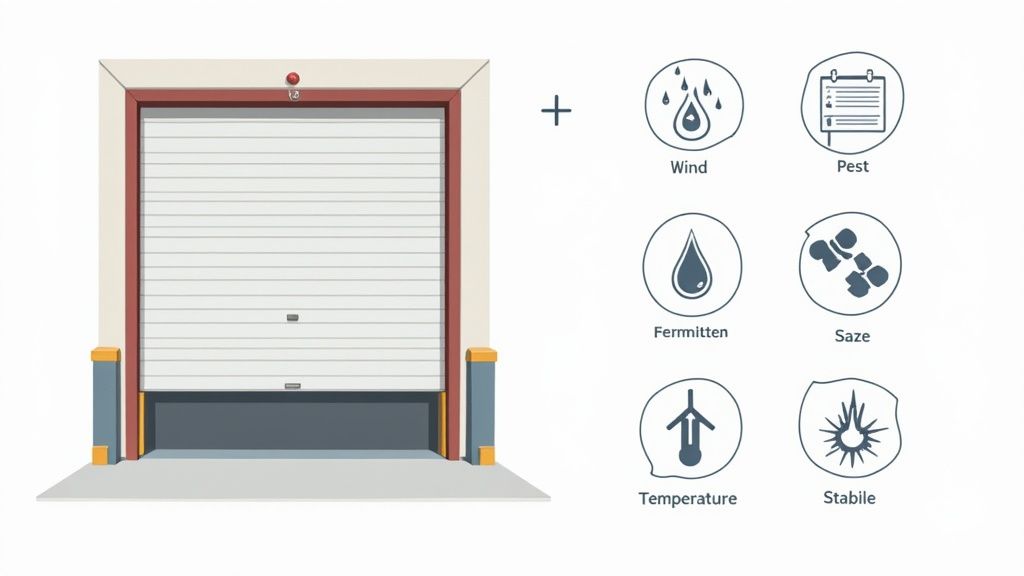
Beyond Keeping The Rain Out
While preventing water intrusion is a primary function, the true value of professional-grade commercial weatherstripping runs much deeper. A failing seal can trigger a chain of expensive problems that often go unnoticed until significant damage is done. Even during new construction, such as when building a steel garage, specifying the correct sealing system is fundamental to protecting the asset long-term.
A complete sealing system provides multiple layers of protection essential for any commercial or industrial site. These benefits work together to create a more efficient, secure, and compliant operation.
Consider what a properly installed seal really does for your facility:
- Energy Conservation: It prevents heated or cooled air from escaping, which stops your HVAC system from working overtime to maintain a stable temperature. This is a crucial benefit for climate-controlled warehouses, food processing plants, and cold storage facilities.
- Pest and Debris Control: A tight seal creates an impenetrable barrier against rodents, insects, dust, and other contaminants. For industries like food and beverage, pharmaceuticals, and high-tech manufacturing, this is non-negotiable for compliance and product safety.
- Asset Protection: It shields sensitive inventory, machinery, and equipment from moisture damage, rust, and corrosion caused by rain, snow, and humidity seeping under the door.
- Noise Reduction: Quality weatherstripping helps dampen outside noise from traffic or adjacent industrial operations, creating a safer and more focused work environment.
The First Line Of Defense
Ultimately, the weatherstrip on your commercial garage door is your facility’s first line of defence against both the elements and operational inefficiency. A seal that’s worn, cracked, or improperly installed leaves your entire operation vulnerable. Recognizing this component as a critical asset is key to proactive facility management. For a comprehensive strategy, exploring planned maintenance programs ensures these vital components are always performing at their best. As respected partners providing reliable service, Wilcox can help you fortify this crucial defence.
The Hidden Costs of a Poor Garage Door Seal
A failing weatherstrip for a garage door might seem like a small maintenance issue, but its effects can ripple through your entire facility. It quietly accumulates hidden costs that impact your budget, threaten compliance standards, and reduce operational uptime. For example, a seemingly minor gap at the bottom of a loading dock door forces your HVAC system to run constantly, leading to significant energy waste and inflated utility bills. These gaps are more than just drafts; they’re an open invitation for a host of problems.
The most immediate impact is the financial drain from energy loss. A compromised seal allows the conditioned air you’re paying to heat or cool to escape, while exterior temperatures infiltrate your space. This creates a constant battle for your climate control system, making it incredibly expensive to maintain a stable indoor environment. Reviewing strategies to save electricity highlights just how much an airtight seal can contribute to your bottom line.
Protecting More Than Just Your Climate
While energy savings are a significant benefit, the true value of high-quality commercial weatherstripping lies in asset protection and risk management. A robust seal is your first line of defence against numerous threats that can bring operations to a halt.
In industries like food processing, pharmaceuticals, or advanced manufacturing, where environmental control is paramount, a faulty seal allows dust, pollen, and contaminants to enter, compromising sterile environments. This can lead to product contamination, failed audits, and costly operational shutdowns.
“A proper seal isn’t just about keeping the weather out; it’s about maintaining the integrity of your entire operation. It protects inventory from moisture damage, prevents pest infestations that can lead to costly remediation, and reduces noise pollution for a safer, more productive work environment.”
This is why professional-grade sealing isn’t just an optional upgrade—it’s a non-negotiable part of intelligent facility management.
The Domino Effect of a Bad Seal
A worn-out weatherstrip can trigger a chain reaction, with consequences that affect nearly every aspect of your facility. Ignoring a cracked or compressed seal today is an invitation for a larger, more expensive problem tomorrow.
Consider these interconnected risks:
- Pest Infestations: Small gaps at the bottom of a loading dock door are a welcome mat for rodents and insects seeking food and shelter. A small opening can quickly lead to a full-blown infestation, resulting in damaged inventory, health code violations, and costly pest control services.
- Moisture and Water Damage: Rainwater seeping under a door can cause significant damage. It can degrade concrete floors, promote mould growth, and create dangerous slip-and-fall hazards for employees. Over time, this moisture will rust the bottom of steel doors and damage sensitive equipment stored nearby.
- Security Vulnerabilities: A gap in your door seal isn’t just an energy leak; it’s a potential security breach. It can be exploited as an entry point for theft or vandalism. A securely sealed door presents a much stronger deterrent to unauthorized access.
- Noise Pollution: For facilities located near busy roads or in industrial parks, a poor seal allows external noise to flood the workspace. This can be a major distraction for employees and detract from a safe working environment.
Our guide on enhancing commercial door energy efficiency dives deeper into strategies tailored for facility managers. Proactively addressing your commercial door seals is an essential strategy for protecting your assets and will pay for itself many times over in reduced costs and enhanced security.
Choosing the Right Weatherstrip Material and Style for Commercial Use
When it comes to commercial overhead doors, selecting the right weatherstrip for a garage door is not a one-size-fits-all decision. The material and style must be robust enough to withstand the daily demands of heavy use, extreme temperatures, and your specific operational environment. An incorrect choice will not only fail prematurely but will also undermine your efforts to control costs and protect your building.
This section serves as a straightforward guide to comparing common materials and understanding the different types of seals available for commercial applications.

As the flowchart illustrates, ignoring a worn-out seal opens the door—literally—to a host of operational issues far more expensive to resolve than investing in the correct weatherstripping from the start.
Understanding Commercial-Grade Weatherstrip Materials
The material is the core of your weatherstrip’s performance. For a busy loading dock or a climate-controlled warehouse, you need a material that is both durable and resilient.
Here’s a breakdown of the most common materials used for commercial overhead door seals:
- Vinyl: A solid, cost-effective option, vinyl seals are effective at stopping drafts and moisture. They are often used as perimeter seals (known as stop moulding) that frame the door opening. However, standard vinyl can become brittle in extreme cold, making it less suitable for unheated Canadian warehouses in winter.
- Rubber (Synthetic): A significant step up in durability from vinyl, rubber seals remain flexible in colder temperatures and can handle the high compression forces of a heavy commercial door, providing a reliable barrier against water and pests.
- EPDM (Ethylene Propylene Diene Monomer): For facilities facing extreme temperature fluctuations, EPDM is the premier choice. This high-performance synthetic rubber maintains its flexibility and strength in both scorching heat and freezing cold, preventing cracks and stiffness. It also offers excellent resistance to UV radiation and ozone, making it ideal for doors with southern exposure.
- Brush Seals: Composed of dense nylon or polypropylene bristles, brush seals are the perfect solution for sealing gaps on uneven surfaces, such as the pitted concrete floors found at older loading docks. They create a flexible barrier that conforms to imperfections, effectively blocking dust, debris, and pests while allowing the door to move without friction.
A common mistake is choosing a seal based on price alone. An inexpensive vinyl seal might save money upfront, but if it fails after one harsh winter, the costs of replacement, energy loss, and potential pest issues will far outweigh the initial savings.
Common Commercial Seal Styles and Their Applications
Beyond material, the style of the seal determines its specific function. An effective sealing system utilizes a combination of different types to create a comprehensive, airtight barrier around the entire door.
Bottom Seals (Astragal)
The bottom seal, often called an astragal, is the most critical part of the weatherstripping system. It endures the most wear and acts as the primary barrier between the floor and the door.
- T-Type and Bead-End Seals: These seals slide into a channel or retainer at the bottom of the door. They are available in various shapes and sizes to create a cushioned, tight fit against the floor.
- J-Type Astragal: This style wraps around the bottom edge of the door, providing a robust layer of protection that is excellent for sealing larger gaps on many sectional steel doors.
Perimeter Seals
As the name suggests, these seals are installed around the top and sides (the perimeter) of the door opening to stop drafts and light from entering when the door is closed.
- Stop Moulding: This is a rigid vinyl or aluminum extrusion with a flexible flap that presses against the face of the door. It is installed on the exterior door jambs and header to create a weather-tight frame. For a deeper look, you can learn more about how a garage door side seal functions and why it’s so important.
- Threshold Seals: While less common in high-traffic commercial applications, a threshold seal is mounted directly to the floor. It provides the bottom seal with a raised barrier to press against, which is particularly useful for sloped driveways or floors with drainage issues.
Carefully matching the right material and seal style to your facility’s daily operations creates a durable barrier that protects assets, reduces energy consumption, and promotes a more secure and efficient workplace.
Why Professional Installation Makes all the Difference
Selecting the correct weatherstrip for your garage door is a crucial first step, but it’s only half the equation. The real performance—the airtight seal that cuts energy costs and protects your assets—comes from a flawless installation. For heavy commercial overhead doors, this is a job that demands trained professionals.
The difference between a professional fit and a DIY attempt is immediately apparent. A correctly installed seal creates a continuous, gap-free barrier that fully protects your facility. In contrast, an improper installation can leave you with the same drafts, pests, and energy loss you were trying to eliminate, and in some cases, can even damage the door itself.
Precision is Non-Negotiable
Installing a commercial weatherstrip for garage door systems requires expert precision. A technician must account for every subtle imperfection in the door, frame, and floor that has developed over years of heavy use.
Our certified technicians begin with exact measurements, but their expertise truly shines when addressing real-world challenges found in commercial settings:
- Uneven Floors: Loading dock floors are rarely perfectly level after years of heavy forklift traffic. A professional knows how to adjust the bottom seal to conform to every dip and slope, ensuring a tight fit across the entire width of the opening.
- Warped or Damaged Doors: Over time, door panels can bend, warp, or sustain impact damage. Our team can adapt the installation, recommending specific retainers or seal types to compensate for these issues and restore a proper seal.
- Track Misalignment: If door tracks are not perfectly aligned, the door will not close evenly, leaving gaps for air and pests. A technician will identify and correct this root cause before installing the new seal, ensuring the entire system functions correctly.
Attempting to install a new seal on a misaligned or damaged door is like putting a brand-new tire on a bent rim. It won’t perform as intended and is guaranteed to fail under pressure.
The Right Tools and Fasteners for Commercial Doors
Using the wrong fasteners is one of the most common and costly mistakes in amateur installations. A commercial door panel is a structural component. Drilling in the wrong location or using incorrect screws can compromise its integrity, leading to rust, panel damage, or voiding the manufacturer’s warranty.
Professionals use specific, corrosion-resistant fasteners designed for the door’s material, whether it’s steel, aluminum, or a composite. This ensures the seal’s retainer is securely anchored without weakening the door itself—a critical detail for long-term durability. Our experts also know how to properly seal every fastener penetration to prevent water intrusion.
Safety is Paramount
Working on commercial overhead doors is inherently dangerous. These systems are under extreme tension from powerful springs, and the doors themselves are incredibly heavy. Attempting to adjust or work near these components without proper training and equipment is a serious safety risk.
Wilcox Door Service technicians are rigorously trained, insured, and adhere to strict safety protocols on every job site.
- They are experts in safely working around high-tension springs and cables.
- They use proper lockout/tagout procedures to de-energize door operators.
- They are equipped with the appropriate lifts and safety gear to handle heavy door sections.
Bringing in professionals eliminates these risks, protecting your staff and your property. When you entrust your weatherstripping installation and commercial door service and repair needs to our team, you’re investing in a solution that is safe, effective, and built to last. Our commitment to being “Respected Partners, Reliable Service” means we get it done right the first time.
A Proactive Maintenance and Inspection Plan for Your Door Seals
Your facility’s weatherstripping is one of its hardest-working components, constantly compressed, exposed to the elements, and stressed by daily operations. Like any high-use part, it will inevitably wear out. A proactive maintenance plan is a strategic measure to prevent the costly domino effect of a seal failure—from soaring energy bills to unexpected, business-halting downtime.
Treating your weatherstrip for garage door systems as the critical assets they are begins with simple, scheduled inspections. This routine is your best defence against minor issues escalating into major operational headaches.
Your Regular Inspection Checklist
Incorporating a quick visual check into your team’s weekly or monthly facility walk-through can make a significant difference. No specialized tools are required—just a keen eye for the tell-tale signs of wear.
Equip your maintenance staff with this straightforward checklist:
- Look for Cracks and Brittleness: Examine seals for fine splits or a hardened texture, particularly on those exposed to direct sunlight. A healthy seal should be flexible and pliable.
- Check for Compression or Flat Spots: Over time, the bottom seal can become permanently compressed, losing its ability to form a tight barrier. If it no longer springs back to shape, it’s time for replacement.
- Inspect for Tears or Gouges: At a busy loading dock, seals can easily be snagged or torn by forklifts or pallets. Even a small rip compromises the entire seal.
- Perform a Daylight Test: The simplest test of all. With the door closed during the day, turn off the interior lights. If you see daylight around the edges, you have an air leak.
This proactive approach is far more cost-effective than reacting to a complete failure. For a more structured approach, learn about the benefits of a planned garage door maintenance program, which formalizes these inspections and ensures nothing is overlooked.
How Environmental Factors Accelerate Wear
Your facility’s environment plays a massive role in how quickly your weatherstripping degrades. Understanding these factors helps you anticipate maintenance needs and select the right materials for replacement.
Environmental stress is the silent enemy of your door seals. UV radiation from the sun, extreme temperature swings, and exposure to industrial chemicals can drastically shorten the lifespan of even the most durable materials.
For example, a distribution centre in an area with intense summer sun will see vinyl seals become brittle much faster than a facility in a milder climate. Similarly, a wash-down bay in a food processing plant exposes seals to cleaning agents that can cause certain rubber compounds to break down prematurely.
Practical Cleaning and Care Tips
Proper cleaning is a simple yet effective way to extend the life of your seals by keeping the material flexible and maintaining its integrity. We recommend inspecting and cleaning seals at least twice a year—ideally before winter and summer. Pre-winter checks ensure seals can handle the cold, while pre-summer checks prepare them for heat and UV exposure. The bottom seal consistently takes the most abuse, making it the most frequently replaced component.
Follow these best practices for maintenance:
- Clean Gently: Use a mild detergent and water to wipe away dirt, grime, and any chemical residues. Avoid harsh, abrasive cleaners that can damage the seal’s surface.
- Lubricate Wisely: For rubber and vinyl seals, apply a silicone-based lubricant. This is crucial for keeping them supple and preventing them from sticking to the door frame, especially in freezing temperatures.
- Avoid Petroleum-Based Products: Never use products like WD-40 on rubber or vinyl seals. Petroleum distillates cause the material to swell, soften, and degrade rapidly.
By adopting a simple inspection and maintenance routine, you transform weatherstripping from a reactive repair headache into a managed asset.
Troubleshooting Common Weatherstrip Failures in Commercial Doors
Even the most robust weatherstrip for a garage door will eventually fail, especially under the constant stress of a busy commercial facility. By knowing how to spot problems early, you can address them long before a minor gap leads to a major issue like a flooded warehouse floor or a pest infestation.
Think of your weatherstripping as a communication system for your door’s health. A draft, a puddle, or visible light are all signals that something needs attention. Acting on these clues is the first step in keeping your facility secure, clean, and efficient.
Identifying the Symptoms and Their Root Causes
Recognizing the signs of a failing weatherstrip is straightforward once you know what to look for. Each symptom often points to a specific cause, helping you diagnose the problem quickly.
- Visible Daylight or Drafts: If you can see light or feel a breeze around the edges of a closed door, the perimeter seal or bottom astragal is likely compromised. Over time, these seals can become compressed, cracked, or torn, creating a direct path for air and your energy dollars to escape.
- Water Pooling Inside: Finding puddles inside the door after rain is a clear indicator that your bottom seal has failed. The seal may be worn down, or the concrete floor could be uneven, creating gaps that old, hardened rubber can no longer fill.
- Increased Pest Activity: Discovering droppings or seeing pests near your overhead doors is a strong sign of a breach. Rodents and insects are adept at exploiting small openings, and a worn-out or chewed-through seal is an open invitation.
An unevenly closing door is a major red flag. If one side of the door touches the ground while the other remains elevated, the problem is not the seal itself. It is a symptom of a more serious mechanical issue, such as misaligned tracks or failing lift cables, which requires immediate professional commercial door service and repair.
When to Call a Professional
While your maintenance team can handle routine visual inspections, diagnosing the root cause of a seal failure often requires an expert eye. That unevenly closing door mentioned above indicates a potentially dangerous issue with the door’s counterbalance system. Attempting to adjust high-tension springs or cables without specialized training is extremely hazardous.
Environmental factors also add complexity. For instance, extreme temperature swings can cause materials to expand and contract, leading to misaligned tracks and premature weatherstripping failure. You can learn more about how weather affects door perimeter seals from the experts at Garaga. This is precisely when a professional diagnosis is essential to prevent small issues from becoming costly repairs.
If your troubleshooting points to anything beyond a simple worn-out seal, it’s time to call the professionals.
Time to Partner with the Sealing Experts at Wilcox
As we’ve covered, the weatherstrip for your garage door is not just a strip of rubber—it’s a critical asset. It is your primary defence against the elements, pests, and soaring energy costs, directly impacting your facility’s efficiency, security, and operational uptime.
A properly selected and installed seal is an investment that protects your inventory, helps maintain compliance, and strengthens your bottom line. Ignoring a failing seal is like leaving a window wide open; it’s an invitation for bigger, more expensive problems.
More Than a Supplier—We’re Your Partner in Facility Protection
At Wilcox Door Service, we provide more than just parts. We partner with you to maintain every aspect of your commercial door systems. Our certified technicians have the experience to diagnose the true cause of a failing seal, recommend the most durable solution for your specific environment, and perform an installation that guarantees a perfect, gap-free fit.
We stand by our commitment to being “Respected Partners, Reliable Service.” Our mission is to help you proactively manage your facility’s access points, ensuring your doors perform at their peak to support your business.
Taking the next step is simple. Allow our team to provide a comprehensive assessment of your overhead doors and sealing systems. We can identify vulnerabilities before they become emergencies, giving you peace of mind and a clear plan to keep your facility secure and efficient.
Ready to secure your facility and reduce operational costs? Contact Wilcox Door Service today to schedule a professional inspection or explore our expert commercial door service and repair options. For a long-term, proactive strategy, learn more about our comprehensive planned maintenance programs.