


Organizing a commercial doors installation in Toronto can feel complex, balancing building codes, operational needs, and budget constraints. This guide cuts through that complexity, offering a clear roadmap for facility and operations managers. You will learn how to choose the right door for your needs, navigate local codes and permits, understand installation costs, and select a reliable installation partner. Our goal is to equip you with the knowledge to make confident decisions that enhance your facility’s security, efficiency, and safety.
Your Expert Guide to Commercial Door Installation
A proper door installation is more than just hanging a new door; it’s a critical infrastructure project impacting your facility’s safety, energy efficiency, and daily workflow. For any Toronto-based business, from a sprawling warehouse in Mississauga to a busy downtown parkade, the right door is essential for smooth operations.
This guide walks you through every crucial stage of a professional doors installation in Toronto. We’ll cover everything you need to know for a seamless project, ensuring your facility remains secure, compliant, and efficient. Understanding the full scope of the project helps you work effectively with your installer to achieve the best possible outcome.
What You Will Learn in This Guide
To prepare you for your project, this guide will break down several key areas:
- Choosing the Right Door: We’ll explore different types of commercial doors—like high-speed, sectional, and fire-rated doors—and explain which applications they’re best suited for.
- Navigating Local Codes: Learn how to comply with the Ontario Building Code (OBC) and Toronto-specific permit requirements to avoid costly delays.
- Budgeting and Cost Factors: Get a transparent look at what drives installation costs, from materials and labour to site-specific modifications.
- The Installation Process: We’ll map out the step-by-step process, covering everything from site preparation and old door removal to final post-installation safety tests.
- Selecting a Partner: Discover the key questions to ask and qualifications to look for in a reliable, professional installation provider.
A professional installation is the foundation of a door system’s longevity and reliability. An improper fit can cause premature wear on critical parts like springs and rollers, compromising safety and leading to unexpected, costly downtime.
By understanding these elements, you’ll be better positioned to manage your project successfully. For a real-world example, our guide on a recent Toronto sectional door installation offers a closer look at these principles in action.
As “Respected Partners, Reliable Service,” Wilcox Door Service is committed to providing expert guidance and flawless execution for your next commercial door installation.
Choosing The Right Commercial Door For Your Facility
A successful doors installation in Toronto begins long before the tools come out. It starts with selecting the perfect door for your facility’s unique operational demands. This isn’t just about filling an opening; it’s a strategic decision that impacts workflow, security, and energy costs.
Think of it this way: you wouldn’t use a sports car to haul construction materials. Similarly, installing a basic roll-up door in a climate-controlled food processing facility would be a critical mistake. Every commercial door is engineered for a specific purpose. Matching the door to its intended job is the first and most vital step toward a sound, long-lasting investment.
Matching Door Types To Toronto Business Needs
Every facility in the Greater Toronto Area has its own unique challenges. A pharmaceutical cleanroom in Vaughan operates under different rules than a high-end retail shop on Bloor Street or a bustling logistics hub near Pearson Airport.
For example, a distribution centre with constant forklift traffic needs a tough, reliable solution. A heavy-duty sectional steel door is the workhorse here, built to withstand daily impacts and secure the facility. In contrast, a pharmaceutical cleanroom requires a high-speed fabric door with an airtight seal to maintain a sterile, climate-controlled environment and prevent contamination.
Selecting a door is about solving a business problem. A high-cycle parking grille for a downtown condo prevents traffic bottlenecks, while an insulated overhead door in a Mississauga warehouse directly lowers winter heating bills. The right door is an asset, not just an entryway.
To help clarify your options, the following decision tree highlights key considerations around traffic, climate, and security.
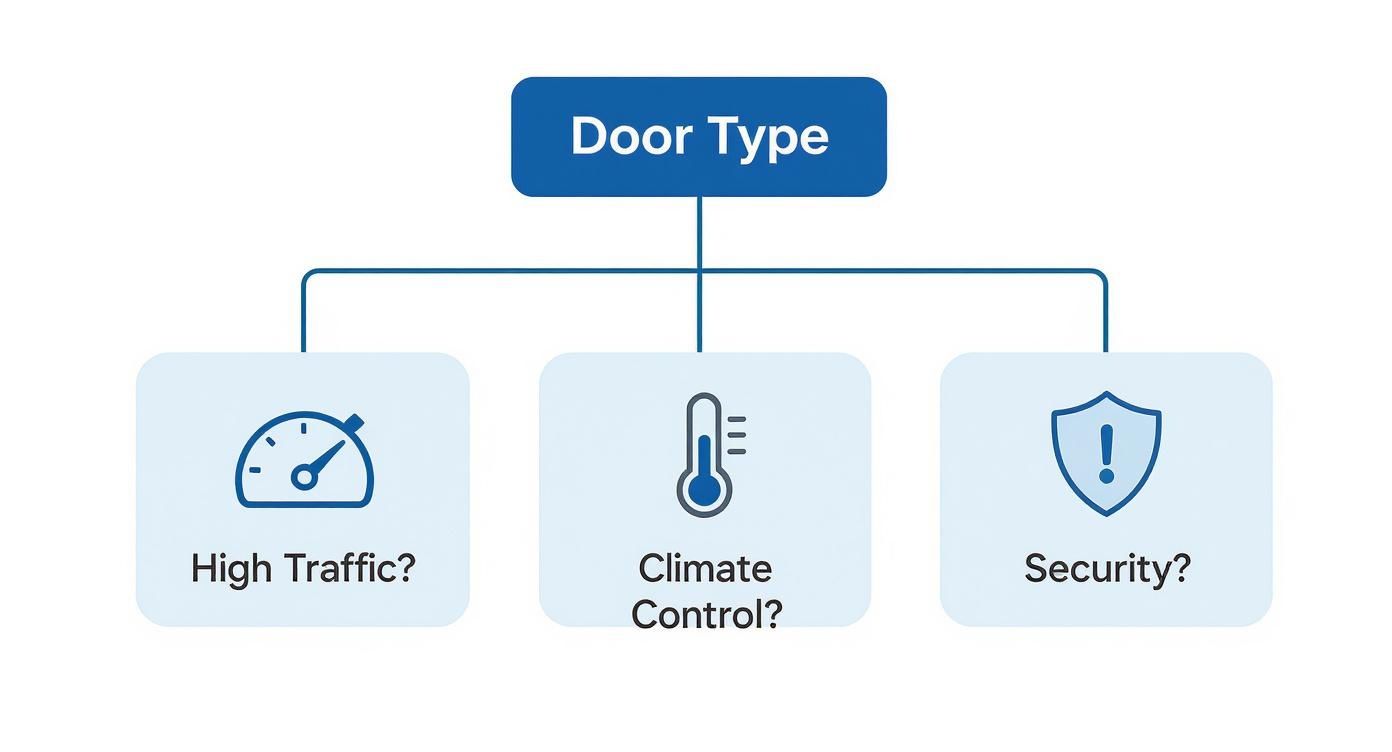
As you can see, your top operational priorities—whether speed, environmental control, or security—will guide you toward the best door type for your facility.
Here’s a quick comparison of the most common commercial doors we install across Toronto and their ideal applications.
Commercial Door Type Comparison For Toronto Businesses
| Door Type | Best For (Toronto Application) | Key Benefits | Considerations |
|---|---|---|---|
| Sectional Steel Doors | Warehouses, loading docks, industrial plants | Durable, secure, excellent insulation options (R-value) | Slower opening speed, requires overhead track space |
| Rolling Steel Doors | Retail storefronts, storage units, fire-rated openings | Very secure, compact (coils up), fire-rated models available | Slower operation, can be noisy |
| High-Speed Doors | Cold storage, food processing, busy parkades | Extremely fast cycle times, improves traffic flow, energy control | Higher initial cost, more complex mechanics |
| Full-View Glass Doors | Car dealerships, fire stations, modern restaurants | Maximizes natural light, high-end aesthetic appeal | Lower insulation value, less secure than solid steel |
| Security Grilles | Shopping malls, underground parking, pharmacies | Provides security while allowing visibility and airflow | Not suitable for climate control or weather protection |
This table provides a starting point for matching common GTA business needs with the right door technology.
Understanding Key Door Features
Once you have an idea of the door type you need, you’ll encounter a few technical terms. Understanding these will help you make a more confident and informed decision.
- Steel Gauge: This is a measure of the steel’s thickness. The important thing to remember is that a lower gauge number means thicker, stronger steel. For instance, a 20-gauge door is more robust and dent-resistant than a 24-gauge door, making it ideal for high-traffic areas or security-critical applications. For more on this, explore our guide on commercial steel doors.
- R-Value: This number indicates how well a door insulates by measuring its resistance to heat flow. A higher R-value means better insulation. For any Toronto facility with heated or cooled areas, like a cold storage warehouse, a door with a high R-value (R-16 or more) is crucial for reducing energy waste and lowering utility costs.
- Cycle Rating: This specifies how many times a door is designed to open and close before key components, like the springs, may require service. A standard door might be rated for 10,000 cycles, whereas a high-performance door for a busy downtown parkade could be rated for 100,000 cycles or more.
The right commercial door can significantly impact your building’s operating costs and environmental footprint. Learning more about commercial building energy efficiency highlights how strategic choices in this area can deliver long-term benefits.
By analyzing your daily operations and understanding these key features, you are well-equipped to select a door that not only secures your building but also enhances its performance.
Navigating Toronto Building Codes and Permits
A successful commercial doors installation in Toronto requires more than just selecting the right hardware; it demands navigating a complex web of local building codes and permits. This is not a step to overlook, as non-compliance can lead to hefty fines, project delays, and significant operational headaches.
For any facility in the GTA, the primary regulations are the Ontario Building Code (OBC) and provincial accessibility standards. These are not mere suggestions—they are strict rules designed to ensure every door installation is safe, fire-resistant, and accessible to everyone. While it may seem daunting, adherence is crucial for a legal and safe project. A knowledgeable installation partner is invaluable here, guiding you through the regulatory landscape to ensure every requirement is met.
Decoding the Ontario Building Code
The OBC is the definitive rulebook for all construction in the province, with specific sections dedicated to commercial doors. While you don’t need to be an expert, understanding a few key concepts is essential for any facility manager.
First is the fire-resistance rating. This is not just about the door material; it refers to how long the entire door assembly—including the door, frame, and hardware—can contain a fire and prevent its spread.
A fire-rated door is a complete life-safety system. For example, a door with a 90-minute fire rating is certified to withstand intense heat for that duration, creating a barrier that compartmentalizes a fire and provides critical time for evacuation. This is why proper installation and mandatory annual inspections, like fire door drop testing, are non-negotiable to maintain its life-saving capability.
Accessibility is another critical component, governed by the Accessibility for Ontarians with Disabilities Act (AODA). This act mandates specific requirements for door openings, such as minimum clear widths, threshold heights, and the use of accessible hardware like lever handles instead of knobs. These rules ensure your facility is safe and welcoming for everyone.
The Permit Process in Practice
Let’s consider a practical example: installing a new, fire-rated rolling steel door at a loading dock in an older Toronto warehouse.
This type of project will almost certainly require a building permit because it involves changing the door’s function and potentially making structural alterations. A successful permit application must include:
- Engineered Drawings: These are detailed blueprints showing the door’s specifications, wall construction, and how the new assembly will be securely anchored.
- Fire-Rating Documentation: Official proof from the manufacturer that the entire door assembly meets the OBC’s fire-rating requirements for its specific location.
- Installation Plan: A clear description of the work, outlining how each step will comply with all relevant safety standards.
After the permit is approved and the door is installed, a city inspector will visit to verify that the final installation matches the approved plans and that all components are fitted correctly. This final sign-off closes the permit and confirms your installation is fully compliant.
Attempting to bypass this process can lead to work-stop orders, steep fines, or even the forced removal of a non-compliant door. Working with an experienced installer like Wilcox Door Service removes this burden. We manage the technical paperwork and coordinate with inspectors, ensuring your commercial and industrial door project meets every regulation without becoming a logistical nightmare.
Understanding Commercial Door Installation Costs
A successful project requires a solid budget. When planning a commercial doors installation in Toronto, it’s easy to focus solely on the door’s price, but that’s just one piece of the puzzle. To keep your project on track and avoid unexpected expenses, a comprehensive understanding of all potential costs is essential.
Numerous factors contribute to the final cost, transforming a simple purchase into a full-scale project. From material choices to site complexity, each decision shapes the overall investment.
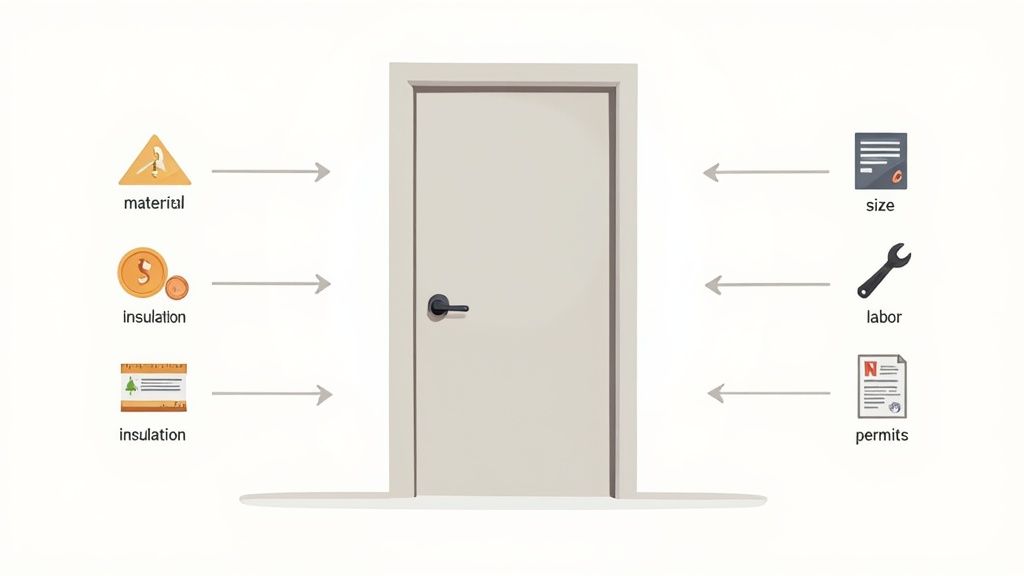
Key Factors Driving Project Costs
The final invoice for your installation is a sum of several distinct parts. Understanding these components helps you see where your money is going and why some projects are more complex than others.
Here are the primary cost drivers:
- Door Material and Type: A standard, uninsulated sectional steel door costs significantly less than a high-speed, insulated fabric door designed for a cold storage facility. Specialized materials, like those in a full-view glass door for a car dealership, also impact the price.
- Size and Customization: Standard door sizes are more budget-friendly. Custom dimensions for non-standard openings increase manufacturing costs and the final price.
- Insulation and R-Value: A door’s resistance to heat flow, or R-value, is a key feature. Higher R-values mean better insulation, which adds to the material cost but provides long-term savings on energy bills.
- Specialized Hardware: High-cycle springs for heavy use, heavy-duty operators for large doors, or advanced security features like specialized locking mechanisms will all add to the total cost.
Looking Beyond the Door Itself
Many facility managers focus on the door and overlook associated services and site requirements that are equally crucial to the project’s budget and success. These often-overlooked expenses can derail financial plans if not accounted for upfront.
A common budgeting mistake is underestimating the cost of site preparation and disposal. If an opening needs structural reinforcement or the old door contains materials requiring special disposal, these “hidden” costs can quickly add up. A transparent quote should always itemize these essential services.
These additional costs often include:
- Labour and Site Complexity: A straightforward replacement in an open, accessible area requires less labour than a complex retrofit in a tight space or an active production zone.
- Structural Modifications: If the door opening needs to be enlarged, reinforced with steel, or otherwise altered, this structural work represents a significant additional cost.
- Permit Fees: As covered earlier, projects involving structural changes or fire-rated doors require permits from the City of Toronto, which have associated fees.
- Disposal of Old Materials: Safely removing and disposing of the old door and its components is part of the job and is typically included in a professional quote.
To provide a clearer picture, here’s a sample breakdown of how these factors can add up on a typical Toronto project.
Sample Cost Drivers for a Commercial Overhead Door Project
| Cost Component | Description | Typical Cost Range (Variable) |
|---|---|---|
| The Door Itself | The base cost of the door, panels, tracks, and standard hardware. | $2,000 – $15,000+ |
| Motor/Operator | The electric operator system, including safety sensors, controls, and wiring. | $800 – $4,000+ |
| Labour | The cost for a certified crew to install the door and operator. Varies by complexity. | $1,000 – $5,000+ |
| Site Prep & Structural | Any necessary frame reinforcement, concrete work, or opening modification. | $500 – $10,000+ (Highly variable) |
| Old Door Disposal | The cost to dismantle, remove, and properly dispose of the existing door. | $250 – $750 |
| Permits & Fees | City of Toronto permit fees for structural or fire-rated door work. | $200 – $1,000+ |
| Specialty Hardware | Upgrades like high-cycle springs, security locks, or remote access systems. | $300 – $2,500+ |
This table illustrates the wide range of variables. A simple warehouse door swap will be at the lower end, while a custom, high-performance door requiring significant structural work will be at the higher end.
While commercial costs vary, residential trends offer insight into rising material and labour prices. For example, the average cost for a standard front door replacement in Toronto now ranges from $1,320 to $2,280, with installation labour adding another $300–$500. These figures reflect broader price hikes across the construction sector. You can read more about Toronto renovation cost trends to understand the market better.
Partnering with Wilcox Door Service means you receive a detailed, transparent quote that accounts for all these variables, reflecting our commitment to being your “Respected Partners, Reliable Service.”
The Commercial Door Installation Process Step by Step
Knowing what to expect during a commercial doors installation in Toronto is key to a project that runs on time with minimal disruption. A professional installation is a carefully planned sequence of steps centered on safety, precision, and efficiency. From our technicians’ arrival to the final cleanup, every action is designed to get your new door system operational without interrupting your business.
This overview breaks down the entire process, giving you a clear picture of what happens on installation day. Understanding these steps allows you to prepare your facility and coordinate with your team, ensuring a smooth experience for everyone.
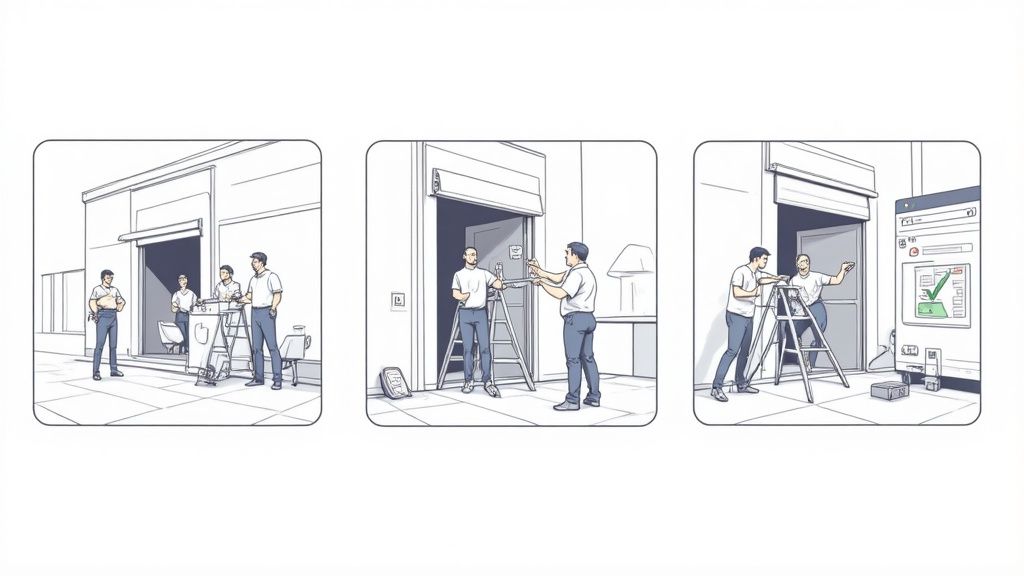
Preparing Your Facility for Installation Day
A smooth installation begins before our team arrives. Preparing your site is the most important step you can take to ensure the job is completed quickly and safely. A few simple preparations can make a significant difference, allowing our technicians to work efficiently.
Here’s a quick checklist to help you get your site ready:
- Clear the Area: Ensure the space around the door opening—both inside and out—is free of inventory, vehicles, equipment, and any other obstructions. Our team needs ample room to work safely.
- Provide Unobstructed Access: Our trucks and crew need a clear path to the installation point. Please ensure driveways, loading bays, and interior pathways are accessible.
- Coordinate with Other Trades: If other contractors are on-site, coordinating schedules can prevent conflicts and maintain a safe work environment for everyone.
- Secure the Work Zone: For the safety of your staff, cordon off the immediate work area to prevent anyone from accidentally entering a hazardous zone.
What to Expect During the Installation
On the day of the job, our certified technicians will arrive with all the necessary tools, equipment, and safety gear. The process is methodical, following strict protocols to protect our team, your staff, and your property.
We begin with a final on-site safety review, or a “tailgate talk,” to discuss the day’s plan and identify any potential hazards—a critical first step for every project.
From there, the installation follows a clear sequence:
- Safe Removal of the Old Door: If it’s a replacement, the existing system—door, tracks, and operator—is carefully dismantled and removed for proper disposal.
- Frame and Opening Preparation: We inspect the door frame and surrounding structure to ensure it is sound and ready for a perfect, secure fit.
- Track and Hardware Installation: Precision is paramount here. The vertical and horizontal tracks are mounted and meticulously aligned for smooth, long-term operation.
- Door Section or Curtain Fitting: The new door panels or rolling curtain are carefully set into the tracks, followed by the installation of rollers, counterbalance springs, and cables.
- Operator and Safety Device Integration: The motor and control systems are installed and wired, including essential safety features like photo-eyes or reversing edges. Learn more about this in our guide to door, dock, and operator installations.
Post-Installation Checks and Commissioning
Once the door is physically in place, the work isn’t finished. The final and most crucial phase is commissioning. This involves a series of rigorous tests to confirm the entire system operates flawlessly and meets all safety standards.
This final check is non-negotiable. For a fire-rated door, this includes a mandatory drop test to verify it closes correctly during a fire alarm simulation. This test is the only way to certify that the door will perform its life-saving function when needed most.
Our team will cycle the door multiple times, checking its balance, fine-tuning the operator’s limits, and verifying that every safety device functions correctly. We then conduct a thorough cleanup, leaving your facility as we found it.
Before we leave, we will walk you through the door’s operation and explain maintenance requirements, ensuring your team is confident and prepared to use the new system safely and effectively.
How to Choose Your Toronto Door Installation Partner
Choosing a new commercial door is important, but the success of your project ultimately depends on the team you hire to install it. The right partner for your doors installation in Toronto does more than just hang a door; they ensure it operates safely, meets local codes, and performs reliably for years. The wrong choice can lead to premature breakdowns, safety hazards, and costly downtime.
This section provides a straightforward guide to finding and vetting the best commercial door companies in the GTA. We’ll cover the essential questions to ask and the qualifications that should be non-negotiable. This is about finding a true partner committed to quality, safety, and long-term support.
Vetting Potential Installation Partners
Not all installers are created equal. To protect your investment and ensure the job is done right, you must look beyond a polished website. A truly professional partner will be transparent and ready to answer your questions. For additional guidance, resources on choosing the right door supplier can offer helpful insights.
Begin your evaluation with these core questions:
- Industry Experience: How long have you been installing commercial doors in the Toronto area? Can you provide examples of projects similar to mine?
- Licensing and Insurance: Can you provide proof of your business license, liability insurance, and WSIB compliance?
- Technician Certifications: Are your technicians factory-trained and union-certified? What ongoing training do they receive?
- Local References: Can you provide contact information for recent commercial clients in the GTA?
A partner’s WSIB (Workplace Safety and Insurance Board) compliance is non-negotiable. It protects you from liability in case of an accident on your property and demonstrates the company is a serious, professional operation.
The Value of Comprehensive Support
Your relationship with an installer shouldn’t end when the job is done. The best partners view installation as the beginning of a long-term commitment to keeping your facility running smoothly. This is especially critical for businesses where every minute of uptime is crucial.
A key differentiator is the availability of 24/7 emergency service. A malfunctioning loading dock door or a stuck security grille can halt your operations. Knowing you have a reliable crew on call 365 days a year provides invaluable peace of mind. A partner who can dispatch a certified technician at a moment’s notice is essential for minimizing costly disruptions.
Look for Proactive Maintenance Programs
Beyond emergency repairs, look for a company that offers structured Preventative Maintenance Programs. A professional installation is the start, but routine maintenance guarantees your door’s longevity. Regular inspections can catch small issues before they become catastrophic failures, extending the life of your door system and preventing unexpected breakdowns.
A solid maintenance plan should include:
- Lubricating all moving parts like rollers, hinges, and springs.
- Inspecting cables and springs for signs of wear.
- Testing all safety features, including photo-eyes and reversing mechanisms.
- Tightening all hardware and fasteners.
Choosing a partner that handles both expert installation and ongoing maintenance creates a seamless support system. At Wilcox Door Service, our motto, “Respected Partners, Reliable Service,” reflects our commitment to supporting you throughout the entire life of your door, from the initial consultation to years of dependable performance.
Common Questions About Toronto Door Installation
When planning a commercial door installation in Toronto, it’s natural to have questions. Facility and operations managers often share similar concerns, and getting clear, straightforward answers is the best way to start your project with confidence.
Here are direct answers to some of the most common questions we receive.
How Long Does a Typical Commercial Door Installation Take?
For a standard overhead door replacement, our crews can often complete the job in a single day. We understand that minimizing disruption is critical, so we work efficiently to get your operations back to normal as quickly as possible.
More complex projects may take longer. A new construction installation, a project requiring significant structural changes, or a highly specialized door system might take several days. We always provide a detailed project schedule after our initial site visit, giving you a clear and reliable timeline from the outset.
What Is the Most Important Factor for Door Longevity?
While high-quality materials are essential, the single most important factor is professional installation followed by a consistent preventative maintenance program.
Even the best door, if installed improperly, is destined for premature failure. It will suffer from excessive wear on springs, cables, and rollers, leading to costly emergency repairs. Regular upkeep, like our planned maintenance programs, ensures your investment performs reliably for its full expected lifespan.
Do I Need a Permit to Replace a Door in Toronto?
It depends on the scope of the work. If you are simply replacing an existing door with a new one of the same model and size, a permit is usually not required.
However, you will almost certainly need a building permit from the City of Toronto if the project involves:
- Altering the size of the door opening.
- Changing the door’s function (e.g., installing a fire-rated door where one did not exist previously).
- Making any structural changes to the surrounding wall.
Navigating the permit process can be complex, but we are here to guide you through the specific requirements for your project, ensuring full compliance.
Your facility’s access points are too critical to leave to chance. At Wilcox Door Service Inc., we combine decades of installation expertise with unmatched support to keep your operations running smoothly and securely.
Ready to discuss your project? Contact us today for a professional consultation and quote.