


Choosing between commercial door materials can be complex, but this guide makes it simple. Here, you'll learn the critical differences between fiberglass and steel doors so you can make an informed decision for your facility. We'll cover everything from durability and impact resistance in real-world scenarios to energy efficiency for the Canadian climate and the true total cost of ownership. By the end, you'll understand which material offers the best long-term value for your specific needs, whether it's for a busy loading dock or a secure interior room.
When you're looking at commercial doors, the fiberglass vs steel doors discussion often boils down to a key trade-off. Steel doors give you impressive strength and security at a lower upfront price, which is why you see them everywhere. However, fiberglass doors really shine when it comes to standing up to dents, rust, and tough weather, often leading to a lower total cost of ownership over the long run.
A Definitive Commercial Comparison
Choosing the right door for a commercial or industrial facility in Canada is a major investment. This isn't just about filling a hole in the wall; the decision impacts everything from your day-to-day operations and site security to your energy bills and long-term maintenance budgets. For facility managers, operations leaders, and maintenance teams, looking past the surface-level differences is crucial for making a choice that pays off.
This guide provides a definitive comparison to help you see how each material performs under the real-world pressures found in:
- Warehouses and distribution centres
- Manufacturing plants and processing facilities
- High-traffic commercial buildings
We’ll get into the details of durability, security, and energy efficiency, all through the lens of Canada's demanding climate. By the end, you'll have the information you need to pick a door that boosts safety, cuts down on downtime, and fits with your operational goals.
Key Takeaway: The "best" door is all about the specific job it needs to do. A steel door might be the perfect fit for an interior secure room, while a fiberglass door is the clear winner for an exterior loading dock that’s constantly exposed to salt and moisture.
Fiberglass vs Steel Doors at a Glance
To kick things off, let's look at the core differences. This table gives a high-level overview that will frame our more detailed analysis.
| Feature | Fiberglass Doors | Steel Doors |
|---|---|---|
| Durability | Highly resistant to dents, scratches, and corrosion. Will not rust or rot. | Very strong but can dent on impact. Scratches can lead to rust if not repaired. |
| Maintenance | Minimal; usually just needs routine cleaning. | Low, but requires touch-up painting on scratches to prevent corrosion and rust. |
| Energy Efficiency | Excellent thermal insulation, especially with composite frames that reduce heat transfer. | Good to excellent insulation with a foam core, but can be prone to thermal bridging. |
| Best For | Exterior applications, high-moisture or chemical environments, and high-traffic areas. | Interior applications, high-security areas, and budget-conscious projects. |
Getting a handle on these basic distinctions is the first step. As we dive deeper into each category—from how they’re built to their total cost of ownership—you’ll gain the insights needed to partner with us for a reliable, long-lasting solution for your facility.
Understanding Core Material and Construction Differences
When you’re weighing fiberglass against steel doors, it’s easy to get lost in feature lists. But before you can really compare them, you need to understand how they’re actually built. From the outside, they might look pretty similar, but what’s going on inside makes all the difference in performance, durability, and whether they're the right fit for your facility.
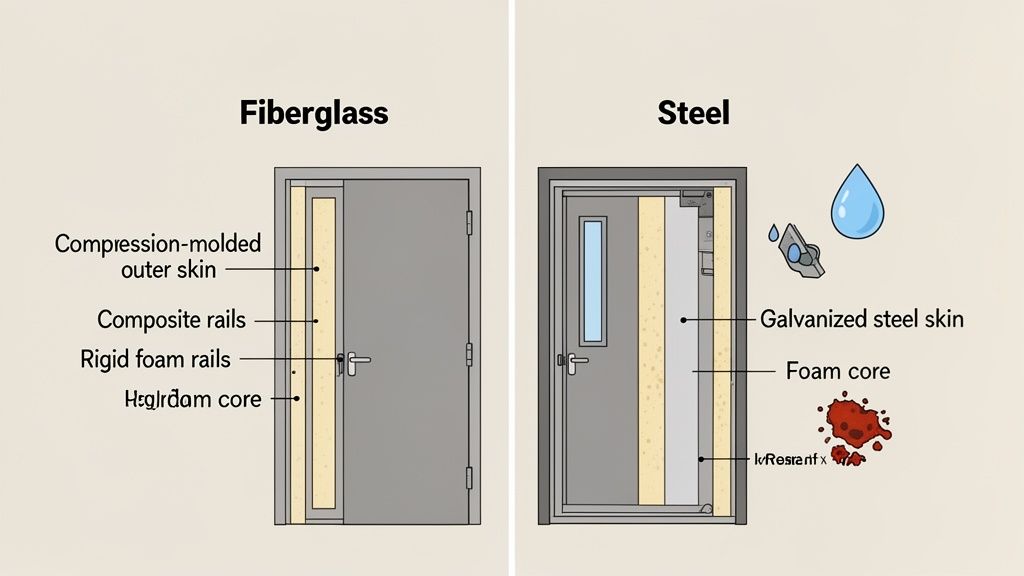
Steel doors have a long-standing reputation for raw strength. They’re typically built with skins of galvanized steel—a simple process where steel is coated in zinc to fight off rust. These skins are then wrapped around an insulating foam core, with the door’s edges framed out with steel or sometimes wood components. It's a proven, tough design.
On the other hand, fiberglass doors are built to stand up to the elements. Their skins are made from compression-molded fiberglass, a composite material that’s naturally resistant to dents, scratches, and most importantly, rust and corrosion. Just like steel doors, they have a rigid insulating foam core inside that provides excellent energy efficiency.
The Critical Role of Stiles and Rails
The real game-changer often comes down to the door’s edges—the stiles (vertical sides) and rails (horizontal top and bottom). In many standard steel doors, these can be made of wood. If the door's outer seal is ever broken, these wood components can soak up moisture, which leads to swelling, rot, and eventual failure.
This is where high-quality fiberglass doors pull ahead. They are often constructed with composite stiles and rails. This material simply won’t absorb water, which makes the entire door assembly highly resistant to moisture damage, delamination, and rot. For any exterior door in Canada’s harsh and varied climate, that’s a massive advantage.
Real-World Example: Picture a busy loading dock at a food processing plant in a humid coastal region. A deep scratch from a forklift on a steel door breaks the galvanized coating. That raw steel is now exposed to moisture, and rust is inevitable. A similar impact might mark a fiberglass door, but because the material itself is rust-proof, its structural integrity stays completely intact.
This durability is one reason the market is shifting. The global commercial fiberglass door market trends and insights show a projected growth to $33.0 billion by 2032, reflecting a compound annual growth rate (CAGR) of 9.1%. This isn't just a trend; it's a clear signal that facility managers see fiberglass as a tough, cost-effective alternative to traditional doors.
Knowing how each door is put together is the key to understanding the trade-offs in durability, maintenance, and long-term value. While both are solid choices, their internal construction will guide you to the right solution for your specific needs. Next, we’ll get into how these construction differences play out when it comes to real-world impact resistance.
Durability and Impact Resistance in Demanding Environments
In any industrial or commercial facility, a door isn't just an access point—it’s an operational workhorse that has to stand up to constant abuse. When choosing between fiberglass and steel doors, it all comes down to one critical question: how will it hold up to daily punishment?
This isn't about simple strength ratings. It's about real-world resilience. We’re talking about how each door reacts to forklift bumps, cart collisions, and relentless Canadian weather, helping you decide which material gives you the most reliable performance for the long haul.
The Dent vs. Damage Debate
There's no question that steel is strong. Its inherent rigidity has made it a go-to for security applications for decades. But that same rigidity is also its biggest weakness when it comes to direct, forceful impacts.
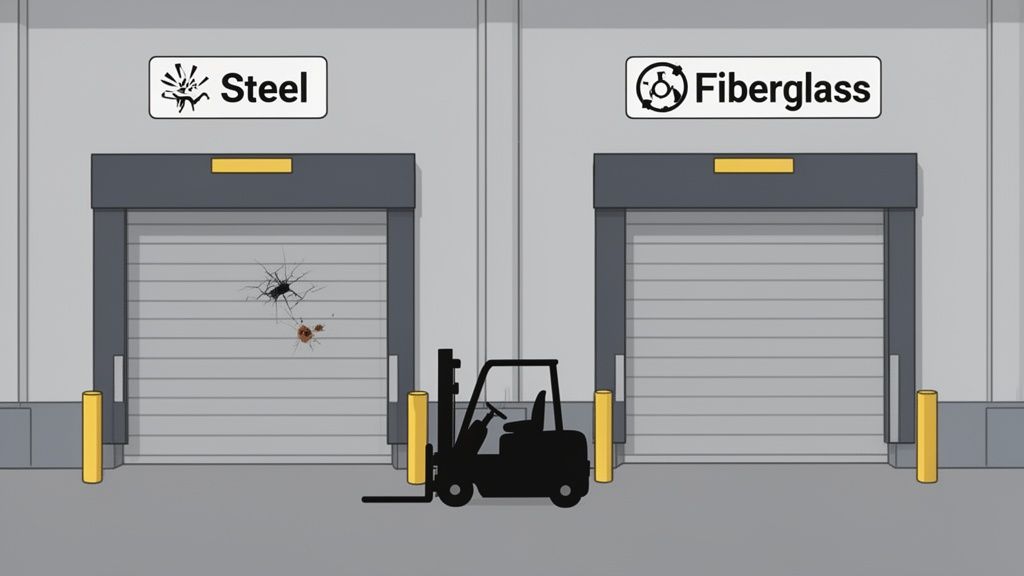
Real-World Example: A forklift operator misjudges a turn and clips the corner of a steel loading dock door. The impact leaves a nasty dent. It might look like just a cosmetic problem, but that dent has just compromised the door's protective coating. Now, the raw steel underneath is exposed to moisture, and rust is almost inevitable. This is a recurring headache for facility maintenance teams.
This is a recurring headache for maintenance teams. Once rust takes hold, you're looking at sanding, priming, and repainting to stop it from spreading and weakening the entire door panel.
Fiberglass doors handle impacts in a completely different way. Their composite skins are engineered to flex and absorb the energy of a collision. In that same forklift scenario, a fiberglass door will typically give way to the impact and then pop right back into its original shape, leaving little to no sign of damage. This high dent resistance means the door's protective surface stays intact, preventing the moisture intrusion that leads to corrosion and decay.
Resilience in the Face of Canadian Weather
Canada’s climate throws everything it has at an exterior door. You’ve got humid, salty air on the coasts, brutal freeze-thaw cycles on the prairies, and heavy snow loads everywhere in between. In these conditions, material stability is non-negotiable.
-
Fiberglass Performance: Fiberglass is dimensionally stable, a technical term meaning it doesn’t expand or contract much with temperature swings. It's also completely impervious to moisture. This means it won't warp, crack, swell, or rot, even after years of being battered by rain, snow, and humidity.
-
Steel Performance: While modern galvanized steel offers good initial protection, it remains vulnerable. As we saw with the dent scenario, any scratch or breach in the surface coating creates an opening for moisture. In high-humidity or coastal areas with salt in the air, this corrosion process accelerates dramatically, compromising the door's structural integrity and appearance over time.
While there are many great applications that highlight the lasting style and security of metal products, exterior doors in harsh climates are a different beast. Here, fiberglass's innate resistance to the elements gives it a significant lifecycle advantage.
Durability and Environmental Resistance Comparison
To make the choice clearer for your facility, this table breaks down how each door material stacks up against common stressors you're likely to encounter.
| Performance Metric | Steel Doors | Fiberglass Doors | Best Use Case Example |
|---|---|---|---|
| Impact Resistance | Strong, but dents easily on sharp impact. Dents often lead to rust and further degradation. | Highly dent-resistant. The composite skin flexes to absorb force and returns to its original shape. | A high-traffic warehouse corridor where cart and equipment collisions are a daily occurrence. |
| Corrosion/Rust | Vulnerable if the galvanized or painted coating is scratched or dented, exposing the raw steel. | Completely rust-proof and corrosion-resistant. The material itself does not degrade from moisture exposure. | A food processing plant with regular high-pressure washdowns and constant high humidity. |
| Weathering | Susceptible to corrosion in high-moisture or salty air if the surface is breached. | Impervious to warping, cracking, or rotting caused by extreme temperature fluctuations and moisture. | Any exterior-facing bay door in a region with heavy rain, snow, or coastal air. |
| Scratch Resistance | Scratches easily, requiring immediate touch-up paint to prevent rust from forming. | Generally more scratch-resistant than painted steel. Scratches do not compromise its weather resistance. | A public-facing commercial entrance that sees daily wear and tear from foot traffic and deliveries. |
Ultimately, the durability discussion in the fiberglass vs. steel doors debate always comes down to context. Steel offers brute force, but fiberglass provides superior resilience against the day-to-day impacts and environmental factors that cause long-term decay.
For facilities where operational uptime and low maintenance are top priorities, the tough, weather-immune nature of fiberglass often presents a more reliable long-term investment. This is especially true for our wide range of durable commercial door solutions. In the next section, we’ll dive into how these material differences translate into another critical area for Canadian facilities: energy efficiency.
Energy Efficiency and Thermal Performance for the Canadian Climate
For any facility manager in Canada, fighting to control energy costs is a constant battle against the elements. When you’re weighing fiberglass vs steel doors, their thermal performance isn’t just a side note—it’s a massive factor that hits your heating and cooling budget directly.
Both high-quality insulated steel and fiberglass doors can do a great job, thanks to their foam-injected cores. But the subtle differences in how they're built have a huge impact, especially during our harsh winters and humid summers.
Understanding R-Value and Thermal Bridging
Before we pit the materials against each other, let’s get two key terms straight. R-value is a simple measure of thermal resistance—basically, how well the door stops heat from passing through it. The higher the R-value, the better the insulation.
But the more nuanced—and often more important—factor is thermal bridging. It's a technical term for how heat or cold travels through the most conductive parts of a door, like its frame and edges. A material that allows thermal bridging acts like a superhighway for energy to escape.
Real-World Example: Picture a cold-storage facility in Ontario during a humid summer. If the door's frame conducts heat easily (a classic case of thermal bridging), the cold inner surface of the frame will cause condensation to form on the outside. That moisture leads to slippery, hazardous floors and can create costly ice buildup around the door seal, putting both your products and your people at risk.
How Fiberglass Gains an Edge
This is where the material differences in the fiberglass vs steel doors debate really come into focus. While both can have well-insulated cores, fiberglass pulls ahead with a significant thermal advantage because of how its frame is constructed.
-
Fiberglass Doors: These doors are typically built with composite stiles and rails—the vertical and horizontal edges. Composites are terrible conductors of heat, which is a good thing here. They create a natural thermal break, which simply means they block the path heat or cold would normally take. This dramatically cuts down on energy transfer around the door’s perimeter, keeping the inside surface temperature stable and stopping those condensation problems.
-
Steel Doors: Many steel doors use steel for their internal frame. Steel is a fantastic heat conductor, meaning it easily creates a thermal bridge that lets cold seep in and heat escape. This makes them less efficient right at the edges, even if the core R-value is high.
This difference in edge performance is precisely why a fiberglass door with the same R-value as a steel door will often deliver better overall energy efficiency. It's a key reason why many Canadian industries are turning to fiberglass more and more for demanding applications.
Insulated Doors for Every Application
At the end of the day, a well-insulated door is an investment that pays you back in lower energy bills. The insulation doesn't just help hold a stable temperature; it also cuts down the strain on your HVAC systems, helping that expensive equipment last longer.
Whether you choose fiberglass for its superior thermal break or a high-quality insulated steel door for a more protected interior spot, focusing on thermal performance is a must. For a deeper look, check out our article on enhancing long-term durability and efficiency with insulated overhead doors.
Choosing the right material means you aren’t just installing a door. You're actively managing your facility’s energy use and operational bottom line—a critical move for keeping your environment productive and cost-effective, no matter the season.
Analyzing the Total Cost of Ownership
When you’re comparing fiberglass and steel doors, the initial price tag only tells part of the story. Any experienced facility manager knows the real expense isn't what you pay on day one, but what you spend over the entire life of the door. The total cost of ownership (TCO) is the true measure, accounting for the purchase price plus maintenance, repairs, and eventual replacement.
A lower upfront cost might look good on paper, but it often brings hidden long-term expenses that can quickly add up. Understanding the financial impact over a 10-to-15-year lifecycle is the key to making a smart investment that protects your budget and keeps operations running smoothly.
Breaking Down Maintenance and Repair Costs
This is where the financial paths of fiberglass and steel doors truly split. In a busy commercial environment, wear and tear is a given. How each material handles that abuse directly impacts your maintenance budget.
Steel doors, for example, are most vulnerable to surface damage.
- A bump from a pallet jack or a deep scratch from equipment can easily break the door's protective coating. This isn't just a cosmetic problem—it's an open invitation for rust.
- To stop corrosion, every single scratch and dent has to be sanded, primed, and repainted. That means labour, materials, and operational downtime.
- If that rust is ignored, especially in damp or salty Canadian climates, it can eat away at the door's structural integrity, forcing a full and expensive replacement long before you planned for it.
In contrast, fiberglass doors need far less hands-on work. Their composite material is naturally resistant to the things that degrade steel. Because fiberglass doesn’t rust, rot, or corrode, a scratch is just a scratch—it doesn't become a weak point that threatens the entire door. In most cases, routine cleaning is all they need to stay in top shape.
Key Insight: A fiberglass door’s minimal maintenance needs translate directly into saved labour hours and material costs. Over a decade, these savings can easily add up to more than the initial price difference compared to a steel door.
A Real-World Cost Analysis Scenario
Let's put this into a practical context. Picture a property management firm that oversees several commercial strip malls in a Canadian city known for its harsh winters and humid summers. They have to replace 20 exterior back-of-house doors.
Scenario Breakdown Over 10 Years:
Steel Doors:
- Initial Cost: The upfront price is lower, making it seem like the better deal at first.
- Years 1-3: Following routine inspections, minor scratches from deliveries require touch-up paint. This involves a maintenance call-out each year for a handful of doors.
- Years 4-7: Several doors now have visible dents and rust spots where old touch-ups failed or new damage happened. The repair job is now more intense, requiring sanding, rust converter, primer, and paint.
- Years 8-10: At least two doors near downspouts or snow-melt zones have major corrosion at the base. They’re becoming a security risk and are difficult to operate. The firm must now pay for a full replacement for these doors, years ahead of schedule.
Fiberglass Doors:
- Initial Cost: The upfront investment is higher than for steel.
- Years 1-7: The doors take the same hits from deliveries and weather. They get some scuffs and scratches, but because the material is rust-proof, no repairs are needed beyond a simple cleaning during regular property maintenance. There are zero costs for corrosion repair.
- Years 8-10: The doors are still fully functional and structurally sound. While they show signs of use, their integrity is solid. No replacements are on the horizon.
In this scenario, the fiberglass doors’ higher initial price is easily offset by the near-total elimination of repair costs. The property management firm saves money on labour, materials, and the huge expense of premature replacements, leading to a significantly lower total cost of ownership. If you're weighing similar factors, our insights on commercial garage door costs can offer more perspective on long-term value.
Making the right choice comes down to maximizing the life of your assets. As your service partner, we're here to help you find a solution that delivers both performance and financial predictability for years to come.
Matching the Right Door to Your Application
When it comes to the fiberglass vs steel doors debate, the best door is simply the one that fits the specific needs of its location. There's no single right answer, only the right solution for a particular environment. This is where moving from theory to practical application becomes critical for facility managers aiming for reliability and long-term value.
For interior applications where security, fire ratings, and cost are the main concerns, steel doors have long been the go-to choice. Think of a secure server room, an electrical closet, or interior partitions separating different warehouse zones. In these controlled environments, the risk of moisture or impact from heavy machinery is low, allowing steel’s strengths to shine without exposing its weaknesses.
On the other hand, fiberglass doors are engineered to handle the challenges of exterior-facing positions and tough interior conditions.
Situational Recommendations
Here are a few clear-cut scenarios where each material really shows its worth:
-
Exterior Loading Docks: Fiberglass is the superior choice. Constant exposure to rain, snow, and salty air in many parts of Canada will eventually compromise a steel door once its surface is scratched. Fiberglass is simply impervious to rust and corrosion, ensuring long-term structural integrity.
-
Food Processing Plants: In this case, fiberglass is non-negotiable. These facilities require frequent high-pressure washdowns and operate in high-humidity environments. A steel door would quickly succumb to rust, whereas a fiberglass door offers the necessary resistance to both moisture and cleaning chemicals.
-
High-Traffic Interior Corridors: Fiberglass offers better long-term value. In areas with constant cart or personnel traffic, steel doors will inevitably get dented. A fiberglass door’s ability to absorb impacts without damage reduces maintenance and preserves its appearance.
This infographic helps simplify the long-term financial decision by visualizing the total cost of ownership.
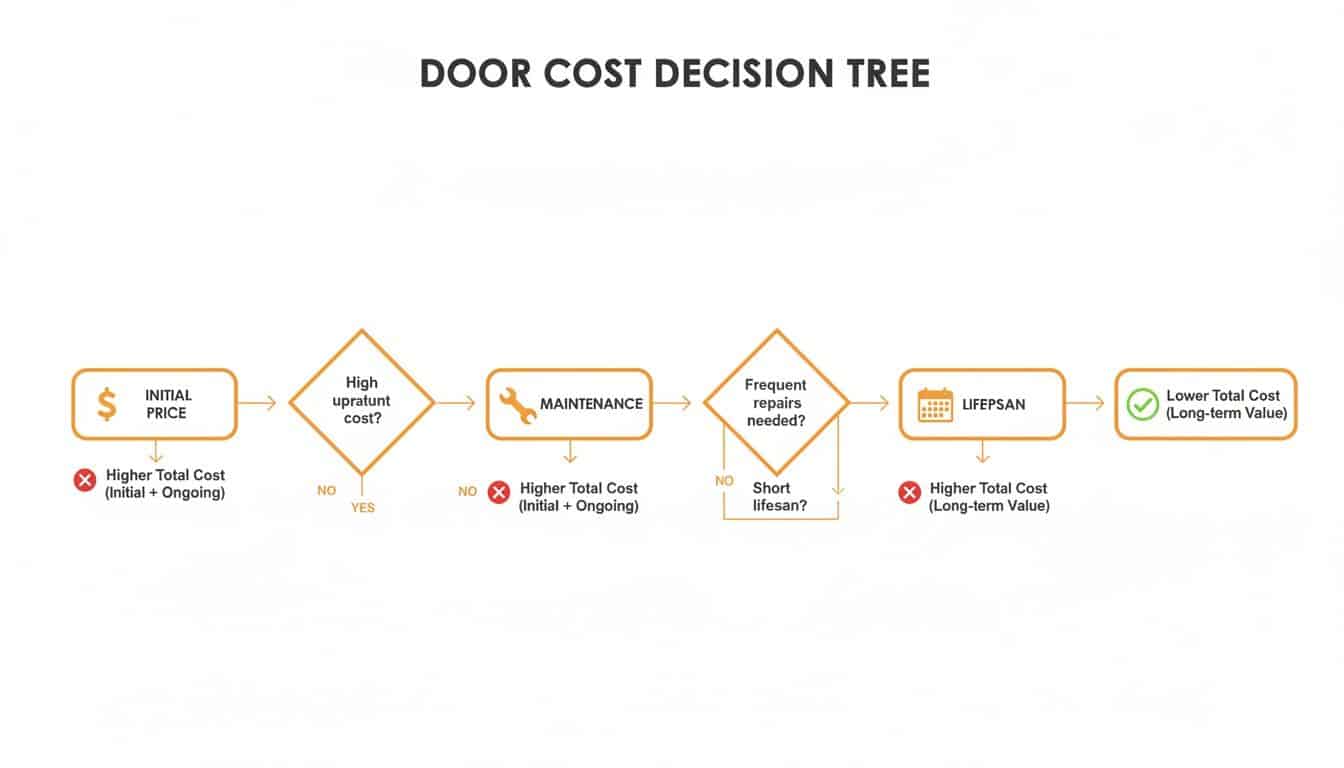
As the visualization shows, while the initial price is one factor, ongoing maintenance needs and overall lifespan are critical components that determine a door's true long-term value.
This focus on durability and low maintenance is why the commercial fiberglass door market trends and insights show continued strong growth. This trend directly addresses the operational priorities of warehouses and industrial plants where reliability is mission-critical.
Your Decision-Making Checklist
To simplify your choice, run through this quick checklist for your application:
- Environmental Exposure: Will the door face rain, snow, salt, or chemicals? (Yes = Fiberglass)
- Impact Risk: Is the door in a high-traffic area with forklifts or carts? (Yes = Fiberglass)
- Primary Need: Is the top priority security or a fire rating in a dry, protected interior space? (Yes = Steel)
- Maintenance Budget: Do you want to minimise ongoing labour for cosmetic repairs? (Yes = Fiberglass)
Answering these questions will point you toward a solution that aligns with your operational goals. As your partner in the field, we’re here to ensure you get a reliable, code-compliant door that performs for years.
Choosing Your Partner for a Lasting Solution
In the fiberglass vs steel doors debate, the final call rests on a clear-eyed view of your facility's daily grind and long-term goals. Protecting your investment isn’t just about the initial price. It's about choosing the door that truly impacts your bottom line—through durability, lifecycle costs, and energy efficiency. A door that minimizes downtime and can take whatever your specific environment throws at it is a critical asset, not just an expense.
The choice you make today will echo in your maintenance budgets, operational uptime, and site security for years. Steel doors bring undeniable strength to the table, making them a solid choice for secure, controlled interior spaces. But for any opening exposed to impacts, punishing weather, or moisture, fiberglass doors consistently prove their resilience and deliver a lower total cost of ownership.
Expertise You Can Rely On
With over a century of experience, Wilcox Door Service is more than just a commercial door supplier; we are respected partners delivering reliable service. Our deep understanding of how different materials perform across Canada allows us to recommend solutions that genuinely enhance facility performance and safety. We recognize that every single entrance has a specific job to do.
Our commitment is simple: to make sure you get a solution that works flawlessly from day one and continues to add value for its entire service life.
At Wilcox, we believe the right door is the one that solves your problem for the long haul. That’s why our approach is built on partnership—we listen to your needs, assess your environment, and deliver a solution that works. "Respected Partners, Reliable Service."
Your Next Step to a Better Solution
From the first consultation to ongoing planned maintenance programs, we stand behind our work. Our union-certified technicians are equipped to expertly install, service, and maintain both fiberglass and steel door systems right across Canada. Whether you’re running a high-traffic warehouse, a food processing plant, or a multi-site commercial property, we have the hands-on expertise to ensure your access points are secure, efficient, and code-compliant.
Ready to find the perfect door for your facility? Let us help you cut through the complexity. A detailed assessment from our team can pinpoint the ideal, code-compliant product to protect your facility and your investment.
Get Your Free Quote and Facility Assessment Now