


Choosing a garage door commercial solution is a critical decision for any facility manager. This component is more than just an entry point; it’s a vital piece of equipment that directly impacts your operational efficiency, security, and energy consumption. An unsuitable door can lead to workflow bottlenecks and safety hazards, while the right one becomes a valuable asset.
This guide will provide you with the essential knowledge to make an informed choice. You will learn to identify the different types of commercial doors, understand key performance metrics like R-value and cycle life, and develop a practical framework for selecting a system that aligns perfectly with your facility’s unique demands. We’ll explore everything from materials and safety features to the long-term value of planned maintenance, ensuring you invest in a solution that enhances your business operations.
Why Your Commercial Garage Door Is a Critical Asset
For facility and operations managers, a commercial garage door is not merely a building component—it is integral to your daily workflow. The right door system actively enhances productivity and safety. Conversely, the wrong one can become a persistent source of operational delays, a security vulnerability, and an unforeseen drain on your budget.
When you select a system tailored to your specific needs, it contributes to a smoother, safer, and more cost-effective operation. Moving beyond the initial purchase price to consider the total cost of ownership is essential. A high-performance door is not an expense; it is a strategic investment in the seamless continuity of your business. As your “Respected Partners, Reliable Service” provider, Wilcox Door Service helps you see the complete picture.
The Impact On Daily Operations
The performance of your commercial garage door has a significant, daily impact on your entire facility.
Consider a busy distribution center. A slow or unreliable door can disrupt the flow of goods, leading to a cascade of delayed shipments and increased labor costs. In contrast, a high-speed door can shave valuable seconds off each cycle. While seemingly small, these time savings accumulate over a year, resulting in substantial productivity gains.
Here’s how a door system plays a crucial role:
- Workflow Efficiency: The speed and reliability of your door directly govern the movement of materials, vehicles, and personnel. This is a key factor in your facility’s overall throughput, which is the rate at which goods or services are processed.
- Energy Costs: A poorly insulated or improperly sealed door acts like a large, open window, leading to significant energy loss and higher utility bills, whether you are heating or cooling the space.
- Safety and Compliance: Modern doors are engineered with essential safety features to protect your employees and assets, helping you meet or exceed strict regulatory standards.
- Security: A robust, well-maintained door serves as a primary defense against theft, vandalism, and unauthorized access.
Effective management of this asset is crucial. Tools designed for comprehensive property management can help integrate your door’s performance into the bigger picture. A helpful property management software comparison can guide you toward solutions that fit your operational needs.
Proactive management and regular inspections are non-negotiable for these systems. For a deeper understanding of what this involves, our guide on routine garage door maintenance is an excellent resource.
Partner with Wilcox Door Service for a thorough assessment of your facility’s unique needs. We’ll help you select, install, and maintain a door system that doesn’t just fill an opening—it strengthens your entire operation.
Decoding Commercial Garage Door Types and Materials
Choosing the right commercial garage door is about matching the right tool to the job. Different doors are engineered for specific functions, and understanding the core options is the first step toward a smart, long-term investment.
We will explore the industry’s most reliable options, from versatile sectional doors to high-security rolling steel doors. We will also examine specialized solutions for unique challenges, such as high-speed doors that optimize workflow and fire-rated doors that are critical for life safety. This knowledge will empower you to select a door that boosts efficiency, enhances security, and benefits your bottom line.

Alt text: Four types of commercial garage doors: sectional, rolling steel, high-speed fabric, and fire-rated, with icons representing their construction and function.
Sectional Doors: The All-Round Performer
Sectional doors are a common sight in warehouses, automotive service centers, and loading docks across Canada. They are constructed from a series of horizontal panels hinged together that move along a track system, resting parallel to the ceiling when open.
This design makes them incredibly practical. The panel construction allows for various customizations—you can add windows (known as “lites”) for natural light or choose from multiple insulation levels to manage energy costs. Because they retract overhead, they do not require the bulky coil box needed for rolling doors.
Real-World Example: In a busy distribution center during a cold winter, an insulated steel sectional door is an ideal fit. It is durable enough to withstand an accidental impact from a forklift while effectively retaining heated air, keeping energy costs down. Their combination of durability, customization, and cost-effectiveness makes them a reliable choice for numerous applications.
Rolling Steel Doors: The Security Specialist
When security and durability are non-negotiable, a rolling steel door is the ultimate solution. These doors consist of interlocking steel slats that coil into a compact drum above the door opening.
Their primary advantage is this compact design, which requires minimal headroom. This makes them perfect for facilities with limited ceiling space due to obstructions like cranes, sprinkler systems, or conveyors.
A rolling steel door is engineered for maximum strength. It is designed to withstand harsh weather conditions and serve as a formidable deterrent to forced entry, providing superior protection for high-value inventory or secure areas. This is why they are commonly used for storefronts, parking garages, and heavy industrial plants where resilience is the top priority.
Specialized Doors for Unique Demands
Standard doors are not always sufficient for facilities with unique operational challenges. Specialized solutions are engineered to address specific problems related to speed, climate control, and life safety.
- High-Speed Doors: In fast-paced environments like food processing plants or logistics hubs, efficiency is paramount. High-speed doors, typically made from durable fabric or vinyl, can open and close at speeds of up to 100 inches per second. This rapid cycle is crucial for maintaining climate-controlled zones, preventing contamination, and ensuring a seamless workflow.
- Fire-Rated Doors: These are an essential component of a building’s life-safety system. Engineered to close automatically during a fire alarm, they create a barrier to contain smoke and flames. Mandated by building codes in specific areas, these doors undergo rigorous testing to ensure they function flawlessly when needed most.
- Specialty Environment Doors: Certain applications require highly tailored solutions. For example, a cold storage facility needs heavily insulated doors with heated seals to prevent ice buildup. A pharmaceutical cleanroom, in contrast, requires perfectly sealed, non-porous doors to maintain a sterile, particle-free environment.
The Role of Materials: Steel vs. Aluminum
The material of your garage door commercial system directly affects its strength, lifespan, and appearance. Steel and aluminum are the two most common materials in the commercial sector.
Steel is the leading choice for strength and security. Its exceptional durability and impact resistance make it the standard for high-traffic industrial environments. Steel doors are available in different gauges—a measure of thickness—allowing you to balance strength and budget. Our guide comparing fibreglass and steel doors offers a more detailed breakdown.
Aluminum is lighter and naturally resistant to corrosion, making it ideal for environments with moisture or corrosive chemicals, such as car washes or coastal facilities. Aluminum frames are also used for doors with large glass sections, popular in auto dealerships and fire stations where maximum visibility and natural light are desired.
Understanding these foundational door types and materials is the first step toward a smart investment. As your trusted partner providing Reliable Service, we’re here to help you navigate these options.
Ready to find the perfect door for your application? Contact us today to schedule an expert consultation.
Getting into the Weeds: Key Performance and Safety Specs
Once you have identified the right type of commercial door for your facility, it’s time to examine the technical specifications. These performance ratings tell you how a door will perform in terms of energy savings, durability, and safety. Understanding these details is crucial for selecting a door that is not just a barrier but a true operational asset.
Let’s translate these technical specs into practical, bottom-line benefits for your business.
R-Value: Your Building’s First Line of Defence Against Energy Loss
For any heated or cooled facility, R-value is a critical metric. In simple terms, R-value measures a material’s resistance to heat flow—the higher the R-value, the better the insulation.
Think of it like a winter jacket. A thin windbreaker has a low R-value and offers little warmth. A thick, down-filled parka has a high R-value, effectively trapping body heat. Your commercial garage door performs the same function for your building.
A door with a high R-value, such as a modern polyurethane-injected steel door, can significantly reduce heat loss in winter and prevent cool air from escaping in summer. This directly translates to lower energy bills and a more stable, comfortable workspace. For a food processing plant, a heated warehouse, or any climate-controlled space, a high R-value is a necessity, not a luxury.
Wind Load: Bracing for Nature’s Unseen Force
A door’s Wind Load rating indicates the amount of wind pressure it can withstand before bending, buckling, or failing. This is a concern not only in storm-prone regions but anywhere strong gusts can exert immense pressure on the large surface of a commercial door.
An underrated door is a significant liability. In high winds, it can act like a massive sail, risking catastrophic failure that could damage your building, destroy inventory, and endanger staff. A door with the proper wind load rating is engineered with heavier-gauge steel, additional reinforcement struts, and more robust track systems to stand firm against these forces.
A correctly specified wind load rating is a critical component of your building’s structural integrity. It is an upfront investment that prevents devastating damage and ensures your facility remains secure, regardless of the weather.
Cycle Life: The True Measure of a Door’s Durability
The number of times your door will open and close each day determines the required Cycle Life. A door’s cycle life is the number of open-and-close cycles its springs and hardware are designed to handle before requiring replacement.
This number is a direct indicator of long-term durability.
- Standard Cycle Life: Most commercial doors come with springs rated for 10,000 to 25,000 cycles. This is suitable for low-traffic areas like a storage unit or a seasonal maintenance bay.
- High Cycle Life: For a busy loading dock, a high-traffic parking garage, or a fast-paced production environment, high-cycle springs rated for 50,000, 100,000, or more cycles are necessary.
Matching the cycle life to your operational tempo is crucial for avoiding premature failures and unexpected downtime. Investing in high-cycle components from the start is more cost-effective than dealing with frequent spring replacements and the operational disruptions they cause. To learn more about operators designed for these demanding settings, see how modern jackshaft door openers can enhance performance.
Non-Negotiable Safety and Compliance
Safety is the most critical aspect of any commercial door system. These are heavy, powerful pieces of machinery, and their safety systems are mandatory requirements that protect your people and ensure compliance.
- Photo-Eye Sensors: These devices project an invisible infrared beam across the door opening. If anything—a person, pallet, or forklift—breaks the beam, the door will immediately stop and reverse.
- Reversing Safety Edge: This is a pressure-sensitive strip along the bottom edge of the door. If it makes contact with an obstacle while closing, it instantly signals the operator to reverse direction.
Facility managers are responsible for ensuring these systems are installed and regularly tested by certified technicians. An efficient door is valuable, but a safe door is non-negotiable. Partnering with experts like Wilcox Door Service ensures your system is both productive and fully compliant with all safety codes.
For a comprehensive assessment of your door’s performance and safety specifications, contact our team to schedule a consultation.
A Practical Framework For Selecting The Right Door
Choosing the right commercial garage door is about matching its capabilities to the real-world demands of your facility. This requires a clear framework that moves beyond technical specifications to practical application. This section provides just that, using real-world scenarios to illustrate how different priorities lead to different solutions.
This approach will help you ask the right questions, enabling you to make a decision that balances upfront investment with long-term operational value.
Prioritizing Your Core Operational Needs
Every facility has a unique mission that should guide your door selection. What is essential for one business may be a secondary consideration for another. The key is to identify your number-one priority before you begin looking at products.
Real-World Example: In a bustling logistics hub, the most critical metric is throughput—the rate at which goods are processed. Every second a door is closed is a potential bottleneck. The focus here is on high-speed doors with a proven, long cycle life. In this case, the door is a direct enabler of the business’s core goal: moving goods as quickly as possible.
Now, consider a pharmaceutical cleanroom. Here, speed is less important than maintaining a sterile, controlled environment. The top priority is an airtight seal to prevent contamination. The door must be made from non-porous, corrosion-resistant materials that are easy to sanitize.
This decision tree visualizes how your main priority—be it insulation, durability, or safety—should direct your initial choices.
**Alt text:** A flowchart guiding the selection of a commercial garage door, with decision points for insulation, durability, and safety leading to different material suggestions.
The key takeaway is to start with your biggest operational challenge. This focus will cut through the noise and lead you to a more effective solution.
Building Your Selection Checklist
To make an informed choice, you need to gather specific data about your environment and workflow. Providing these details to a door specialist will make the consultation more productive and ensure the final recommendation is a perfect fit.
Start by answering these questions:
- What is the daily traffic volume? An accurate count is essential. Is it 20 cycles a day or 200? This number directly determines the required cycle life for the springs and operator.
- What are the environmental conditions? Will the door be exposed to corrosive agents like road salt or harsh cleaning chemicals? This will indicate whether you need rust-resistant materials like aluminum or specialized protective coatings.
- What are the specific security needs? Are you deterring opportunistic theft or preventing a determined break-in? This influences the required steel gauge and locking hardware.
- Are there unique climate control requirements? For a cold storage facility, a high R-value and perimeter weather seals are non-negotiable. For a simple equipment shed, they may be an unnecessary expense.
Answering these questions transforms the selection process from guesswork into a calculated business decision, ensuring the commercial garage door system you invest in is engineered for your day-to-day reality.
A Scenario-Based Approach
Let’s apply this framework to a couple of common scenarios to see how shifting priorities lead to different door solutions.
Scenario 1: The Urban Parking Garage
A high-traffic underground parkade in a busy downtown core has a specific set of demands.
- Top Priority: High cycle life and speed. The door will open and close hundreds of times a day. Slow operation will cause traffic to back up, creating congestion.
- Secondary Priority: Security. The door must be robust enough to prevent unauthorized entry after hours.
- The Right Fit: A high-speed, high-cycle rolling grille or a perforated rolling steel door is often the best choice. This solution provides solid security while allowing for the ventilation required in a parkade. The operator must be a heavy-duty model designed for continuous use.
Scenario 2: The Food Processing Plant
A facility that handles food products operates under stringent sanitation and regulatory guidelines.
- Top Priority: Hygiene and environmental separation. The door must be completely washable, non-porous, and create a tight seal to prevent cross-contamination and maintain distinct temperature zones.
- Secondary Priority: Speed. Quick open-and-close cycles are essential to minimize exposure between different climate zones, protecting product integrity.
- The Right Fit: A high-speed fabric or rubber door is the perfect solution. These doors are built for rapid cycling, are easy to clean, and can handle constant moisture without corroding.
By methodically working through your operational needs, you can confidently choose a door that becomes a powerful asset rather than a recurring problem. As your “Respected Partners, Reliable Service” provider, this is the consultative approach we specialize in.
Ready to build your custom door framework? Connect with a Wilcox Door Service expert to analyze your application and get a tailored recommendation.
Commercial Door Selection Criteria Checklist
To help you organize your thoughts, this checklist breaks down key factors across common industrial applications. Use it as a starting point to define what matters most for your facility.
| Selection Factor | Warehouse/Logistics | Food & Beverage | Manufacturing Plant | Parking Garage |
|---|---|---|---|---|
| Primary Goal | Maximize Throughput | Maintain Hygiene | Ensure Durability | Control Access/Traffic |
| Cycle Life | High (200-500+ daily) | High (150-300+ daily) | Medium to High (50-200 daily) | Very High (500-1000+ daily) |
| Speed | Critical | Critical | Important | Critical |
| Insulation (R-Value) | Important (R-12+) | Critical (R-16 to R-32+) | Varies by Process | Low (Ventilation needed) |
| Material Durability | Impact Resistance (Steel) | Corrosion Resistance (Stainless/Rubber) | Abrasion/Impact Resistance (Steel) | High-Cycle Components |
| Security | High Priority | Medium Priority | High Priority | High Priority |
| Safety Features | Vehicle Restraints, Sensors | Wash-down Rated Sensors | Interlocks with Machinery | Reversing Edges, Photo Eyes |
| Code Compliance | Standard Building Codes | CFIA/HACCP Standards | Fire Codes, OH&S | Building & Fire Codes |
This checklist is not exhaustive, but it highlights how priorities shift dramatically depending on the environment. A door that excels in a warehouse would fail in a food plant. Defining these criteria upfront is key to a successful investment.
The True Cost Of Ignoring Planned Maintenance
A commercial garage door is a massive piece of heavy machinery. Like any critical equipment, it requires regular upkeep to operate safely and reliably. The reactive “fix-it-when-it-breaks” approach is one of the most expensive mistakes a facility manager can make, leading to budget-breaking emergency repairs, operational downtime, and serious safety risks.
This section makes the business case for a proactive Planned Maintenance Program (PMP). We’ll break down what a PMP involves, how this consistent investment protects your asset’s lifespan, and what to look for in a 24/7 service partner for unexpected issues.

Alt text: A technician performing planned maintenance on a commercial garage door, with icons for a calendar, money savings, and safety.
The Downward Spiral of Reactive Maintenance
Waiting for a component to fail is a costly gamble. A single broken torsion spring—one of the key components that lifts the door—on your main loading dock doesn’t just halt one door. It stops shipments, idles staff, and creates a logistical nightmare. The repair bill is often just the beginning when you factor in the cost of lost productivity.
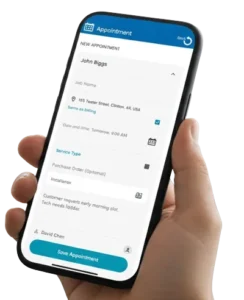
Furthermore, minor issues can cause major collateral damage. A frayed cable that goes unnoticed can snap, causing the door to free-fall, potentially crushing goods, damaging equipment, or injuring an employee. The best way to avoid the high costs of reactive repairs is to invest in preventative maintenance, often managed with efficient service scheduling software, to get ahead of problems.
Core Components of a Planned Maintenance Program
A professionally managed PMP is more than a quick inspection. It is a systematic process designed to identify and address potential problems before they become catastrophes, ensuring every part of your garage door commercial system functions correctly. It involves replacing wear-and-tear items on a predictable schedule, not during a crisis.
A comprehensive PMP from a trusted partner like Wilcox Door Service will always include:
- Detailed Inspection: Our technicians meticulously check all critical components—springs, cables, rollers, tracks, and weather seals—for signs of wear, stress, or fatigue.
- Lubrication and Adjustments: All moving parts are properly lubricated to reduce friction and strain. We also test and adjust the spring tension to ensure the door is perfectly balanced, which significantly reduces stress on the motor.
- Safety System Verification: This is non-negotiable. We perform functional tests on all safety devices, including photo-eye sensors and reversing edges, to confirm they are working correctly and comply with safety regulations.
- Operator and Control Checks: The motor, gearbox, and electrical controls are inspected to guarantee reliable and smooth operation.
A proactive maintenance plan is the single most effective strategy for maximizing the lifecycle of your commercial door. It transforms your maintenance budget from a reactive, unpredictable expense into a controlled, predictable investment that delivers a clear return.
Responding to Unplanned Breakdowns
Even with the best maintenance plan, unexpected failures can occur. When a critical door goes down, every minute of downtime costs you money. This is where a reliable 24/7 emergency service partner becomes essential.
When evaluating a service provider, look for:
- Guaranteed Response Times: Can they commit to having a certified technician on-site within a specific, reasonable timeframe?
- Fully-Stocked Service Vehicles: Do their technicians arrive with the common parts needed to complete the repair on the first visit? This is key to minimizing downtime.
- Certified Expertise: Are their technicians union-certified and factory-trained to work on your specific type of door and operator?
As “Respected Partners, Reliable Service,” we understand the urgency. Our job is to get you back up and running as quickly and safely as possible. Our coast-to-coast network of certified technicians is ready to respond when you need us most.
Don’t wait for a breakdown to disrupt your business. Contact Wilcox Door Service today to learn about our customizable Planned Maintenance Programs and 24/7 emergency repair services.
Bringing Older Doors Up to Speed with Smart Upgrades and Retrofits
Replacing a functional commercial door is not always the most cost-effective solution. You can often achieve the performance, safety, and efficiency of a new system through strategic upgrades to your existing equipment. This retrofit approach allows you to modernize your facility’s access points without the significant cost and disruption of a full replacement.
Think of it as breathing new life into your existing assets. From advanced motor operators that reduce wear and tear to intelligent access controls that improve traffic flow, these upgrades can deliver a measurable return on investment. Let’s examine how targeted enhancements can transform your old doors into smarter, safer, and more valuable components of your operation.

Alt text: A diagram of a smart commercial garage door system, showing the opener, a camera, a remote, and safety sensors.
Upgrading to Advanced Motor Operators
The motor is the heart of your door system, and upgrading to a modern operator can make an immediate, noticeable difference. Today’s operators are engineered for efficiency and longevity, featuring technology that older units lack.
A key innovation is soft-start and soft-stop technology. Instead of jolting the door into motion with a sudden burst of power, these operators gradually ramp up to speed and then gently slow down before stopping. This simple change dramatically reduces stress on all components—from springs and cables to the door panels themselves—which can significantly extend the lifespan of the entire system.
Integrating Smarter Access Controls
The way people and vehicles enter and exit your facility has a massive impact on productivity and security. Retrofitting your doors with modern access controls can transform this flow.
- Motion Sensors and Loops: For high-traffic areas, installing in-ground loops or overhead motion sensors is an excellent upgrade. Doors open automatically for vehicles, keeping traffic moving smoothly.
- Integrated Management Software: Systems like myQ Facility connect your doors to the cloud, providing unprecedented control. From a central dashboard, you can monitor door status, receive real-time alerts, and operate them remotely.
- Keypad and Card Readers: Transitioning from traditional keys to secure keypads or card readers enhances security by restricting access to authorized personnel and providing a clear audit trail.
A smart access control upgrade does more than just open a door; it provides valuable operational data and strengthens your facility’s security posture. It’s a cost-effective way to make an older door much more intelligent.
Creating a Safer, More Efficient Loading Dock
Your commercial door is a key component of your loading dock system. Integrating it with other dock equipment is one of the most powerful safety upgrades you can make. By retrofitting your setup to include interlocks—which are automated safety links—between the door, the dock leveler, and the vehicle restraint, you can create a much safer sequence of operations.
Real-World Example: The system can be programmed so the overhead door cannot be opened until a truck is securely locked in place by the vehicle restraint. This integration prevents a common and often serious category of loading dock accidents.
Slashing Energy Costs with Sealing and Insulation
To improve sustainability and reduce operating costs, enhancing your door’s thermal performance is a quick win. Many older doors have worn, cracked, or inadequate weather seals.
Upgrading to high-quality perimeter seals and a new bottom seal can drastically reduce air infiltration, preventing conditioned air from escaping. For an even greater impact, consider an air curtain—a device that blows a high-velocity stream of air across the opening. This invisible barrier can significantly reduce energy loss when the door is open, delivering a fast and measurable return through lower utility bills.
As your “Respected Partners, Reliable Service” provider, we can help you identify the most impactful upgrades for your facility. Contact Wilcox Door Service to schedule an assessment and discover how retrofitting can make a real difference in your operations.
Got Questions? We’ve Got Answers.
Here are some of the most common questions we hear from facility managers about their commercial garage door systems. Let’s clear things up so you can manage your facility with confidence.
How Often Should Our Commercial Doors Be Serviced?
The ideal service frequency depends entirely on usage. A garage door commercial system at a busy distribution center, operating continuously throughout the day, may require quarterly inspections to ensure safe and reliable performance.
In contrast, a door on a seasonal storage building that opens only a few times a week might only need a single, thorough service annually. The best approach is to have a professional assess your operations and create a planned maintenance schedule that fits your specific needs, protects your investment, and prevents unexpected downtime.
What Is The Best Way To Reduce Long-Term Door Costs?
The most effective way to manage long-term costs is through a proactive Planned Maintenance Program (PMP). While selecting the right door is the first step, consistent, professional upkeep delivers the greatest long-term value.
Think of it this way: regular maintenance addresses small issues—like a frayed cable or a worn roller—before they escalate into major, operation-halting failures. This small investment saves you significantly on emergency repair bills, lost productivity, and the cost of premature system replacement.
Can An Older Commercial Door Be Upgraded For Safety?
Absolutely. A full replacement is not always necessary. Many older doors can be easily retrofitted with modern safety devices, such as photo-eye sensors or pressure-sensitive reversing edges. These are often simple additions that bring an older door up to current safety standards.
Upgrading the motor operator is another excellent option, as it can introduce newer, built-in obstruction detection technology. This is a smart, cost-effective way to enhance safety and meet compliance requirements without the expense and disruption of a full replacement. Explore your options with our commercial door repair services.
Your facility’s doors are too important to be an afterthought. As your Respected Partners, Reliable Service provider, Wilcox Door Service is here to help you develop a door strategy that improves safety, enhances reliability, and strengthens your bottom line. Contact us today to schedule an expert consultation.