


A broken spring on a commercial overhead door isn’t just an inconvenience; it’s a critical safety incident that can bring your entire operation to a standstill. This guide explains why commercial garage doors spring repair is a job exclusively for trained professionals. You will learn how these powerful springs work, the extreme dangers involved in handling them, why temporary fixes like clamps are a major risk, and what to expect during a professional service call. Understanding these key points will help you keep your facility safe and operational.
The Critical Role of Commercial Garage Door Springs

alt text: A professional technician performing commercial garage doors spring repair on an overhead door in a facility.
The springs on your commercial garage doors are the powerhouse of the entire system. These aren’t like the springs you find in a residential garage; they are massive, tightly wound coils of high-tensile steel designed to manage incredible forces. Their job is to act as a counterbalance, storing an immense amount of energy to make a door weighing hundreds or even thousands of pounds feel light enough for an electric opener to lift.
Think of it this way: the spring does all the heavy lifting. As the door closes, the spring is wound tighter, storing energy. When the door opens, that stored energy is released, providing the force needed to lift the door’s massive weight. Without a functioning spring, the full, crushing weight of the door is unsupported, creating a significant safety hazard and putting impossible strain on the door’s motor.
The Unseen Dangers of Spring Tension
Attempting a garage doors spring repair without specialized training and tools is extremely dangerous. The tension stored in a commercial-grade spring is immense. If that energy is released improperly, it can launch metal parts across a loading dock with lethal force or cause the heavy door to crash down without warning. This is why our motto, “Respected Partners, Reliable Service,” is built on the principle of protecting your staff by handling these hazardous jobs safely and correctly.
For any facility manager, understanding that these springs have a finite lifecycle is key to preventing sudden, dangerous failures. While a typical residential spring might last for years, the springs on a high-traffic commercial door at a busy warehouse or distribution center wear out much faster due to constant use.
Why Clamps Are a Dangerous and Temporary Fix
You may have heard of using clamps as a temporary fix for a broken spring. While this might seem like a clever way to buy time, it is an exceptionally dangerous and inadequate measure for a commercial door. The sheer weight and tension involved are far beyond what a simple clamp can safely handle.
Using clamps creates a false sense of security and can fail without warning, turning a controlled problem into a catastrophic event. The only safe and reliable solution is a complete spring replacement performed by a trained professional who can ensure the door is properly balanced and secure. A proactive approach is always the best defense; understanding the benefits of a planned garage door maintenance program can help you schedule replacements before a critical failure disrupts your business. If you suspect any issue with your commercial door springs, your first and only step should be to call for professional service.
How Torsion Springs Power Your Commercial Door
Imagine trying to lift a small car by hand. That’s the level of force your commercial overhead door spring manages every single day. The component responsible for this incredible feat is the torsion spring—a massive, tightly wound coil of steel mounted on a shaft just above the door. It is the core of the counterbalance system, storing and releasing enormous amounts of mechanical energy with each cycle.
As your commercial door closes, heavy-duty cables attached to the bottom corners rotate the shaft, winding the torsion spring tighter. This process loads the spring with potential energy, much like twisting a rubber band. When you activate the opener, that stored energy is unleashed. The spring unwinds, providing the torque—or rotational force—needed to lift the door’s immense weight. Without the spring doing this heavy lifting, your electric opener would be forced to pull the entire weight on its own, leading to rapid and catastrophic motor burnout. This is why a proper garage doors spring repair isn’t just a minor fix; it’s about restoring the fundamental strength of your entire door system.
The Dangers of Stored Energy
The same immense energy that makes a torsion spring so effective also makes it incredibly dangerous. This is not a component to be underestimated. If that tension is released in an uncontrolled manner, such as during an improper repair attempt by an untrained individual, it can turn metal components into high-speed projectiles. The result can be devastating property damage or, far worse, severe personal injury.
Attempting to adjust or replace a commercial torsion spring without specialized tools and professional training is one of the most hazardous maintenance tasks in any industrial facility. The risk of sudden, violent energy release is extremely high.
This is precisely why this job is strictly for professionals. At Wilcox Door Service, we use specific tools, such as proper winding bars and locking pliers, to safely manage and control this tension, protecting your people, your facility, and your assets from harm.
Spotting the Warning Signs of Spring Failure
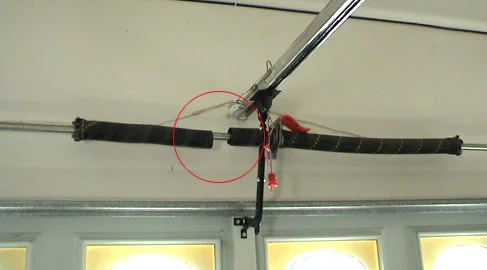
A commercial garage door spring rarely fails without giving some warning. For a facility manager who knows what to look and listen for, these signs can mean the difference between a planned maintenance call and an emergency shutdown that brings your operations to a halt.
Catching these clues early allows you to schedule a professional garage doors spring repair on your terms, not in the middle of a crisis. The most dramatic and unmistakable sign is the sound: a sudden, sharp BANG that echoes across the loading dock. This is the sound of a torsion spring snapping under immense pressure. It’s loud, startling, and your immediate signal to stop using that door and call for service.
Visual and Operational Red Flags
Beyond the loud noise, there are several other tell-tale symptoms your team can spot by paying attention to the door’s movement and components.
- The Door Feels Heavy or Moves Unevenly: If the door suddenly struggles to open, goes up crookedly, or feels like dead weight when operated manually, it’s a major red flag. This indicates the counterbalance system is compromised because a spring has likely failed.
- A Visible Gap in the Spring: A quick visual inspection of the spring shaft above the door often reveals the problem. A broken spring will have a clear 2 to 3-inch gap in the coil where the steel has fractured.
- Slack or Frayed Lift Cables: The steel cables that lift the door are directly connected to the spring’s tension. If you see them hanging loosely, looking frayed, or off their drums, it’s a sure sign of a critical loss of tension from a broken spring.
Another significant indicator is a door that slams shut. A healthy spring system controls the door’s descent. When a spring breaks, gravity takes over, causing the door to crash down with dangerous force, posing a risk to both personnel and equipment. For example, a door slamming shut on a loading dock could damage a forklift or injure an employee.
Why “Minor” Issues Are Never Minor
You might also notice the door moving with a jerky motion or making grinding noises. These are not small annoyances; they are early warnings that the system is under extreme strain because a spring is no longer doing its job.
A commercial door that sits crooked when closed or has a visible slant is not a cosmetic issue. It is a clear sign of an imbalance caused by a weak or broken spring, putting the entire system at risk of further damage.
Ignoring these symptoms is a gamble. A failing spring places enormous strain on the door opener and other components, leading to much larger and more expensive repairs later. Forcing an opener to lift the dead weight of a door with a broken spring can burn out its motor in a single operation.
Checklist for Identifying Failing Door Springs
| Symptom | What It Looks or Sounds Like | Immediate Action to Take |
|---|---|---|
| Sudden Loud Noise | A sharp “BANG” or “POP” from the door area, even when not in use. | Stop all use of the door. Cordon off the area. Call a professional. |
| Heavy or Difficult Operation | The door is extremely difficult to lift manually or the opener strains. | Do not force the opener. Discontinue use and schedule an inspection. |
| Uneven or Crooked Movement | One side of the door lifts faster than the other, or it closes at an angle. | Immediately stop operating the door to prevent it from coming off its tracks. |
| Visible Spring Gap | A clear 2-3 inch separation in the spring coil above the door. | Confirm the break visually. Do not touch. Call for professional repair. |
| Loose Lift Cables | The cables on either side of the door are slack, hanging, or off their drums. | This is a critical failure. Stop use immediately and call for service. |
| Door Slams Shut | The door falls rapidly and uncontrollably instead of closing smoothly. | This is a major safety hazard. Secure the area and call for emergency repair. |
Catching any of these signs early is key. The safest course of action is always to contact a professional for a full commercial door service inspection the moment you suspect a problem.
The Unacceptable Dangers of DIY Spring Repair
The coiled energy within a commercial torsion spring makes it one of the most dangerous components in any industrial facility. Attempting a DIY garage doors spring repair is not just a bad idea—it’s a massive gamble with the safety of your people and property. This is a task that must be left to trained, insured professionals.
These springs are wound under incredible tension. If that stored energy is released uncontrollably, it can launch metal parts with enough force to cause devastating injuries or fatalities. The risks are far too high for anyone but a certified technician.
Specialized Tools for a Dangerous Job
Professional technicians arrive equipped with specialized tools, such as proper steel winding bars, designed specifically to safely control the immense tension in these springs. Attempting this job with makeshift tools like screwdrivers, crowbars, or pieces of rebar is inviting disaster. These items can easily slip or shatter under the torque, leading to a violent, uncontrolled release of the spring’s stored energy.
A botched repair can do more than injure a person; it can cause the entire door to crash down. In a commercial setting, this could destroy valuable inventory, damage expensive loading dock equipment, or trap personnel, creating a catastrophic failure for both your operations and your safety record.
This task is not for your general in-house maintenance staff. It demands specific, hands-on knowledge of commercial door systems, which are far heavier and more complex than residential doors. The scale and forces involved require an expertise that only comes from dedicated training and real-world experience with companies like ours.
To get a clear picture of the risks, check out our spring replacement safety video that demonstrates exactly why this job is strictly for the pros.
Across the industry, the message is unanimous: DIY fixes on commercial door springs are a severe hazard. The only responsible choice for a garage doors spring repair is to bring in a certified, insured professional.
At Wilcox Door Service, our motto is “Respected Partners, Reliable Service,” and that begins with prioritizing your team’s safety. We have the right tools, rigorous training, and strict safety protocols to handle this dangerous job correctly, ensuring your facility remains secure and operational. Don’t gamble with safety—it’s a bet you can’t afford to lose.
The Professional Garage Door Spring Repair Process
When you call a professional for a garage doors spring repair, you are investing in a systematic process that prioritizes safety and restores your facility’s operations with minimal downtime. It is a comprehensive service designed to ensure your door’s safe, reliable function for the long term.
A qualified technician begins with a thorough inspection of the entire door system, including the cables, rollers, bearings, and tracks. This crucial step helps diagnose the root cause of the failure and identify any related wear and tear. This is the difference between a simple part swap and preventing a larger, more dangerous problem down the road.
Safe Removal and Correct Installation
Next, the technician will secure the door, typically by locking it in place with industrial-grade clamps on the tracks to prevent unexpected movement. Only then will they carefully release any remaining tension from the old springs before removing the broken components. This is the most hazardous part of the job, requiring specialized tools and a deep understanding of the forces involved to prevent a violent release of energy.
With the old parts removed, they will install new, high-cycle springs correctly rated for your commercial door’s specific weight, size, and usage frequency. Using the wrong spring is a common mistake that leads to premature failure and puts excessive strain on the door opener. The new springs are then carefully tensioned to perfectly balance the door—a key step for ensuring smooth, reliable operation for years to come.
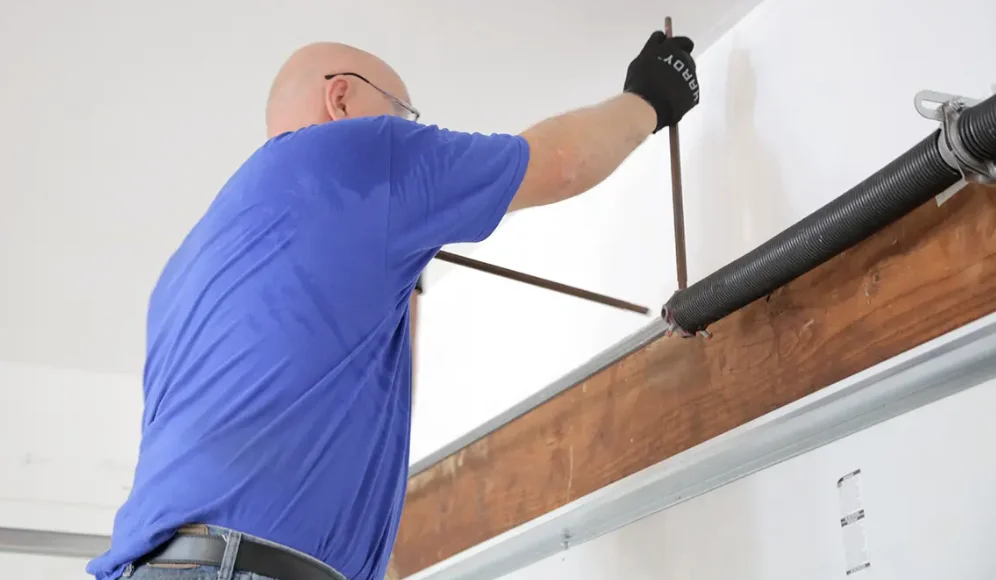
alt text: A technician demonstrating proper use of winding bars on springs to provide tension.
As the visual shows, a DIY attempt can quickly escalate from an uncontrolled energy release to serious injury, reinforcing why this is a job best left to professionals.
Final Checks and Service Completion
The door is then run through several full open-and-close cycles to confirm it operates smoothly and evenly. The job concludes with a full lubrication of all moving parts and a final safety check. When you hire a professional, you’re also hiring their accountability. Understanding the protections they carry is important; learning about professional liability insurance for contractors shows how reputable companies protect your assets.
This entire procedure is guided by strict safety protocols. Technicians are trained in procedures like Lock Out Tag Out safety, which is essential for securing the work area before repairs begin. This dedication to safety and precision defines a professional repair.
Common Questions About Spring Repair
When a commercial garage door spring snaps, it brings operations to a sudden halt and raises urgent questions about safety, cost, and downtime. As a facility manager, you need clear answers to get things moving again. Here are the questions we hear most often.
Why Did My Commercial Garage Door Spring Break?
The most common reason is simple metal fatigue. Every spring is engineered for a certain number of cycles—one cycle being one full opening and closing of the door.
A busy loading dock door can easily reach its cycle limit of 10,000 to 20,000 cycles in just a few years. At that point, the steel is worn out and eventually breaks. Other factors can accelerate this failure:
- Rust and Corrosion: Moisture is the enemy of steel. Rust creates a weak point where a snap is more likely to occur.
- Improper Balance: If the door was never perfectly balanced during installation, it puts uneven stress on the springs from day one.
- Extreme Temperatures: The expansion and contraction from temperature swings can slowly degrade the spring’s integrity.
This is why proactive maintenance is the best defense against a sudden break that disrupts your operations.
Should I Replace Both Springs if Only One Broke?
Yes, always. This is not an upsell; it’s a non-negotiable standard for safety and performance.
Both springs were installed at the same time and have performed the exact same amount of work. If one has failed from fatigue, the other is on the verge of failing as well.
Replacing only the broken spring creates a dangerously unbalanced system. This imbalance puts immense strain on the new spring, the opener motor, and the cables. The door will operate unevenly and unsafely, and you are almost guaranteed to have the second spring fail soon after, requiring another service call and more downtime. Replacing both at once is the only safe, reliable, and cost-effective solution.
How Long Does a Commercial Spring Repair Take?
For a standard double torsion spring replacement on a typical commercial overhead door, a trained technician can usually complete the job in 1.5 to 3 hours.
This timeframe includes a full safety inspection, securing the door, performing the replacement, precisely tensioning the new springs for perfect balance, and running operational tests. The job might take longer depending on the door’s size and weight, or if other worn parts like cables or bearings are discovered and need to be addressed. Our goal is always to restore your operations quickly, but never by compromising on safety.
A professional repair is about precision, not just speed. Correctly tensioning the springs to perfectly balance the door is a critical step that reduces wear on the opener and extends the life of the entire system.
Can I Prevent My Commercial Door Springs from Breaking?
You cannot make a spring last forever, but you can absolutely extend its lifespan and prevent the disruption of an unexpected failure. A scheduled maintenance plan allows you to replace springs on your schedule—during off-hours—instead of reacting to an emergency that halts productivity.
The most effective strategy is to enroll in a preventative maintenance program. A professional will handle critical tasks like regular lubrication to fight friction and rust, along with periodic balance checks to ensure the system is not under unnecessary strain. It’s a small investment in upkeep that pays for itself by avoiding costly downtime and ensuring your access points remain reliable.
At Wilcox Door Service Inc., we believe in being “Respected Partners, Reliable Service.” Our focus is on providing solutions that enhance your facility’s safety and operational efficiency. If you’re dealing with a spring issue or want to prevent one, our expert team is ready to help.
Contact us today to schedule a service inspection or get an expert quote.