


When is a broken commercial glass door more than just a simple fix? This guide will walk you through everything you need to know about a commercial glass door replace project. You’ll learn how to spot the signs that a full replacement is necessary, understand crucial building codes, choose the right materials for security and energy efficiency, and manage the project to minimize costs and downtime. We’ll provide the expert insights you need to make confident decisions for your facility.
Knowing When to Repair Versus Replace Your Glass Door
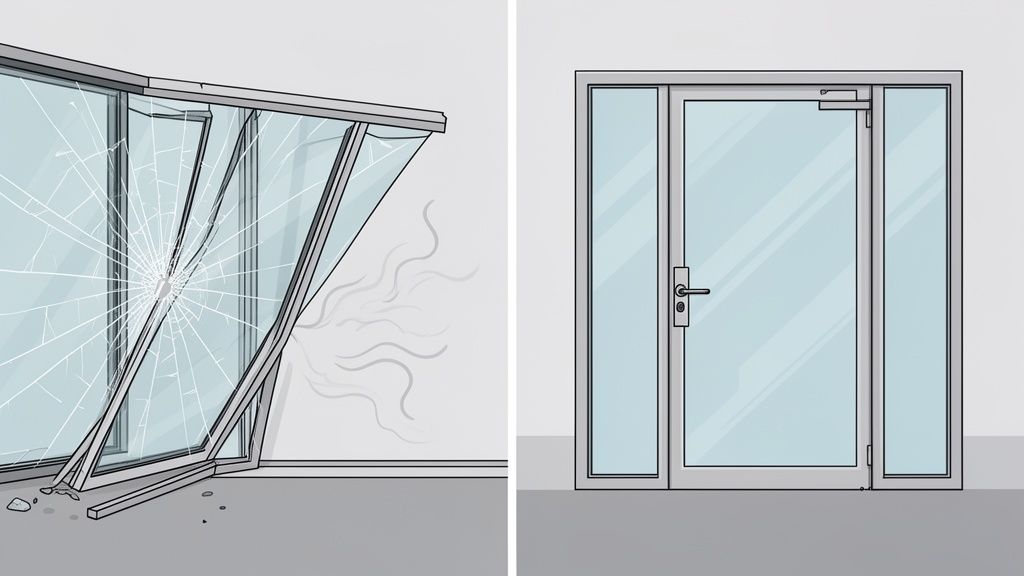
Alt text: A cracked and dislodged commercial glass wall indicating the need for a glass door replace project.
As a facility manager, you’re constantly balancing immediate costs with long-term value. While a quick repair on a faulty glass door might seem like a cost-effective fix, it can often be a temporary patch that masks deeper structural problems. This can lead to greater expenses and serious safety risks down the road. It’s essential to look beyond a simple shattered pane and spot the critical signs that a complete glass door replacement is the only reliable solution.
Signs a Full Replacement Is Necessary
Sometimes, the door tells you exactly what it needs. If you’re dealing with the same problems repeatedly, it’s a clear signal that the entire system’s integrity has been compromised. For example, consider a door that constantly sticks or drags against the floor. Even after multiple adjustments, the root cause might be a warped frame—a problem no amount of minor tweaking can truly fix.
Here are a few non-negotiable signs that it’s time for a replacement:
- Frame Damage: Look for corrosion on steel frames or visible warping in aluminum ones. Any structural damage compromises the door’s security and weather seal. We frequently see this in high-traffic commercial areas like loading docks, where years of small impacts accumulate into significant frame failure.
- Persistent Drafts: If you feel a constant draft even after installing new weatherstripping, the door no longer fits correctly in its frame. That gap is a direct leak for your heating and cooling budget.
- Seal Failure in Insulated Glass: Seeing condensation or a foggy film between the glass panes? This means the hermetic seal has failed. A hermetic seal is an airtight seal that traps insulating gas between glass panes. Once it breaks, the door loses all its insulating properties, and the only fix is to replace the entire insulated glass unit (IGU).
- Outdated Security Hardware: If your current door cannot support modern locks or access control systems, it presents a significant security vulnerability. Upgrading the entire door unit is often the only practical way to integrate the necessary security features.
The Growing Need for Modern Doors
The demand for high-performance doors is growing across Canada’s commercial and industrial sectors. A detailed report on the Canadian commercial door market highlights this trend, driven by new construction and the need to meet modern safety and energy codes. For facility managers, this underscores the importance of keeping door systems current.
Expert Insight: Think of a commercial glass door as a complete system. The glass, frame, and hardware are all engineered to work together. When one major component fails—like the frame—it places undue stress on the others, creating a domino effect of future breakdowns.
Investing in a full replacement is about ensuring long-term safety, efficiency, and reliability. As “Respected Partners, Reliable Service,” we are committed to helping you make the most informed decision for your facility.
Navigating Building Codes and Project Requirements
Before any tools are picked up, a successful glass door replacement project begins with meticulous planning. This phase is about more than just identifying a problem; it’s about understanding your facility’s operational needs and the specific regulations that apply. Skipping this step can lead to costly fines, project delays, or significant safety hazards.
The process starts with a thorough assessment of the existing door. Look for subtle signs of wear that point to larger issues. Check for seal failure in insulated glass units—that tell-tale fogging between panes. Feel for drafts that indicate a poor fit, and inspect the frame closely for structural fatigue like rust or cracks.
Defining Your Operational Needs
Once you understand the current door’s condition, you must clearly define what the new one needs to accomplish. For example, a standard pedestrian door located near a busy loading dock in a manufacturing plant becomes a critical safety feature. That door requires high-impact, shatter-resistant glass to protect personnel from accidental contact with forklifts or moving equipment.
Consider these key operational factors:
- Traffic Volume: How many people use the door daily? High-traffic entrances require heavy-duty hardware and closers designed to withstand constant use without premature failure.
- Security Requirements: Does the door need to integrate with an access control system? If so, the frame and glass assembly must be specified to accommodate electronic strikes or magnetic locks from the outset.
- Environmental Exposure: Is the door exposed to harsh Canadian weather? Exterior doors require enhanced weatherstripping and a thermally broken frame—a frame with a reinforced plastic barrier separating the inside and outside metal pieces to prevent heat and cold transfer.
Understanding Canadian Building Codes
Navigating the regulations governing commercial doors is mandatory. In Canada, several key codes and standards will directly influence your glass door replacement project.
The National Building Code of Canada (NBCC) sets the foundation. It outlines essential requirements for exits and egress paths, dictating minimum clear widths and heights of doorways to ensure safe evacuation in an emergency.
A common oversight is replacing a door without considering its fire rating. If a door is located in a fire-rated wall, which is common in corridors and stairwells, the new door, frame, and all hardware must carry the correct fire-protection rating, confirmed by a certified label.
Accessibility and Fire Safety Regulations
Beyond the NBCC, two other major standards come into play:
- AODA (Accessibility for Ontarians with Disabilities Act): This act, and similar provincial standards, sets requirements for door-opening force, clear width, and hardware types, such as lever handles instead of knobs. Any replacement door must meet or exceed these accessibility standards.
- Fire Codes: Local and national fire codes have strict regulations for fire-rated glass used in escape routes. This specialized glass is engineered to block flames and smoke for a specific duration (20, 45, or 90 minutes), providing crucial time for evacuation. Installation must be performed by a certified technician to ensure the entire assembly maintains its fire rating.
By thoroughly assessing your needs and understanding the regulatory landscape, you create a detailed project scope. This ensures your new glass door is not just a replacement but a true upgrade that makes your facility safer, more efficient, and fully compliant.
Choosing the Right Glass and Frame Materials
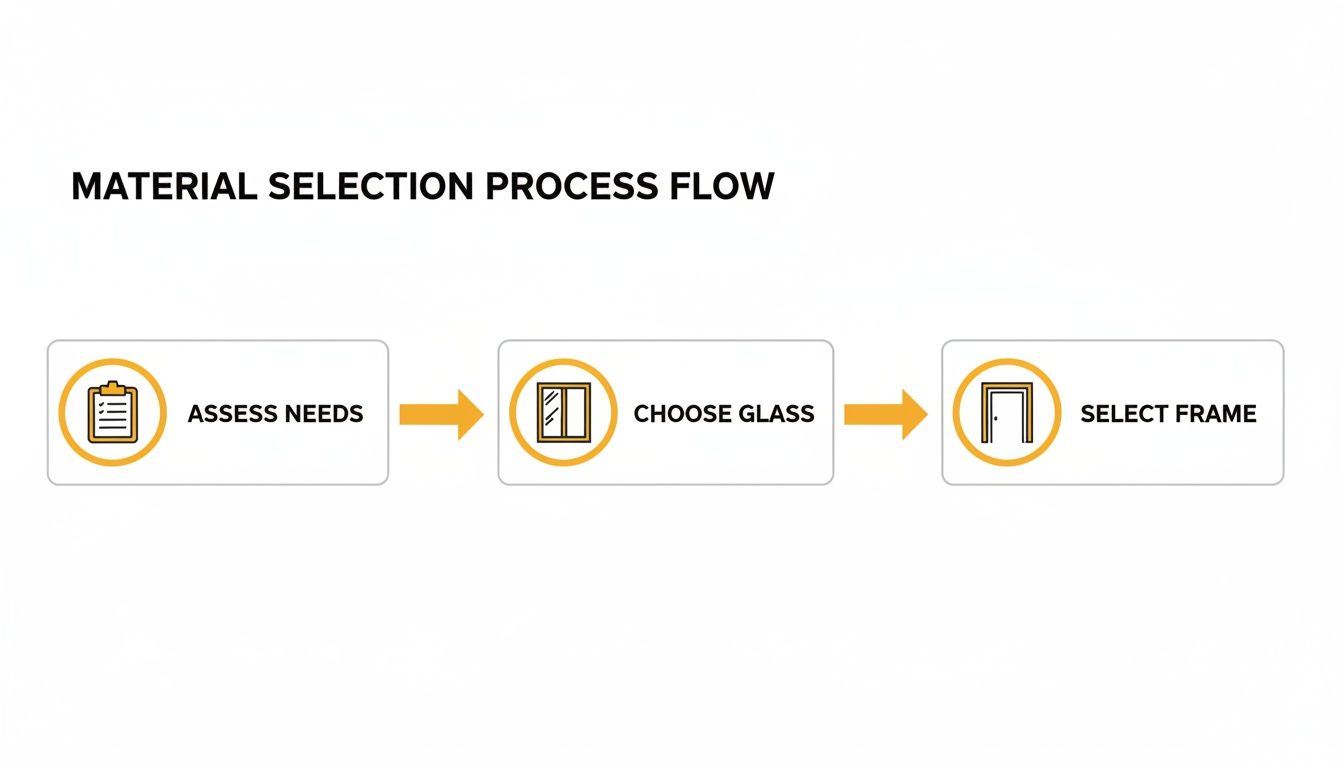
Alt text: Flowchart for a glass door replace project showing the process of assessing needs, choosing glass, and selecting the frame.
Selecting the right materials is where a commercial glass door replacement project truly succeeds. This choice goes beyond aesthetics; it’s about matching the physical properties of the glass and frame to the unique demands of your building. A mismatch can lead to premature wear, security vulnerabilities, or unnecessarily high energy bills.
Think of it like choosing tires for a commercial truck. You wouldn’t put standard highway tires on a vehicle operating in a gravel pit. Similarly, the glass and frame for a high-traffic industrial entrance must be fundamentally different from those used for an interior office door. Our role as your partner is to guide you toward a reliable solution that performs flawlessly for years.
Your Commercial Glass Options Explained
In commercial applications, you need specialized safety and performance glass. Standard annealed glass, which shatters into large, dangerous shards, is not a safe option. You will primarily encounter three types: tempered, laminated, and insulated.
- Tempered Glass: This is a true safety glass. It is heat-treated to be approximately four times stronger than regular glass. Its key safety feature is how it breaks—it shatters into small, pebble-like pieces, significantly reducing the risk of serious injury. This makes it the standard for most commercial pedestrian doors.
- Laminated Glass: Think of this as security glass. It consists of a tough plastic interlayer (typically PVB) sandwiched between two or more layers of glass. When it breaks, the glass fragments adhere to the inner layer instead of scattering. This is the same technology used in vehicle windshields and provides excellent resistance to forced entry, making it ideal for doors near loading docks or in high-security zones.
- Insulated Glass Units (IGUs): An IGU features two or three panes of glass separated by a sealed space filled with air or an inert gas like argon. This design creates a powerful thermal barrier that dramatically reduces heat transfer. For any exterior door, an IGU is the best choice for improving energy efficiency and lowering your facility’s HVAC costs. Many modern units also include Low-E (low-emissivity) coatings—an ultra-thin metallic layer that reflects heat—for an extra boost in thermal performance.
Finding the Best Framing Material
The frame is the backbone of your door system, providing the structural integrity, security, and durability to withstand daily use. The material you choose will directly impact the door’s lifespan and maintenance requirements.
Aluminum Frames
Aluminum is a popular choice for commercial doors due to its light weight, natural corrosion resistance, and design versatility. However, standard aluminum is a poor insulator. For exterior applications, you must specify a thermally broken aluminum frame. This design uses a plastic barrier to separate the interior and exterior metal, effectively stopping heat and cold from passing through.
Steel Frames
When maximum strength and security are required, steel is the clear winner. It offers exceptional durability and is often mandated for fire-rated door assemblies. Its main vulnerability is rust if the protective coating is scratched. Regular inspections are crucial, especially in damp environments like a food processing facility.
Fibreglass Frames
Fibreglass is the top performer for energy efficiency and low maintenance. These frames are highly resistant to dents, scratches, and corrosion, and their insulating properties are superior. While the initial investment may be higher, their long lifespan and energy savings often result in a lower total cost of ownership.
For additional insights into glass applications in commercial spaces, this complete guide to glass partition walls for offices offers valuable information on design and structural considerations that can also apply to glass doors.
Commercial Glass and Frame Material Comparison
This table summarizes the most common materials to help you make an informed decision.
| Material Type | Key Benefits | Ideal Application | Considerations |
|---|---|---|---|
| Tempered Glass | Safety (shatters into small pieces), strength. | High-traffic retail, public entrances, interior office doors. | Offers minimal security against forced entry. |
| Laminated Glass | High security (resists impacts), sound reduction. | Exterior doors, secure facilities, high-noise areas. | Higher cost and weight compared to tempered glass. |
| Insulated Glass | Excellent energy efficiency, reduces condensation. | All exterior doors, climate-controlled environments. | Seal failure can compromise performance over time. |
| Aluminum Frame | Lightweight, corrosion-resistant, versatile design. | Retail storefronts, office buildings. | Must be “thermally broken” for exterior energy efficiency. |
| Steel Frame | Maximum strength, durability, and fire resistance. | Industrial plants, warehouses, secure entry points. | Can rust if protective coating is damaged. |
| Fibreglass Frame | Superior insulation, low maintenance, resists damage. | Energy-conscious buildings, harsh weather environments. | Higher initial investment compared to aluminum. |
Pairing the right glass with the right frame is a critical decision. An expert consultation is the best way to ensure your investment meets your facility’s security, safety, and energy goals.
A Look Inside the Installation and Commissioning Process
Understanding what to expect during installation is key to a smooth, efficient glass door replacement project. This is not simply swapping one panel for another; it’s a precise, multi-stage process designed to guarantee safety, performance, and longevity. Knowing these steps helps you plan for the work, minimize operational disruptions, and feel confident in the final result.
Preparing the Site and Removing the Old Door
The process begins by securing the work area to ensure the safety of your staff and visitors. Our certified technicians set up barriers and clear signage, a critical step in high-traffic areas like a main corporate entrance or a busy retail storefront.
Once the area is safe, the old door system is carefully removed. This requires precision to avoid damaging the surrounding wall, flooring, and rough opening. Technicians methodically detach hardware, lift the door slab, and dismantle the frame. We also manage the responsible disposal of old materials as part of our comprehensive service.
Installing and Sealing the New Door System
With a clean and prepared opening, the new door system is installed. The new frame is set and meticulously checked to be plumb (perfectly vertical), level (perfectly horizontal), and square. Any deviation can cause the door to bind, drag, or fail to seal properly.
After the frame is securely fastened, the new glass door is hung. Technicians then install weatherstripping and apply a high-grade commercial sealant around the entire perimeter.
This meticulous sealing process is what creates an airtight and watertight barrier. It’s not just about stopping drafts; a proper seal prevents water infiltration that can lead to costly structural damage and mould growth.
Integrating Hardware and Access Control
A glass door is only as good as its hardware. This phase involves installing and calibrating all components that make the door functional and secure.
- Door Closers: These hydraulic devices are adjusted to control the door’s closing speed and latching force, ensuring it closes securely without slamming.
- Panic Bars and Egress Hardware: For emergency exits, this hardware is installed to meet strict fire and life safety codes, allowing for quick and easy egress.
- Locks and Access Control: From standard key locks to advanced electronic systems, we integrate them seamlessly with the new door to maintain your facility’s security protocols.
For automated doors, our technicians also install and calibrate the operator. If you are considering this upgrade, our guide on the benefits of automatic door operators provides valuable insights.
The Critical Commissioning Phase
The final step is commissioning. This is a formal testing and verification process where technicians run the new door through rigorous checks. They confirm every component functions exactly as intended, from the swing of the door to the lock’s engagement.
During commissioning, we perform a final safety inspection to ensure full compliance with all building and accessibility codes. The door’s movement is tested, hardware is double-checked, and any integrated electronic systems are verified. Only after the door passes every test and you are completely satisfied do we consider the job complete. This final sign-off is our guarantee of a job well done.
Managing Your Budget and Minimizing Downtime

Alt text: Illustration of a commercial building with glass doors next to a calendar and stacks of coins, representing budget management for a glass door replace project.
For any facility manager, a successful glass door replacement project comes down to two critical factors: controlling the final cost and maintaining business operations. A smart budget anticipates every expense, while strategic scheduling ensures the installation causes minimal disruption. Mastering both demonstrates the project’s true return on investment.
Building an Accurate Project Budget
A detailed, line-item budget is your best defense against unexpected costs. When requesting a quote, insist on a breakdown that includes every potential expense. This transparency allows for an accurate comparison between vendors and shows you exactly where your investment is going.
Ensure your budget accounts for:
- Materials: The door, frame, and specified glass type (e.g., laminated, insulated).
- Hardware: Closers, hinges, panic bars, locks, and any components for access control integration.
- Labour: The cost of certified technicians who can perform the installation safely and correctly the first time.
- Disposal Fees: The cost to properly dispose of the old door and frame.
- Contingency Fund: Set aside 5-10% of the total project cost for unforeseen issues, such as discovering hidden rust or structural damage once the old door is removed.
A planned replacement is always more cost-effective than an emergency call when an old door finally fails. Investing wisely upfront prevents much larger expenses later.
Strategies for Minimizing Operational Downtime
Downtime is more than an inconvenience; it costs money by hitting productivity, turning away customers, or frustrating tenants. The goal is to make the installation process virtually invisible to your building’s occupants.
A Real-World Example: A property manager needed to replace a dozen aging glass entrance doors across three commercial buildings. A simultaneous replacement would have been a logistical nightmare. Instead, we developed a phased approach, tackling one building per quarter and scheduling each installation over a weekend to completely avoid disrupting business hours.
This kind of strategic planning is the hallmark of a true partner.
Smart Scheduling and Coordination
Here are a few proven strategies we use to keep facilities running smoothly during a replacement project:
- Schedule During Off-Peak Hours: The simplest and most effective method. Scheduling work for nights, weekends, or planned shutdowns avoids any conflict with your regular operations.
- Coordinate with Other Trades: If the door replacement is part of a larger renovation, clear communication is vital. We coordinate directly with other contractors to ensure our work slots in seamlessly, preventing delays for everyone.
- Partner with a 24/7 Provider: Working with a service provider that operates around the clock provides incredible flexibility. An unexpected issue can be addressed immediately, keeping the project on track without waiting for the next business day.
Proactive planning and clear communication are fundamental to keeping your budget in line and your downtime to a minimum. We pride ourselves on delivering reliable service that protects both your bottom line and your operational rhythm.
Your Glass Door Replacement Questions Answered
When planning a commercial glass door replacement, questions are inevitable. As your trusted partner, we believe in providing clear, straightforward answers to help you move forward with confidence. Here are our responses to some of the most common questions we receive from facility managers.
How Long Does a Commercial Glass Door Replacement Take?
For a standard, single pedestrian door, our certified technicians can typically complete the entire replacement in 4 to 8 hours. This includes removing the old unit, preparing the opening, installing the new system, and conducting final checks. Our goal is always to minimize disruption to your operations.
Factors like custom door sizes, complex frame removal in older buildings, or integrating new access control systems can extend this timeline. Lead time for materials is also a consideration; specialized glass can sometimes take a few weeks to arrive. We always provide a detailed schedule upfront, often planning the work during off-peak hours to keep your business running smoothly.
What Are the Signs a Glass Door Needs a Full Replacement Instead of a Repair?
While a simple crack can sometimes be repaired, several clear signs indicate a full replacement is necessary. If the door is difficult to open or close, the frame itself may be warped beyond repair. Visible rust or corrosion on a steel frame is another major red flag, as it compromises the door’s structural integrity and security.
Key Takeaway: The most definitive sign of failure in an insulated glass door is condensation between the panes. This means the hermetic seal has broken, and its energy efficiency benefits are completely gone. At that point, replacement is the only effective solution.
Finally, if a door no longer meets current security or accessibility codes, a full replacement is the only way to ensure your facility remains safe and compliant. We recommend a professional assessment to determine the most cost-effective, long-term solution. For a closer look at compliant options, explore our range of commercial pedestrian doors.
How Can a New Glass Door Improve My Building’s Energy Efficiency?
Modern glass doors can significantly reduce your energy bills, primarily through advanced insulated glass units (IGUs). These units use double or even triple panes of glass separated by a sealed space filled with an insulating gas like argon. This creates a powerful thermal barrier that dramatically reduces heat transfer.
Furthermore, many of our doors feature Low-E (low-emissivity) coatings. This microscopic metallic layer reflects heat back to its source—keeping heat inside during winter and outside during summer—while still allowing visible light to pass through. When combined with a thermally broken frame and high-quality weatherstripping, a new door can substantially lower your HVAC costs.
What Kind of Maintenance Does a New Glass Door Require?
Regular maintenance protects your investment and ensures your new door operates safely and reliably for years. We recommend annual inspections of all moving parts—hinges, closers, and locking mechanisms—to keep them properly lubricated and adjusted.
Simple but important maintenance steps include:
- Regular Cleaning: Use a non-abrasive solution to clean the glass and prevent scratches.
- Weatherstripping Checks: Inspect seals for signs of cracking or wear. Replacing worn weatherstripping is an inexpensive way to maintain a tight seal.
- Hardware Functionality: Periodically test panic bars and closers to ensure they function smoothly and meet all safety codes.
The most effective way to manage this is through a Planned Maintenance Program. This ensures our certified technicians proactively service your doors, catching small issues before they become expensive problems or cause unexpected downtime.
For a professional assessment of your facility’s needs and a detailed quote for your next glass door replacement, trust the “Respected Partners, Reliable Service” at Wilcox Door Service.
Ready to get started? Contact Wilcox Door Service to discuss your project today.