


Meta Description: Discover why hollow metal doors are the standard for commercial buildings. This guide covers construction, fire ratings, hardware, and maintenance for facility managers.
Welcome to the definitive guide on hollow metal doors. If you manage a commercial or industrial facility, you know that every component, especially your doorways, must be durable, secure, and compliant. This article will walk you through everything you need to know about these critical assets. You’ll learn why they are the industry standard, how to choose the right construction and core materials, what fire ratings and hardware options mean for your facility’s safety, and the best practices for installation and maintenance to ensure a long service life. By the end, you’ll be equipped to make informed decisions that enhance your building’s safety, efficiency, and operational continuity.
Why Hollow Metal Doors Are a Facility Standard

Alt Text: A modern commercial building entrance with durable hollow metal doors, showcasing secure and reliable access for employees and visitors.
When you hear “hollow metal doors,” you might just picture a plain, grey slab of steel. The reality is far more engineered. These aren’t just doors; they’re complete systems designed to take a beating in demanding environments, from a busy warehouse loading dock to a sterile hospital corridor.
Unlike wood doors that can warp and split or fibreglass doors that might crack under heavy impact, hollow metal doors give you a powerful combination of pure strength and practical versatility.
Here at Wilcox Door Service, we see them as the foundation of a secure, efficient building. And despite the name, they aren’t truly “hollow.” They’re built with a core material sandwiched between heavy-gauge steel panels. This clever construction provides exceptional performance without the massive weight of a solid steel door, making them practical for everyday use.
The Core Benefits for Your Facility
Making the right choice in a hollow metal door has a direct, measurable impact on your building’s performance. The advantages are clear, contributing to both occupant safety and your bottom line.
-
Unmatched Durability: Engineered to handle constant high traffic, harsh weather, and the inevitable bumps from carts in a commercial setting, these doors simply last. A well-maintained door can serve your facility for over 30 years, providing a truly long-term solution. For example, a 16-gauge door on a busy warehouse personnel entrance will resist dents and damage far better than any alternative.
-
Superior Security: The sheer strength of steel construction is a powerful deterrent against forced entry. Paired with the right commercial-grade locking hardware, a hollow metal door assembly forms a secure barrier that protects your staff, inventory, and sensitive assets.
-
Fire Safety and Compliance: This is where hollow metal doors are absolutely essential. Their ability to be fire-rated for up to three hours is a crucial part of your building’s life safety system. Properly rated doors, like those we detail in our steel fire-rated doors guide, are mandatory for containing a fire and meeting strict building codes.
-
Design Versatility: Don’t let the “metal” part fool you into thinking they’re one-size-fits-all. These doors can be specified with different cores for insulation or sound-dampening, and they can accommodate a huge range of hardware. This means you can get the right door for the job, whether it’s an exterior dock door or an interior office entry.
For facility managers, a hollow metal door isn’t just a purchase; it’s an investment in operational continuity. Its resilience minimizes downtime from repairs and replacements, ensuring your access points remain functional when you need them most.
Getting this foundation right is the first step. As we dig into construction and hardware, you’ll see just how critical it is to specify the right door from the start. It’s all about building a safer, more efficient, and more reliable environment—a philosophy that reflects our commitment to being “Respected Partners, Reliable Service.”
Understanding Door Construction: Steel, Gauge, and Cores
Let’s pull back the curtain on the modern hollow metal door. On the surface, they look simple—just a slab of steel. But inside, they’re an engineered system built for serious strength and a long, reliable service life. Knowing what’s going on behind the scenes will help you spec the right door for your facility’s real-world needs.
A hollow metal door is built from two steel panels, often called “skins,” that are joined to form an outer shell. The space between those skins gets filled with a core material, and that core is what truly defines how the door will perform.
Steel Gauge and Its Real-World Impact
When you’re looking at specs, one of the first things you’ll see is steel gauge. It’s simply a way of measuring the steel’s thickness. The tricky part? A lower gauge number means thicker, stronger steel.
- 18-Gauge (Standard Duty): This is the everyday workhorse. You’ll find it on most interior commercial doors, like office entries or storage closets. It strikes a great balance between solid durability and cost for areas with moderate foot traffic.
- 16-Gauge (Heavy Duty): When you need more muscle, you step up to 16-gauge. It’s perfect for high-traffic zones or places prone to bumps and dings—think school hallways, hospital entrances, or the personnel doors in a busy warehouse where carts are constantly going through.
- 14-Gauge (Extra Heavy Duty): This is for the toughest jobs out there. 14-gauge steel offers maximum dent resistance and security. It’s what you’d spec for the exterior of a manufacturing plant or a secure government facility where performance simply can’t be compromised.
Opting for a thicker gauge directly translates to better dent resistance and security, which means a longer service life in any demanding spot.
Choosing the Right Core Material
That “hollow” space is where you can really customize a door for its specific job. The core fill is what dictates the door’s insulating power, fire resistance, and even how much sound it blocks.
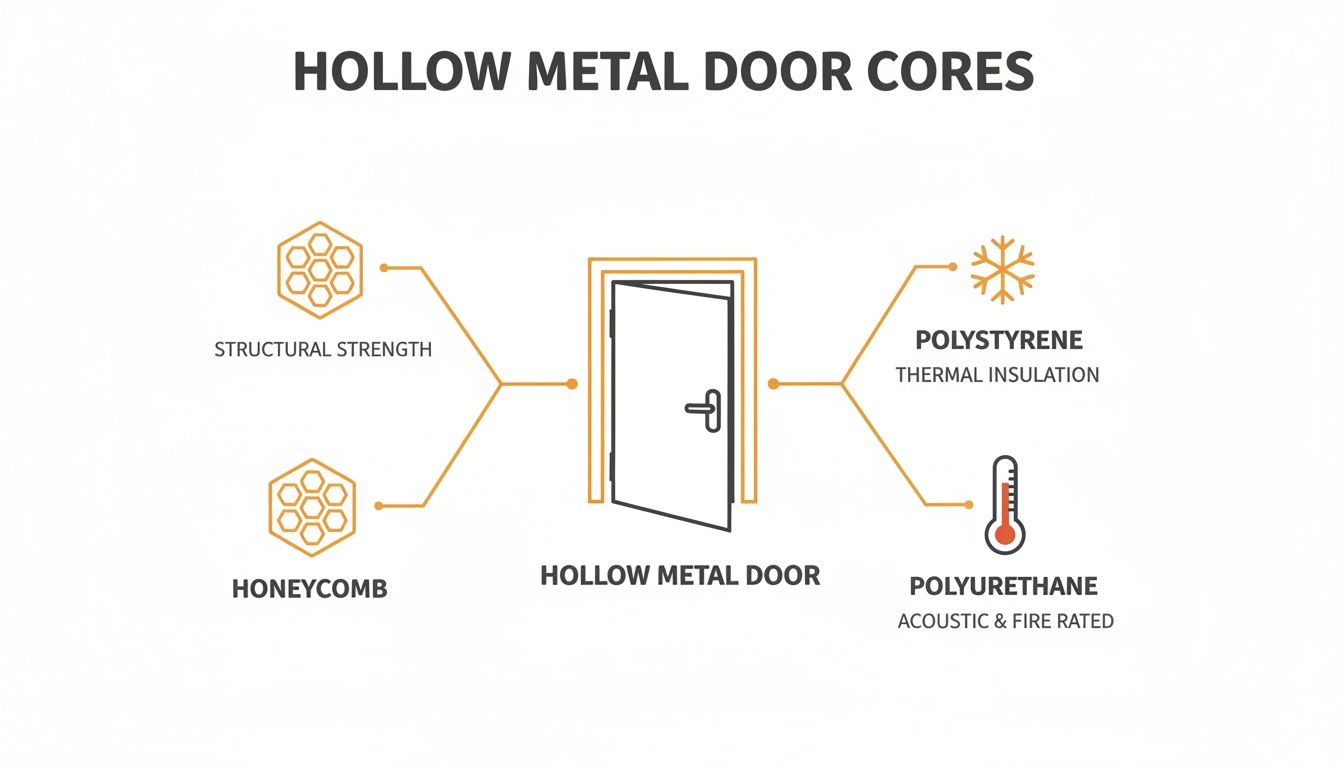
Alt Text: Diagram showing cross-sections of hollow metal door cores, including honeycomb, polystyrene, and polyurethane, for different levels of strength and insulation.
-
Honeycomb Core: This is a lightweight and budget-friendly option made from kraft paper formed into a honeycomb grid. It gives the door great structural rigidity, making it a solid choice for standard interior doors where insulation isn’t the top priority.
-
Polystyrene Core: A rigid foam insulation that gives you a nice bump in thermal performance. It’s a fantastic middle-ground option for exterior doors or even interior ones where you need to manage temperature between two spaces, like keeping a server room cool.
-
Polyurethane Core: If maximum insulation is the goal, polyurethane is the clear winner. This foam is injected right into the door cavity, where it expands to completely fill the space. It creates an incredibly efficient thermal barrier. A polyurethane core is your best friend for an exterior warehouse door in a cold Canadian climate, and you’ll see a real difference in your energy costs.
Over the past decade, we’ve seen hollow metal doors completely change the game for energy efficiency in commercial retrofits across Canada. Their use in places like airports and pharmaceutical plants has shot up by 35% since the 1970s. With modern upgrades like air curtains and better seals, we’re seeing another 22% boost in efficiency. For our clients at Wilcox, that means getting a solution that hits sustainability goals without causing major operational headaches. You can dive deeper into the history and evolution of these doors on Wholesale Iron Doors.
Steel Types for Specific Environments
The last piece of the construction puzzle is the type of steel used for the door’s outer skin. This choice is all about matching the door to its environment.
Think of steel type as the door’s specialized armour, selected to fight specific environmental battles like moisture, chemicals, or the need for extreme cleanliness.
For instance, a galvannealed steel door is an excellent choice for a loading dock entrance. This zinc-coated, heat-treated steel is brilliant at resisting corrosion and also creates a perfect surface for painting. But if you’re outfitting a food processing plant or a hospital, stainless steel is the undisputed champion. It offers top-tier hygiene and stands up to the harsh cleaning chemicals used in those environments. Making the right choice here directly impacts how long your door will last and how well it will perform.
Decoding Fire Ratings and Security Features
When it comes to protecting your people and property, there’s no room for compromise. This is where hollow metal doors prove their worth, acting as your first line of defence against both fire and security breaches. Understanding their ratings isn’t just about ticking a compliance box; it’s about making smart decisions that can save lives and prevent catastrophic losses.
Understanding Fire Ratings
A door’s fire rating tells you exactly how long it can withstand the intense heat and direct flames of a fire before its integrity is compromised. These ratings are earned through standardized testing, like the ULC-S104 protocol in Canada, where doors are literally put in a furnace.
Common Fire Ratings and Typical Applications
| Fire Rating (Minutes) | Typical Location in a Commercial Building | Primary Purpose |
|---|---|---|
| 20-45 Minutes | Corridor doors, office entryways | Contains smoke and initial flames in occupied areas. |
| 60-90 Minutes | Stairwell doors, hazardous material storage rooms | Protects critical escape routes and contains more significant fire threats. |
| 180 Minutes (3 Hours) | Firewalls separating building sections or connecting two buildings | Creates a major fire break to compartmentalize and isolate a severe fire. |
For facility managers, knowing these requirements isn’t just about compliance—it’s a fundamental responsibility. A properly specified door buys time, and time saves lives.
A fire-rated hollow metal door assembly—including the door, frame, and hardware—is a complete system. If even one component fails or is improperly substituted, the entire assembly’s fire rating is void.
Enhancing Facility Security
Beyond fire protection, hollow metal doors are the bedrock of physical security. Their steel construction is naturally resistant to forced entry. A real-world example is securing a high-value inventory room in your warehouse—the sheer strength of a 16-gauge steel door is your first and best defence against a break-in.
These doors have been a staple of safety in Canadian commercial buildings for over a century. In Canada, the National Building Code (NBC) requires fire-rated doors in high-occupancy spots like warehouses, where nothing matches the performance of hollow metal. For you, this means a door tested to UL 10C standards—a spec common in the Wilcox Door Service portfolio—can endure temperatures over 1,000°C for 90 minutes, stopping fire in its tracks and keeping you compliant. You can discover more on the history and performance of these essential doors.
Key security features include:
- Reinforced Hardware Points: Doors can be internally reinforced to handle heavy-duty locks, continuous hinges, and panic bars, eliminating weak points.
- Forced-Entry Resistance: A properly specified hollow metal door assembly can resist powerful physical attacks, often satisfying the stringent requirements of insurance providers.
Of course, a robust door works best as part of a larger strategy. Your fire safety plan is much stronger when you integrate technologies like complementary fire detection systems. To dive deeper into the codes and requirements, be sure to check out our complete guide on understanding steel fire-rated doors.
Getting the Right Door Hardware and Frames
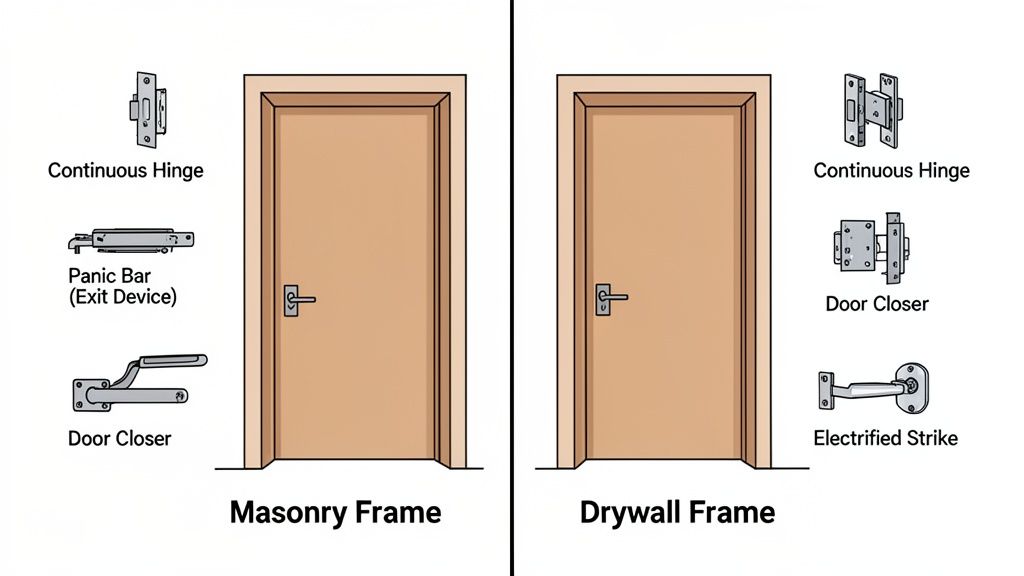
Alt Text: A collage of essential hollow metal door hardware including a continuous hinge, panic bar, door closer, and electrified strike for commercial security.
A great hollow metal door is only as good as the frame and hardware holding it up. Picking the right components isn’t just about making the door swing; it’s about making the entire system work together to give you the security, longevity, and compliance you’re paying for.
Think of it like this: the door is the star player, but the frame and hardware are the essential support team. When they’re all in sync, you get a reliable access point for your facility that will last for years.
Masonry vs. Drywall Frames
The frame is the backbone of the entire door assembly, and the right one depends on the wall you’re putting it in.
-
Masonry Frames: These are built for pure durability and are installed right into concrete block or brick walls as the wall goes up. They’re usually welded solid for maximum strength, making them the default choice for exterior doors or high-security spots in warehouses and industrial plants.
-
Drywall Frames: You might hear these called “knock-down” frames. They’re designed to be installed after the drywall is finished. They wrap around the finished opening and are assembled on-site, making them a flexible option for interior offices, retail stores, and commercial retrofits.
For example, a new distribution centre would use beefy masonry frames for all its exterior personnel doors. But for the offices inside, drywall frames would be the smarter, faster choice.
Essential Hardware for Peak Performance
Hardware is where you define what your door actually does. Every piece has a job, and choosing the right style for your specific use is critical.
The right hardware doesn’t just make a door work; it makes it work smarter. It can boost security, guarantee code compliance, and cut down on wear and tear, which directly impacts your long-term maintenance budget.
Let’s break down the key players:
-
Hinges: For a quiet office door, standard butt hinges are fine. But for a heavy warehouse door that sees constant traffic, a continuous hinge is a much smarter investment. It spreads the door’s weight along the entire length of the frame, stopping sag and drastically reducing stress.
-
Locks: Options range from basic cylindrical locks on supply closets to heavy-duty mortise locks for high-security zones. For an extra layer of control, you can integrate electrified hardware. If you’re curious, we have a detailed guide on using a magnetic lock for a door.
-
Door Closers: These are the hydraulic arms that ensure your door closes securely every time. They’re non-negotiable for fire-rated doors and for controlling building access. A well-adjusted closer also prevents slamming, which saves your door and frame from damage.
-
Exit Devices (Panic Bars): Building codes demand these for safe egress in public areas. They let people unlatch a door and get out fast in an emergency. An electrified exit device can be tied into your access control system, giving you secure daily access while guaranteeing a quick exit when it matters most.
The Canadian market for hollow metal doors in industrial settings is booming. For facility managers in manufacturing and distribution, these doors offer forced-entry resistance of up to 1,000 lbs, cutting break-ins by 55% in high-value storage areas. This trend is driven by the wave of warehouse expansions across Canada, where these durable doors are the number one pick for security.
As “Respected Partners, Reliable Service,” we know this hardware inside and out. We can help you navigate these choices to find the perfect setup for your building.
Installation and Maintenance Best Practices

Alt Text: An infographic showing key hollow metal door maintenance tasks, such as lubricating hinges, checking alignment, and performing the dollar bill test for weather seals.
There are two secrets to getting the full, 30+ year lifespan out of a hollow metal door: a flawless installation and consistent, proactive maintenance. Getting these two things right is how you maximize your investment.
Think of it like this: the installation is the foundation, and maintenance is the ongoing care that keeps that foundation strong. Get both right, and your doors will perform exactly as they should for decades.
New Construction vs Retrofit Installation
Installing a hollow metal door assembly isn’t a one-size-fits-all job. The approach shifts depending on whether you’re working on a brand-new build or upgrading an older facility.
New Construction Installation:
This is the most straightforward path. The frames, usually masonry-style, are set directly into the walls as they go up. This method creates an incredibly sturdy and integrated opening, which is perfect for high-traffic or high-security areas like the exterior of a manufacturing plant.
Retrofit Installation:
Upgrading an old door is a whole different ball game. You’re often dealing with existing frames that may have settled and are no longer perfectly square. Common retrofit hurdles include:
- Matching Existing Frames: The new door has to be prepped to match the exact hinge and lock locations of the old frame.
- Meeting New Building Codes: An older opening might need to be brought up to current fire-rating or accessibility (AODA) standards.
- Handling Unforeseen Issues: Pulling out an old door can reveal hidden rust or structural problems in the frame.
In a retrofit, a professional assessment is invaluable. A Wilcox technician can spot potential issues upfront, heading off costly surprises and ensuring the new door assembly meets every safety and compliance requirement.
Your Preventive Maintenance Checklist
A little proactive care goes a long way in preventing expensive repairs. For a deeper dive, check out our insights on a planned maintenance program for commercial doors.
Try to work these simple checks into your regular facility walk-throughs:
- Visual Inspection: Look for the first signs of rust, especially along the bottom of the door. Check for dents that could weaken the door’s integrity.
- Check Alignment: Open and close the door. Does it swing smoothly without dragging on the floor or rubbing the frame?
- Lubricate Moving Parts: Hinges and latch bolts need to be lubricated at least twice a year with a high-quality commercial-grade lubricant.
- Test Seals and Weatherstripping: Gaps in your seals lead to serious energy loss. An easy way to find them is the “dollar bill test.”
The Dollar Bill Test:
Close the door on a dollar bill. If you can pull it out easily with no drag, your seal is worn. That gap lets conditioned air out, pushing your energy costs up. Test this along the top, bottom, and latch side of every exterior door.
When to Call a Professional Technician
While you can handle basic maintenance, some issues demand a professional’s touch to guarantee safety and maintain compliance.
Call a certified technician if you notice:
- The door fails to latch properly: This is a huge security and fire safety risk.
- The door closer is leaking fluid or not working correctly: A bad closer can make a door slam or prevent it from closing completely.
- Significant rust or corrosion: A professional can determine if the door’s structural integrity is compromised.
- The fire-rated label is missing or painted over: A fire door is no longer compliant without its label clearly visible.
As your “Respected Partners, Reliable Service,” our union-certified technicians have the expertise to diagnose and fix any issue with your hollow metal doors.
The Long-Term ROI of Hollow Metal Doors
Smart budgeting means looking beyond the initial sticker price. To truly understand the value of your hollow metal doors, you need to look at their lifecycle cost and return on investment (ROI). This is about seeing the door as a long-term strategic asset.
When you invest in a hollow metal door, you’re buying into a lifespan that often exceeds 30 years. In a busy commercial setting, a wood door might need replacement in under a decade. An aluminium door, while weather-resistant, simply can’t match steel’s brute strength against impacts in a warehouse or manufacturing plant.
Beyond the Purchase Price
The real ROI shows up in long-term savings. A complete financial picture includes:
- Initial Purchase and Installation: The upfront investment.
- Predictable Maintenance: Minimal costs for lubrication and adjustments.
- Long-Term Repair Costs: Significantly lower than alternatives thanks to superior durability.
To accurately calculate the real ROI of your hollow metal doors and manage project costs effectively, using tools like Exayard construction estimating software can be invaluable. This helps you forecast expenses over the entire life of the asset.
A hollow metal door isn’t an expense; it’s a capital investment. Its durability directly minimises operational downtime, protecting your revenue stream by keeping access points functional and secure.
Quantifying the Tangible Benefits
The returns become even clearer when you start putting numbers to the benefits:
- Lower Energy Bills: An insulated core, like polyurethane, provides excellent thermal resistance, slashing HVAC costs.
- Reduced Insurance Premiums: Their inherent strength and security features often lead to lower insurance premiums.
- Minimised Operational Downtime: In a facility where every minute counts, a door that doesn’t work can halt operations. The unmatched durability of hollow metal means fewer surprise failures.
By looking at the complete picture—durability, energy savings, and security—you can confidently frame your purchase as a smart, long-term investment.
Frequently Asked Questions About Hollow Metal Doors
Working with facility managers across Canada, we hear a lot of the same questions about hollow metal doors. This section gives you clear, straight-up answers to help you make smart decisions.
Can Hollow Metal Doors Be Used For Exterior Applications?
Absolutely. In fact, for most commercial exterior doorways, they’re the only choice that makes sense due to their unmatched durability and security.
The key is to specify a galvannealed steel door. This isn’t standard steel; it’s coated with zinc and then heat-treated, giving it far superior resistance to rust. When you pair that with a polyurethane insulated core, you also get excellent thermal performance—a huge plus for managing energy costs.
How Do I Know What Steel Gauge I Need?
The right steel gauge comes down to where the door is going and how much abuse it will take. Just remember, a lower gauge number means thicker, stronger steel.
Here’s a simple breakdown:
- 18-Gauge (Standard Duty): Perfect for low-traffic interior spots like office doors.
- 16-Gauge (Heavy Duty): The ideal choice for high-traffic areas like school corridors, hospital entrances, or busy warehouse personnel doors.
- 14-Gauge (Extra Heavy Duty): Save this for your toughest environments where security is non-negotiable, like manufacturing plant exteriors.
Choosing a heavier gauge for a high-traffic area is a smart investment. It dramatically extends the door’s service life and cuts down on repair costs, ensuring your facility stays secure and operational.
Are Hollow Metal Doors Rust-Proof?
While no steel door is truly “rust-proof,” a properly specified hollow metal door is highly rust-resistant.
As mentioned, galvannealed steel is the gold standard for preventing corrosion on exterior doors and in moisture-heavy areas like loading docks. The factory-applied primer adds another critical layer of defence. If the door gets scratched, any exposed metal should be touched up right away with primer and paint to keep the protective barrier intact.
Still have questions? The experts at Wilcox Door Service are always ready to share the insights you need. As your “Respected Partners, Reliable Service,” we’re here to help you select, install, and maintain the perfect door solutions for your facility. Contact us today for a professional consultation or to get a quote.