


In this guide, you will learn everything a facility manager needs to know about stile and rail doors. We'll cover their durable construction, material options from classic wood to modern steel, and how to decode critical safety ratings for fire, sound, and energy efficiency. By the end, you'll be equipped to select, install, and maintain the perfect doors for your commercial facility.
Why Stile and Rail Doors Are a Smart Investment
For any facility manager or operations leader, choosing the right doors goes far beyond aesthetics. It’s a critical decision that directly impacts long-term maintenance budgets, occupant safety, and overall operational flow. While a simple slab door might work for a seldom-used closet, the entrances to busy corridors, offices, and public spaces demand something far more resilient. This is exactly where stile and rail doors prove their worth.
Think of a stile and rail door like a high-quality piece of custom furniture. It’s built from multiple components—vertical stiles and horizontal rails—that are expertly joined together to create an incredibly strong and stable frame. To put it simply, this frame-and-panel construction is inherently more durable than a single slab of wood or composite, which can easily warp or split over time, especially in a facility with fluctuating temperatures and humidity.
The core benefit is all in the construction. By assembling individual pieces, stile and rail doors are designed to manage the stresses of daily use, dramatically reducing the likelihood of warping and extending the door’s functional lifespan.
This built-in durability translates directly into fewer maintenance calls and lower replacement costs down the road. For a bustling facility like a hospital, school, or manufacturing plant where a malfunctioning door can disrupt operations, that kind of reliability is essential. Their robust build also contributes to better security and helps in meeting strict building codes.
When you invest in stile and rail doors, you are prioritizing:
- Structural Integrity: The frame-and-panel design stands up to heavy, repeated use and resists the warping that plagues lesser doors.
- Design Versatility: From elegant wood for a corporate head office to robust steel for a warehouse, the materials and panel configurations can be adapted to any environment. You can even incorporate glass lites for better visibility, a feature you can explore further in our article on glass commercial doors.
- Reduced Long-Term Costs: Their impressive longevity means you spend less time and money on repairs and replacements over the life of your facility.
As your Respected Partners providing Reliable Service, we at Wilcox Door know that these doors aren't just an architectural detail, but a strategic asset.
Understanding the Anatomy of a Stile and Rail Door
Ever wondered what gives a stile and rail door its solid, dependable feel? It all comes down to its construction. Unlike a basic slab door cut from a single piece of material, a stile and rail door is built more like traditional furniture, with an interlocking frame that gives it incredible strength. This engineered approach is what makes them a go-to choice for busy commercial spaces. To really get why they hold up so well, it helps to look at how they’re put together, piece by piece.
The Core Components and Their Functions
At first glance, you might just see a door with some nice panels. But in reality, it’s a system where every part has a job, working together to create a door that resists warping and stands up to constant use.
Here's a quick reference guide to the anatomy of a stile and rail door. Each technical term is explained simply.
| Component | Description | Primary Function |
|---|---|---|
| Stiles | The long, vertical boards on the left and right edges. | Forms the main vertical structure and holds hardware like hinges and locks. Think of them as the door's spine. |
| Rails | The horizontal boards that connect the stiles. | Provide horizontal stability; includes the top rail, bottom rail, and often a lock rail where the handle is mounted. |
| Panels | The sections that fill the openings in the frame. | Can be customized for design (raised, flat) or fitted with glass for visibility. They "float" within the frame, allowing the door to expand and contract without warping. |
| Mullions | Smaller vertical pieces that separate multiple panels. | Add extra support and create more intricate designs, dividing the space between the main rails. |
This table shows how each component is a crucial part of the whole, contributing to the door's overall integrity.
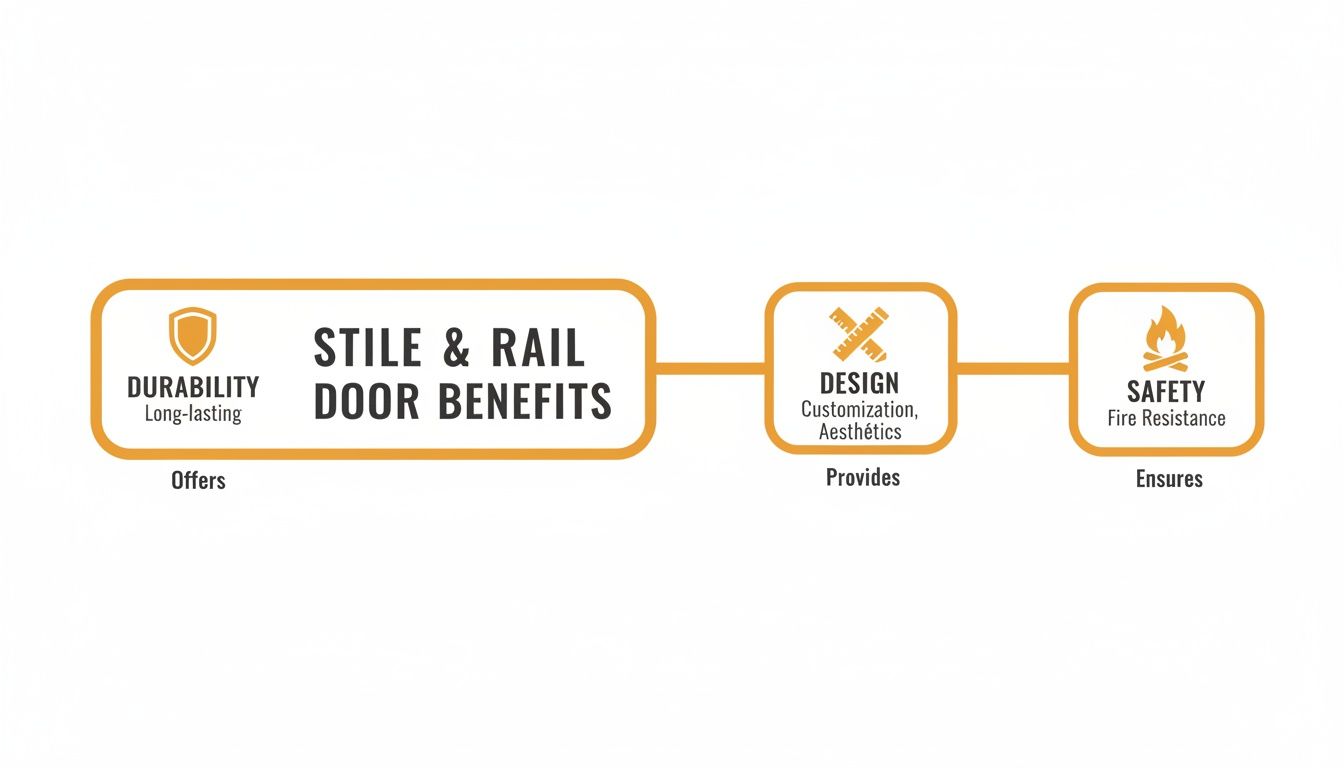
This combination of parts results in a door that not only lasts but also offers a huge range of design possibilities and can meet critical safety standards.
How the Pieces Create a Stronger Whole
The real secret to a stile and rail door's strength isn't just the parts, but how they’re joined. The joinery is what turns individual pieces of wood or composite into a single, unified door that can handle being opened and closed thousands of times without giving up.
The strength of a stile and rail door comes from its joinery. Methods like mortise-and-tenon and dowel construction create powerful, rigid joints that distribute stress across the entire door frame, preventing it from twisting or warping under pressure.
In high-quality commercial doors, you'll typically find one of two trusted methods:
- Mortise-and-Tenon Joints: A classic woodworking technique for a reason. A slot (the mortise) is cut into one piece, and a precisely matched tongue (the tenon) is cut on another. When fitted and glued, they lock together to form an incredibly strong joint that resists being pulled apart.
- Dowel Pin Construction: This modern method is just as effective. Holes are drilled with extreme precision into the stiles and rails, which are then aligned and joined with strong wooden dowels and adhesive. This creates a secure, stable frame that holds its shape for years.
This superior construction is a major reason why facilities that upgrade to stile and rail doors often see a dramatic drop in door-related problems. For example, a busy distribution center we worked with was constantly repairing its flimsy breakroom doors. After upgrading to solid core stile and rail doors, their maintenance calls for that area dropped to nearly zero. It's this built-in integrity that also allows for features like glass inserts without weakening the door. You can check out our guide on commercial door glass to see how vision lites can be incorporated safely.
Choosing the Right Materials for Your Application
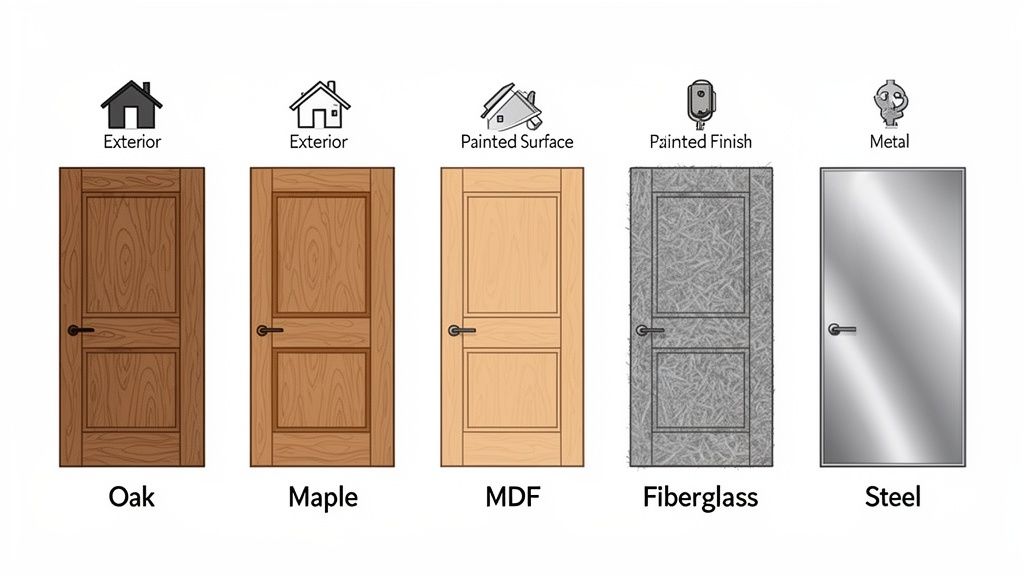
The material you choose for your stile and rail doors does more than just define their look—it dictates their entire performance. This decision is where aesthetics, durability, and budget all come together. The great thing about stile-and-rail construction is its versatility, allowing you to pick a material that perfectly suits your facility's needs, whether it's the classic warmth of wood for an office or the tough resilience of steel for a utility area.
Classic Wood for Timeless Appeal
When you want to create a professional, inviting atmosphere, nothing quite beats the look and feel of solid wood. It communicates quality and tradition, making it a go-to choice for executive offices, law firms, and upscale hotels where first impressions count.
- Oak: Famous for its strong grain and incredible hardness, oak is a workhorse. It stands up exceptionally well to dents and scratches, making it perfect for busy entryways.
- Maple: If you're after a cleaner, more contemporary look, maple is a fantastic option. Its fine, subtle grain provides a smooth surface that takes either stain or paint beautifully.
There’s a reason wood doors have such a strong market presence. Projections show that wood-based components are expected to command a significant revenue share in the stile and rail door market, a testament to their lasting appeal in both design and performance.
Engineered Materials for Stability and Versatility
While solid wood is beautiful, it can be susceptible to warping or shrinking in places with fluctuating humidity. This is where engineered materials offer some serious practical advantages, delivering stability and cost-effectiveness without sacrificing quality.
Medium Density Fibreboard (MDF) is the perfect example. It's an engineered wood product created by breaking down wood fibres and binding them with wax and resin.
MDF is the go-to choice for painted stile and rail doors. Its incredibly smooth and stable surface won't show wood grain, ensuring a flawless, uniform finish that lasts.
This makes MDF an excellent, budget-friendly option for interior doors in commercial offices, clinics, and schools where you need a consistent, clean appearance across many openings.
Durable Composites for Demanding Environments
For exterior doors or high-traffic interior spots that face heavy use and potential impact, you need materials built for the job. Advanced composites like fibreglass and steel deliver superior performance and are engineered to withstand harsh conditions.
- Fibreglass: A top contender for exterior doors, fibreglass is highly resistant to moisture, rust, and denting. It can be moulded with realistic wood grain textures, giving you the look of wood without the high maintenance.
- Steel: When security and durability are non-negotiable, steel is the clear winner. Ideal for utility closets, service corridors, or loading dock man-doors, commercial metal doors provide unmatched resilience and fire resistance.
For a closer look at what makes steel such a powerhouse, check out our guide on why metal doors are a top choice for commercial buildings.
Decoding Key Performance and Safety Ratings
For any facility manager, a door's performance ratings aren't just details—they're non-negotiable. Those labels aren't technical jargon; they are your guarantee of safety, compliance, and operational efficiency. Knowing what these ratings mean for your stile and rail doors is vital for protecting your people, property, and budget.
Understanding Fire Door Ratings
A fire-rated door is a critical part of your building’s passive fire protection system. Its job is to contain a fire to one area, slowing the spread of smoke and flames so occupants can evacuate safely. The rating, measured in minutes, tells you exactly how long the door assembly can withstand a fire under strict test conditions.
Common fire ratings you'll see on commercial doors include:
- 20-Minute Rating: Often found on openings between corridors and individual rooms, like offices or hotel suites. They provide a fundamental barrier against smoke and draft.
- 60-Minute Rating (1-Hour): Typically specified for openings in fire-rated walls that separate different parts of a building, such as between an office area and a storage room.
- 90-Minute Rating (1.5-Hour): Used for openings in walls that enclose stairwells, elevator shafts, or separate different building occupancies.
Selecting the correct fire rating isn't a suggestion—it's a legal requirement dictated by local building and fire codes. Installing a 20-minute door where a 90-minute rating is required creates a serious safety hazard and compliance failure.
Proper installation by certified technicians is just as critical as the door itself. The entire assembly—door, frame, and hardware—must meet code to function as intended. You can learn more about the market and the importance of compliance by reading the latest research on stile and rail door trends.
Controlling Sound with STC Ratings
In a busy commercial facility, noise is more than just a nuisance; it's a direct drain on productivity. This is where acoustical performance comes in, measured by a Sound Transmission Class (STC) rating. The STC rating indicates how well a door assembly blocks airborne sound. Simply put, a higher STC number means better sound insulation.
Here’s a practical breakdown:
| STC Rating | Level of Sound Insulation | Real-World Example |
|---|---|---|
| STC 25-30 | Loud speech is audible and understandable. | A standard hollow-core residential door. |
| STC 35-40 | Loud speech is audible but not easily intelligible. | A solid-core wood door, good for general office use. |
| STC 45-50+ | Loud speech is barely audible. | A specialized acoustical door, ideal for boardrooms, HR offices, or healthcare consultation rooms where confidentiality is key. |
The robust construction of stile and rail doors, especially those with solid cores, naturally provides better sound control than lightweight alternatives. In a recent project for a legal firm, we specified STC 45-rated doors for their meeting rooms, which eliminated conversation leakage into the hallways and ensured client confidentiality.
Managing Energy with Thermal Performance
For any door on your building's exterior, energy efficiency is a major consideration. An uninsulated door can be a significant source of heat loss in the winter and heat gain in the summer, driving up utility bills. The thermal performance of a door is measured by its R-value. The R-value indicates a material's resistance to heat flow—the higher the R-value, the better it insulates.
While stile and rail doors made of wood offer some natural insulation, those with insulated cores and proper weatherstripping provide far superior thermal control. This is especially important for doors exposed to harsh Canadian weather. By selecting a stile and rail door with a high R-value, you are making a smart investment in long-term energy savings.
A Practical Guide to Selecting and Specifying Your Doors
Picking the right door for a commercial facility goes way beyond just aesthetics. It’s a critical decision that directly impacts security, energy costs, and your ability to meet building codes. This guide will give you a practical framework for making smart choices, ensuring your stile and rail doors deliver the performance your building truly needs.
Start with a Facility Needs Assessment
Before you even glance at a door catalogue, you need a crystal-clear picture of what each opening is required to do. A door in a high-traffic hospital corridor has completely different demands than one in a quiet corporate boardroom.
A simple checklist can help guide this process:
- Traffic Flow: How many people pass through this door daily? A main entrance needs hardware built for constant use, while a small utility closet door won't.
- Security Requirements: Is this an exterior access point or a sensitive server room? The level of security you need will dictate the core materials, frame strength, and type of locksets required.
- Environmental Factors: Will the door be exposed to moisture or extreme temperatures? An exterior door facing a harsh Canadian winter needs excellent thermal performance and weather resistance.
- Acoustic Needs: Do you need this door to create a quiet, private space? An HR office will need a door with a high STC rating to ensure confidentiality.
Aligning with Building Codes and Standards
Once you have a handle on your operational needs, the next step is making sure you're compliant with regulations. Building and fire codes are non-negotiable, and getting it wrong can lead to costly rework and serious safety risks.
The smartest approach is to think about code compliance from day one. Asking "What are the specific fire code demands for this doorway?" isn't just good practice—it's essential for protecting your facility and everyone in it.
Work with a knowledgeable partner who can help you make sense of local regulations. An expert can confirm if an opening needs a 20-, 60-, or 90-minute fire rating and ensure the entire door assembly—including the frame and hardware—meets that standard. This proactive approach saves you from inspection headaches down the line. You can find more on this in recent stile and rail door market research.
Writing Clear Specifications for Accurate Bids
A well-written specification in a Request for Proposal (RFP) is your single best tool for getting accurate, comparable bids. Vague descriptions lead to inconsistent quotes and could leave you with a product that doesn't actually meet your needs. Be specific.
Your specification should clearly outline:
- Door Type and Material: Specify exactly what you want, like a "solid core wood stile and rail door" or an "insulated steel stile and rail door."
- Performance Ratings: List all required ratings, such as fire ratings (e.g., "90-minute"), STC ratings (e.g., "STC 45"), and any thermal R-values.
- Hardware Requirements: Detail the exact types of hinges, locks, closers, and exit devices you need. You can explore our range of commercial door hardware to see what's available.
By providing this level of detail, you make sure every vendor is bidding on the exact same product. This allows for a true apples-to-apples comparison.
Getting it Right: Proper Installation and Maintenance
You can invest in the best stile and rail doors on the market, but their performance and lifespan ultimately depend on proper installation. A poorly installed door will fight you from day one, while a neglected one will fail when you need it most. It's all about getting the details right from the start and keeping up with proactive care.
Why Professional Installation is a Must
We see it all the time: improper installation is the number one reason doors fail. A door that isn't perfectly plumb, level, and square won’t just be a nuisance to operate; it will put constant stress on its hinges, latches, and frame, causing everything to wear out prematurely.
A professional installer sees the door, frame, and hardware not as separate parts, but as a single, integrated system. This is absolutely critical for fire-rated doors, where the smallest gap can render the entire assembly useless against smoke and flames.
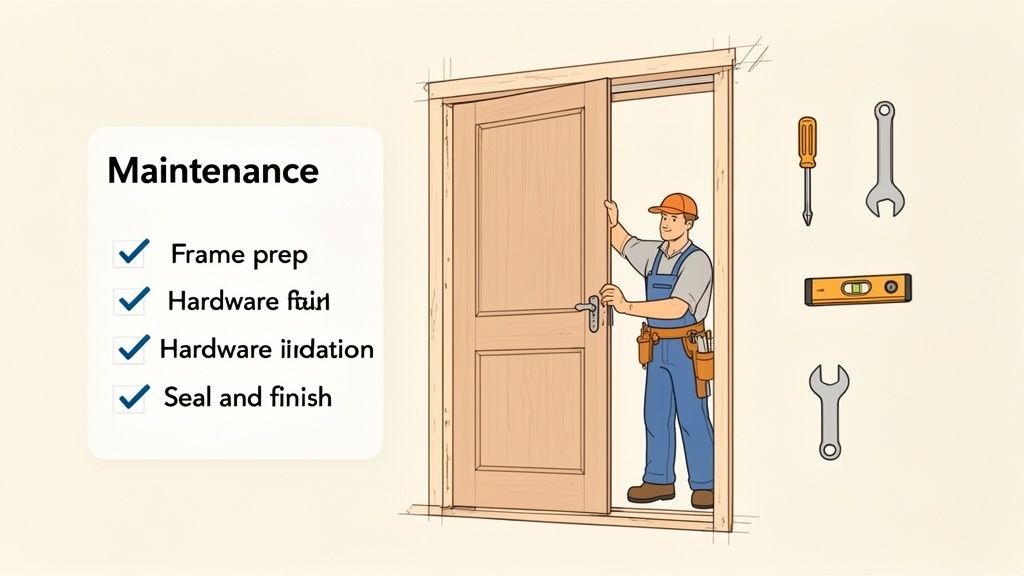
A true professional focuses on these key steps:
- Perfectly Square Frames: The door frame is the foundation. It must be installed without any twist or bow and anchored securely. Any imperfection in the frame gets transferred right to the door, causing it to bind or drag.
- Flawless Hardware Setup: Hinges need to be mortised to the exact depth, and locks and closers must be installed to the manufacturer’s precise specifications. This ensures everything operates without resistance.
- Consistent, Code-Compliant Gaps: The clearances around the door need to be uniform and meet strict code requirements. This allows the door to swing freely while ensuring the latch engages securely every single time.
Hiring a certified team isn't just about getting the job done—it's about preventing the headaches, costly repairs, and operational downtime that come from a botched installation.
Your Proactive Maintenance Checklist
Once your doors are installed correctly, a simple maintenance plan is your best defence against unexpected problems. Regular checks allow you to spot and fix small issues before they snowball into major failures that shut down an entire area. You can dive deeper into market trends by reviewing the latest research on the stile and rail door market.
Use this checklist during your regular facility walkthroughs to stay ahead of trouble:
- Check Hinges and Pivots: Are there loose screws? Do you see signs of grinding or metal filings? Make sure hinges are lubricated and moving freely.
- Inspect Latches and Locks: Does the door latch securely without being slammed? The lock bolt should slide smoothly into the strike plate.
- Test Door Closers: Watch the door close. It should move at a controlled speed and latch firmly. If it’s slamming shut or closing too slowly, the closer needs adjustment.
- Examine the Door’s Finish: Look for deep scratches, dents, or peeling paint. Any break in the finish can expose the door's core to moisture, leading to warping.
- Verify Seals and Weatherstripping: On exterior and fire-rated doors, check for cracked or missing seals. This is crucial for energy efficiency and fire safety.
For hands-on support, Wilcox Door Service offers comprehensive Planned Maintenance Programs designed for your facility’s unique needs.
Your Partner for Reliable Commercial Door Solutions
Choosing and installing the right stile and rail doors is one thing. Ensuring they stay safe, compliant, and operate perfectly for years to come is another challenge. That’s where having a true partner, not just a supplier, makes all the difference.
At Wilcox Door Service, we handle the entire lifecycle of your doors. Our motto is "Respected Partners, Reliable Service," and we live by it. We know a quality door is just the start. Real peace of mind comes from knowing you have experts for installation, ongoing maintenance, and responsive support whenever you need it.
A Partnership Built on Expertise
Navigating building codes, performance ratings, and installation specs can be a headache. Our team of certified technicians brings decades of hands-on experience to every project, so your doors aren't just a good fit; they're installed to precise, exacting standards.
This is especially true for critical applications like fire-rated openings. We manage every detail, from picking the right door and hardware to guaranteeing a code-compliant installation, so you can focus on your business.
- Code-Compliant Installations: Our technicians ensure every door, frame, and piece of hardware is installed correctly to meet all local building and fire codes.
- Certified Fire Door Inspections: We provide certified inspections to confirm your fire doors are fully functional and compliant, helping you avoid fines and keep your people safe.
- Tailored Maintenance Programs: We offer customized Planned Maintenance Programs to keep your doors running smoothly and prevent surprise downtime.
When you partner with a team that manages the entire lifecycle of your stile and rail doors, you can get back to your core operations, confident that your facility’s access points are secure and efficient.
Of course, the door itself is only part of the security equation. To complete your commercial door solution, it’s wise to work with professionals who offer comprehensive, reliable commercial locksmith services.
Whether you're breaking ground on a new build or retrofitting an older building, Wilcox is here to help. Our national network of union-certified technicians is committed to providing consistent, high-quality support that minimizes downtime and extends the life of your investment.
Your facility deserves a partner you can trust. Wilcox Door Service is committed to delivering reliable solutions that protect your people, property, and productivity.
For expert guidance on your next project or to schedule a service inspection for your current doors, contact our certified team today.