


Planning a new commercial door? Understanding the total garage door cost with installation is the first step to making a smart investment for your facility. This guide will provide a clear breakdown of all the factors involved, from the base price of the door itself to labor, upgrades, and long-term maintenance. You’ll learn how to evaluate materials like steel and aluminum, understand technical terms like R-value and cycle ratings, and see how strategic upgrades can boost your operational efficiency and safety. By the end, you’ll have the expert knowledge to budget confidently and choose a door solution that delivers lasting value.
Your Quick Guide to Commercial Garage Door Costs
For facility and operations managers, a new commercial garage door is a major capital investment. It’s far more than a simple barrier; it’s a vital component of your building’s security, energy efficiency, and daily workflow. Whether you’re running a busy distribution center or a climate-controlled food processing plant, selecting the right door at the right price is critical to your success. As your respected partners in reliable service, we believe an informed decision is the best decision.
This guide offers a clear, no-nonsense look at what goes into the total cost. We’ll break down the full investment into three main parts: the door itself, the installation labor, and any custom upgrades you might need to optimize performance.
Breaking Down the Total Cost
It’s easy to focus on the sticker price of the door, but that’s only part of the story. Your final invoice is a combination of three distinct cost centers.
- The Door Unit: This is the baseline cost for the physical door panels, tracks, and standard hardware. The price varies widely based on material (like steel or aluminum), insulation level (known as R-value), and overall size.
- Professional Installation: This covers the labor from certified technicians to install the system safely and correctly. It typically includes removing the old door, preparing the opening, and ensuring the new door is perfectly balanced and meets all safety codes.
- Upgrades and Customization: This is where you add features beyond the standard package. Think high-cycle springs for a busy loading dock, an automated operator to boost efficiency, or advanced safety sensors for added protection. For example, a high-speed operator on a warehouse door can significantly improve throughput, justifying its upfront cost through increased productivity.
This chart gives you a visual breakdown of how these pieces fit together to form your total investment.
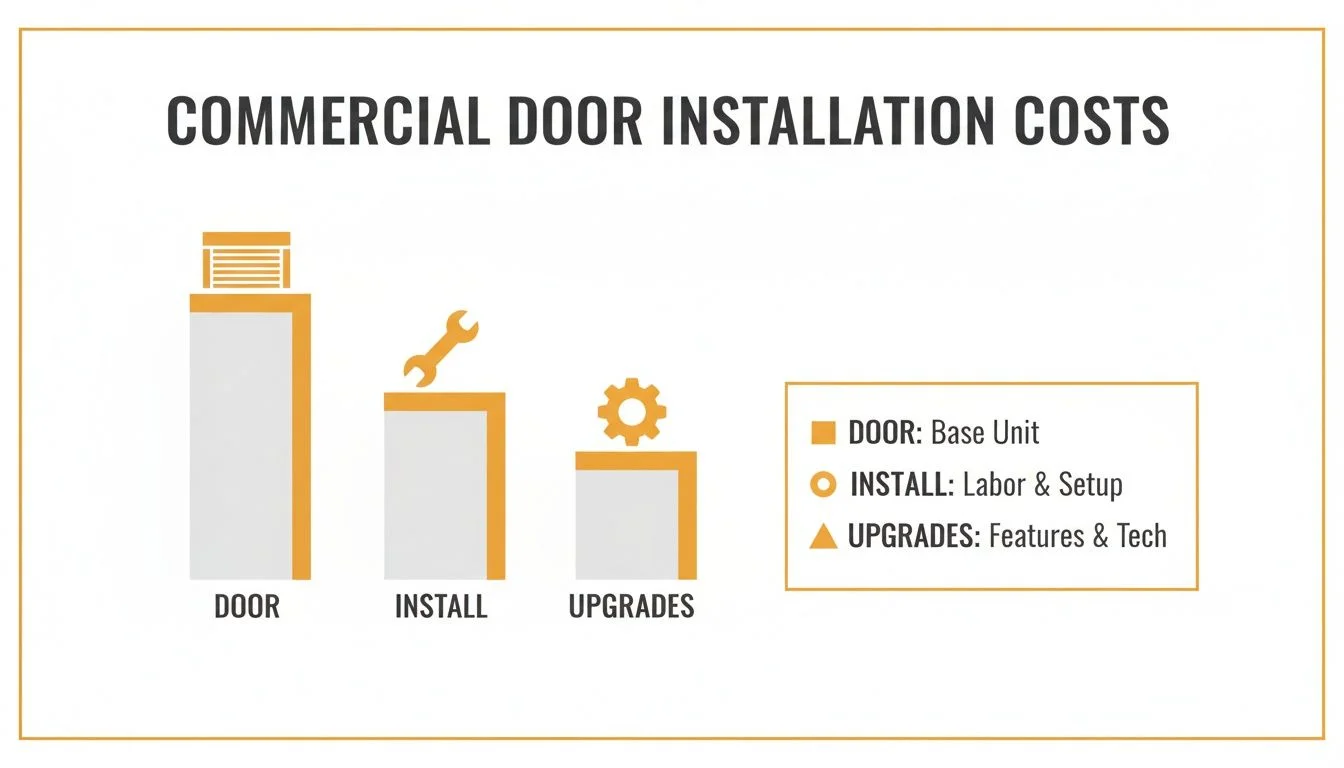
As you can see, the door and the installation make up the bulk of the initial expense. However, strategic upgrades can significantly impact the total, depending on your facility’s needs.
As your partners in reliable service, we know that a clear grasp of costs is the foundation of any successful project. An informed choice today is what prevents budget surprises tomorrow.
By looking at the complete picture—materials, labor, and your long-term operational needs—you can build a budget that makes sense. This approach helps you choose a door that not only fits your immediate requirements but also delivers real, lasting value. In the next sections, we’ll dig deeper into each of these cost factors.
To start planning your project with confidence, our team is ready to put together a detailed, no-obligation quote. Contact Wilcox Door Service today for an expert consultation.
Deconstructing Your Commercial Door’s Material Costs
When budgeting for a new commercial door, looking at the sticker price alone won’t give you the full picture. To truly understand the total garage door cost with installation, you have to break down what’s driving the price of the door itself—and that starts with materials and performance specifications. Think of it less like buying a door and more like selecting the right tool for a critical job.
Choosing a commercial door is a lot like equipping a vehicle for its specific task. You wouldn’t put standard tires on a heavy-duty truck operating on a rough worksite. The same logic applies here: the door’s material must be perfectly matched to its function and environment. For example, a door on a busy loading dock at a logistics hub has very different requirements than a door on a municipal fire station.
Matching Materials to Your Facility’s Needs
The material you choose is the single biggest factor in a door’s base price. Each option offers a different balance of upfront cost, durability, and long-term maintenance needs.
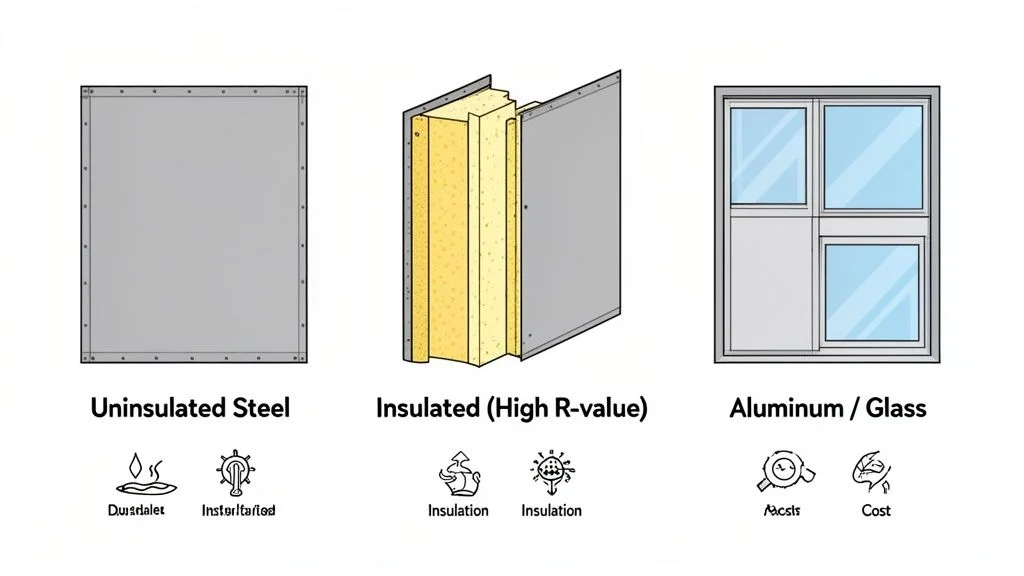
- Standard Steel Doors: These are the workhorses of the industry. For unheated warehouses, storage facilities, or openings with low traffic, an uninsulated steel door provides excellent durability and security at the most affordable price point. It’s a straightforward, reliable solution.
- Insulated Steel Doors: If you have any kind of climate-controlled space—like a food distribution center, pharmaceutical plant, or heated manufacturing area—insulated steel is the go-to. These doors have a core of polyurethane or polystyrene foam packed between steel panels, which acts as a thermal barrier to stop heat transfer.
- Aluminum and Glass Doors: You’ll often see these in auto service bays, fire stations, or retail storefronts where visibility and a clean, modern aesthetic are important. While built to last, they typically provide less insulation and come with a higher price tag than standard steel.
- High-Speed Fabric or Rubber Doors: Designed for high-traffic openings, both interior and exterior, these doors are all about speed and environmental control. They open and close in seconds to maintain temperatures and boost productivity. The initial cost is higher, but for a busy loading dock or cold storage facility, the return on investment from energy savings and efficiency can be massive.
Your choice directly affects more than just your initial budget; it impacts your operational expenses for years to come. Installing an uninsulated door on a refrigerated warehouse, for instance, will force your cooling systems to work overtime, leading to energy bills that quickly erase any upfront savings.
Translating Technical Specs Into Real-World Value
Beyond the basic material, two key technical specs—R-value and cycle rating—have a major impact on both cost and performance. Understanding these terms is key to making a smart investment.
R-Value Demystified
The R-value is a simple measurement of a door’s ability to resist thermal transfer—in other words, how well it insulates. The higher the R-value, the better the insulation. For example, a door with an R-value of R-16 is twice as effective at insulating as one with an R-8 rating.
For a facility manager, a higher R-value translates directly into lower heating and cooling costs. It’s an investment in operational efficiency, not just a feature.
Cycle Rating Explained
A cycle rating tells you how many times a door is designed to open and close before its core parts, especially the springs, are expected to need replacement. A standard commercial door might be rated for 25,000 cycles. A high-performance door for a busy logistics hub, on the other hand, could be rated for 100,000 cycles or more.
Choosing a door with a cycle rating that matches your actual daily use is crucial for preventing unexpected downtime and expensive emergency repairs. For a closer look at door systems, you can explore our resources on sectional door installations.
Data from across the industry shows that costs for commercial doors can vary widely based on these factors. A standard steel door might run anywhere from $650 to $3,200, with labor adding another $200 to $500 per door on average, according to this cost analysis for garage door replacement. For businesses in specialized sectors like food and beverage, where hygiene and fast cycling are paramount, investing in the right high-performance door is even more critical.
Ultimately, when you break down the material costs, it becomes clear that the cheapest option is rarely the most cost-effective. By matching your door’s material, R-value, and cycle rating with your facility’s specific needs, you’re not just buying a door—you’re investing in a solution built for long-term value and reliability.
For help selecting the perfect door for your application or understanding the long-term benefits of a proactive maintenance plan, connect with our experts today.
Understanding Installation and Labour Expenses
When budgeting for a new commercial door, it’s easy to focus on the price tag of the door itself. But that’s only half the story. The other critical half of your investment is the professional installation, which directly impacts the safety, lifespan, and reliability of your entire system.
A significant portion of your total garage door cost with installation goes toward the skilled labor needed to do the job right. This isn’t just a service fee—it’s your assurance that a heavy, complex piece of machinery is installed to precise manufacturer specifications and local safety codes. For any facility manager, a proper installation means fewer operational headaches and a much safer workplace.
What a Standard Installation Includes
A comprehensive quote from a reputable professional like Wilcox Door Service covers every step needed to get your new door running perfectly. It’s a lot more involved than just hanging a few panels.
A typical professional installation includes:
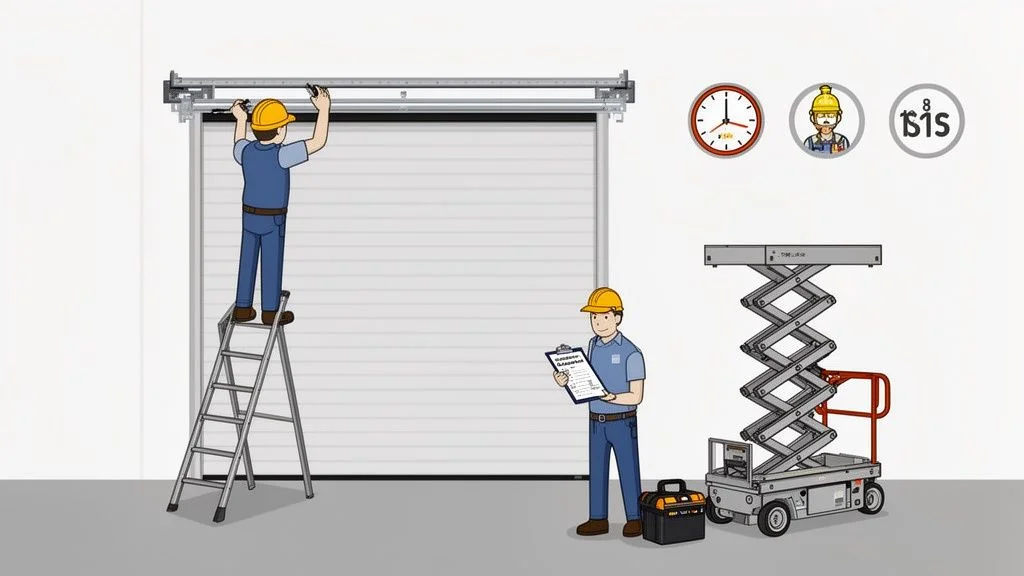
- Site Prep and Safety: This starts with a pre-installation safety check, securing the work area, and ensuring all technicians have the right personal protective equipment (PPE).
- Old Door Removal: Your existing door, tracks, and hardware are carefully dismantled and prepared for disposal or recycling, a service often built into the quote.
- New Door Assembly and Mounting: Technicians assemble the new door, install the vertical and horizontal tracks, and mount the entire system securely to your building’s structure.
- Spring Tensioning and Balancing: This is a crucial—and potentially dangerous—step. The powerful torsion springs are wound precisely to counterbalance the door’s weight, allowing it to open and close smoothly and safely.
- Final Testing and Commissioning: The door is run through multiple open-and-close cycles. We test its movement, check safety features like photo-eyes or reversing edges, and ensure the entire system operates exactly as intended.
Knowing what’s involved helps you see the real value behind the labor costs. It’s a detailed, technical process that ensures your investment works reliably from day one.
Why Labour Costs Vary
No two installations are exactly alike, and a few key factors can change the amount of labor your project requires. Labor costs typically make up 25% to 50% of the total project cost, depending on these variables.
Regional Rates
Labor rates fluctuate across Canada based on local economies and the availability of union-certified technicians. You can expect technicians in major urban centers to have higher hourly rates than those in more rural areas.
Project Complexity
The complexity of the job is a massive cost driver. For instance, installing a standard sectional door into a new, perfectly framed opening is a straightforward process.
In contrast, retrofitting a door in an older building with uneven floors or limited headroom demands more time and creative problem-solving from the installation crew. These site-specific challenges, common in facility maintenance, can add hours to the job.
Specialized Certifications and Equipment
Some installations require specialized knowledge and equipment, which naturally affects the cost.
- A high-lift track system for an auto repair bay requires extra track and hardware, plus additional labor to ensure the door follows the roofline perfectly, maximizing interior clearance.
- Installing a certified fire-rated door in a hospital or factory requires technicians with specific certifications to ensure the installation meets strict fire codes. Mandatory post-installation drop testing is also part of this process.
- If site access is tricky—like a high loading dock with no platform—technicians might need a scissor lift or other specialized gear, adding rental and operational costs to the bill.
Partnering with a reliable provider who can anticipate these needs is key. An experienced team will perform a thorough site assessment to identify challenges upfront, ensuring your quote is accurate and complete. This proactive planning prevents surprise charges and delays, reflecting our commitment to being your respected partner.
For a detailed evaluation of your facility’s needs and a clear quote on your next project, explore our commercial door installation services or connect with our team directly.
How Upgrades and Customization Shape Your Final Price
Think of a commercial door. A standard one opens and closes, and that’s about it. But a door customized for your specific operation? That’s an asset—a tool that can actively boost your efficiency, tighten up safety, and even improve your bottom line. While a basic door gets the job done, strategic upgrades turn it into a high-performance workhorse.
Understanding how these add-ons factor into your final garage door cost with installation is the key to getting the best possible return on your investment. These aren’t just “bells and whistles”; they’re targeted solutions for real-world operational challenges. Whether it’s to speed up throughput in a busy warehouse or slash energy bills in a climate-controlled facility, the right upgrades deliver value that quickly outstrips their initial cost.
High-Performance Operators for Unmatched Throughput
The door operator—the motor that automates the door—is the heart of your system. For any busy facility, upgrading from a standard-duty operator to a high-performance model is one of the most impactful upgrades you can make.
- Faster Cycle Times: A high-speed operator can open a large door in just a few seconds, a huge improvement over the 30-45 seconds a standard model might take. For a distribution center processing hundreds of shipments a day, that time saved adds up to a serious boost in productivity.
- Durability for High-Cycle Environments: These operators are built tough, with heavy-duty components designed to handle constant use without failing. This drastically cuts down on the risk of breakdowns and costly downtime at your most critical access points, like a busy loading dock.
- Soft-Start and Soft-Stop: Instead of jarring, jerky movements, advanced operators gently ramp up to speed and slow down before stopping. This simple feature minimizes wear and tear on everything from the panels to the springs, extending the lifespan of the entire system.
Picture a busy loading dock during peak hours. A high-speed operator keeps trucks and forklifts flowing smoothly, preventing bottlenecks and keeping your teams productive. The upfront cost is higher, but the ROI from a streamlined workflow isn’t far behind.
Insulation and Weather Seals That Lower Operating Costs
In any building where you’re paying to control the temperature, energy loss is a direct hit to your operating budget. Upgrading your door’s insulation and weather seals is a direct investment in your facility’s energy efficiency.
For a cold storage facility or a heated manufacturing plant, a poorly sealed door is like leaving a window wide open all year round. A high-R-value door and robust weather seals pay for themselves by dramatically reducing your monthly energy bills.
Let’s break down the components that create this powerful thermal barrier:
- High R-Value Insulation: As we’ve touched on, a higher R-value means better thermal resistance. For any freezer or cooler application, investing in panels with an R-value of R-24 or higher is non-negotiable. It’s what keeps your refrigeration systems from working overtime just to maintain temperature.
- Advanced Weather Seals: It’s not just the door panels. Upgraded seals for the perimeter, header, and between sections create a virtually airtight barrier. This stops drafts cold, prevents moisture and pests from getting in, and helps maintain a stable indoor environment—a critical factor in industries like food and beverage or pharmaceuticals.
For facility managers, the math is simple. A food processing plant can easily calculate the upfront cost of a well-insulated door against the substantial, ongoing savings on their hydro bill. The investment often proves its worth in just a few years. For more on this, our article about upgrading a sectional door installation offers some deeper insights.
Essential Safety and Access Control Upgrades
Beyond pure efficiency, customization is crucial for creating a safer, more secure facility. Modern safety features aren’t just nice to have; they are essential for protecting your personnel and assets.
- Photo-Eyes and Light Curtains: Photo-eyes create an invisible beam across the door opening. If the beam is broken, the door immediately stops and reverses. A light curtain takes this a step further, creating a full grid of invisible beams for even greater protection against impact.
- Reversing Edges: This is a pressure-sensitive strip attached to the bottom edge of the door. If it makes contact with any obstruction while closing, it instantly signals the operator to reverse direction, preventing crushing injuries or equipment damage.
- Integrated Access Controls: For secure areas, adding keypads, card readers, or remote transmitters ensures that only authorized personnel can operate the door. This not only enhances security but also creates a digital log of who accessed the area and when.
These safety systems are more than just best practices; they’re often mandated by workplace safety regulations. By factoring them into your garage door cost with installation, you are actively building a safer and more compliant environment from day one.
Budgeting for Long-Term Value and Maintenance
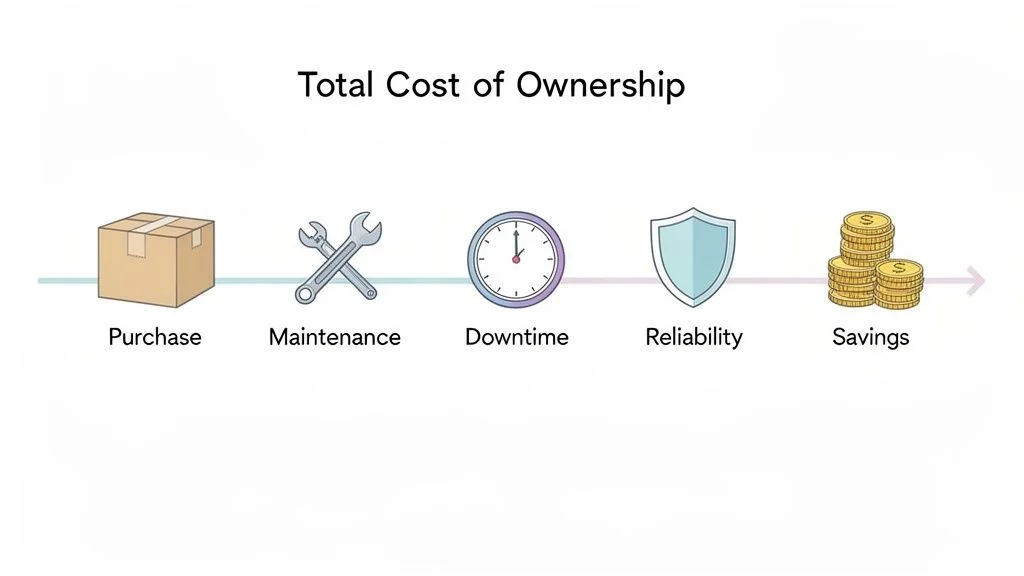
The price tag on a new commercial garage door is just day one of your investment. The real cost shows up over the door’s entire lifespan—what we in the industry call the Total Cost of Ownership (TCO). To make a smart financial decision for your facility, you must look past the initial invoice and plan for years of reliable, uninterrupted operation.
This means changing how you think about maintenance. A proactive service plan isn’t just another line item expense; it’s a strategic investment that protects your assets and keeps your business moving. It’s no different than the scheduled oil changes for a fleet of delivery trucks—it’s the essential work that prevents catastrophic failures down the road.
The Real Cost of Unplanned Downtime
An unexpected door failure is never just a minor hiccup. For any busy commercial facility, it’s a direct hit to your bottom line. Consider these real-world examples:
- A broken spring on a loading dock door: This instantly stops all shipping and receiving, creating a costly bottleneck that idles workers, holds up trucks, and delays critical shipments.
- A malfunctioning operator: When a high-traffic door won’t open, it can trap vehicles or essential equipment inside, racking up lost production time that costs far more than the repair itself.
- A damaged panel from a forklift impact: This isn’t just a security risk. It also compromises your building’s insulation and energy efficiency until it’s fixed, driving up your utility bills.
A single downed door at a manufacturing plant or distribution center can easily cost thousands of dollars in lost productivity for every hour it’s out of commission. That figure completely dwarfs the annual cost of a simple Planned Maintenance Program (PMP).
Comparing Proactive vs. Reactive Maintenance Costs
The numbers don’t lie: being proactive is always more cost-effective. A single unplanned spring replacement averages $292.48, and an emergency opener repair can run $151.25 plus materials. These reactive costs add up fast, especially in high-cycle environments where doors operate hundreds of times a day.
A Planned Maintenance Program (PMP) is your best defense against budget-breaking emergency calls. By identifying and addressing wear and tear before it leads to failure, you extend asset life and maintain predictable operational expenses.
This proactive approach is at the heart of our philosophy as respected partners. Our goal is to provide reliable service that keeps your facility running like a well-oiled machine, not just show up when something breaks.
What a PMP Delivers
A PMP from a trusted provider like Wilcox Door Service does more than just lubricate a few moving parts. It’s a comprehensive health check for your entire door system. During a scheduled visit, our certified technicians will:
- Inspect and adjust spring tension for proper balance.
- Check cables, rollers, and tracks for signs of wear or damage.
- Test all safety features, including photo-eyes and reversing edges.
- Examine the operator and electrical components for proper function.
- Provide a detailed report on your equipment’s health, flagging potential issues.
By investing in regular, expert care, you turn your doors from a potential liability into a reliable, long-lasting asset. This approach not only minimizes downtime but also helps ensure your facility remains safe, secure, and compliant.
Ready to shift from reactive repairs to proactive asset management? Learn more about the long-term benefits of a planned garage door maintenance program and see how it can strengthen your bottom line.
Getting an Accurate and Trustworthy Quote
You’ve got a solid handle on the variables that drive your total cost. Now it’s time to turn that knowledge into a clear, actionable plan by getting a quote you can count on.
A trustworthy quote isn’t just a number; it’s the result of a collaborative partnership and clear communication. Before you even pick up the phone, gathering key details about your project will make the entire process smoother and help ensure the final garage door cost with installation truly fits your needs.
Your Pre-Quote Checklist
Walking into a conversation with these details on hand helps any potential partner give you a much more precise estimate from the get-go.
- Door Opening Dimensions: Jot down the width and height of the finished opening where the new door will be installed.
- Headroom and Sideroom: Measure the clearance above the opening (headroom) and to the left and right (sideroom). This is critical for determining which track systems will fit.
- Desired Cycle Frequency: Give a realistic estimate of how many times the door will open and close each day. A busy loading dock door has vastly different needs than one for a rarely used storage bay.
- Insulation and Sealing Needs: Will the door separate a heated or cooled area from the outside? If so, you’ll need to specify a target R-value and high-quality weather seals.
- Site-Specific Challenges: Take note of any obstructions near the opening, like pipes, structural beams, or an uneven floor. Is there a power source nearby for an operator?
When you bring this information to the table, you’re no longer just asking for a price—you’re an informed buyer. It allows a respected partner to move beyond generic price ranges and start designing a solution that’s actually right for your facility.
Of course, an experienced partner makes this even easier. A thorough on-site assessment is always the best way to confirm measurements, spot potential installation hurdles, and recommend the most effective, code-compliant solution for your budget. This hands-on approach removes guesswork and prevents surprise charges down the road. If you’re looking for local expertise, our guide on finding qualified garage door installers near you has some extra helpful tips.
This level of detailed planning is the mark of a reliable service provider—it ensures the quote you get is one you can build your budget around.
You now have the knowledge to approach the procurement process with confidence. Take the next step by connecting with our team for a detailed, no-obligation quote tailored to your facility’s specific requirements. Contact Wilcox Door Service today to get started.
Common Questions About Commercial Garage Door Costs
As a facility manager trying to budget for a new commercial door, you need clear, direct answers to get through the procurement process without any surprises. Getting a handle on the total garage door cost with installation helps you make a smarter, more cost-effective decision for your facility. Let’s tackle some of the most frequent questions we hear.
Is a Roll-Up Door More Expensive Than a Sectional Door?
For standard sizes, a basic sectional door often has a lower initial material cost. However, when you step up to heavy-duty commercial roll-up (or coiling) doors, especially those built for high-cycle use or with fire ratings, the upfront cost is typically higher.
The final price really comes down to the application. For a busy loading dock, the incredible durability and space-saving design of a roll-up door often deliver better long-term value, even with the higher initial investment. A sectional door might be more cost-effective for a standard warehouse bay with less frequent traffic.
What Hidden Costs Should I Look For in a Quote?
A transparent quote from a trusted partner should be all-inclusive, but it’s always smart to double-check. You want to verify a few key items to avoid budget surprises down the line.
- Disposal: Does the quote cover the tear-down and proper disposal of your old door?
- Structural Modifications: If the opening needs changes to the frame or surrounding structure, is that work accounted for?
- Electrical Work: Is all wiring and electrical hookup for the operator factored in?
- Permits: Is the cost of pulling necessary municipal or building permits included?
- Safety Devices: Does the price reflect all required safety sensors, photo-eyes, and activation devices needed to comply with regulations?
Always ask for warranty details on both parts and labor. A strong warranty is your best protection against unexpected expenses. It shows a company stands behind its work, reflecting the kind of reliable service you should expect from a respected partner.
Why Is Professional Installation So Important?
This isn’t like a residential garage door. Commercial doors are significantly heavier, more complex mechanically, and fall under strict safety regulations like OH&S and provincial fire codes. Professional, certified installation ensures the door is perfectly balanced and tensioned—a non-negotiable step for both safety and the door’s longevity.
Improper installation is a recipe for disaster. It can lead to premature wear, dangerous accidents, voided warranties, and hefty fines for non-compliance. For specialized systems like fire-rated models, certified installation and drop-testing aren’t just recommended; they are legal requirements to ensure the door functions as designed in an emergency.
You’ve built the knowledge to make a confident decision. Now, let Wilcox Door Service provide you with a detailed, accurate quote that aligns with your facility’s needs and budget.
Contact us today to schedule your expert consultation.