


Commercial Door and Dock Maintenance Agreements: Are They Worth It, and What to Ask Before You Sign
Most facilities handle door and dock equipment one of two ways: call someone when it breaks, or put it on a planned maintenance agreement. The first feels cheaper until the 2am failure. This guide gives you a straight answer on when each approach makes sense, and the exact questions to ask any vendor before you sign.
A commercial door and dock maintenance agreement covers scheduled inspections, lubrication, safety-device testing, and priority repair response for a fixed annual cost. It is usually worth it once a facility runs more than a handful of truck movements a day — and it almost always pays for itself against one unplanned dock failure.
| Reactive (call when it breaks) | Planned maintenance agreement | |
|---|---|---|
| Cost pattern | Unpredictable; highest per-incident | Fixed annual fee, easier to budget |
| Downtime | Fails during peak, fixed after | Wear caught before failure |
| Safety devices | Tested rarely, if ever | Tested on every scheduled visit |
| Compliance records | Hard to produce at audit time | Documented visit history |
| Equipment life | Shortened by deferred maintenance | Extended with routine care |
Is a Preventive Maintenance Contract Worth It?
For most facilities with more than a handful of dock doors, yes. The reasoning is simple: doors, levelers, and seals wear on predictable schedules, and most failures give warning signs that a technician catches during a scheduled inspection but an operator does not.
A maintenance agreement usually pays for itself when:
- You run more than five or six dock positions or high-cycle doors
- A door being down stops shipping, receiving, or production
- You have had repeat failures on the same equipment
- Safety or code compliance requires documented inspections (fire doors, dock levelers, restraints)
- You currently use several vendors and lose time coordinating them
Call-when-it-breaks can be reasonable when: you have a few low-cycle doors, downtime costs little, and nothing is safety-critical. Even then, the emergency premium and wait time add up.
What a Good Maintenance Agreement Covers
- Scheduled inspections at a frequency matched to cycle counts, not a flat annual visit
- Lubrication, adjustment, and safety testing of springs, cables, rollers, operators, sensors, and safety edges
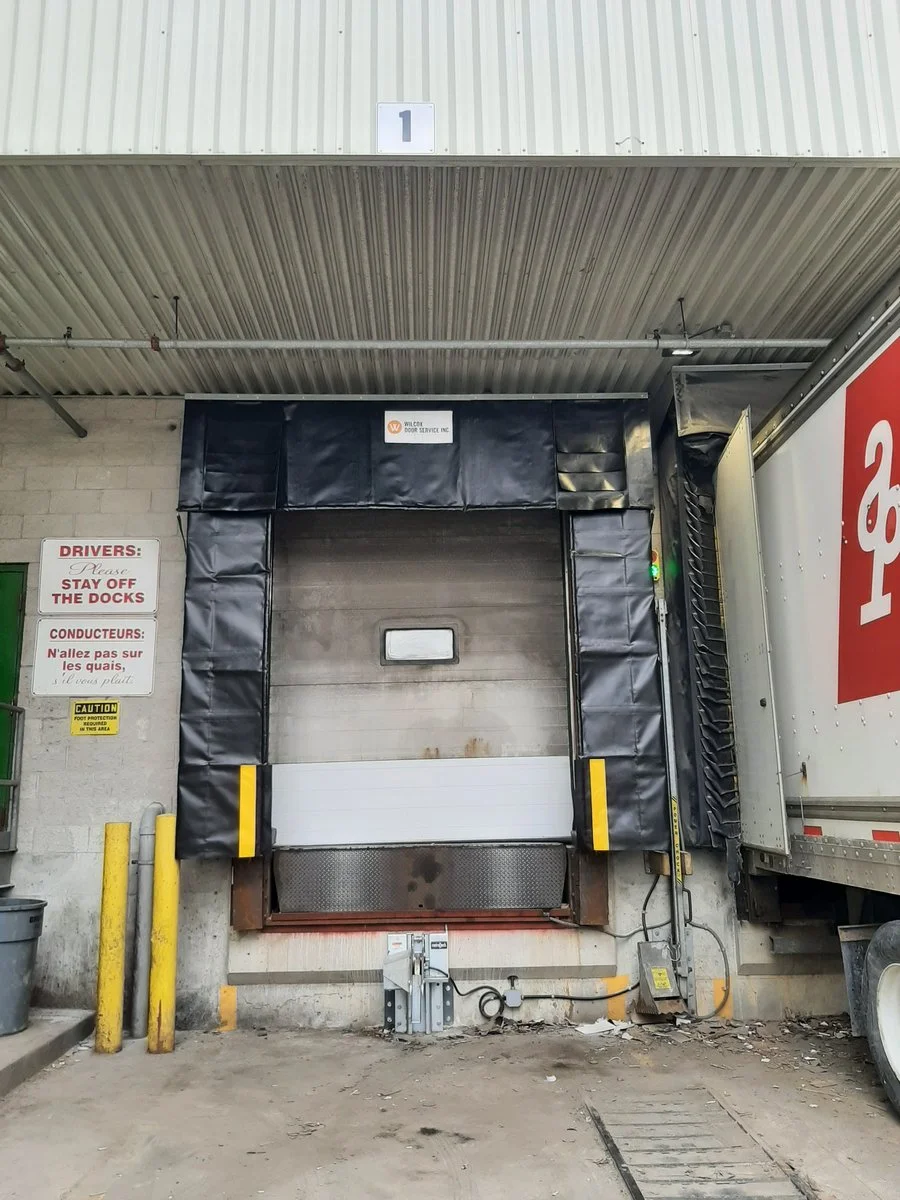
- Dock levelers, seals, and restraints in the same visit as doors, so one vendor covers the whole dock
- A written report after each visit with findings, repairs made, and recommended work
- Priority emergency response for contract customers
- Repair pricing that is clear up front, not discovered after the inspection
Questions to Ask Before You Sign
- What exactly is inspected on each visit? Ask for the written checklist. Vague scopes lead to visits that amount to a quick look.
- How often will you visit, and why that frequency? A busy dock door and a rarely used personnel door should not be on the same schedule.
- Do you service all makes and models? A vendor limited to one brand cannot consolidate your equipment.
- What is your emergency response time, and is it guaranteed for contract customers? Get the number in writing.
- Are repairs included, or billed separately? Understand what the fee covers and what triggers extra charges.
- Do you carry parts on the truck? This decides whether a repair takes one visit or three.
- Who are the technicians? Employees or subcontractors, and what training do they have on your equipment type?
- What documentation do I get? You need records for insurers, auditors, and fire marshals.
- How do I exit the contract? Check the term, renewal, and cancellation terms before you sign.
- Can you cover all my locations? If you have multiple sites, one vendor with consistent standards beats several local ones.
One Vendor for Doors and Docks
A common headache for facility managers is splitting door work and dock work between vendors, so nobody owns the whole opening. A single provider that handles doors, levelers, seals, and restraints means one schedule, one set of records, and one call when something fails. That is how our planned maintenance programs work, and it applies equally to a single plant or a portfolio of sites across the GTA, including Mississauga and Hamilton.
Frequently Asked Questions
Is a preventive maintenance contract worth it for loading dock equipment?
For most facilities with several dock positions or high-cycle doors, yes. Scheduled inspections catch worn springs, misaligned tracks, and failing sensors before they cause an overnight failure, and they create the documentation insurers and auditors expect.
What should I ask before signing a door maintenance agreement?
Ask for the written inspection checklist, the visit frequency and reasoning, whether all makes and models are covered, guaranteed emergency response time, what repairs are included, whether parts are carried on the truck, and the exit terms.
Can one company handle all my dock doors, levelers, and seals?
Yes. Wilcox Door Service services all makes and models of doors, dock levelers, seals, shelters, and restraints, so one vendor can cover your whole dock and consolidate multiple vendors.
Do you handle multiple facilities?
Yes. We service facilities across the GTA and beyond, including Mississauga, Hamilton, and Toronto, with the same standards and reporting at every site.
To discuss a maintenance program for your facility, call 1-800-528-4131 or use the form below.
Want a maintenance program priced for your site?
We survey your doors and docks, count the openings, and quote a fixed program — no obligation.