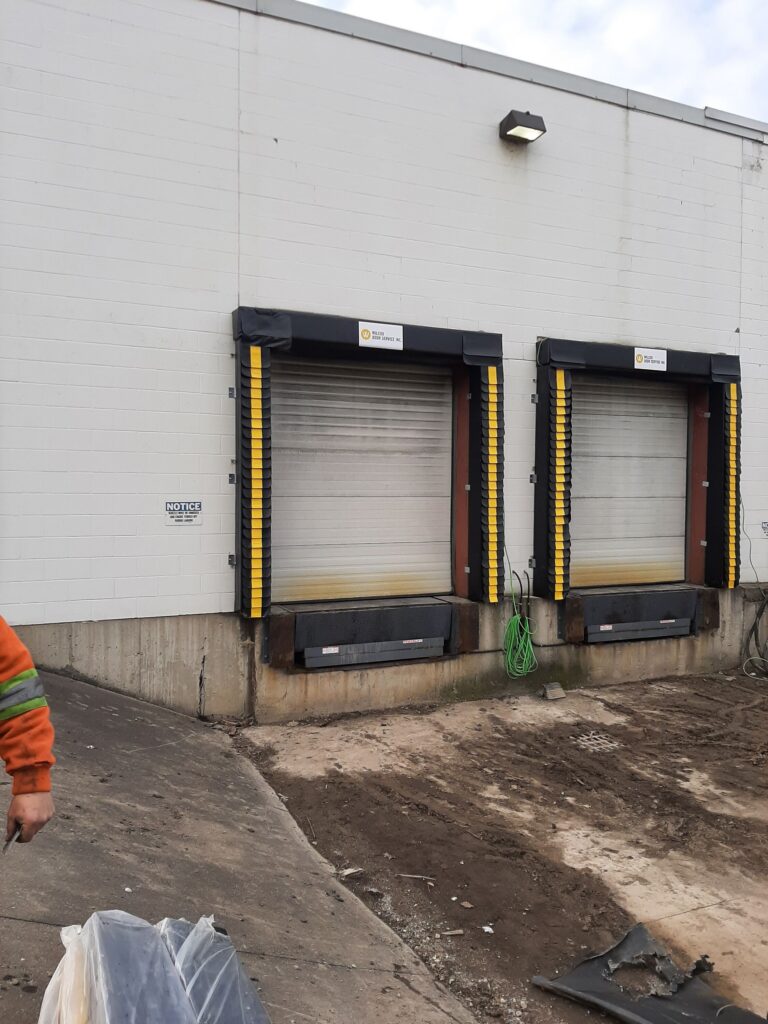
In this guide, you’ll learn why the garage door seal top and sides are critical for your facility’s efficiency and how to choose, install, and maintain the right ones. We’ll explore different material types, provide practical installation advice, and show you how proper sealing directly impacts your bottom line by saving energy and protecting assets. This expert advice will help you make informed decisions to enhance your building’s performance and operational reliability.
Why Your Garage Door Seal Matters

Alt text: An industrial garage door with a properly installed garage door seal top and sides to prevent air leakage.
When facility managers list their priorities, the humble garage door seal is often overlooked. But this seemingly minor component has a major impact on your building’s performance. A worn-out or poorly installed seal creates gaps that let conditioned air out and outside elements in, triggering a host of problems.
For example, imagine a food processing plant where maintaining a consistent temperature is non-negotiable. A failing seal can let in warm, humid air, forcing the HVAC system (your heating, ventilation, and air conditioning unit) to work overtime and even putting product safety at risk. In a distribution centre, those same gaps can allow dust, pests, and moisture to ruin sensitive inventory.
The Financial and Operational Impact
Neglecting your garage door’s top and side seals hits your bottom line directly. In Canada’s punishing winters, unsealed doors can be responsible for up to 30% of a building’s total heat loss just from air infiltration.
Modern seals, usually made from durable EPDM rubber or vinyl, can cut that air leakage by 25-40% per door. For a facility manager, this adds up to serious annual energy savings—sometimes as much as 18%. For climate-sensitive operations, that can mean HVAC cost reductions of 15-20%.
A well-sealed door is your first line of defence against energy waste and operational disruption. It’s a small investment that delivers a substantial return by protecting assets and reducing utility expenses. As your Respected Partners providing Reliable Service, we see this as a foundational element of facility maintenance.
Key Benefits of a Quality Seal
Effective seals aren’t just about saving money; they’re fundamental to running a tight ship. The right weatherstripping brings several key advantages:
- Improved Energy Efficiency: By creating an airtight barrier, seals stop the loss of heated or cooled air, drastically cutting down on energy use.
- Enhanced Environmental Control: They block out dust, dirt, moisture, and pests. This is critical for industries like food processing, pharmaceuticals, and electronics manufacturing.
- Increased Employee Comfort: A properly sealed environment eliminates annoying drafts, making the workspace more comfortable and productive for your team.
Understanding the role of a proper garage door seal is the first step. For a deeper dive into the different kinds available, check out our guide on weatherstrip for garage doors.
Choosing the Right Seal for Your Facility
Picking the right garage door seal for the top and sides boils down to your facility’s specific needs. This isn’t about ticking boxes on a spec sheet; it’s about understanding how a seal will hold up day after day in your real-world environment.
The choice you make directly impacts your building’s energy bills, durability, and future maintenance costs. For instance, a high-traffic loading dock in a freezing climate has completely different requirements than a climate-controlled pharmaceutical warehouse. Understanding the core materials is the first and most important step.
Material Matters in Seal Performance
When you start looking at seals, you’ll generally find three main options: EPDM rubber, vinyl, and brush seals. Each one has its own strengths, making it a better fit for certain jobs.
- EPDM (Ethylene Propylene Diene Monomer) Rubber: This is a synthetic rubber known for its fantastic flexibility in extreme temperatures. It won’t crack or get brittle when the mercury plummets, making it a go-to choice for tough Canadian winters. It’s also incredibly resistant to UV rays and ozone, so it won’t break down quickly from sun exposure.
- Vinyl (PVC): Vinyl seals are a solid, budget-friendly choice. They do a great job blocking drafts and moisture and are durable enough for most standard applications. The one catch is they can get a bit stiff in very cold weather, which might compromise the seal’s effectiveness over time.
- Brush Seals: Instead of a solid barrier, these seals use thousands of dense polypropylene bristles to create a flexible, tight seal. They’re perfect for sealing uneven surfaces and are especially good at stopping dust, debris, and pests without impeding the door’s movement. You’ll often see them in food processing plants or other sensitive environments.
To help you decide, here’s a quick breakdown of how these materials stack up.
Commercial Door Seal Material Comparison
| Material Type | Best For | Cold Weather Performance | Durability | Estimated Lifespan |
|---|---|---|---|---|
| EPDM Rubber | High-traffic docks in extreme climates (hot or cold) | Excellent flexibility; doesn’t crack or stiffen | Very High | 7-15 years |
| Vinyl (PVC) | Standard commercial applications with moderate traffic | Good; can become stiff in deep cold, potentially compromising the seal | Good | 5-10 years |
| Brush Seal | Uneven floors, pest control, and dust-sensitive areas | Excellent; bristles remain flexible regardless of temperature | High | 7-12 years |
Ultimately, the right material balances upfront cost with long-term reliability for your specific operational needs.
Understanding Durability and Long-Term Value
Two technical terms that really matter for durability are “compression set” and “memory.”
- Compression set is a material’s tendency to get permanently squashed after being compressed for a long time. A seal with a poor compression set will lose its shape and won’t spring back, creating gaps.
- Material memory is the flip side—it’s the seal’s ability to return to its original shape after being compressed. High-quality EPDM rubber, for instance, has excellent memory, which means it maintains a tight seal even after thousands of door cycles at a busy loading dock.
Choosing a material with low compression set and high memory means you’re investing in a seal that will last longer and perform more reliably, reducing replacement costs and maintaining energy efficiency.
The global garage door seals market, valued at USD 335 million, is projected to hit USD 446.81 million by 2033, with Canada playing a huge role thanks to our climate. For facility managers, this proves that your choice of seal isn’t just a minor maintenance task—it’s a strategic decision affecting your operational budget and compliance.
For a broader perspective, you can also explore our guide on the different types of weatherstripping for exterior doors.
A Practical Guide to Measurement and Installation
Getting the installation right for your garage door seal top and sides is where the real value lies. A perfect measurement and secure fit mean maximum energy savings and a longer lifespan. An improper installation, on the other hand, can negate the benefits, leaving you with the same gaps you were trying to fix.
This guide is built on what our expert technicians see in the field every day. We’ll walk through the essentials, from getting accurate measurements to avoiding costly mistakes.
Accurate Measurements Are Non-Negotiable
Before cutting a new seal, precise measurements are your top priority. It sounds basic, but this is where many DIY installations go wrong.
- Measure the Door, Not the Old Seal: Old seals often shrink, stretch, or warp. Always measure the height and width of the door opening along the jambs (the side posts) and header (the top beam) where the new seal will sit.
- Measure Twice, Cut Once: It’s an old saying for a good reason. Double-check your numbers to avoid simple errors. A seal cut even a half-inch too short will create a persistent, drafty gap.
- Account for Compression: For stop moulding seals designed to press against the door, you’ll need a slight overlap. This ensures the flexible flap creates a tight barrier when the door is closed without impeding its movement.
The goal is to create a continuous, unbroken barrier around the door’s perimeter.

Alt text: Flowchart for selecting a garage door seal: identify needs, compare options, and choose the optimal garage door weather stripping.
As the flowchart shows, the process starts with understanding your specific needs—like pest control or temperature regulation—which guides your material choice and installation method.
Preparing for a Lasting Installation
A great seal on a dirty or damaged surface won’t last. Proper surface preparation is crucial for ensuring the seal adheres properly.
First, remove the old seal completely. Check the door frame for rust, peeling paint, or grime. A wire brush is great for loose debris, and a degreaser will clean the surface so no oil or residue interferes with fasteners or adhesive. If you spot any damage to the frame, fix it now. A smooth, clean, and solid surface is essential for the new seal to sit flush.
A common mistake we see is overtightening fasteners. This can crush the seal, creating a weak point and distorting its shape. The fastener should be snug enough to hold the seal firmly without deforming the material.
The successful installation of commercial garage door seals relies on the right hardware. For a comprehensive overview, check out this a practical guide to fasteners and fittings.
Securing the Seal for a Perfect Fit
When you’re ready to install, always start with the top seal (the header) first. Cut it to length with a sharp utility knife for a clean edge. Position it along the header and secure it according to the manufacturer’s instructions, typically with self-tapping screws.
Next, move to the side seals (the jambs). Ensure the top of each side seal fits snugly against the ends of the header seal, creating a seamless corner. This corner is a common failure point, so take extra care here to eliminate any potential gaps. For a real-world example, a warehouse in a dusty industrial park can prevent significant inventory contamination just by ensuring these corners are perfectly sealed.
If you have a complex door system or persistent sealing issues, you might find our deeper look into the side garage door seal to be a helpful resource.
How to Spot and Prevent Common Seal Failures
Even the highest quality garage door seal for top and sides has a lifespan. A proactive maintenance plan can save you a fortune in energy costs and prevent emergency repairs. If you learn to spot the early warning signs of failure, you can act before a small problem shuts down a loading bay.

Alt text: Comparison showing a failing garage door top seal with cracks versus a new, properly installed garage door side seal with a checkmark.
The easiest check? Look for daylight. When the door is closed, stand inside and look around the perimeter. If you see light, you have a gap. That gap is a direct line for your conditioned air to escape and an open invitation for dust, pests, and moisture.
Identifying the Root Causes of Seal Degradation
Most seals fail gradually from daily operations and environmental exposure. Figuring out why a seal is failing is the key to preventing it from happening again.
Common culprits we see include:
- UV Degradation: Constant sun exposure is brutal on rubber and vinyl, making the material brittle and leading to cracks.
- Physical Damage: This is the top issue at busy loading docks. A forklift turning too tight, a pallet jack bumping the frame, or a truck nudging the building can easily tear or dislodge a seal.
- Chemical Exposure: In facilities like food processing plants, harsh cleaning agents can eat away at seal material over time.
- Improper Installation: Fasteners driven in too tight will crush the seal, while loose ones let it sag. A seal cut even a fraction too short is an immediate point of failure.
Proactive maintenance isn’t just about replacing what’s broken; it’s about extending the life of your assets. A simple monthly walk-around to inspect your door seals can prevent costly energy loss and protect your inventory.
Implementing a Preventative Maintenance Routine
Your best defence is a simple, consistent inspection and cleaning schedule.
Start by wiping down the seals with a mild detergent and water every few months. This removes corrosive dirt and grime. While you’re cleaning, it’s the perfect time for a quick visual and physical check.
Your Monthly Inspection Checklist:
- Look for Cracks and Brittleness: Check for tiny fissures or any spots where the material feels hard and inflexible. This is a sign the seal is losing its elasticity.
- Check for Compression Set: Gently press on the seal. Does it spring back, or does it stay squashed? A seal that has lost its “memory” is no longer creating a tight barrier.
- Inspect Fasteners: Run your hand along the retainer and make sure all screws are snug. They shouldn’t be so tight they distort the seal, but they can’t be loose.
- Verify Seal Contact: With the door closed, run your hand along the perimeter where the seal meets the door. You should feel firm, consistent contact all the way around.
This quick routine helps you spot trouble before it leads to a full-blown failure. For more complex issues, our expert team can provide a thorough facility audit.
The Real Impact of Effective Sealing on Your Bottom Line
It’s tempting to view a garage door seal top and sides as a minor maintenance task, but it’s a powerful tool for controlling costs, protecting assets, and keeping operations running smoothly. Every gap around your commercial doors is a leak in your budget. In a country with Canada’s climate extremes, that leakage forces your HVAC system to work overtime, driving up utility bills.
Quantifying the Financial Benefits
The savings from a high-quality seal add up. Your commercial doors are the largest moving parts of your building envelope—the critical separation between your controlled interior and the outdoors—making them your biggest vulnerability.
Studies show that sealing air leaks can cut annual energy costs by 10% to 20%. For a large warehouse or manufacturing plant, that translates into thousands of dollars saved each year—a clear return on investment.
A well-sealed building envelope is the foundation of an energy-efficient facility. By addressing your door openings, you directly improve HVAC efficiency and slash operational costs.
This isn’t just about saving money; it’s about keeping up with provincial and national energy codes. An effective sealing strategy helps ensure your facility stays compliant. Explore how our energy-saving solutions contribute to hitting those compliance goals.
Protecting Inventory and People
Beyond the numbers, the operational benefits are just as critical. Many industries handle products sensitive to temperature and humidity fluctuations.
Consider these real-world scenarios:
- Pharmaceuticals: For medicine, a stable, controlled environment is non-negotiable. A single drafty door can compromise an entire batch, leading to catastrophic product loss.
- Food and Beverage: Consistent temperatures are essential to prevent spoilage. A tight seal also acts as a crucial barrier against pests, a major compliance checkpoint in any food-grade facility.
- Electronics Manufacturing: Dust and moisture are enemies of sensitive electronic components. A properly installed garage door seal keeps these contaminants out, reducing defects.
A well-sealed workspace also dramatically improves employee comfort. Eliminating cold drafts boosts morale and prevents slick, hazardous floors from rain or melting snow. This dedication to a secure and efficient environment is a core part of our commitment to being Respected Partners providing Reliable Service.
If your doors have more than just sealing issues, it might be time for a professional assessment. Learn more about our commercial door repair services to tackle underlying problems.
Knowing When to Bring in the Professionals
While a proactive in-house maintenance routine handles most day-to-day wear, some issues with a garage door seal top and sides signal deeper problems that need an expert eye. Knowing when to call a professional is key to preventing a minor annoyance from becoming a costly operational failure.
DIY replacements are fine for standard doors, but specialized equipment is a different ball game. High-speed fabric doors, rolling steel fire doors, and insulated cold storage doors have unique sealing systems. A botched installation on one of these can void warranties, compromise safety ratings, and violate building codes.
When the Seal Is Just a Symptom
Often, a recurring seal failure is a symptom of a larger issue. If you’re replacing the same weatherstripping repeatedly, it’s time to find the root cause.
A misaligned door track is a classic culprit. If the door doesn’t close squarely, it creates uneven pressure on the seal, causing one area to shred prematurely. You can replace that seal a dozen times, but it won’t fix the underlying alignment problem. Our certified technicians are trained to spot these root causes, ensuring the repair is done right the first time.
A seal that fails repeatedly in the same spot is your door’s way of telling you something more serious is wrong. Just treating the symptom without diagnosing the cause is a fast track to wasted time and money.
Protecting Your Investment
Calling in a professional isn’t giving up; it’s a smart decision to protect your facility’s assets and ensure safety. Our technicians provide more than just a repair—they deliver peace of mind. They have the experience to see how every component works in harmony, ensuring optimal performance and longevity for your door systems.
Your facility’s uptime and efficiency are too important to leave to chance. For a comprehensive inspection or to schedule professional service for your garage door seals, contact the Wilcox Door Service team today. As your “Respected Partners, Reliable Service,” we’re here to help.