


A lot of facility managers arrive at window roll shutters the same way. A ground-floor office window becomes a repeat security concern. Heating bills keep rising in an older building with too much glass. Wind, debris, and after-hours exposure start looking less like isolated issues and more like a pattern.
That's where window roll shutters make sense. Not as a cosmetic add-on, and not as a one-size-fits-all answer, but as a practical building component that can improve security, thermal control, and day-to-day operating discipline when it's specified properly.
They also aren't new. Roller shutters first appeared in Italy in 1870, starting as wood units operated by ropes before evolving into the motorized systems used today to secure and insulate modern facilities, according to the history of external roller shutters.
Your First Line of Defence Against Risk and Inefficiency
A common pattern in industrial buildings is that the big openings get attention first. Teams service the overhead doors, inspect the dock equipment, and replace worn seals. Meanwhile, office windows near truck courts, side elevations, and pedestrian access points stay exposed long after they've become a weak point.
That weak point shows up in different ways. Sometimes it's smash-and-grab risk after hours. Sometimes it's glare and heat gain in a dispatch office. In older properties, it's often winter discomfort around perimeter glazing that staff notice before the utility team sees it on a report.
Window roll shutters solve a different class of problem than film or blinds. They create a physical barrier outside the glazing line, which means they can support security, weather protection, and insulation at the same opening. If you need a broader framework for evaluating site vulnerabilities, this physical security guide is a useful starting point because it puts openings, access control, and layered protection in the same conversation.
Practical rule: If your building treats windows as passive components, you're probably leaving a gap in your security and energy strategy.
This matters most in facilities where operations don't stop at 5 p.m. A warehouse office that faces the yard, a maintenance room beside a loading area, or a small admin block attached to a manufacturing plant all have the same issue. They rely on glass where the rest of the envelope relies on reinforced, serviceable hardware.
Roll shutters also work better when they're considered alongside the rest of the opening package. If you're already addressing drafts and uncontrolled air movement at doors, it makes sense to review adjacent openings at the same time. Many sites that upgrade shutters also revisit perimeter sealing and weather control through components such as door weather sealer systems.
The value isn't only in stopping a break-in. It's in reducing avoidable exposure, giving staff more control over the building envelope, and adding a solution that can be operated consistently instead of improvised with temporary fixes.
What Are Window Roll Shutters Explained
A window roll shutter is an exterior rolling closure built to secure and manage a glazed opening with a single operable assembly. The curtain travels in side guides, wraps around a barrel, and stores in a hood or housing above the window when open. For industrial and commercial sites in Canada, that basic design matters because it gives the opening an active barrier that can be deployed at the end of shift, during a storm event, or when a space needs tighter temperature and light control.
The better way to assess a shutter is to look past the curtain and study the full system. A shutter that cycles well in July can still become a service problem in January if the guides hold debris, the housing is poorly sealed, or the operator is undersized for cold-weather use. That is why facility teams comparing commercial door roller shutters should evaluate operation, service access, and compatibility with the building, not just the slat profile.
The main parts that do the work
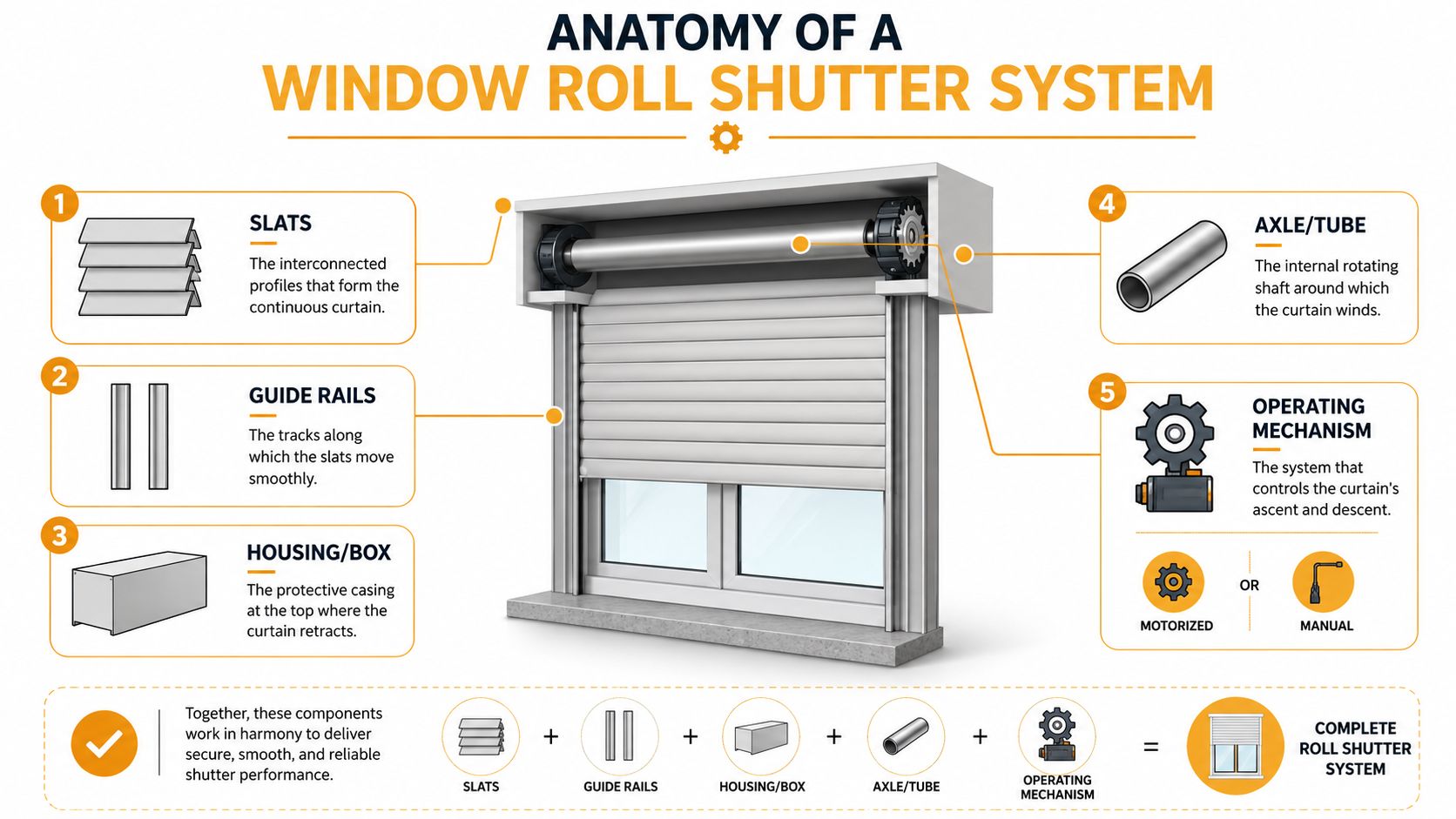
Each part affects reliability, cycle life, and maintenance planning.
- Slats form the shutter curtain and create the physical barrier over the glass.
- Guide rails keep the curtain aligned during travel. Poor rail alignment leads to binding, noise, and uneven wear.
- Housing or hood protects the rolled curtain and core components from weather, dirt, and impact.
- Barrel or axle carries the curtain load as it rolls and unrolls.
- Operator and controls drive the system, whether by crank, spring assist, tubular motor, or integration with other building controls.
On paper, that sounds simple. In practice, the quality of those connections determines whether the shutter remains dependable after repeated freeze-thaw cycles, vibration, and daily use around an active facility.
How they differ from other opening solutions
Window roll shutters do a different job than film, blinds, or fixed grilles. Security film helps retain broken glass. Interior blinds manage glare and privacy. Fixed bars or grilles create a permanent obstacle. A roll shutter adds a retractable exterior barrier that can support security, light control, weather resistance, and in some assemblies, a measure of thermal and acoustic improvement.
That flexibility is what makes shutters useful on plant offices, shipping windows, guard buildings, and attached administrative areas. The opening can stay visually open during operating hours, then be secured with a hard barrier after hours without replacing the glazing system itself.
For teams already familiar with the broader logic behind rolling products, the same selection discipline used in deciding on a roll up door applies here. Match the shutter to the opening size, expected cycle count, exposure, and service conditions.
A shutter system performs as a package. Rails, housing, attachment points, operator sizing, and control logic all matter. Wilcox approaches shutter recommendations that way because long-term value comes from a system that still runs properly after years of weather exposure and routine use, not from a curtain that only looks adequate on day one.
Comparing Shutter Materials and Operator Types
Material and operator choices shape how a shutter behaves over the long haul. They affect resistance to abuse, ease of cycling, maintenance frequency, and whether the system fits the way your site runs.
If your team already compares rolling products with other opening types, it can help to review a broader primer on deciding on a roll up door. The same thinking applies here. Match the product to the opening, the frequency of use, and the level of protection needed.
Material selection in real facilities
For most commercial window openings, aluminum is the default because it balances corrosion resistance, manageable weight, and smooth operation. In coastal air, wet climates, or buildings that can't tolerate heavy moving components over windows, aluminum is usually the practical answer.
Steel enters the conversation when the priority is a heavier-duty barrier and appearance is secondary. It can make sense in more aggressive security environments, but it also adds weight and can increase demands on operators, mounting, and service access.
Foam-filled aluminum is often selected when teams want a more insulation-focused build without moving to a heavier material. It can be a reasonable fit for office windows attached to industrial buildings, guard stations, and other occupied spaces where thermal comfort matters as much as deterrence.
Roll Shutter Material Comparison
| Material | Best For | Security Level | Insulation Value | Maintenance |
|---|---|---|---|---|
| Aluminum | Most commercial retrofits, coastal exposure, frequent use | Strong for general commercial use | Good when paired with the right slat profile and installation | Lower burden, especially where corrosion resistance matters |
| Foam-filled aluminum | Occupied spaces where thermal performance matters | Moderate to strong depending on system design | Better thermal performance than non-insulated profiles | Moderate, with attention to tracks and motor operation |
| Steel | High-abuse or high-security environments | High | More dependent on full assembly design than material alone | Higher due to weight, finish condition, and operating loads |
Manual or motorized
Manual operators still have a place. On a rarely used window in a low-cycle environment, a crank or spring-assisted setup can be acceptable. The trouble starts when staff must operate several shutters every day. Manual systems invite inconsistent use, skipped closures, and rough handling.
Motorized systems solve that operational problem. They also fit better in facilities where windows are part of opening and closing routines, alarm response, or light-control procedures. The historical shift from rope-operated shutters to systems controlled by wall switches, remotes, or smartphone apps shows how far these products have moved toward practical automation, as noted in the earlier historical source.
The choice comes down to habits.
- Choose manual when the opening is used infrequently and there's a clear owner for operation.
- Choose motorized when consistency matters more than initial simplicity.
- Choose integrated controls when shutters need to align with wider facility processes such as schedules, occupancy, or centralized oversight.
A product category such as commercial roller shutters fits best when the specification reflects that operational reality, not just the opening size.
Field note: The more often people have to remember to operate a shutter manually, the more likely it becomes a part-time solution.
Understanding Commercial Mounting Options
Mounting determines how the shutter looks, but its primary impact is on performance and how loads move into the building. That's why retrofit discussions should start with structure, clearances, and serviceability before anyone starts talking about colours or box shapes.
This visual helps frame the most common approaches.
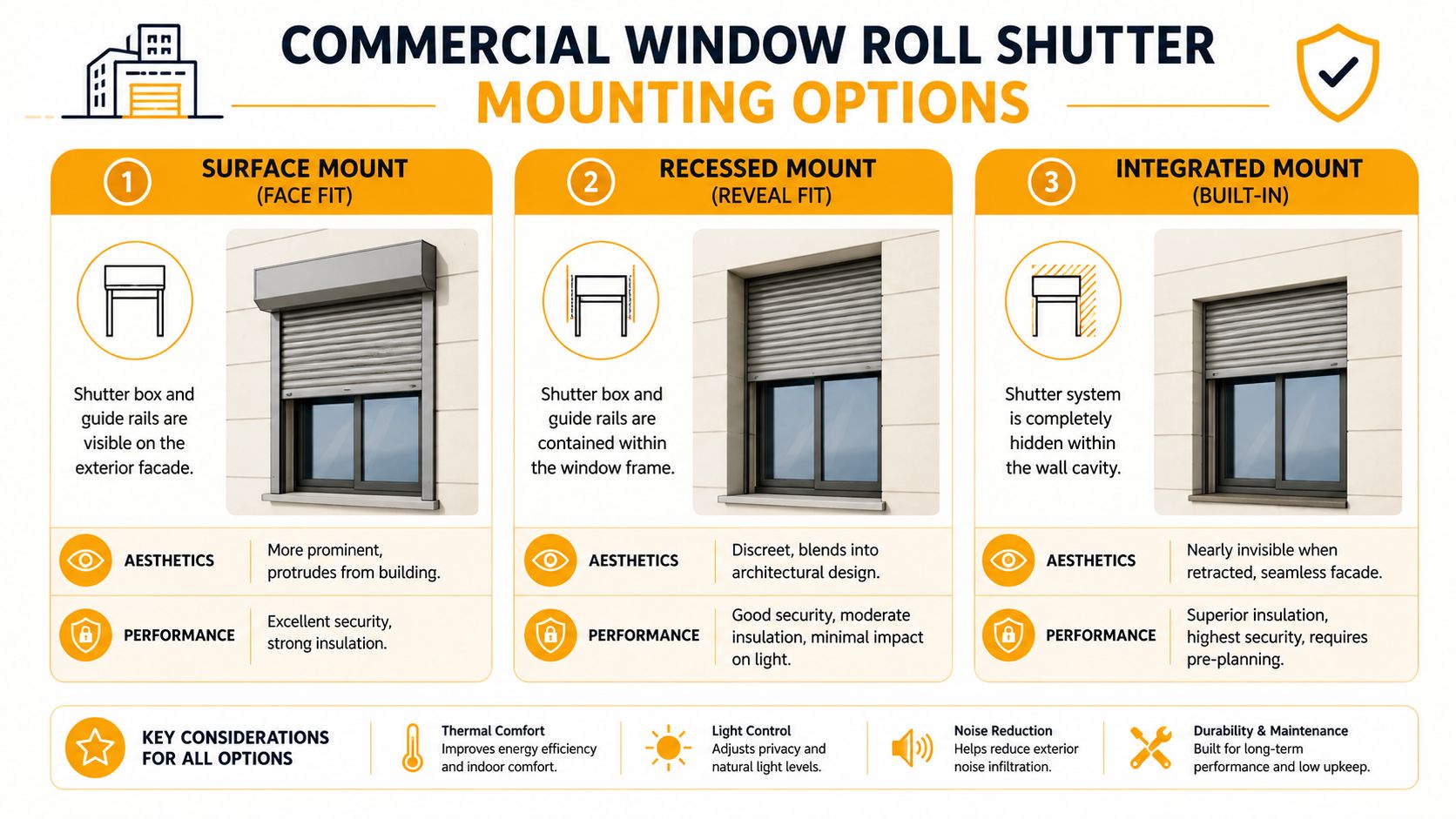
Surface, recessed, and built-in options
Surface mount places the box and guide rails on the face of the wall. For retrofits, this is often the most forgiving option because it doesn't depend as heavily on cavity space within the opening. It's visible, but it usually gives the installer more flexibility to work around existing conditions.
Recessed mount pulls the assembly into the reveal. It can look cleaner, but it narrows the margin for error. If the opening is out of square or crowded by hardware, trim, or glazing details, service access can become awkward.
Integrated mount conceals the shutter box within the wall construction. It's the neatest finish, but it belongs in projects with early design coordination. On existing buildings, it can be expensive or disruptive if the structure wasn't prepared for it.
What good mounting actually requires
One specification point matters more than many buyers realise. The shutter must not be mounted directly to the window frame. It requires a site-specific build-out that transfers load to the surrounding structure, helping prevent frame distortion, binding, and premature wear, according to this rolling shutter specification document.
That matters on occupied commercial sites because crews often encounter old frames, non-structural trim, and glazing assemblies that were never meant to carry shutter loads.
Mounting to the frame may look tidy on day one. It often turns into alignment problems, noisy travel, and service calls later.
For a quick visual of how these installation styles appear in practice, this video is a useful reference.
If you're managing a retrofit, ask three direct questions before approving any install: what carries the load, how will water be managed, and how will a technician access the motor and box later. If those answers are vague, the proposal isn't ready.
How to Select the Right Shutters for Your Facility
At 6 a.m. in January, the wrong shutter choice shows up fast. A motor strains in the cold, the curtain drags, staff stop using it, and the opening you meant to secure becomes one more maintenance item on the building log. Selection should start with operating conditions, not catalogue features.
A good specification answers four practical questions. What risk does the opening face. How often will the shutter cycle. How will it perform through a Canadian winter. What will it cost to service over the next ten to fifteen years. Facilities that get those answers right usually end up with better uptime and a clearer return.
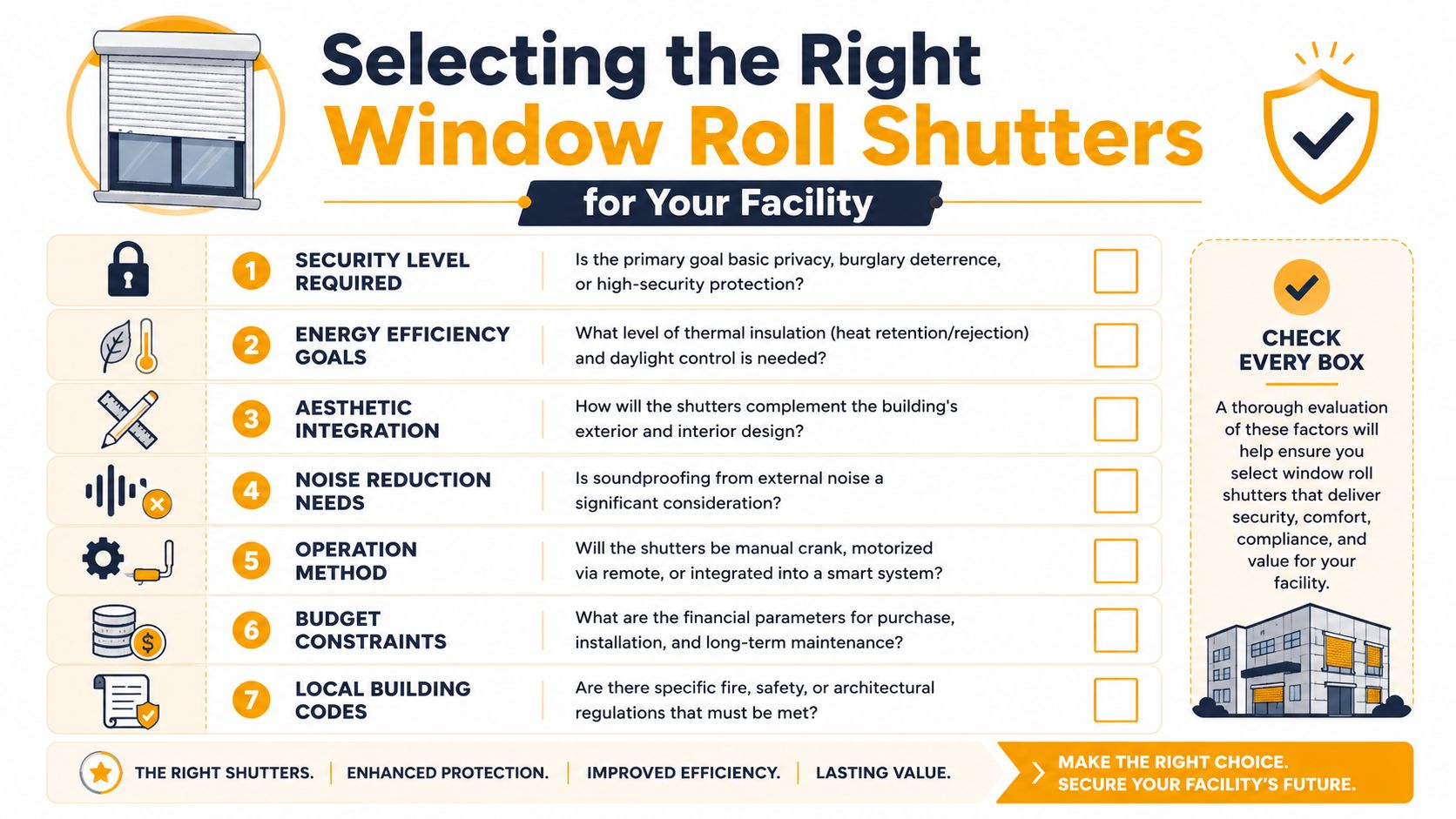
A practical selection checklist
Start with the opening, then work outward to operations, controls, and life-cycle cost.
- Security exposure: Is the glazing visible from the street, exposed to yard traffic, or located where after-hours access is hard to monitor?
- Winter performance: Will snow, ice, wind, or freeze-thaw cycles affect operation, bottom-bar sealing, or staff willingness to use the shutter consistently?
- Thermal and comfort goals: Is the problem perimeter cold, solar gain, glare, or occupant comfort near large glazed areas?
- Operating frequency: Will the shutter run twice a day, a few times a week, or only during shutdowns and severe weather?
- Control method: Is local key switch control enough, or should the shutter tie into existing building routines, security procedures, or scheduled closing sequences?
- Service environment: Will dust, vibration, washdown, salt, or traffic contamination shorten motor life or increase rail cleaning requirements?
- Parts standardization: If you manage multiple sites, can your team stock common controls, motors, and service parts instead of carrying different components for every building?
- Code and specialty requirements: Some openings need a rated assembly rather than a standard security shutter. In those cases, fire window shutters for code-driven openings are the correct path.
Operator choice deserves more attention than many buyers give it. Manual operation can make sense on low-cycle openings, but it often gets ignored if the shutter is large, awkward, or exposed to winter conditions. Motorized units cost more upfront, yet they usually deliver better compliance on busy sites because staff use them.
Facility type changes the answer.
A distribution centre often needs dependable closure at shipping office windows, customer service glazing near the dock, and other openings exposed to traffic and after-hours activity. In those areas, consistent daily operation matters as much as security rating.
A manufacturing plant usually has a different set of trade-offs. Dirt, vibration, and access for service can matter more than finish or concealment. I have seen well-specified shutters turn into nuisance assets because the environment was hard on controls and nobody planned for regular cleaning.
Healthcare sites, government buildings, and multi-property portfolios usually benefit from standardization. One control approach, one service process, and a narrower parts list reduce downtime and make budgeting easier across the portfolio. That is often where Wilcox adds long-term value, because reliability depends on matching the shutter to the site's real operating pattern, not just the opening size.
The selection mistake I see most often is treating every window as if it carries the same risk and the same payback. It does not. A ground-level admin window facing a truck court has different exposure, different usage, and different maintenance demands than an upper-floor office window on a controlled façade. Choose accordingly.
Best Practices for Installation and Maintenance
A shutter with good specifications can still become a nuisance asset if the install is rushed or the maintenance plan is vague. Most long-term problems come from three sources: poor mounting, poor alignment, or poor service access.
The first rule is absolute. The shutter must not be fixed directly to the window frame. It needs a site-specific build-out that transfers load to the surrounding structure, which helps prevent frame distortion and premature wear, as established in the earlier specification reference.
Installation checks that prevent future callouts
Before installation starts, the contractor should confirm structural attachment points, opening dimensions, clearance for the shutter box, and any interferences from trim, mullions, security bars, or access hardware. On retrofits, those details are where surprises live.
During installation, pay attention to these practical issues:
- Rail alignment: Guides have to stay plumb and true or the curtain will drag.
- Seal continuity: Perimeter sealing should control water and air leakage without interfering with shutter travel.
- Service access: Motors, limit settings, and the axle area must remain accessible for future work.
- Cycle testing: The shutter should be run through repeated open and close cycles before sign-off.
Maintenance reality: If a shutter chatters, hesitates, or stops short early in its life, the issue is usually installation quality or adjustment, not “normal break-in.”
What your maintenance team should own
Your staff doesn't need to rebuild a shutter assembly, but they should notice early warning signs.
- Watch travel quality: Uneven motion, scraping, or delayed response usually means it's time for service.
- Keep tracks clear: Dirt, ice, and debris in guide rails create avoidable wear.
- Check closure habits: A shutter left partly open too often won't deliver the protection it was bought for.
- Report weather effects: In Canadian winters, freeze-thaw conditions can turn minor drainage or alignment issues into operating failures.
A planned maintenance approach is the most reliable path for frequently used shutters. It keeps adjustments current, catches wear before a breakdown, and reduces the odds that a security device is unavailable when the site needs it.
Calculating Cost ROI and Real-World Use Cases
The business case for window roll shutters works when you calculate them as an operating asset, not just a purchase. Cost is shaped by size, material, operator type, control complexity, and how difficult the mounting conditions are. Retrofit work almost always costs more to get right than buyers expect, because structure, access, and finishing details drive labour.
ROI comes from several places at once. Some owners value the reduction in heat loss and comfort complaints. Others care more about avoiding break-ins, replacing damaged glazing less often, or adding a visible barrier at vulnerable ground-floor openings. In many facilities, the answer is a blend of all three.
When shutters beat alternatives
Security film can be a sensible lower-intervention option when the goal is mainly glass retention. Fixed grilles can work where visibility and airflow matter more than insulation. Upgraded glazing can improve the envelope, but it won't give you a deployable shield after hours.
Window roll shutters tend to justify themselves when the opening needs multiple jobs from one system. Secure the window. Help control the indoor environment. Stand up to regular use.
For sites facing severe weather exposure, tested aluminum systems may also support the case. Some modern systems list design pressures of up to 200 psf, which matters in debris-prone or high-wind conditions because pressure resistance relates directly to how the assembly handles uplift, deflection, and fastener stress, as described in this high-pressure roll shutter product reference.
A practical example is a warehouse office window facing a truck court. Film helps the glass. A blind reduces glare. A roll shutter addresses visibility, barrier protection, and exposure in one move. That's often where the long-term value becomes easiest to defend on paper.
If you're weighing window roll shutters for a retrofit, new build, or multi-site standardization plan, Wilcox Door Service Inc. can help you review opening conditions, operating requirements, and service implications before you commit to a specification. That's how facilities protect uptime and keep projects aligned with the brand promise of Respected Partners, Reliable Service.