


A broken glass panel in a commercial door usually gets reported the same way. Someone calls from the dock, the lobby, or the side entrance and says the door is shattered, people are stopping, and nobody knows whether to shut the area down or just tape it off.
That first decision matters more than most managers realise. Emergency door glass repair isn't just about replacing glass. It's about protecting people, preserving security, avoiding code mistakes, and deciding whether you need an immediate dispatch or a controlled next-day repair. In warehouses, manufacturing plants, and multi-tenant buildings, that choice affects uptime fast.
The practical playbook is straightforward. Secure the area. Contain the opening. Gather the right details before you call. Triage the event based on risk, not panic. Then turn the incident into better documentation and maintenance discipline going forward. That's how experienced teams protect operations and live out a simple standard: Respected Partners, Reliable Service.
Your Guide to Handling a Broken Commercial Door Glass Emergency
When a door lite breaks at a shipping office entrance or a pedestrian door beside a loading dock, the mess you can see is only part of the problem. The bigger issue is what the broken opening now allows in or out. Uncontrolled foot traffic, weather exposure, unauthorised entry, and a non-compliant fire door all create very different levels of urgency.
New managers often treat every glass break the same way. That leads to two common mistakes. They either under-react and leave a dangerous opening exposed, or they over-react and pay for an after-hours call that could have been scheduled safely the next morning. Good facility leadership starts with triage.
The six decisions that settle the situation
Here's the order that works in the field:
- Protect people first: Stop traffic, isolate the area, and prevent anyone from touching broken glass or using the damaged door.
- Assess the opening: Decide whether the break created a true security, weather, or life-safety issue.
- Contain temporarily: Board up or secure the opening if a permanent replacement can't happen immediately.
- Collect useful information: Photos, measurements, door type, and glass type help the repair team arrive prepared.
- Check code implications: Fire-rated and security doors need the correct replacement materials.
- Decide on response timing: Immediate dispatch for true emergencies. Scheduled repair for controlled, low-risk situations.
A calm first response beats a fast but disorganised one.
If your facility doesn't already have a written playbook, adapt this process into your broader incident procedure. A practical guide to creating an emergency response plan can help standardise who gets called, who secures the area, and what information gets logged. When the issue is active and you need a qualified door technician involved, keep a direct path to emergency commercial door repair support in your escalation list.
Immediate Safety Protocol The First 15 Minutes
The first quarter hour is not for cleanup. It's for control.
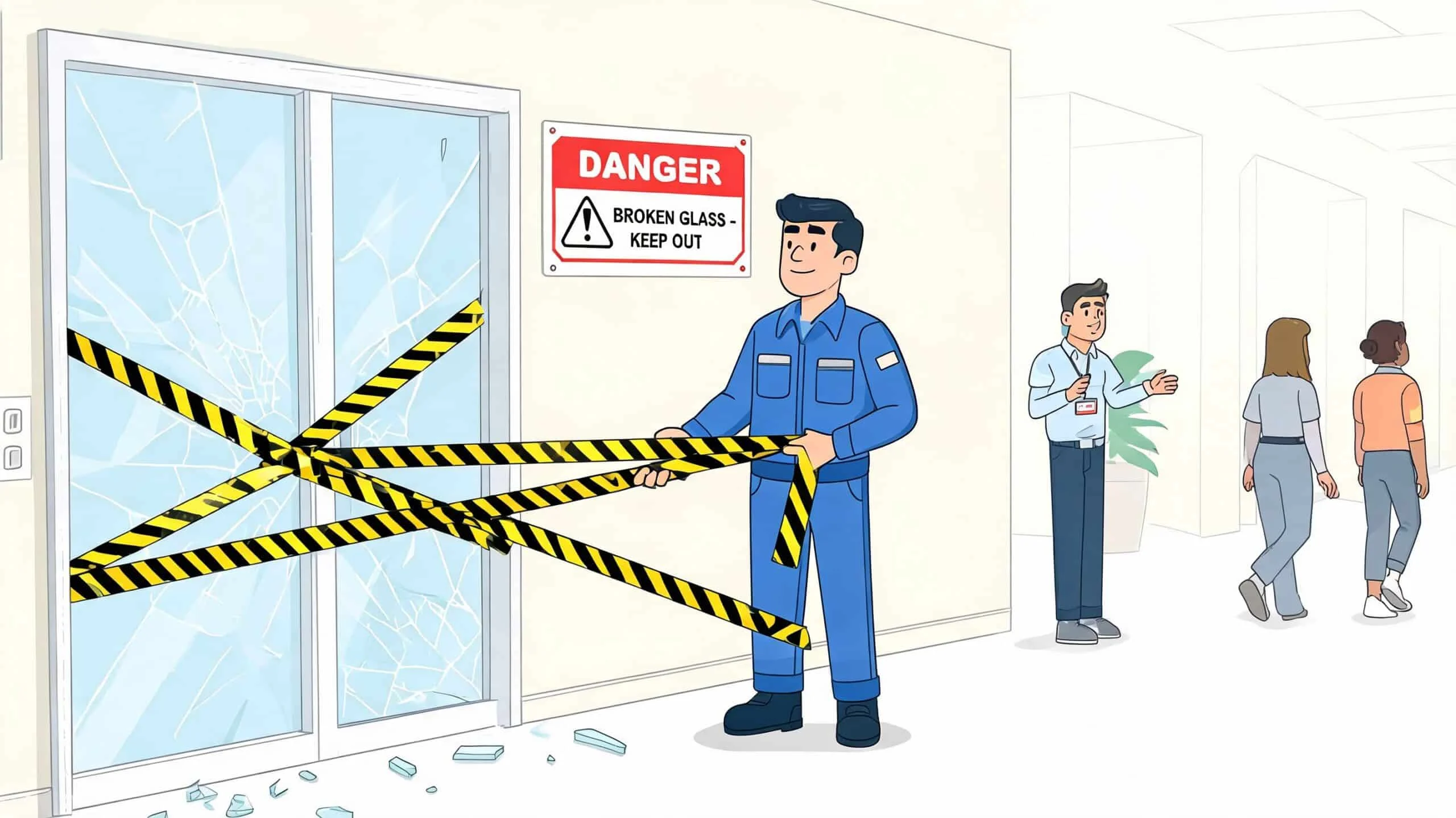
A shattered office entry, broken vestibule door, or cracked vision panel in a plant door can still injure people after the initial impact. Small shards travel farther than is often underestimated. A half-attached pane can fall later. A damaged closer or twisted frame can make the entire opening unstable.
Lock down movement around the opening
Start by assuming the area is larger than it looks.
- Stop traffic immediately: Keep staff, visitors, drivers, and contractors away from the door and its swing path.
- Expand the perimeter: Use cones, caution tape, stanchions, carts, or temporary barriers to block both sides of the opening.
- Redirect circulation: Send people to a different entrance instead of trying to “carefully” pass through.
- Shut down nearby equipment: If the damage is near a dock lane, forklift route, or powered operator, pause movement in that zone.
A warehouse example is common. A forklift clips a glazed panel in a sectional or pedestrian access door. The wrong response is to sweep the obvious glass and keep the lane moving. The right response is to close the lane, isolate the door, and stop anyone from testing whether it still works.
Give your team a clear instruction set
People improvise when instructions are vague. Don't say, “Be careful around the door.” Say exactly what they must and must not do.
Use language like this:
- Do not use this entrance
- Do not touch remaining glass
- Do not attempt to close or latch the door
- Report any loose frame, smoke seal, or hardware damage
Practical rule: If someone needs to ask whether it's safe to use the door, it isn't.
Avoid the common first-response mistakes
The mistakes usually come from trying to be helpful too early.
| Wrong move | Why it creates risk | Better action |
|---|---|---|
| Sweeping before the perimeter is set | People keep walking through the hazard zone | Block access first |
| Letting staff prop the door shut | The frame or glass pocket may be compromised | Leave the door untouched until assessed |
| Picking out remaining shards by hand | Hidden stress points can release more glass | Leave removal to trained personnel |
| Using the door “one last time” | Hardware failure can worsen the damage | Redirect traffic immediately |
A secure perimeter buys time. It also keeps the incident from turning into an injury report.
Temporary Containment and Protection
Once people are safe, the next job is to close the opening. Not cosmetically. Functionally.
A proper temporary barrier keeps out rain, wind, pests, and opportunists. It also shows that the facility acted with due care. In professional emergency glass work, the standard process starts with an on-site damage survey and then moves straight to temporary securing measures if permanent replacement can't happen on-site, as outlined in this overview of how emergency glass repair and replacement works.
What to keep on hand
Most facilities already stock enough material to stabilise a broken opening if the supplies are organised.
Keep these items accessible:
- Plywood panels: For rigid board-up when security matters
- Heavy-duty poly or tarp material: For short-term weather protection on interior vestibules or low-risk openings
- Screws and washers: Better control than nails for temporary fastening
- Work gloves and eye protection: Basic protection for the maintenance team handling containment
- Utility knife and drill: For quick fitting and fastening
- Marker and tape measure: To label the opening and note rough dimensions for the repair call
How to board up without making the repair harder
The goal is to secure the opening without damaging the door system further.
- Clear loose hazards first: Don't try to pull embedded fragments from the glazing channel if they're still holding.
- Measure the exposed opening: Aim for full coverage with overlap where practical.
- Fasten to solid structure: Screw into the frame or surrounding structure, not into weak remaining panel material.
- Keep hardware accessible where possible: Don't bury critical areas if the technician will need immediate access.
- Mark the barrier clearly: Identify the door as out of service so nobody removes the board-up casually.
If the break is in a glazed overhead or sectional application, don't assume the rest of the door is sound. A broken vision panel can be the visible symptom of a larger alignment or impact problem. In those cases, the temporary measure is only buying time until the system can be inspected properly.
For planned follow-up on matching inserts and vision sections, a glass-specific service such as commercial garage door window replacement is often part of the permanent fix.
The best temporary containment is simple, rigid, and boring. If it looks clever, it usually won't last the night.
Gathering Intelligence for the Repair Team
The quality of your call determines the quality of the response.
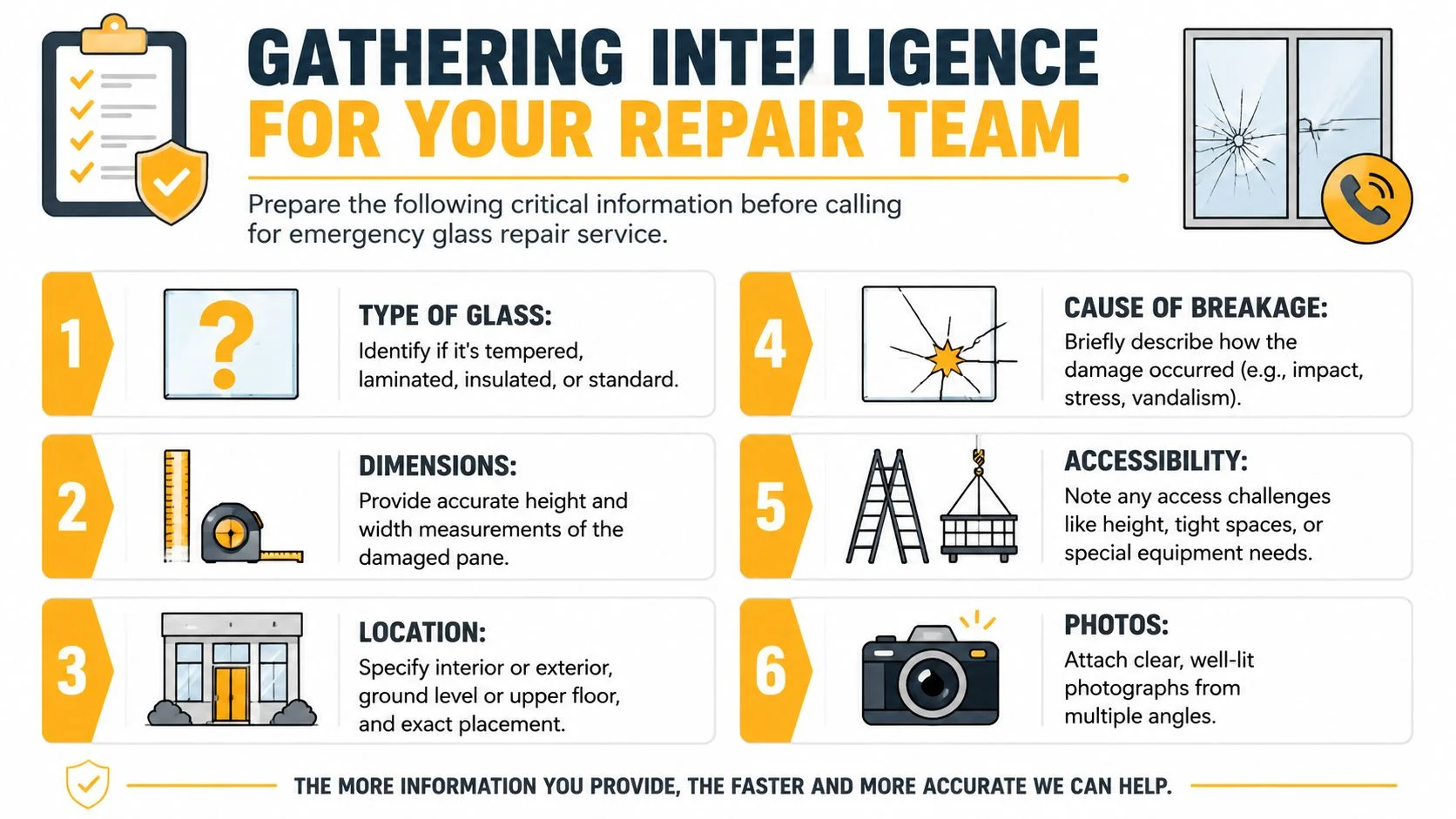
When managers give vague descriptions like “the front door glass is broken,” technicians have to prepare for too many possibilities. That means more uncertainty, more back-and-forth, and a greater chance of a temporary fix turning into multiple visits. Specific information helps the service team bring the right glass, tools, sealants, and access equipment on the first trip.
The details that matter most
Start with the opening itself.
- Door type: Is it a pedestrian entry door, sectional overhead door, aluminium storefront door, or a hollow metal door with a vision lite?
- Opening location: Exterior or interior. Ground level or upper level. Public entrance, shipping office, tenant suite, or secure area.
- Approximate dimensions: Rough height and width of the damaged pane or opening.
- Photos from multiple angles: Wide shot, close-up, frame condition, hardware condition, and surrounding area.
Then capture the context. Tell the dispatcher what caused the break if you know it. Impact, attempted break-in, thermal stress, or equipment collision all point to different likely hidden damage.
Glass type changes the repair plan
This point gets overlooked often. Glass type affects both safety and response time.
Laminated glass offers stronger security performance and may be used in fire-rated applications, but it requires specialised on-site cutting equipment. Standard tempered glass is more common and may be replaced faster when the size is a stocked standard. That distinction matters when you're arranging commercial glass door replacement.
A few practical clues help:
| What you see | Likely implication |
|---|---|
| Glass shattered into many small pieces | Could be tempered glass |
| Glass cracked but stayed largely in place | Could be laminated glass |
| Label in the corner of intact glass | May identify safety or fire rating |
| Door is in a rated corridor or stairwell | Treat the glazing as potentially code-sensitive |
The technician who arrives informed is usually the technician who finishes faster.
If your site has old asset files, pull them before you call. Door schedules, submittals, and fire-door records often contain the exact glazing specification. That saves time and helps avoid the expensive mistake of sending the wrong material to a rated or secure opening.
Triage Timelines and Code Compliance
At 9:40 p.m., a shattered door lite can look like a full emergency. Sometimes it is. Sometimes the right call is to secure the opening, document the rating requirements, and schedule the reglaze for the first available daytime slot. That decision affects cost, downtime, and compliance.
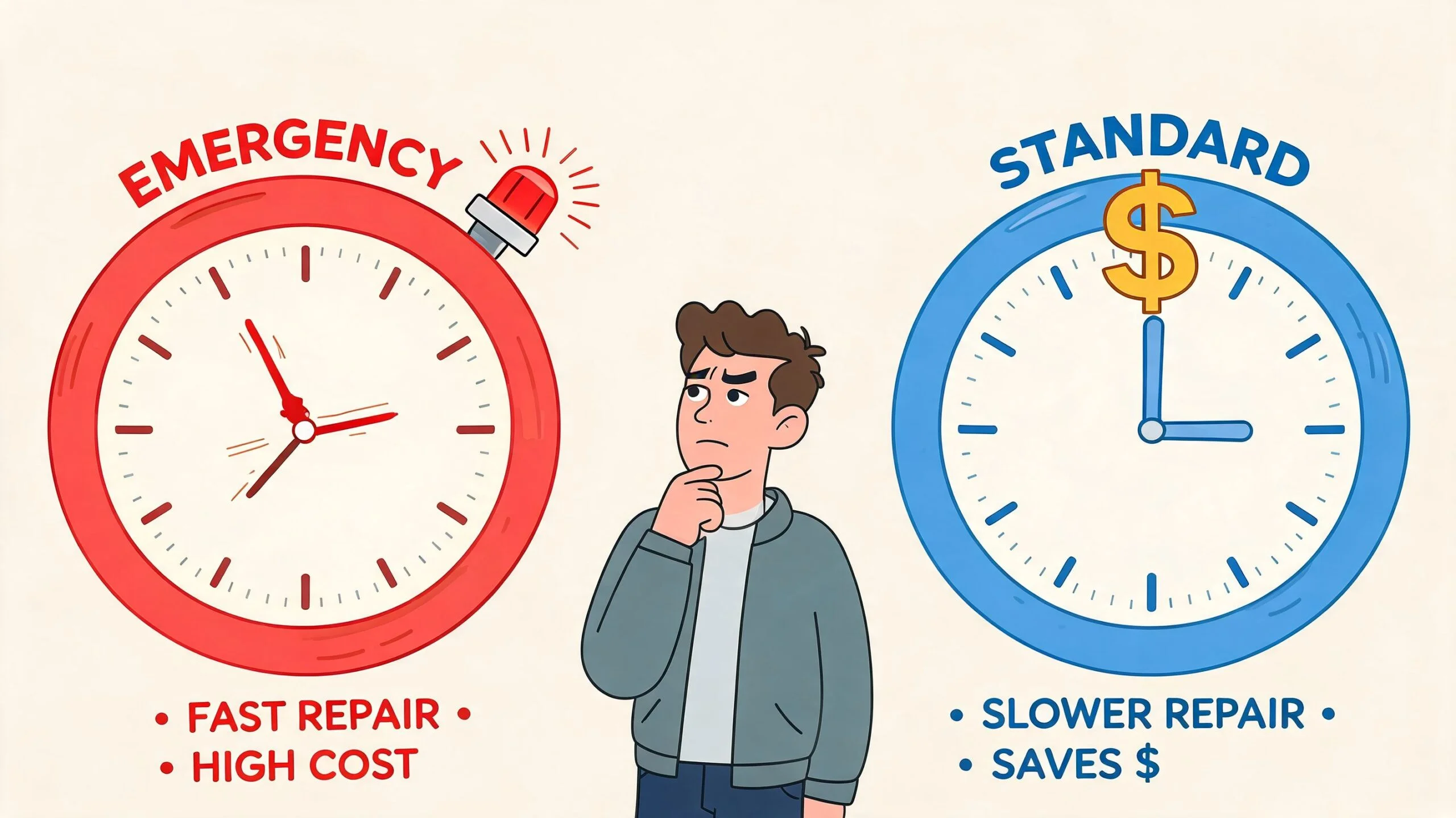
The triage question is simple. What fails if this opening stays in temporary protection until business hours?
Authorize immediate dispatch when the opening cannot be secured, the door serves a required egress path, the assembly is fire-rated, weather exposure will damage interiors or equipment, or the break shuts down a core operation such as a main public entrance or controlled access point. Schedule the repair when the area is safely isolated, the opening is protected against entry and weather, and the damaged glass is not part of a life-safety or code-sensitive assembly.
Ask these questions before authorising emergency dispatch
Is the site exposed to unauthorised entry right now?
Is the opening part of egress, smoke control, or a fire-rated door assembly?
Can staff secure the area and maintain safe circulation until regular service hours?
Will delay create building damage, a security failure, or a tenant-facing shutdown?
This short checklist helps managers make a defensible call under pressure. It also gives security, operations, and finance the same decision standard instead of three different opinions.
The real trade-off is urgency versus certainty
After-hours response usually costs more. Custom glass and rated materials also extend the timeline, even when a technician arrives quickly to make the opening safe. In practice, that means an emergency visit may solve the immediate hazard the same night, while the final glass installation happens later after the exact material, thickness, and rating are confirmed.
That is why I separate "make safe now" from "restore permanently now." They are not always the same job.
If the opening is boarded, the area is controlled, and the door is not code-sensitive, waiting for standard service is often the better operational decision. If the break affects a rated corridor door, a pharmacy entrance, a school vestibule, or a building perimeter opening that cannot stay secured, delaying the response creates more risk than the after-hours charge.
Code compliance is where rushed repairs create expensive second visits
Fire-rated and life-safety openings need more than glass that happens to fit. The glazing label, size limits, frame condition, glazing method, and installation details all have to match the assembly listing. A fast temporary fix that ignores those requirements can leave the door out of compliance and force a second mobilisation.
Good tracking prevents that. Teams handling multiple sites and vendors often borrow the discipline used in construction CRM software: one record for the opening, one record for the incident, clear photos, and one approved scope before anyone orders material. That cuts down on duplicate dispatches and wrong-glass orders.
For facilities that need national emergency support for doors and access points, Wilcox Door Service Inc. is one provider operating across Canada. The point is not the name on the truck. The point is whether the technician and dispatcher treat a broken lite in a rated or secure opening as a code and operations issue, not just a piece of glass to swap.
From Reactive Repairs to Proactive Partnerships
The emergency is over when the opening is safe and the door is functioning again. The important lesson starts after that.
Most repeat glass incidents aren't random. A delivery path is too tight. A closer is slamming. A door is misaligned. An old opening has poor documentation, so every repair starts from scratch. Those are management problems, not just repair problems.
What strong facilities do after the incident
The best teams turn one break into three improvements:
- Update door records: Record the opening number, glass type, thickness, and any security or fire classification.
- Review the cause: Separate accidental impact from hardware failure or recurring traffic conflict.
- Add the opening to routine inspection: Doors near docks, high-traffic corridors, and public entrances deserve regular checks.
Industry best practice recommends documenting glazing installations with material type, thickness ratings, and security or fire classifications. That recordkeeping is critical for faster coordination with 24/7 service providers, as noted in this discussion of emergency versus regular glass repair practices.
Why planned maintenance changes the pattern
A facility that only reacts will keep paying emergency rates, suffering avoidable downtime, and making rushed parts decisions. A facility that inspects and documents its openings makes better calls under pressure. That's the practical value of a planned maintenance programme.
You don't need a complicated system. You need current asset information, a clear escalation path, and a service partner who can work on commercial doors, dock equipment, and related access systems without turning every failure into a separate scramble. That's what long-term reliability looks like in daily operations. Respected Partners, Reliable Service.
If you need help with emergency door glass repair, code-sensitive door issues, or a preventive maintenance strategy for commercial and industrial openings, contact Wilcox Door Service Inc. to discuss your facility's requirements, schedule an inspection, or arrange service support.