


Ground-floor windows are often the weak point in an otherwise well-managed facility. You can have solid doors, organised dock traffic, and a good access system, then still lose heat, invite break-ins, or face storm damage through exposed glazing.
That is why roller shutters windows matter in commercial and industrial buildings. They protect openings that many sites leave under-specified.
For Canadian facility managers, the job is rarely just security. You also need to control energy costs, reduce downtime, satisfy inspectors, and make retrofit decisions that still make sense five years from now. In North America, the roller shutter market holds a 34.2% share of the global market, with demand tied to security requirements and energy efficiency needs, and that pressure is especially relevant in Canada’s weather and code environment (Coherent Market Insights).
Your Guide to Roller Shutters for Windows
A warehouse manager usually notices the window problem in one of three ways. A break-in starts at the side elevation where nobody expected traffic. Utility bills stay stubborn even after door seals and dock equipment have been upgraded. Or a storm exposes how vulnerable older glazing is when wind and debris hit the building envelope.
Roller shutters for windows solve those problems when they are specified properly. They are not decorative add-ons. In an industrial setting, they are part of the facility protection strategy.
What matters in practice
A good specification balances several needs at once:
- Security: The shutter has to resist forced entry, not just look substantial from the parking lot.
- Thermal control: In Canada, window openings can work against your HVAC system all year.
- Code fit: Fire separations, wind exposure, wiring, and mounting details all matter.
- Serviceability: A shutter that is difficult to inspect or repair becomes a liability.
Most online content misses that last two points. It talks about appearance, residential privacy, or angled windows. Facility teams need a more practical lens.
Where facility managers get tripped up
The biggest mistakes are usually specification mistakes, not product failures.
- Choosing by price alone: Low first cost often means weak guides, poor controls, or limited support.
- Ignoring the opening condition: Old masonry, uneven steel, and façade details affect fit and long-term reliability.
- Treating every window the same: Shipping office glazing, warehouse side lights, and high-security storage windows do not need the same shutter.
Tip: If the shutter choice does not reflect the building’s risk profile, operating hours, and code requirements, you are buying a product, not solving a facility problem.
The right approach is straightforward. Understand the components, choose the right material and operating method, verify sizing and mounting, then confirm compliance and lifecycle cost before procurement.
Understanding the Core Components of a Roller Shutter
A roller shutter is a curtain of interlocking slats that travels up and down inside side guides and coils into a box above the opening. If you are new to the product, think of it as armour for the window that can disappear when not needed.
That simple idea only works if the main parts are matched correctly.
The slats
The slats are the visible face of the shutter. They interlock so the curtain moves as one unit.
In commercial applications, slat choice affects more than appearance. It influences stiffness, thermal performance, noise, operating weight, and how the shutter behaves in wind.
Foam-filled aluminum slats are common where insulation matters. Heavier profiles make sense where security or wider spans matter more.
The guide channels
Guide channels are the side tracks that hold the curtain in place. This is one of the most overlooked pieces in a specification.
A strong curtain with shallow or poorly anchored guides will not perform the way it should. In real-world service calls, many issues come back to guide alignment, wear, or inadequate fastening into the structure.
The box and barrel
The top box houses the rolled curtain and the barrel it wraps around. On a new build, this can be planned neatly into the façade. On a retrofit, the box usually becomes a visible exterior element, so clearance and access matter.
The barrel size must suit the curtain weight and opening dimensions. If that relationship is off, motors strain, shutters cycle poorly, and maintenance becomes more frequent.
The drive and controls
Some shutters are hand-operated. Many commercial units are motorized.
Controls can be local, grouped, or tied into wider building systems. For a facility team, the key question is not whether automation sounds modern. It is whether automation reduces labour, improves consistency, and fits your emergency procedures.
How roller shutters differ from other products
A roller shutter is not the same as a grille, blind, or interior shade.
| Product | Main strength | Main limitation |
|---|---|---|
| Roller shutter | Security, weather protection, thermal control | Requires proper mounting and servicing |
| Security grille | Visibility and access control | Limited insulation |
| Interior blind | Privacy and glare reduction | No meaningful security or weather resistance |
When people use the wrong product category, they end up disappointed for predictable reasons. A blind cannot stop intrusion. A grille will not solve winter heat loss.
Choosing the Right Material and Shutter Type
The material decision drives performance, maintenance, and long-term cost more than most buyers expect. The wrong choice usually comes from applying residential logic to an industrial opening.
Material trade-offs that matter on site
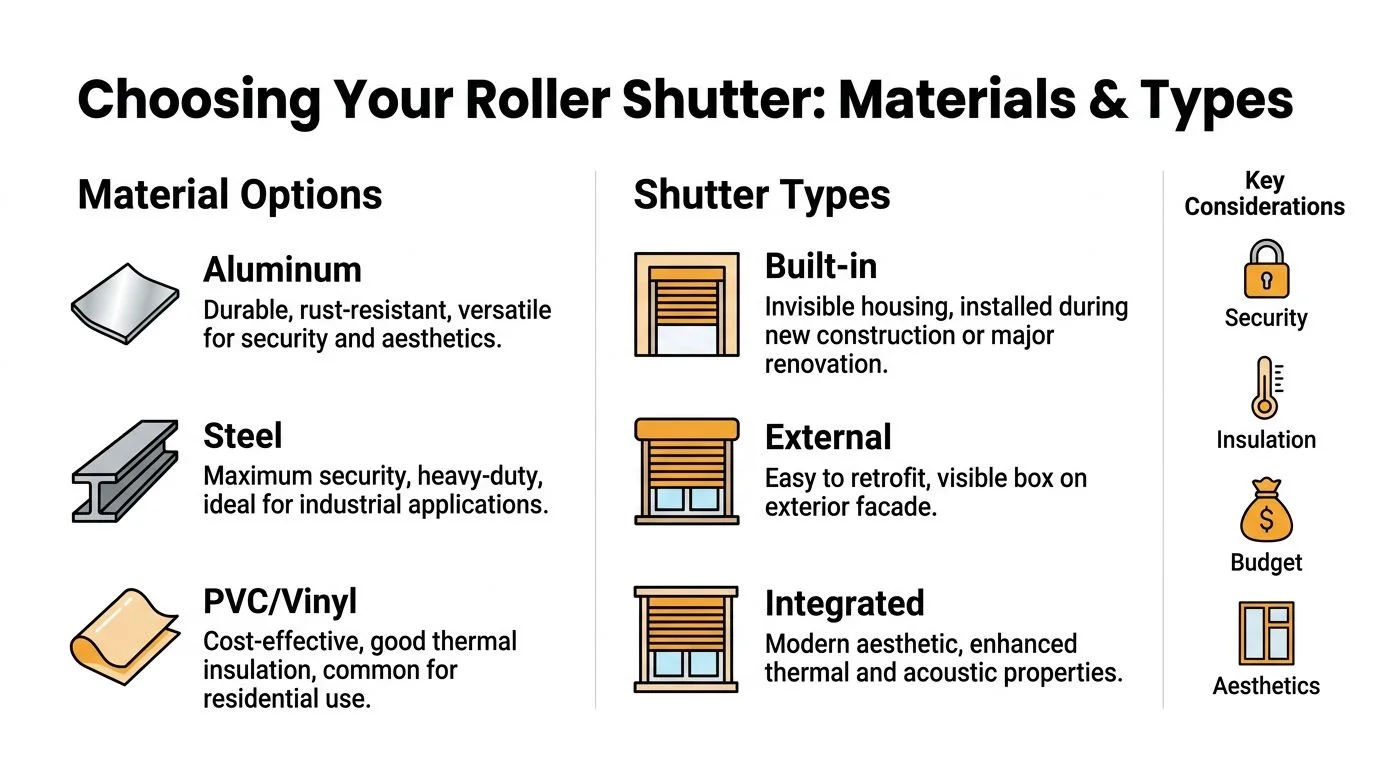
For most Canadian commercial work, the primary comparison is aluminum versus steel. PVC or vinyl appears in light-duty contexts, but it is usually not what an industrial facility manager should be prioritising for security or durability.
Roller Shutter Material Comparison for Commercial Facilities
| Material | Security Level | Insulation Value | Corrosion Resistance | Best For |
|---|---|---|---|---|
| Roll-formed aluminum | Good | Good to very good when foam-filled | Strong | Office glazing, warehouse windows, general retrofit work |
| Extruded aluminum | Very good | Moderate to good | Strong | Higher-security commercial openings |
| Steel | High | Varies by build | Moderate, depends on coating and environment | Heavy-duty industrial risk areas |
Aluminum in daily operations
Aluminum works well because it keeps weight manageable while still delivering solid performance. That matters when the shutter cycles often or when the opening has structural limits.
Foam-filled aluminum also supports energy performance. In practical terms, it is a good fit where the same window needs security, insulation, and reasonable operating load.
Where steel makes sense
Steel belongs where impact resistance and physical security dominate the conversation. You will often accept more weight and potentially more maintenance in exchange for a tougher barrier.
That can be the right trade in exposed industrial areas, but not every opening needs it. A front office window and a vulnerable warehouse side wall rarely deserve the same spec.
Built-in, external, and integrated forms
The shutter type is just as important as the material.
- Built-in systems: Best suited to new construction or major envelope work. The housing is planned into the wall assembly.
- External systems: Usually the practical answer for retrofits. The box remains visible, but installation is simpler and less invasive.
- Integrated systems: Often chosen where the window assembly and shutter are designed together.
For many existing facilities, external mounting wins because it avoids tearing into finished construction. That lowers disruption and keeps the work predictable.
Manual or motorized
A manual shutter can still be appropriate on a small, rarely used opening. Past that point, motorization usually becomes the practical option.
Motorized units help when:
- Windows are hard to reach: Clerestory glazing and elevated office bands are poor candidates for manual operation.
- Openings must be controlled together: Multi-window façades benefit from grouped operation.
- The shutter ties into site procedures: Security lockdowns and scheduled operation are easier to standardise.
If you want a broader look at related rolling products, this guide to roll shutter doors is useful for comparing operating principles and commercial use cases.
Key takeaway: Pick the shutter based on the opening’s job. Security-first windows, energy-loss windows, and frequently operated windows often need different combinations of slat profile, material, and control method.
Key Performance Benefits for Your Facility
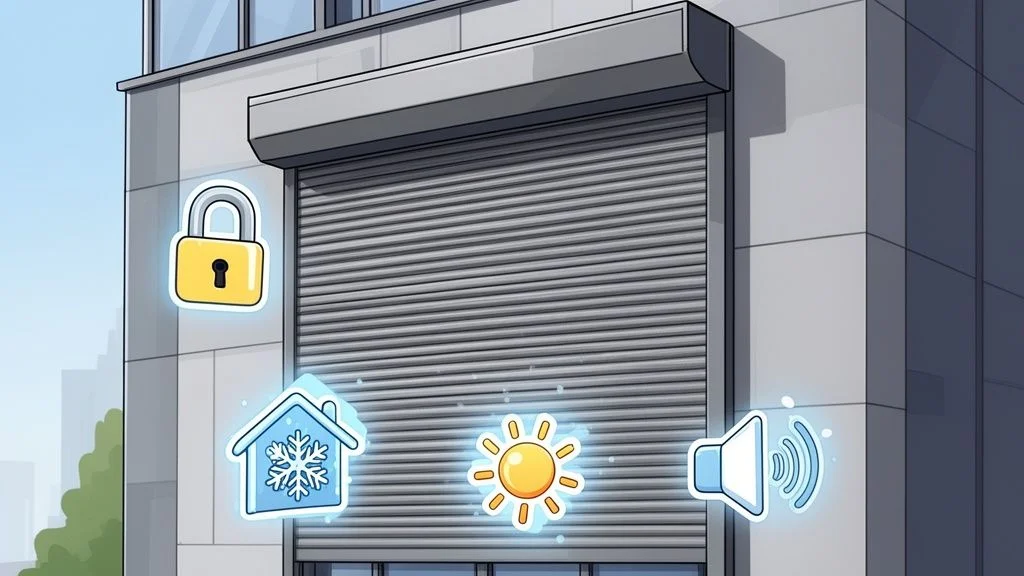
The value of a shutter shows up in three places: security, energy use, and resilience. If it only solves one of those, it may not be the right product for a Canadian industrial site.
Security that changes behaviour
A closed shutter changes how an opening can be attacked. Interlocking slats, side guides, and a properly secured bottom bar create a barrier that is far more difficult to exploit than exposed glass.
That matters most on side elevations, loading-adjacent office windows, and places where inventory is visible from outside. In those areas, the goal is not only to resist entry. It is also to discourage the attempt.
Deep guides and tight curtain travel help here. If the curtain can be lifted or pried out of the guides easily, the shutter is underbuilt or poorly installed.
Thermal performance you can feel
Insulated exterior shutters do more than dim light. They create a thermal layer outside the glass, which is where you want the defence in both summer and winter.
Exterior roller shutters with foam-filled aluminum slats can reduce heat gain through windows by up to 90% in summer and heat loss by up to 70% in winter, with reported ROI within 2 to 3 years from reduced utility bills for Canadian facilities (Door Supply).
For facility teams, that usually shows up as:
- Lower HVAC strain: Equipment runs less aggressively near solar-exposed glazing.
- Better interior comfort: Staff in offices, guard stations, and production-adjacent spaces notice fewer hot and cold spots.
- More stable operation: Sensitive spaces are easier to manage when windows stop acting like weak thermal points.
If you are comparing alternatives for solar control, this overview of solar screens for windows is a helpful reference. Screens can help with glare and solar load, but they are not substitutes when you also need security and weather protection.
Protection from weather and exposure
In Canada, exposed glazing takes real punishment. Wind, drifting snow, hail, debris, and freeze-thaw cycles all work against the building envelope.
A shutter adds a sacrificial protective layer. That is particularly useful on isolated façades, coastal exposures, and facilities where replacing broken glazing would disrupt operations.
Practical advice: If a broken window would force you to shut down part of the building, treat that opening like critical infrastructure. Specify the shutter accordingly.
One product, several operating benefits
The strongest projects are the ones where the shutter solves several problems at once. A side warehouse window can become more secure, easier to heat, and less vulnerable to weather in one retrofit.
That is where the business case improves. You are not buying a single-purpose accessory. You are reducing multiple operational risks with one opening treatment.
Sizing Mounting and Integration Options
Good shutters fail early when sizing is lazy. Accurate measurement, realistic mounting choices, and clean integration are what separate a smooth retrofit from a recurring service issue.
Measure the structure, not just the glass
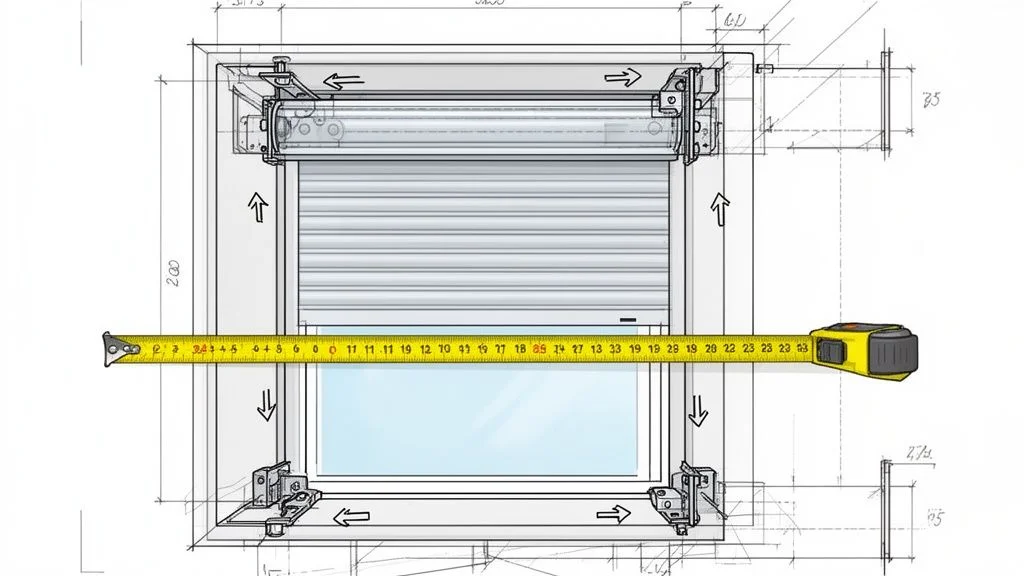
Start with the full opening condition. Width and height are obvious, but they are not enough.
You also need to check:
- Plumb and level: Old masonry and steel-framed walls often vary more than expected.
- Mounting surface condition: Cracked block, uneven cladding, or weak trim can affect anchoring.
- Headroom and side room: The box and guides need clear space.
- Obstructions: Lights, conduit, signage, cameras, and downspouts regularly interfere with shutter placement.
This is one reason field verification matters. Shop drawings based on nominal window sizes alone can create avoidable rework.
Reveal fit or face fit
A reveal fit places the shutter within the opening. It can look cleaner and stay tighter to the façade.
A face fit mounts outside the opening on the wall surface. It is often the better retrofit option because it works around imperfect openings and gives more flexibility for the box and guides.
Neither is automatically better. The structure decides.
Wind and security depend on the mounting
For Canadian facilities in high-wind regions, proper specification is essential. Certain aluminum roller shutters can achieve Wind Load Resistance Class 3 to 6 under EN 13241 and RC 2 burglary resistance when they are sized and mounted correctly (ARCAT).
That point is easy to miss. Performance ratings belong to a tested assembly, not just a slat brochure. Fasteners, substrate, guide depth, and opening size all affect whether the installed product behaves like the tested one.
Integration with building systems
Motorized shutters become more useful when they are tied to site operations.
Common integration points include:
- Security controls: Scheduled closing after business hours or during lockdown procedures
- Building automation: Group operation by façade exposure or occupancy schedule
- Fire alarm interfaces: Depending on the product and code intent, shutters may need a defined response during alarm events
For teams looking at screen products as well, these sizing and installation tips for roller fly screens offer a useful reminder that accurate measurement and mounting logic matter across all rolling window systems, even though the performance goals are different.
Tip: If you are unsure whether the wall can carry the loads cleanly, involve the installer before final ordering. It is cheaper to solve mounting details on paper than after the box arrives on site.
Navigating Canadian Compliance and Building Codes
Many projects go off track here. Buyers spend time on finish colour and motor options, then leave code review until procurement or inspection. That sequence causes delays.
A significant gap in available content is the lack of attention to Canadian building codes for roller shutters. Many sources focus on appearance, while facility managers need guidance on the National Building Code of Canada and ULC standards for fire-rated openings (Woundwo).
Fire-rated openings are not optional details
If the window opening sits in a required fire separation, the shutter decision is no longer just about security or weather. It becomes a life-safety issue.
That means checking:
- Whether the opening needs a fire-rated closure
- What rating is required by the assembly
- How the shutter is triggered and reset
- What testing and documentation the authority having jurisdiction expects
A fire-rated rolling product has to be treated like fire protection equipment, not just a movable barrier. That includes inspection routines, drop testing where applicable, and documented maintenance.
For a deeper look at that topic, this article on fire shutters for windows covers how these assemblies fit into commercial and industrial code planning.
NBC, provincial requirements, and site realities
The NBC sets the framework, but projects are shaped by provincial adoption, local enforcement, occupancy type, and the building’s existing condition. Airports, healthcare facilities, manufacturing plants, and multi-tenant commercial buildings all bring different review questions.
A few practical issues come up repeatedly:
- Retrofit assumptions: Existing buildings do not automatically avoid compliance obligations.
- Electrical scope: Motorized shutters need wiring that aligns with applicable electrical requirements.
- Egress and operations: A security solution cannot create unsafe operating conditions for staff.
Insurance and inspection consequences
Non-compliant work creates problems long before a fire or break-in happens. Inspectors can reject the installation. Insurers may ask hard questions after a loss. Facility teams then spend more money correcting a product that should have been specified properly at the start.
Practical rule: If the shutter touches fire separation, life safety, or emergency procedures, involve code review early. Do not leave those questions to the installer on arrival day.
Documentation matters
Keep a full project file with approved drawings, product data, ratings, control logic, and service records. That file helps during inspections, ownership transitions, and future repairs.
In my experience, the sites with the fewest surprises are the ones that treat opening protection like any other regulated building system. They document it, inspect it, and keep the records where operations can find them.
Installation Maintenance and Repair Best Practices
A well-built shutter can still become a poor asset if the installation is rushed or maintenance is reactive. Most long-term problems are predictable.
Installation details that affect service life
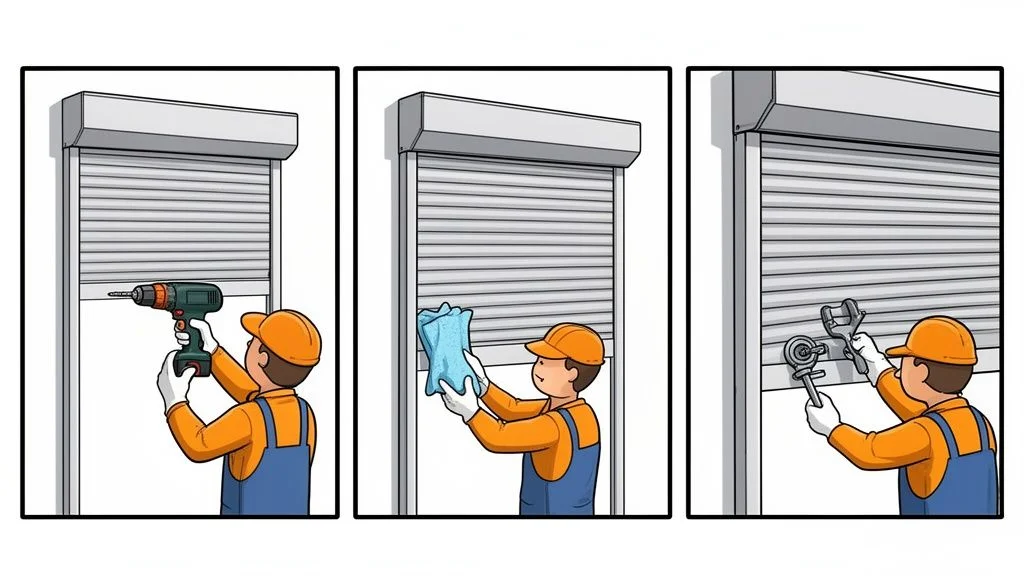
Retrofit work is where discipline matters most. Existing walls are rarely perfect, and openings often sit near utilities, trim, or façade elements that force compromises.
During installation, the crew needs to verify:
- Guide alignment: If the guides are twisted or out of parallel, the curtain will wear unevenly.
- Secure anchoring: Fasteners must suit the actual substrate, not the assumed one.
- Motor setup: Limits need proper adjustment so the curtain stops where it should.
- Drainage and sealing: Water entry around the box or guides can damage both the opening and the shutter system.
On new construction, coordination is the bigger issue. Shutter boxes, steel support, power, cladding, and window placement need to be resolved before the wall is closed up.
A maintenance routine that pays for itself
Planned maintenance for roller shutters windows does not have to be complicated, but it does need consistency.
A practical checklist includes:
- Clean the guides: Dirt, salt, and debris increase drag and wear.
- Inspect curtain condition: Look for bent slats, damaged end locks, and impact marks.
- Test operation: Listen for straining, hesitation, or uneven travel.
- Check seals and perimeter condition: Air leaks and water ingress often start at neglected edges.
- Review controls: Confirm switches, remotes, and safety devices respond correctly.
These inspections fit naturally into broader facility routines that already cover overhead doors, loading docks, and access systems.
What fails most often
In service work, common failures are usually simple:
| Common issue | Likely cause | Operational effect |
|---|---|---|
| Curtain binds in guides | Debris, guide damage, poor alignment | Shutter stops mid-cycle |
| Motor strains or overheats | Incorrect limits, excess load, wear | Lost security and downtime |
| Water or drafts around opening | Failed seals or poor flashing | Comfort and building envelope issues |
| Bottom bar damage | Impact or misuse | Incomplete closure |
When to call for repair
Do not wait for complete failure. If a shutter starts cycling unevenly, making new noise, or leaving gaps when closed, put it on a repair ticket early.
For facilities that already manage multiple opening types, it also helps to align shutter service with broader repair planning such as commercial door repair. That keeps response procedures more consistent across the site.
Maintenance advice: A shutter that still opens is not necessarily healthy. Small tracking or control issues are much cheaper to fix before they turn into a jammed curtain or a burned-out operator.
Calculating Total Cost and Return on Investment
Procurement teams often focus on installed price. Facility managers should look at total cost of ownership instead.
That means asking what the shutter costs to buy, operate, maintain, and repair over its service life, then weighing that against what it prevents. In industrial settings, prevention is where much of the value sits.
What belongs in the calculation
A useful TCO review includes both hard costs and operational effects:
- Capital cost: Product, controls, structural prep, wiring, and installation
- Energy impact: Reduced heat gain and heat loss through exposed glazing
- Maintenance cost: Planned servicing, parts replacement, and emergency repairs
- Risk reduction: Fewer break-ins, less vandalism, lower exposure to weather damage
- Operational continuity: Better uptime when the opening remains protected and functional
For Canadian industrial retrofits, motorized roller shutters can deliver 25% to 40% energy savings, with payback periods of 2 to 4 years, and automated shutters also correlate with an 18% improvement in uptime (Shutterworld).
Build the business case properly
The cleanest ROI cases usually come from windows that already have one or more obvious problems:
- they face strong sun and drive cooling demand
- they expose valuable stock or equipment
- they sit in wind-prone or vandalism-prone areas
- they are difficult for staff to manage manually
If the opening creates repeat cost, the shutter has a stronger financial argument.
A practical way to compare options
When reviewing quotes, compare each option against the same questions:
- How much risk does this opening create today?
- Will this shutter reduce operating cost or only add protection?
- What service support exists if the unit fails?
- Does the specification support compliance and inspection needs?
- What is the expected cost if the window remains unprotected?
That last question is often the one that changes the decision. A broken pane, a security incident, or a weather-related shutdown can make a “cheaper” option look expensive quickly.
The strongest ROI discussions avoid guessing. They use your actual utility patterns, operating hours, and exposure conditions to decide where shutters belong first and where they may not be necessary yet.
Secure Your Facility with a Trusted Partner
Choosing roller shutters windows for a Canadian facility means balancing security, thermal performance, code compliance, and long-term serviceability. The right system protects more than glass. It protects uptime, inventory, staff comfort, and inspection readiness.
Where shutters are only part of the opening security plan, it is also worth comparing them with products such as folding security gates for interior zones, tenant separations, or controlled-access areas that need a different level of visibility and access.
If you are assessing vulnerable windows, planning a retrofit, or trying to build a stronger business case for a multi-site upgrade, contact Wilcox Door Service Inc. to arrange a site review or service inspection. Respected Partners, Reliable Service.