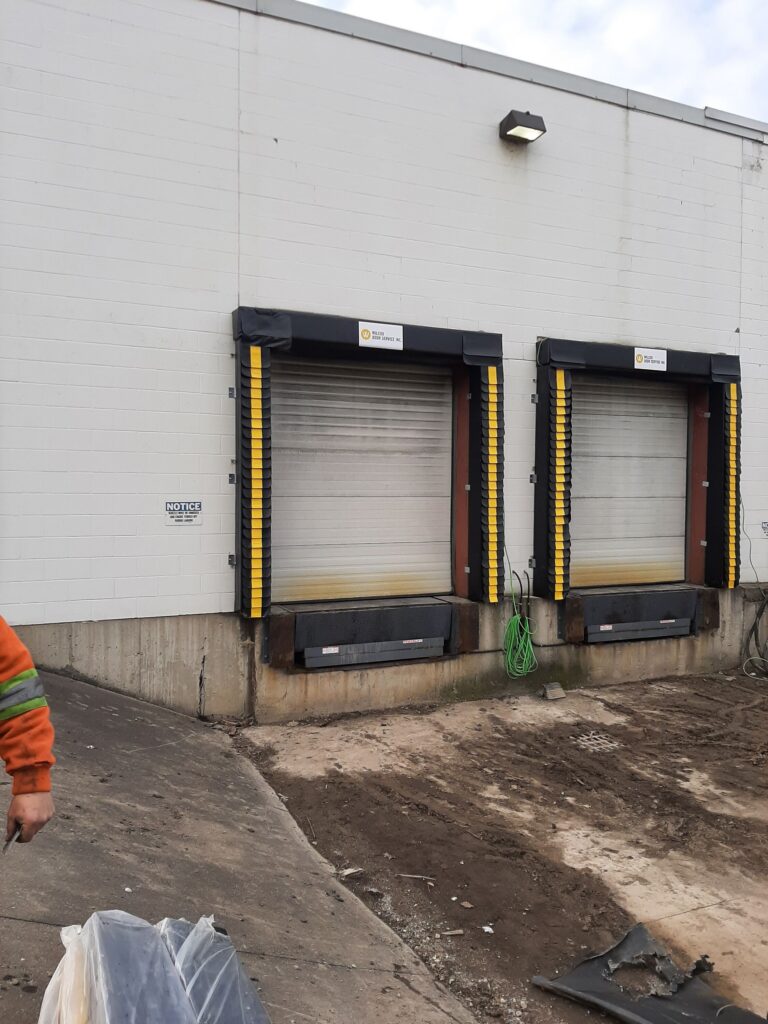
A successful commercial garage door opener installation is far more than just bolting a motor to the ceiling—it’s a strategic upgrade that directly impacts your facility’s safety, security, and daily workflow. This guide is your complete blueprint for managing the process, designed to give facility managers and maintenance teams the clarity needed to make smart, long-term decisions. You will learn how to select the right operator, understand critical safety and compliance standards, and see how modern openers integrate with building systems to enhance operational efficiency.
For facility managers and maintenance teams, understanding the entire process—from choosing the right operator to conducting final safety checks—is what separates a smooth project from a future headache. It’s about installing a reliable, long-term asset, not just a piece of equipment.
Your Blueprint For A Seamless Installation
This guide is designed to cut through the technical jargon and provide a clear roadmap for a successful commercial garage door opener installation. Our goal is to empower you with the practical knowledge to partner confidently with a trusted provider like Wilcox Door Service, ensuring your project enhances safety and delivers lasting value.
We believe that an informed client is our best partner—it’s a core part of our “Respected Partners, Reliable Service” philosophy. We’ll walk through the entire process, from choosing the right operator for your specific doors to navigating critical safety codes and preparing your site. Whether you manage a high-cycle warehouse or a secure government building, the details make all the difference.
What You Will Learn
This overview will cover all the essential topics, giving you a 360-degree view of what a professional installation truly involves.
You will gain a clear understanding of:
- Operator Selection: How to choose the right motor and drive type based on your door’s size, weight, and cycle count (how many times it opens and closes each day).
- Safety and Compliance: The non-negotiable standards and codes that protect your people and your facility.
- Site Preparation: A simple checklist of what needs to be ready before the installation team arrives to ensure an efficient process.
- Integration Capabilities: How modern openers can connect with your access control systems and loading dock equipment for a safer, smarter workflow.
- Costs and Timelines: A realistic look at project costs and how long a typical commercial installation takes from start to finish.
Of course, a solid blueprint for any business also means having a steady stream of customers. For practical advice on reaching your local market, you might want to look into local marketing strategies for business growth. A strong operational foundation paired with commercial success is a winning combination.
A professional garage door opener installation is not just an expense; it’s an investment in operational uptime, facility security, and the safety of your personnel. Getting it right from the start prevents costly emergency repairs and unexpected downtime later.
By the end of this guide, you’ll be ready to manage your next commercial door installation project with total confidence. Let’s start with the most critical first step: choosing the right commercial door operator for your facility’s unique demands.
Choosing The Right Commercial Door Operator
Selecting the right operator is the most critical decision in your commercial garage door opener installation. Think of it like choosing an engine for a vehicle; you wouldn’t put a small car engine in a massive transport truck and expect it to perform. Matching the operator to your door’s specific demands is the foundation of a reliable and safe system.

Alt: A comparison of trolley, jackshaft, and hoist operators for a commercial garage door opener installation.
This decision directly impacts operational efficiency, long-term maintenance costs, and facility safety. An operator mismatched to the door won’t just fail prematurely—it can create serious safety risks. Let’s break down the three main types of commercial operators to help you make the right choice.
Comparing Commercial Garage Door Operators
Each operator type is designed for a specific set of operational needs and facility layouts.
| Operator Type | Best For | Key Advantages | Installation Considerations |
|---|---|---|---|
| Trolley | Standard sectional doors with ample overhead clearance (e.g., warehouses, auto shops). | Cost-effective for standard applications, powerful and reliable for high-cycle use. | Requires a clear, unobstructed ceiling path directly above the door. |
| Jackshaft | Facilities with high ceilings, vertical lift doors, or overhead obstructions. | Frees up ceiling space, cleaner look, quieter operation, ideal for specialized environments. | Mounts on the wall next to the door; needs adequate side room and a solid mounting point. |
| Hoist | Very large, heavy, or oversized industrial doors that need a manual backup. | Provides extreme lifting power and torque; includes a manual chain for power outages. | Wall-mounted, requires robust structural support for the operator’s weight and force. |
Choosing the best fit comes down to understanding the nuances of your specific door and its daily use. Now, let’s dig into the details of each type.
Trolley Operators
Trolley operators are the workhorses of the industry. They use a rail system mounted on the ceiling, which guides a trolley attached to the door to pull it open or push it shut.
- Best For: Standard sectional doors in environments with plenty of overhead room, like distribution centers or automotive service bays.
- Real-World Example: For a high-traffic loading dock where doors cycle hundreds of times a day, a heavy-duty trolley operator is often the most dependable and cost-effective solution.
- Consideration: They need clear ceiling space directly above the door’s path, which can sometimes interfere with high-stack storage, vehicle lifts, or lighting fixtures.
Jackshaft Operators
Jackshaft operators, also known as side-mount or wall-mount operators, are a space-saving alternative. Instead of a ceiling rail, they are installed on the wall next to the door and connect directly to the torsion bar—the spring-loaded shaft above the door—to lift and lower it. We offer a detailed guide exploring why jackshaft door openers might be the right fit for facilities that need to maximize vertical space.
Jackshaft operators are ideal for facilities with high ceilings, obstructions like cranes, or where maximizing vertical storage space is a priority. They offer a cleaner look and can reduce noise and vibration compared to traditional trolley systems.
- Real-World Example: A cold storage facility or food processing plant can benefit immensely from a jackshaft operator. Its sealed, moisture-resistant NEMA 4X housing protects internal parts from harsh wash-down procedures, a non-negotiable requirement in these regulated industries.
Hoist Operators
Hoist operators are engineered for the largest and heaviest industrial doors—think oversized vertical lift or high-lift sectional doors. Like a jackshaft, they mount on the wall but include a crucial addition: a chain hoist for manual operation during a power failure.
- Best For: Massive, heavy industrial doors found in manufacturing plants, fire stations, or municipal garages.
- Key Feature: The manual chain hoist is a critical safety and operational feature. It ensures that even the heaviest doors can be opened if the power goes out, preventing people or equipment from being trapped.
Ultimately, the right choice boils down to a careful assessment of your door’s size, weight, and daily cycle count. Getting this right ensures your investment will provide reliable service for years to come.
Safety and Compliance: The Non-Negotiables
For any facility, safety isn’t just a checklist item—it’s foundational. A professional garage door opener installation is about much more than making a heavy door move; it involves a deep understanding of safety standards and building codes designed to protect your people, assets, and organization.
These regulations exist to prevent accidents by mandating reliable, built-in safety features for what is often the largest moving piece of equipment in your building. We see these standards as the absolute baseline for any project we undertake.
Core Safety Features Mandated By Law
While codes can vary by location, a few core safety features are universal for commercial operators. These aren’t optional add-ons; they are essential systems that must work together to prevent entrapment or injury.
- Photo-Eye Sensors: These small electronic “eyes” mounted near the bottom of the door tracks create an invisible infrared beam. If a person, forklift, or pallet breaks that beam while the door is closing, the operator must immediately stop and reverse. It’s an effective first line of defense.
- Reversing Mechanisms: This is the system’s physical backup. If the closing door contacts an obstruction, the motor is designed to sense the resistance and automatically reverse to the fully open position. It’s the critical fail-safe if the photo-eyes miss an object.
- Emergency Disconnect: In case of a power outage or malfunction, the manual release—usually a red cord or handle—disengages the motor, allowing the door to be lifted by hand. This is non-negotiable for ensuring egress in an emergency.
A code-compliant installation is your first line of defense against workplace accidents. Failing to meet these standards not only creates significant safety hazards but can also result in failed inspections, operational shutdowns, and severe legal consequences in the event of an incident.
The Growing Importance Of Battery Backup Systems
A major shift in safety compliance is the move toward mandatory battery backup systems. These units ensure your door remains operational even when the power is out—a critical feature for business continuity and life safety. A door that won’t open can trap employees, block emergency access, or completely halt shipping and receiving.
This push gained momentum after California’s 2017 wildfires, where residents were trapped by powerless garage doors. As a result, SB 969 now requires battery backups for all new residential openers in the state. You can review the official findings and reports that led to this legislation.
While that law is residential, the lesson is even more critical for commercial facilities. For a busy loading dock or a secure government building, a power outage cannot mean a total shutdown. A battery backup ensures your access points stay functional, your people remain safe, and your operations continue—a direct reflection of the reliability your business depends on.
The Installation Process From Site Check To Final Testing
Understanding the steps of a professional commercial garage door opener installation helps you manage the project confidently while minimizing operational disruptions. A proper installation is a methodical process that guarantees safety, reliability, and code compliance from the start.
This step-by-step workflow demonstrates why partnering with an expert makes all the difference, ensuring every component, from the motor to the safety devices, functions perfectly for years to come.
The Initial Site Assessment
Before any tools are unpacked, a technician performs a thorough site assessment to confirm details and identify potential issues, preventing surprises on installation day.
This assessment covers key areas:
- Verifying Structural Integrity: Checking the wall or ceiling to ensure it can support the new operator’s weight and torque.
- Confirming Clearances: Taking precise measurements of side room and headroom to ensure the chosen operator will fit without obstruction.
- Checking Electrical Supply: Confirming a dedicated circuit with the correct voltage and amperage is available, a non-negotiable electrical code requirement.
- Inspecting the Door: The door itself is examined for balance, smooth operation, and any wear on springs, cables, or rollers. Installing a new operator on a failing door is a recipe for disaster.
Pre-Installation Site Preparation
A few simple steps on your end can help the installation team work safely and efficiently. A clear workspace is crucial for preventing accidents and keeping the project on schedule.
Facility Manager Tip: Schedule the installation during off-peak hours or a planned maintenance shutdown. For a busy warehouse, arranging the work overnight keeps your loading docks active during critical business hours, eliminating operational disruptions.
Here’s a quick pre-installation checklist:
- Clear the Area: Move any pallets, equipment, or vehicles away from the door, both inside and out. A clear zone of at least ten feet is ideal.
- Ensure Access: Make sure technicians can easily reach the electrical panel and the mounting location for the new opener.
- Notify Staff: Inform your team about the work to prevent anyone from attempting to use the door or entering the work zone.
The infographic below shows the core safety functions that are put to the test during the final phase of any professional installation.

Alt: A flowchart showing the safety process for a garage door opener installation, including sensor detection, automatic reverse, and backup power.
This visual highlights the layered safety approach, starting with sensor detection, backed by the auto-reverse mechanism and battery power for complete reliability.
Commissioning and Final Safety Testing
After the physical installation, the system is “commissioned.” This is the most crucial part of the process, where technicians fine-tune the operator and rigorously test every safety feature. They set the door’s travel limits, adjust the closing force, and test all entrapment sensors to ensure they meet or exceed all safety standards.
This final verification is your guarantee that the new system is not just working, but verifiably safe. Once this process is complete, the next step is integrating the opener with other facility systems. To see how it all fits together, explore our services for commercial doors and learn more.
Integrating Openers With Facility And Dock Systems
A modern door opener is more than a motor; it’s a connected part of your facility’s operational ecosystem. A well-planned garage door opener installation doesn’t just open a door—it creates an intelligent asset that can streamline workflow, enhance security, and actively prevent accidents. This is where your investment starts to pay daily dividends in safety and productivity.

Alt: A diagram of an integrated loading dock system showing how a garage door opener installation connects with safety controls and truck restraints.
Connecting To Building Access Control
One of the most powerful integrations is with your building’s access control system—the network that manages keycards, fobs, or security codes. When your door operator is tied into this system, you gain precise control over who can open specific doors and when. This eliminates the need for separate remotes, simplifies permission management, and creates a unified, trackable security environment.
The Critical Role Of Dock Interlock Systems
For any facility with a loading dock, integrating the door operator with your dock equipment is a non-negotiable safety measure. This is achieved using an interlock system, where different pieces of equipment are wired to control one another’s actions. It creates a required sequence of operations that cannot be skipped or bypassed.
A common and effective interlock system connects three key components:
- The Truck Restraint: The device that physically locks a trailer to the building.
- The Dock Leveler: The steel plate that bridges the gap between the building and the trailer.
- The Overhead Door Operator: The motor controlling the bay door.
A properly configured interlock system can make it physically impossible to open the overhead door until the truck restraint is safely engaged. It can also prevent the truck restraint from being disengaged while the door is still open and a forklift might be inside the trailer.
This simple electronic logic sequence eliminates one of the most dangerous types of loading dock accidents. It’s a perfect real-world example of how a well-planned installation directly improves facility safety. You can learn more about our approach to a comprehensive door and dock operator installation in our related guide. This commitment to an integrated safety ecosystem is a clear demonstration of our “Respected Partners, Reliable Service” philosophy.
Understanding The Total Cost Of Ownership
When budgeting for a new commercial garage door opener installation, it’s tempting to focus only on the initial quote. However, the true cost extends far beyond the price tag. To make a smart investment, you must consider the Total Cost of Ownership (TCO)—a long-term view that includes all expenses over the equipment’s lifespan.
Focusing only on the upfront price can lead to expensive surprises. Our “Respected Partners, Reliable Service” approach is built on helping you make a strategic decision that protects your facility from unexpected downtime and spiraling repair bills. This shifts the conversation from “How much does it cost today?” to “What is the lifetime value of this investment?”
Breaking Down The Initial Project Cost
Several key factors drive the initial investment. Understanding them helps you see exactly where your money is going.
- Operator Type and Model: A heavy-duty hoist operator or a specialized jackshaft for harsh environments will have a higher upfront cost than a standard trolley model. The motor’s horsepower and duty cycle rating are the biggest drivers.
- Labour Rates: Hiring professional, certified technicians means you’re investing in a higher level of expertise and strict safety compliance. It’s the best way to ensure the job is done right the first time.
- Site Modifications: If the job requires new electrical wiring, structural reinforcements, or custom mounting brackets, these necessary modifications will add to the project’s scope and budget.
For context, the average cost for a standard residential garage door opener installation is around $392 per unit, with projects typically falling between $330 and $454. While this reflects residential work, it highlights how labor-intensive these projects are. For a facility manager, a professional installation prevents costly mistakes like misalignment or a voided warranty.
The Hidden Costs Of A Low-Quality Installation
Opting for the cheapest solution almost always costs more in the long run. A poorly installed or mismatched operator becomes a recurring operational headache, draining your maintenance budget and disrupting your workflow. This is where the value of a professional installation shines.
Investing in a high-quality, professionally installed system dramatically lowers your TCO:
- Fewer Emergency Repairs: A properly specified and installed operator is far less likely to fail unexpectedly, saving you from expensive emergency call-out fees.
- Reduced Operational Downtime: When a critical access point like a loading dock door is down, your entire operation can grind to a halt. In that world, reliability equals profitability.
- Longer Asset Lifespan: A quality installation ensures the equipment operates within its engineered limits, which can extend its service life by years.
Realistic Project Timelines
A clear timeline is essential for planning. While a standard replacement might take a single day, complex projects involving multiple doors or system integrations will take longer.
A transparent project timeline allows you to schedule work around your operations, such as during off-peak hours or planned facility shutdowns, ensuring minimal disruption to your business.
We provide a detailed schedule so you know exactly what to expect. By focusing on long-term value, you can make a strategic investment that pays dividends for years. To dive deeper, read our guide on reducing the total cost of ownership for your facility’s equipment.
Common Installation Questions Answered
When planning a commercial garage door opener installation, getting straight answers to common questions is key to feeling confident about the project. Here are clear, practical answers to what we hear most often in the field.
How Long Does a Commercial Installation Take?
A straightforward replacement of an existing operator typically takes 4 to 6 hours. However, this is just a baseline. A massive industrial door, a new installation requiring electrical work, or a site with difficult access can easily extend the project to a full day or more. The timeline depends on the operator model, door size, and site readiness. Our priority is to keep your operations running, so we’ll coordinate with your team to schedule the work at the least disruptive time.
What Are the Warning Signs My Opener Needs Replacement?
Waiting for a complete failure is a recipe for an operational standstill. Be proactive and watch for these tell-tale signs:
- The door stops or reverses unexpectedly during its cycle.
- It hesitates or responds slowly to commands.
- The motor makes grinding, straining, or screeching noises.
Strange noises are a dead giveaway that the motor or internal gears are under serious stress and failure is imminent. Furthermore, if your operator is over 10-15 years old, it lacks modern safety features and integration capabilities, making a replacement a smart upgrade for safety and efficiency.
Can I Use a Residential Opener on a Commercial Door?
Absolutely not. This is a common but dangerous mistake that puts your property and people at risk. Residential openers are designed for lightweight doors with low daily usage. A commercial door is significantly heavier and may cycle hundreds of times a day. An undersized residential unit will burn out quickly, creating a serious safety hazard. It also voids any warranty and puts your facility in direct violation of safety codes. Always use a commercial-grade operator rated for your door’s specific size, weight, and duty cycle.
Partnering with an experienced team for your installation is the best way to ensure safety, compliance, and long-term reliability. At Wilcox Door Service Inc., we provide expert guidance and union-certified installation services to keep your facility’s access points secure and efficient. Contact us today to discuss your next project.