Meta description: No spill systems help Canadian facilities reduce spills, improve dock safety, and keep critical equipment running with less maintenance disruption.
A dock leveler is down, a forklift is waiting, and someone just found hydraulic fluid spread across the approach. That’s not a small housekeeping issue. It’s a loading dock problem that can slow shipping, create slip hazards, pull technicians off planned work, and turn a routine service job into an unplanned shutdown.
That’s where no spill systems start to matter.
In industrial settings, these systems aren’t just for automotive oil changes. They’re a practical way to control fluid draining on dock equipment, forklifts, compactors, generators, and other hard-working assets that live close to traffic, product, and people. Used properly, they help keep the floor cleaner, make fluid changes more controlled, and reduce the mess that often comes with maintenance at the dock.
For Canadian facilities, that matters even more. Docks run through cold weather, heavy traffic, sanitation demands, and tight uptime targets. A cleaner drain process supports safer working conditions and more predictable maintenance, especially around hydraulic systems that sit at the centre of dock operations.
Your Guide to Cleaner and Safer Loading Dock Operations
Most facility teams know the scene. A technician opens a drain point on a dock leveler or related hydraulic equipment. The catch container isn’t lined up perfectly, access is awkward, and a small release becomes a floor cleanup. Then someone cones off the area, shipping slows down, and maintenance loses time it didn’t plan to lose.
That’s the operating cost of fluid spills. It’s not only the lost oil or hydraulic fluid. It’s the interruption.
At the loading dock, the risk multiplies because several systems depend on the same working zone. If the floor is slick, a forklift operator changes route, a service call takes longer, and other assets around the opening become harder to access safely. Teams already managing ramps, doors, restraints, and traffic flow can’t afford extra friction. That’s one reason many operators also review broader dock layout and access issues, including dock ramp planning, when they tighten up maintenance procedures: https://www.wilcoxdoor.com/blog/warehouse-dock-ramp/
No spill systems offer a cleaner method. They replace the old approach of removing a standard plug and hoping the fluid goes where you want. Instead, they create a more controlled drain path that helps technicians service equipment with less exposure to spills.
Why this matters beyond housekeeping
A fluid spill can trigger internal reporting, cleanup steps, and safety reviews. In some cases, it can also raise transportation or hazardous material handling questions, especially if waste fluids are stored or moved off-site. For teams reviewing those obligations, this overview of DOT hazmat regulations is a useful operational reference.
A clean drain process protects more than the floor. It protects access, workflow, and maintenance time.
Where no spill systems fit at the dock
They make the most sense on assets that need regular fluid service and sit in high-traffic areas, such as:
- Hydraulic dock levelers where service access is tight and drips can spread into travel paths
- Forklifts and yard support equipment that are maintained near receiving or shipping areas
- Generators and power units serving critical door or facility systems
- Compactors and support machinery where floor contamination quickly becomes a safety issue
In practice, no spill systems are part of a broader uptime strategy. They won’t fix poor housekeeping, rushed service, or worn hydraulic components. They do help remove one common failure point from routine maintenance. That’s a practical win.
What Are No-Spill Systems
A no-spill system gives maintenance teams a controlled way to drain oil or hydraulic fluid from equipment without cracking open a plug and hoping the stream lands where it should. At a Canadian loading dock, that matters most on equipment packed into tight service areas, where a small spill can spread into forklift lanes, pit edges, and pedestrian paths before anyone gets absorbent down.
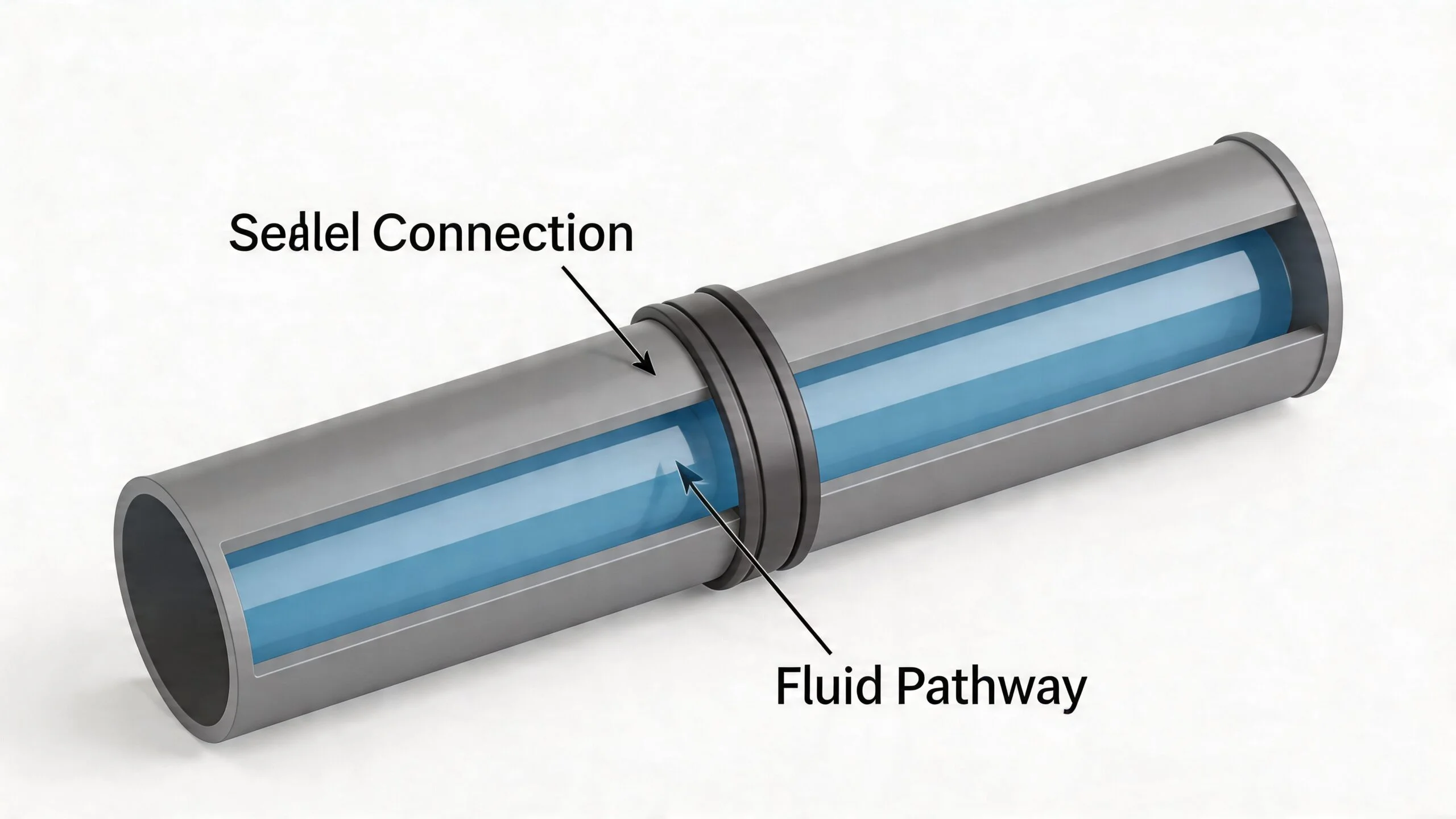
The setup is straightforward. A replacement drain plug stays installed on the asset. A matching coupler or drainer connects when service is needed. A cap protects the connection point between service intervals. Fluid stays contained until the technician is ready to direct it into a hose, drain pan, or waste container.
The three parts that matter
Facility teams do not need the full engineering drawing. They do need to know what each component changes on the floor.
| Component | What it does | Why it matters at the dock |
|---|---|---|
| Drain plug | Replaces the standard drain plug on the equipment | Creates a consistent service point for repeat maintenance |
| Coupler or drainer | Connects to the plug and opens the valve | Sends fluid where the technician intends, instead of onto the floor |
| Dust cap | Covers the service point when not in use | Helps keep grit, salt, and dock debris out of the connection |
That last point matters more in Canadian warehouses than many teams expect. Winter grit, wet debris, and temperature swings are hard on exposed service points. If the connection gets contaminated, routine draining gets slower and messier.
How no-spill systems work in practice
With a standard drain plug, the messy part starts the moment the plug loosens. The technician has to control the plug, the fluid, and the container at the same time. In a shop bay that is inconvenient. At a live loading dock, it can interrupt traffic and create a slip hazard fast.
A no-spill system changes that sequence. The drain path is connected first. Flow starts only after the coupler is in place. That gives maintenance staff better control over timing, direction, and cleanup.
The trade-off is simple. You add a purpose-built service component to the equipment, so fit and compatibility need to be checked up front. In return, routine draining becomes more repeatable, which is exactly what busy facilities need when servicing dock levelers, hydraulic power units, backup generators, compactors, and yard equipment near shipping and receiving areas.
Why this matters beyond the plug itself
At the dock, fluid control is part of a larger facility protection strategy. Teams already work to keep the building envelope clean and operational around door openings, seals, and traffic zones. Maintenance practices should support that same goal, especially near dock positions that are exposed to winter moisture and debris. Wilcox covers that broader dock environment in this guide to dock seals and shelters and their benefits during the winter rush.
Absorbents still belong in the spill kit. A practical primer on oil spill absorbent pads is useful for stocking response materials. But absorbents should be the backup. A no-spill system improves the process that causes the mess in the first place.
Practical rule: If every drain service ends with floor cleanup, the servicing method needs attention.
Key Benefits of No-Spill Systems for Facility Operations
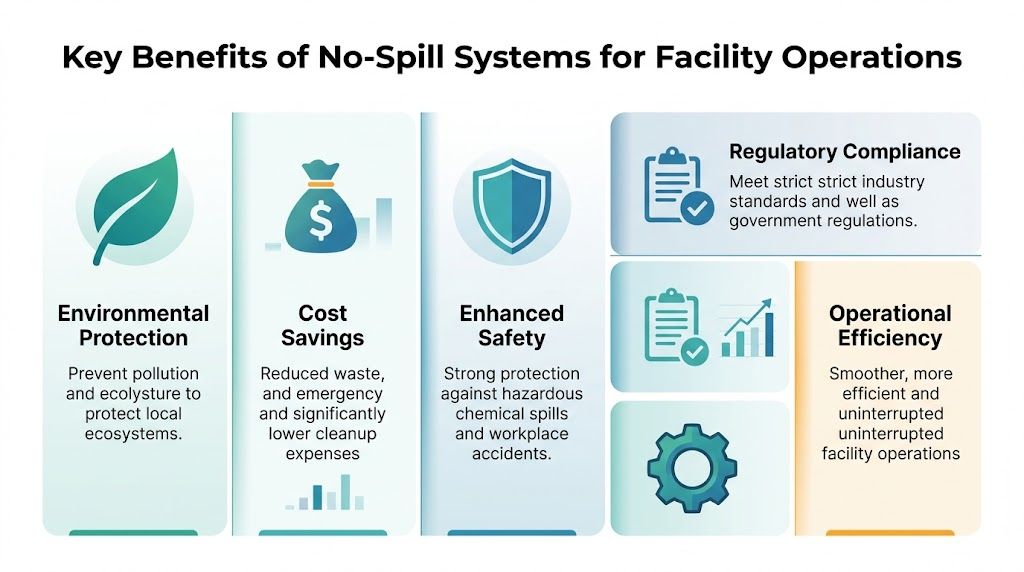
A technician cracks open a drain on a dock leveler during a busy shift change. One bad angle, one shallow catch pan, and now hydraulic fluid is tracking across a traffic lane where lift trucks, pedestrians, and outbound freight all meet. At that point, the issue is no longer housekeeping. It is injury exposure, downtime, and a dock position that may have to come out of service.
Safety on active dock floors
Loading docks are unforgiving work zones. Floors are often wet from snow melt, exposed to dirt and salt, and constantly crossed by forklifts, pallet jacks, and service staff. Add oil or hydraulic fluid to that mix and the risk climbs fast.
A no-spill system reduces how much fluid escapes during draining. That matters most in the exact places Canadian warehouses struggle to keep clean: around pit-style dock levelers, near door thresholds, beside compactors, and at exterior-facing service points where winter conditions already reduce traction.
The practical benefit is simple. Fewer drips reach the floor, fewer tires spread residue across the dock, and fewer cleanup tasks interrupt maintenance work.
- Better control at the drain point helps contain fluid before it reaches traffic paths
- Cleaner service in tight access areas reduces slip hazards around frames, curbs, and pit edges
- More predictable housekeeping supports safer movement for operators, mechanics, and sanitation crews
Compliance and environmental control
Spill response is still required. Prevention is cheaper.
Facilities that handle food products, pharmaceuticals, chemicals, tenant fleet equipment, or public-sector assets are usually judged on more than output. They are judged on whether service work stays controlled, documented, and contained. A drain process that regularly leaves residue on the floor creates avoidable audit and reporting problems, especially in shared warehouse environments where one maintenance issue can affect adjacent operations.
Controlled draining helps reduce those recurring small releases that teams start to accept as normal. It also makes standard work easier to enforce across multiple assets and multiple shifts.
That matters at loading docks because these areas sit at the intersection of maintenance, sanitation, and shipping. If a fluid release reaches door openings, exterior aprons, or drainage paths, the cleanup scope gets bigger quickly.
Air movement around open doors can make that harder to manage, particularly in winter and high-traffic receiving areas. Facilities reviewing dock-side contamination control often run into the same operational issue covered in Wilcox's guide on using air curtains to solve dock opening problems.
Uptime and maintenance efficiency
The uptime gain is usually more important than the fluid savings.
A cleaner drain routine cuts the small delays that slow down planned service. Technicians spend less time repositioning pans, wiping cross members, protecting nearby components, or cleaning the floor before equipment can go back into use. On a single asset, that may look minor. Across a warehouse with multiple dock positions, backup generators, hydraulic power units, and yard equipment, the lost time adds up.
No-Spill Systems says its products are designed to speed drainage and reduce thread damage caused by repeated removal and over-tightening. In facility operations, that translates into a more repeatable service process and fewer maintenance-created problems.
I see the trade-off clearly in dock environments. You still need to choose the right fit, protect the valve location, and train the crew to use it properly. But once the system is matched to the asset, routine draining becomes faster and far less disruptive.
Cost control that shows up in daily operations
The savings rarely come from one dramatic event. They show up in the weekly maintenance log.
Teams usually notice the difference in four places:
- Lower cleanup labour because technicians are not scrubbing fluid from floors, frames, and wheel paths after every drain
- Less wasted product because more used oil or hydraulic fluid reaches the recovery container
- Fewer avoidable repairs tied to damaged threads, rushed reinstallation, or improvised drain methods
- Less disruption to dock availability because service work clears faster and equipment returns to operation sooner
For Canadian warehouses, that last point matters. Dock congestion already gets worse during winter receiving peaks, weather delays, and carrier bunching. If one service task blocks a position longer than necessary, the effect spreads to trailers, labour scheduling, and outbound timing.
Cleaner maintenance protects labour hours and keeps dock equipment available for revenue-producing work.
Selecting the Right No-Spill System for Your Facility
A technician is under a dock leveler during a January service call. Space is tight, gloves are bulky, and a drain point sits beside steel framing packed with road salt and grime. If the valve choice is wrong, the crew fights the hardware before they even touch the fluid.
That is how facilities end up turning a cleanup problem into an equipment problem.
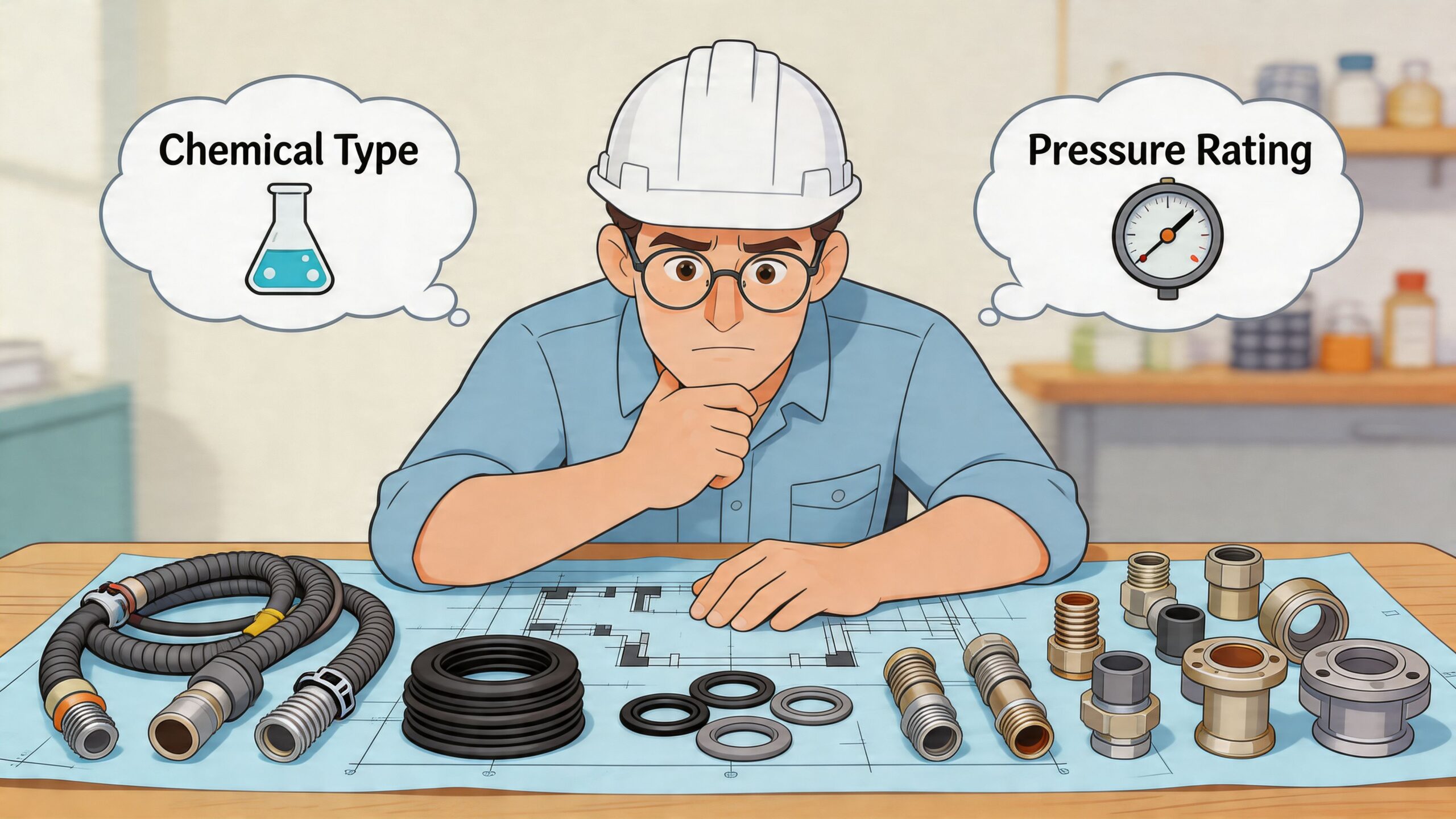
Selection should start with the asset, the service conditions, and the consequences of a bad fit at the dock. In Canadian warehouses, that usually means dealing with cold-weather access, mixed equipment fleets, washdown exposure, and maintenance work done in traffic-heavy areas where downtime spreads quickly.
Start with the asset
A forklift, hydraulic dock leveler, and standby generator can all benefit from controlled draining, but the selection criteria are different.
Check these points first:
- What equipment is being serviced
- How much clearance exists around the drain point
- What fluid is being drained
- How often the asset is serviced
- Whether the location sees vibration, impact, or washdown
On dock levelers, access is often the limiting factor. Cross-members, toe guards, pit walls, and hydraulic components can leave very little room to connect and disconnect a drain tool cleanly. On a generator or power unit with better access, a larger or easier-to-handle style may be fine.
This is a fit decision, not just a parts decision.
Match the thread correctly
Thread verification is where selection gets won or lost. Mixed fleets across warehouses, trucking terminals, food plants, and manufacturing sites rarely use one thread standard. A valve that looks close can still leak, loosen, or damage the port over time.
The safer approach is simple. Confirm the exact thread type and size before ordering, then confirm how the installed valve will sit once tightened. That second check matters at the loading dock because orientation and surrounding clearance often matter as much as thread match.
A quick decision table
| Selection factor | What to check | Common mistake |
|---|---|---|
| Thread type | Confirm exact thread standard and size | Assuming similar assets use the same plug |
| Clearance | Measure obstructions and connection access | Choosing a valve that cannot be operated in place |
| Fluid type | Review compatibility with the service process | Treating every oil or hydraulic application the same |
| Environment | Account for cold, dust, washdown, and debris | Selecting for shop conditions instead of dock conditions |
| Service frequency | Choose for the number of drain cycles | Paying for speed features on rarely serviced equipment |
Consider the operating environment
The same drain setup that works well in a clean maintenance bay may be a poor choice on active dock equipment.
Cold storage changes hand access and hose flexibility. Food and beverage facilities put more pressure on housekeeping and contamination control. Distribution centres care about service speed because one delayed maintenance task can block a position, affect trailer flow, and force crews to reroute work around it.
I usually advise facility teams to ask one practical question. Can a technician complete the drain safely and cleanly during a normal service window, in real site conditions, without improvising? If the answer is no, the specification needs work.
Choose the right plug style
Plug style should reflect service frequency and physical access.
Common configurations generally fall into three practical categories:
- Standard style for equipment with open access and enough room for straightforward connection
- Compact style for drain points blocked by framing, guards, or nearby components
- Quick-connect or speed-focused style for assets that are drained often and need a faster repeatable process
A mixed fleet usually needs more than one style. That is common in warehouses that run dock equipment, forklifts, backup power, and hydraulic support units in the same facility. Standardising where possible helps purchasing and training, but forcing one valve style onto every asset usually creates service headaches later.
The right system should fit the port, the space, and the maintenance reality on your dock floor.
How to Integrate No-Spill Systems with Dock Equipment
The best results come when no spill systems are treated as part of dock reliability, not as a standalone accessory. At the loading dock, fluid service affects more than the machine being drained. It affects floor safety, equipment availability, and how quickly the area returns to full use.
Put them where downtime hurts most
Start with the assets that create the biggest operational headache when maintenance gets messy.
That usually includes:
- Hydraulic dock levelers that sit directly in the shipping path
- Forklifts working close to dock positions
- Power units supporting restraints or related equipment
- Ancillary hydraulic equipment in receiving and staging zones
On these assets, the value is straightforward. Cleaner fluid changes mean fewer floor hazards and less service disruption in active traffic areas.
Build the upgrade into planned service
No-spill hardware works best when it’s installed during scheduled maintenance, not during an emergency repair. That gives the technician time to confirm thread fit, inspect the surrounding components, and make sure the new drain point won’t interfere with operation or guarding.
For dock levelers, that’s also the right time to inspect hoses, fittings, cylinders, and signs of seepage around the hydraulic circuit. A controlled drain point doesn’t solve worn seals or damaged lines. It just makes servicing cleaner.
Connect the drain process to the rest of the dock
A loading dock is a system. The leveler supports trailer transition. The restraint secures the vehicle. The seals or shelters protect the opening. The floor condition affects every one of those tasks.
If hydraulic service leaves residue on the approach or in front of the pit, the whole dock environment gets harder to manage. Clean draining supports cleaner operation around all nearby assets.
That’s why integration should include a simple checklist:
- Drain point placement that’s reachable without unsafe body position
- Hose routing that keeps the service path clear of traffic and pinch points
- Waste handling that moves drained fluid out of the dock area promptly
- Post-service inspection for drips, cap security, and nearby residue
- Technician standardisation so every service call follows the same process
Later in the maintenance cycle, it helps to reinforce service practices visually and operationally. This video offers a useful look at no-spill connection handling in practice.
What works and what doesn’t
What works is simple. Install no-spill systems on repetitive-service assets in high-impact areas, then fold them into standard maintenance procedures.
What doesn’t work is treating them like a universal fix.
Here are the common trade-offs:
| What works | What doesn’t |
|---|---|
| Using them on planned service intervals | Installing them and never training staff on the coupler process |
| Matching plug style to real clearance | Choosing one style for every asset |
| Pairing them with inspection of nearby hydraulic parts | Ignoring existing leaks because the drain process is cleaner |
| Keeping caps clean and intact | Leaving service points exposed to dirt and impact |
A no-spill system improves the drain process. It doesn’t replace inspection, housekeeping, or sound hydraulic maintenance.
Installation Maintenance and Long-Term Reliability
No spill systems are straightforward, but they still need proper installation. If the thread match is wrong, the sealing method is poor, or the plug is installed without attention to equipment condition, the result can be the same leak the system was meant to prevent.
That’s why professional installation is worth it on critical dock and facility equipment.
Good installation prevents preventable failure
A technician should confirm the exact thread, inspect the drain port condition, and install the plug with the right fit and sealing approach for that application. That matters even more on older assets where threads may already be worn or contaminated.
Common failure points usually come from shortcuts:
- Reusing damaged drain ports without correcting the underlying issue
- Forcing a near match instead of using the exact thread pattern
- Ignoring access problems that make future service awkward
- Skipping follow-up checks after the first maintenance cycle
Reliability depends on routine checks
Once installed, these systems don’t need constant attention, but they do need to be part of normal equipment review.
A practical maintenance routine should include:
- Checking the cap condition so the service point stays protected
- Looking for seepage around the installed plug
- Verifying coupler engagement during service
- Watching for damage in high-contact or vibration-prone areas
For most facilities, the smart move is to include these checks inside planned maintenance visits for dock levelers and related equipment. That keeps the drain hardware tied to the actual service cycle instead of becoming another forgotten component.
Think of it as reliability insurance
The plug itself is only one part of the value. The larger gain comes from making fluid service predictable.
That’s why installation and follow-up shouldn’t be treated as optional extras. They’re what turns a good product into a dependable process. In facilities where uptime, safety, and cleanliness all matter at once, process reliability is what pays off over time.
Frequently Asked Questions About No-Spill Systems
Do no spill systems work in Canadian winter conditions
They can, if the system is selected for the equipment and environment properly. Cold conditions change how technicians work, especially in tight service spaces. In freezer or cold-storage areas, it’s smart to confirm material suitability, clearance, and service handling before standardising one setup across multiple assets.
Can the same drainer be used for oil and hydraulic fluid
It can be physically possible, but good practice is to manage cross-contamination carefully. If you’re servicing different fluids, use a clear procedure for dedicated tools, cleaning, and storage. That matters more in food, pharma, and other cleanliness-sensitive operations.
How long does a no-spill plug last
That depends on installation quality, vibration exposure, service frequency, and how well the cap and connection point are protected. No-Spill Systems states that its products are backed by a lifetime warranty on parts and workmanship on the source pages provided for this article. In practice, long life still depends on proper fit and regular inspection.
Are no spill systems only useful on vehicles
No. They’re especially useful on industrial equipment with repeat fluid service needs, including dock levelers, forklifts, compactors, generators, and hydraulic support systems near loading areas.
If your facility is dealing with dock equipment downtime, fluid leaks, or hard-to-manage maintenance access, Wilcox Door Service Inc. can help you assess the full loading dock environment and identify practical upgrades that improve safety and reliability. As Respected Partners, Reliable Service, the team supports Canadian facilities with expert dock and door solutions, planned maintenance, and responsive service.