


Choosing the right glass commercial doors for your business is about more than just aesthetics; it’s a critical decision impacting first impressions, building security, and energy costs. In this guide, you will learn how to select the best doors for your facility, understand key technical features like thermal efficiency and security ratings, and see why professional installation and maintenance are crucial for a long-term, reliable investment.
A Practical Guide to Glass Commercial Doors
Think of this guide as your complete roadmap to understanding the world of commercial glass doors. We’re here to cut through the technical jargon and help you choose the perfect doors, whether you’re outfitting a retail storefront, a modern office lobby, or a busy industrial facility.
We’ll break down everything you need to know, using straightforward, real-world examples. You’ll soon understand exactly how a sleek, frameless glass door creates a sophisticated, open feel in a corporate office, and how that differs from a tough aluminum-framed door built to handle constant foot traffic at a busy loading dock. Our goal is to provide educational value that builds your confidence.
To get a feel for how transparent design can transform a space, it’s also helpful to look at related solutions like glass partition walls for offices, which apply many of the same principles of light and openness inside the building.
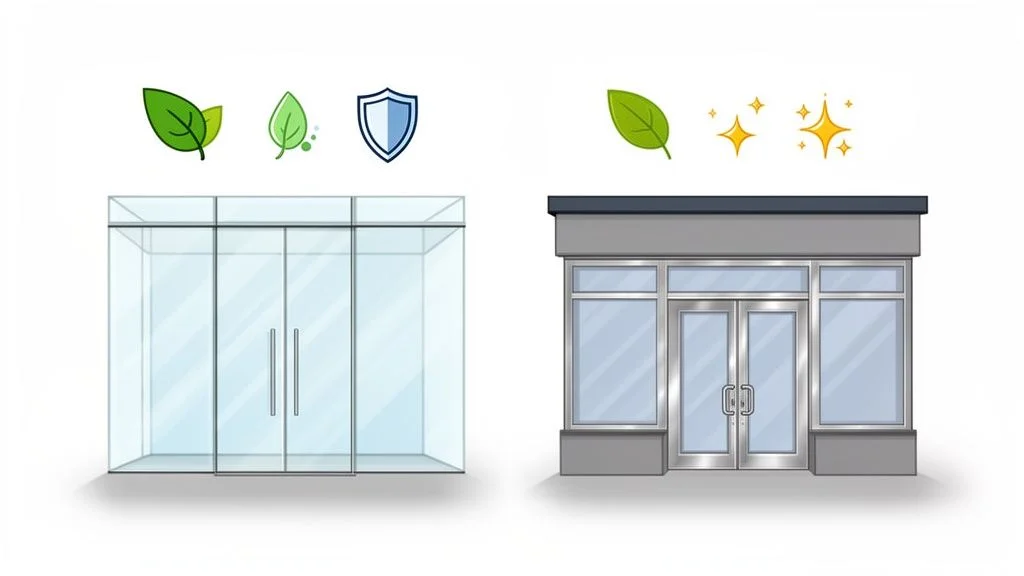
alt text: Two styles of glass commercial doors, a frameless office entry and an aluminum storefront door, highlighting design and function.
What You’ll Learn in This Guide
We’ve structured this guide to build your expertise from the ground up, giving you the confidence to make a smart investment. Here’s what we’ll cover:
- The Main Types of Glass Doors: We’ll walk through the most common styles, like aluminum storefront, frameless, tempered, and laminated glass doors, to help you match the right product to your building’s function.
- Key Performance Factors: You’ll learn how to make sense of terms like thermal efficiency (how well a door prevents heat loss) and acoustic ratings (how well it blocks sound). This knowledge ensures you choose a door that does more than just open and close—it performs.
- Codes and Safety Compliance: We’ll touch on the essential building codes and accessibility standards you need to follow. Getting this right from the start helps you avoid fines and ensures your entrance is safe for everyone.
- Installation and Maintenance: Discover why professional installation is non-negotiable and how a planned maintenance program can protect your investment, extend the life of your doors, and prevent surprise repair costs.
By the end of this guide, you’ll be ready to make a confident choice that improves your facility’s security, lowers energy costs, and delivers real, lasting value. It’s all part of our commitment to being “Respected Partners, Reliable Service.”
The Canadian Market for Commercial Doors
When you’re looking at a new set of commercial glass doors, you’re not just buying a product—you’re making a strategic move. It’s easy to see a door upgrade as just another line item on the budget, but understanding what’s happening in the broader Canadian market shows it’s much more than that. It’s a key investment in your building’s value, daily efficiency, and ability to stand up to future challenges.
For anyone managing a facility or property, this bigger picture is essential. Across Canada, the demand for new doors is being driven by two major forces: a boom in new construction and a serious push to retrofit older buildings with more energy-efficient solutions. Your decision to install new glass commercial doors puts you right in line with this industry-wide shift toward modern, high-performance infrastructure.
Market Growth and Your Opportunity
The numbers really put the importance of this sector into perspective. In 2025, the Canadian market for windows and doors hit a staggering USD 13,004.1 million in revenue. Doors alone claimed a massive 54.02% of that pie, showing just how vital commercial entryways are everywhere from warehouses to airports. Even better, the door category is set to see the fastest growth, which confirms that upgrading now is a smart, timely move. You can explore more about these trends and their impact on the Canadian market.
This growth is especially relevant if you’re overseeing a large portfolio of properties. Swapping out old, inefficient doors for modern high-performance glass models is a direct answer to the rising demand for better security, lower energy bills, and guaranteed uptime—all central to effective facility management.
Why These Trends Matter to You
This isn’t just about abstract numbers; it’s about the real-world need for specialized solutions that can meet today’s tough standards for energy savings, security, and accessibility. That’s where an experienced partner comes in.
Real-World Example: For a facility manager, a new glass door isn’t just about looks. It’s about slashing HVAC costs with better insulation, boosting security with impact-resistant materials, and making sure your building meets the latest accessibility codes. It’s an upgrade that pays you back in multiple ways.
By working with a provider like Wilcox Door Service, who is right in the thick of this growing industry, you’re not just getting a door. You’re getting a long-term solution backed by expertise that knows where the market is going. This lets you build a strong case for your budget, increase your asset’s value, and protect your facility from rising energy costs and changing rules down the road.
Choosing the right partner is critical. If you’re thinking about an upgrade or need dependable service for your current doors, check out our commercial door services to see how we can help your facility. For urgent problems, our 24/7 emergency repair team is always on standby.
Choosing the Right Type of Glass Door
When you’re looking at glass commercial doors, the first thing to ask isn’t about style, but about purpose. What job does this door really need to perform every single day? The right choice will seamlessly support your daily operations, meet your security needs, and reflect your brand’s image.
Thinking about a door as a strategic asset rather than just an expense is a crucial mindset shift. It’s the difference between a quick fix and a long-term investment that adds real value to your property.
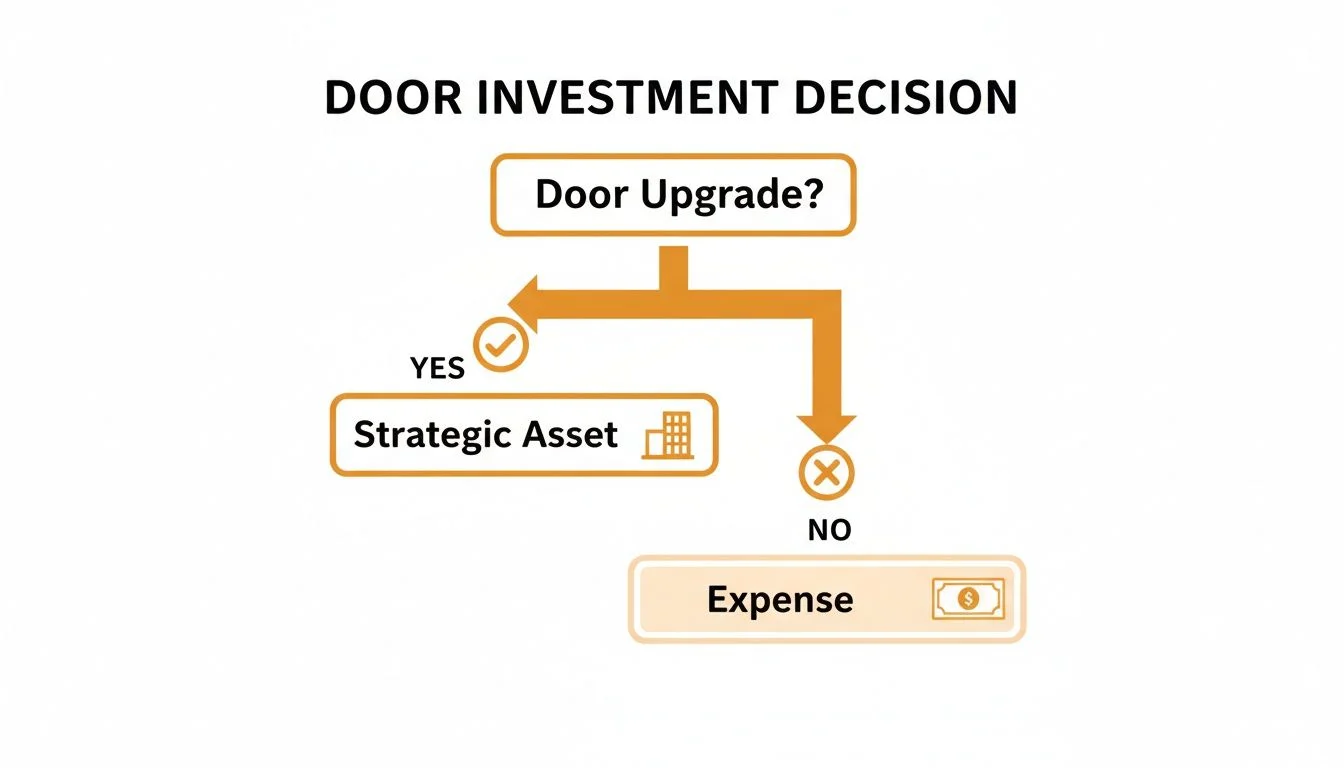
alt text: Flowchart showing how viewing a commercial glass door as a strategic asset leads to long-term gains, versus seeing it as an expense.
As the flowchart shows, treating a door upgrade as a strategic decision opens the door to long-term gains in security, energy efficiency, and operational flow. Viewing it as a mere expense often leads to missed opportunities and future headaches.
Common Door Styles for Different Needs
The door’s frame and overall construction are what give it strength and create its visual impact. In the commercial world, two main styles tend to dominate, each for very different reasons.
- Aluminum and Glass Storefront Doors: These are the undisputed workhorses of commercial entryways. Their robust aluminum frames are engineered to handle constant, high-volume traffic. You’ll see them everywhere—from retail stores and restaurants to public buildings—where reliability is non-negotiable.
- Frameless Glass Doors: When you need to make a statement, nothing beats the clean, modern look of a frameless door. Constructed from thick, heavy-duty structural glass, they provide a stunning, uninterrupted “all-glass” view. They are the go-to choice for corporate head offices, high-end showrooms, and professional service lobbies where aesthetic appeal and a sense of openness are paramount.
Understanding Your Glass Options
The glass itself is far more than just a pane to look through; it’s a critical component that dictates safety and security. Think of it as a customizable shield for your building.
What is Tempered Glass? This is your foundation for safety. Through a specialized heat-treating process, tempered glass is made several times stronger than standard glass. If it ever breaks, it’s designed to crumble into small, dull-edged, pebble-like pieces, very similar to a car’s side window. This dramatically lowers the risk of serious injury, making it a mandatory feature for almost all commercial doors.
What is Laminated Glass? Think of laminated glass as a significant security upgrade. It’s essentially a glass sandwich, made of two or more sheets of glass bonded together with a tough, clear plastic interlayer. If the glass is struck and breaks, that interlayer holds all the shards in place, maintaining a solid barrier against entry. This is the same technology used in vehicle windshields, and it’s an ideal choice for facilities needing extra protection against break-ins.
Comparing Glass Commercial Door Types
This table breaks down the most common types of glass commercial doors, comparing their ideal applications, benefits, and what facility managers should keep in mind.
| Door Type | Best For | Key Benefit | Main Consideration |
|---|---|---|---|
| Aluminum Storefront | High-traffic retail, offices, public buildings | Durability and reliability under heavy use | Function-first design may not suit high-end aesthetics |
| Frameless Glass | Corporate lobbies, showrooms, modern offices | Sleek, high-end appearance and open feel | Higher initial cost and requires specialized hardware |
| Tempered Glass | All standard commercial entryways | Safety: shatters into harmless pebbles | Offers minimal security against forced entry |
| Laminated Glass | High-security areas, jewellers, banks | Security: holds together when broken | Higher cost and weight compared to tempered glass |
Getting the combination right is everything. A bustling distribution centre might prioritize durability with an aluminum-framed door using tempered glass for visibility and safety. In contrast, a downtown jewellery store would get far more value from the anti-theft protection of laminated glass in a frameless design to showcase its products securely.
For a deeper dive, you can explore our detailed guide on commercial glass entry doors to see how these options perform in different real-world settings. Matching the door and glass to your specific needs ensures you get a solution that not only looks great but also works hard for your business. When you’re ready to navigate these choices, our experts are here to make sure you make the right long-term investment.
What Makes a Great Glass Door? Performance and Safety Factors
A glass door is much more than a pane of glass in a frame. Think of it as a critical piece of your building’s operational equipment. Getting to know the key performance factors is the first step in turning a simple purchase into a smart investment that boosts security, comfort, and even your bottom line.
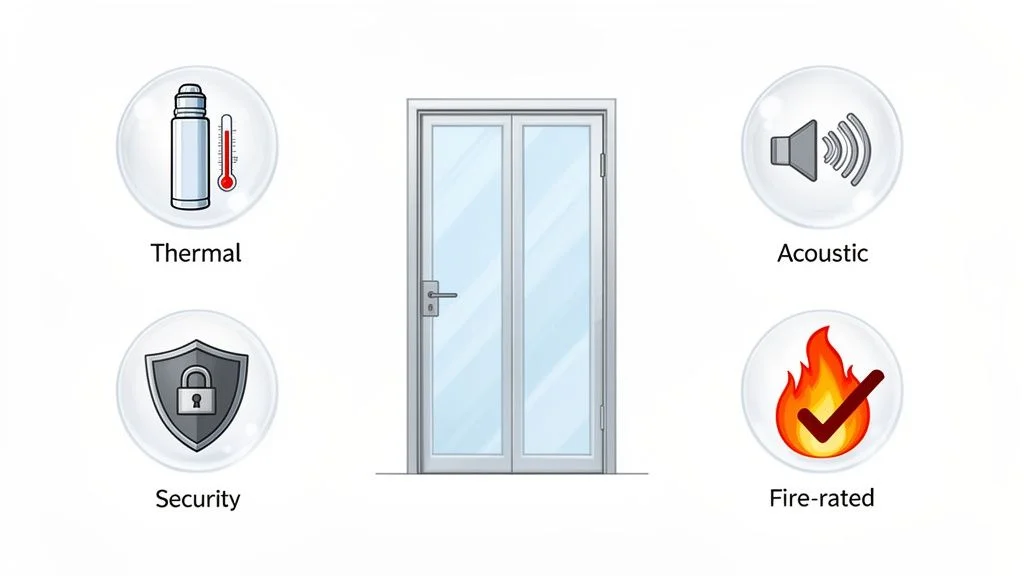
alt text: An illustrated commercial glass door highlighting its key performance features: thermal insulation, sound dampening, security, and fire rating.
Let’s break down the most important metrics so you can choose a door that truly works for your building and your business.
Mastering Thermal Performance
Your building’s entrance can be a major source of energy loss, letting expensive heated or cooled air escape. This forces your HVAC system to work overtime, driving up energy bills. Modern glass commercial doors tackle this problem head-on with sophisticated glazing.
- What are Insulated Glass Units (IGUs)? These units aren’t just single panes of glass. They feature two (double-glazed) or even three (triple-glazed) panes separated by a sealed space filled with air or an inert gas like argon. This gap acts as a powerful insulating barrier, drastically slowing down heat transfer.
- What are Low-E Coatings? A low-emissivity (Low-E) coating is an invisible, paper-thin metallic layer applied directly to the glass. It’s smart technology: in the winter, it reflects heat back inside, and in the summer, it reflects the sun’s heat away from your building, all without blocking natural light.
When you combine IGUs with Low-E coatings, you get an incredibly energy-efficient entryway. This can lead to some serious savings on your facility’s energy bills year-round.
Bolstering Security Beyond the Lock
Today’s glass commercial doors offer security that goes far beyond a simple lock and key. The glass itself is your first line of defence against break-ins and accidents. As we covered before, laminated glass is the go-to choice for security because its inner plastic layer holds the glass together even if it shatters, stopping intruders in their tracks.
Real-World Example: For a retail manager, upgrading to laminated glass can be the difference between a quick smash-and-grab and a failed break-in. The glass fractures but holds its form, creating a tough barrier that frustrates criminals and protects your valuable inventory overnight.
When you pair this tough glass with heavy-duty frames and modern access control systems, you create a secure and dependable solution for nearly any commercial building.
Enhancing the Acoustic Environment
Noise from a busy street, a nearby loading dock, or an adjacent factory can kill productivity and ruin a customer’s experience. The right glass commercial door can serve as an impressive sound barrier, helping to turn a noisy, chaotic space into a quiet and focused one. It turns out the same features that make a door energy-efficient—like double glazing and robust, well-sealed frames—are also fantastic at dampening sound.
This isn’t just about the final product; it’s about the strength of the supply chain behind it. Here in Canada, the Glass & Glass Product Manufacturing industry is a major sector that produces the high-quality components we rely on. This ensures a steady supply of advanced glass products for everything from storefront entrances to complex industrial retrofits.
Meeting Fire-Rated Safety Standards
In certain parts of a building, fire safety isn’t a choice—it’s a strict requirement mandated by building codes. Fire-rated glass doors are specially engineered and tested to contain fire and smoke for a specific amount of time, such as 20, 45, or 90 minutes. This buys precious time for people to evacuate safely and for first responders to arrive.
You can learn more about the specifics of commercial door glass and its various safety ratings in our deep-dive article on the topic.
Choosing the right door is about investing in performance, not just buying a product. Get in touch with a Wilcox expert today to have your facility’s needs assessed, and we’ll recommend a door solution that delivers on safety, efficiency, and long-term reliability.
Ensuring Proper Installation and Compliance
A high-performance glass commercial door is only as good as its installation. You can invest in the best product on the market, but without a professional install, it’s like buying a performance sports car and having an amateur build the engine. You’ll never get the reliability or performance you paid for.
When it comes to commercial doors, precision is everything. That’s why having the work done by expert, union-certified technicians isn’t just a good idea—it’s the only way to protect your investment. A professional installation ensures every component is aligned, balanced, and sealed perfectly. This is what guarantees smooth operation, energy efficiency, and keeps your warranty valid.
Many manufacturers will void a warranty if the door wasn’t installed by a certified pro. That can leave you on the hook for significant costs if something fails down the road.
Navigating Codes and Accessibility
Beyond the physical installation, your glass doors have to meet a complex web of building codes and accessibility standards. These aren’t just bureaucratic red tape; these regulations are in place to ensure safety and provide equal access for everyone who uses your facility.
Real-World Example: Think of building codes as the official rulebook for safety. An incorrectly installed door at a warehouse facility can become a major liability—it might fail in an emergency, block an escape route, or cause a serious injury. This leads to more than just operational headaches; it can result in costly fines and legal action.
In Ontario, for example, the Accessibility for Ontarians with Disabilities Act (AODA) has very specific rules. It dictates everything from door-opening force and clear width to the type of hardware used, all to ensure people with disabilities can move through your space safely and without assistance. Building codes also mandate where safety glazing (like tempered or laminated glass) must be used in hazardous locations, such as in and around doorways, to prevent shattering and injury.
Common Pitfalls of Amateur Installation
Trying to save a few dollars by using an amateur installer almost always backfires, leading to much more expensive problems later on. For any business owner or facility manager, the risks are just too high.
Here are a few of the most common issues we see from improper installations:
- Poorly Sealed Frames: This is a major source of drafts and air leakage. Your HVAC system has to work overtime to compensate, driving up your energy bills month after month.
- Misaligned Doors: A door that isn’t perfectly plumb and level will inevitably drag, stick, or even slam shut. This puts a huge amount of stress on the hinges, closers, and the frame itself, leading to constant service calls and eventual system failure.
- Incorrect Hardware Installation: When locks, panic bars, or automatic operators are installed incorrectly, they create serious security gaps or simply fail to work when you need them most.
Working with an expert partner like Wilcox Door Service turns a glass commercial door from a simple purchase into a reliable, long-term asset. Our union-certified technicians make sure every installation is done precisely to manufacturer specifications and complies with all local codes.
For expert guidance on your next project, explore our commercial door services. If you’re facing an urgent issue, our 24/7 emergency repair team is always ready to restore your facility’s safety and security.
Extending Door Life with Maintenance and Upgrades
Your glass commercial doors are a major investment, but their real value is proven long after the installation is finished. To get the most out of them, you need a smart approach to maintenance and upgrades. This isn’t about adding extra costs—it’s about preventing expensive, disruptive downtime down the road.
Think of it like the fleet of vehicles your business relies on. Regular oil changes and inspections are far cheaper than replacing a blown engine. The same logic applies directly to your doors. A little preventative care is always more cost-effective than a frantic emergency fix.
Planned Maintenance: A Smart Investment
A planned maintenance program is your single best defence against unexpected breakdowns and surprise repair bills. It allows our technicians to catch and address small issues—like a sticky pivot or a worn-out weather seal—before they snowball into major failures that shut down a vital entrance.
A typical maintenance visit from our team covers:
- Hardware Inspection: We check every hinge, pivot, and lock for signs of wear to make sure they are operating smoothly and securely.
- Closer and Operator Adjustments: We ensure automatic openers and closers are perfectly calibrated for speed and force, which keeps them compliant with accessibility standards and prevents needless strain.
- Track and Frame Cleaning: Dirt and debris in door tracks are a common cause of misalignment and damage. We clear them out to keep things running smoothly.
- Glass and Seal Integrity Check: Our technicians inspect the glass for chips or cracks and check seals for gaps that hurt your energy efficiency and security.
Keeping the glass itself clean is also key to maintaining a professional appearance. For a consistently pristine entrance, many businesses use professional commercial window cleaning services, as they have the right tools and expertise for the job.
Strategic Upgrades for Modern Performance
As buildings get older, their original doors often fall short of today’s standards for security and energy performance. Retrofitting is a fantastic way to bring an older entrance up to modern expectations without the cost and disruption of a full replacement. For facility managers of older properties, this is one of the quickest paths to modernization.
Real-World Example: Upgrading an old, single-pane storefront door at a warehouse to a new system with an Insulated Glass Unit (IGU) can transform a drafty, energy-wasting entrance into an efficient asset. This single move can significantly lower your HVAC costs while improving comfort for employees and customers.
This lines up with what we’re seeing across the industry. The Canada glass curtain wall market, which is closely tied to advanced glass commercial doors, is projected to hit USD 2,313.9 million by 2030. A huge driver of this growth is the demand for energy-saving solutions. In fact, advanced glazing can slash heating costs by up to 30% in cold climates—a major focus for our upgrade services.
Deciding whether to fix a minor issue or invest in a full overhaul can be tough. Our guide on how to decide between replacing and repairing your glass door can walk you through the key considerations.
Ultimately, we see ourselves as your long-term partner. Through proactive service and intelligent upgrades, we help ensure your doors operate safely, efficiently, and reliably for many years to come.
Frequently Asked Questions About Glass Doors
Even after exploring all the options, it’s completely normal to have a few lingering questions. When you’re making a significant investment in your facility like new glass commercial doors, you want to be sure. We get it. Facility managers and business owners often ask us about the same key concerns, so we’ve put together some straight-to-the-point answers based on our experience.
How Do I Decide Between Repair and Replacement?
This is probably the most common question we hear, and it’s a tough one for facility managers. The right call really comes down to the door’s age, the seriousness of the damage, and what makes the most sense for your budget long-term.
- Repair When: The problem is relatively minor. Think worn-out weather seals that are causing a draft, a door that’s just slightly out of alignment, or a closer that isn’t working smoothly. These are usually quick, cost-effective fixes that get your door back in service fast.
- Replace When: You’re facing major damage or find yourself calling for the same repair over and over again. A badly bent or rusted frame, shattered glass (especially on an older door that isn’t safety-rated), or recurring issues are clear signs that a replacement is the smarter move.
A new door isn’t just about fixing a problem—it’s an upgrade. It’s your chance to move up to modern security standards, make a real dent in your energy bills, and give your building’s entrance a fresh, professional look. An honest assessment from a pro can lay out a clear cost-benefit analysis to help you decide.
What Is the Best Glass for Energy Efficiency?
Hands down, the best choice for energy performance is a double or triple-glazed Insulated Glass Unit (IGU) that includes a Low-E (low-emissivity) coating and is filled with argon gas.
Think of it like a high-end thermos for your building. The multiple panes of glass create an insulating air gap, which slows heat transfer on its own. The Low-E coating, which is totally invisible, then acts like a heat-reflective shield. In the winter, it bounces your building’s heat back inside; in the summer, it reflects the sun’s heat away. This combination is one of the most powerful ways to cut down your heating and cooling costs.
How Often Do My Doors Need Professional Service?
Our standard recommendation is to have a professional inspection and tune-up at least once per year. But for high-traffic buildings—like retail centres, busy offices, or distribution hubs—bumping that up to twice a year is a smart investment in prevention.
A Planned Maintenance Program will always be more affordable than dealing with an unexpected failure. Proactive service lets a technician spot and fix small issues before they become major breakdowns that lead to downtime, safety risks, and expensive emergency calls.
Are Glass Doors Secure Enough for My Business?
Absolutely. This is a common worry, but modern glass commercial doors are built with security at their core. High-security glazing options, like laminated or tempered safety glass, offer incredible resistance to impact and break-in attempts. Laminated glass, for example, is specifically designed to hold together even when it shatters, creating a tough barrier that frustrates intruders.
When you pair that advanced glass with a heavy-duty frame, high-quality locking mechanisms, and integrate it with your access control system, a glass door becomes a strong and reliable component of your overall security plan.
Partnering with an expert ensures you get clear answers and the right solution for your building’s specific needs. At Wilcox Door Service Inc., we’re here to provide that clarity and deliver reliable service that protects your assets.
Ready to find the perfect door solution for your facility? Contact us today for a professional consultation or quote.