
Meta description: Overhead doors Oakville guide for smarter commercial door selection, lifecycle cost control, code compliance, and uptime planning.
A door failure usually doesn’t happen when the building is quiet. It happens when trucks are backing in, staff are waiting on a bay, and someone needs an answer right away. In Oakville facilities, the actual cost of a commercial overhead door isn’t just the invoice for the replacement. It’s the energy loss from poor insulation, the service calls from the wrong hardware, and the compliance risk that shows up when a fire door or operator hasn’t been maintained properly.
If you’re evaluating overhead doors Oakville options, the smartest decision is rarely the cheapest opening-day price. It’s the one that holds up in Ontario weather, matches your traffic, supports safe operation, and stays serviceable over the long term. That means looking at door type, insulation, operating cycle, safety devices, code requirements, and maintenance planning as one system.
This is the practical lens facility managers need. The North America garage overhead doors market was valued at USD 3.93 billion in 2024 and is projected to reach USD 5.52 billion by 2033, showing how much investment is going into secure and efficient access points across commercial markets that include Oakville, according to North America garage overhead doors market data.
Choosing the Right Overhead Doors in Oakville
A stuck overhead door creates more than a repair ticket. It can slow receiving, tie up outbound shipments, expose conditioned air to the outside, and force staff to work around a hazard while operations keep moving. In Oakville, that situation is common enough that many facility teams replace a door only after it becomes impossible to ignore.
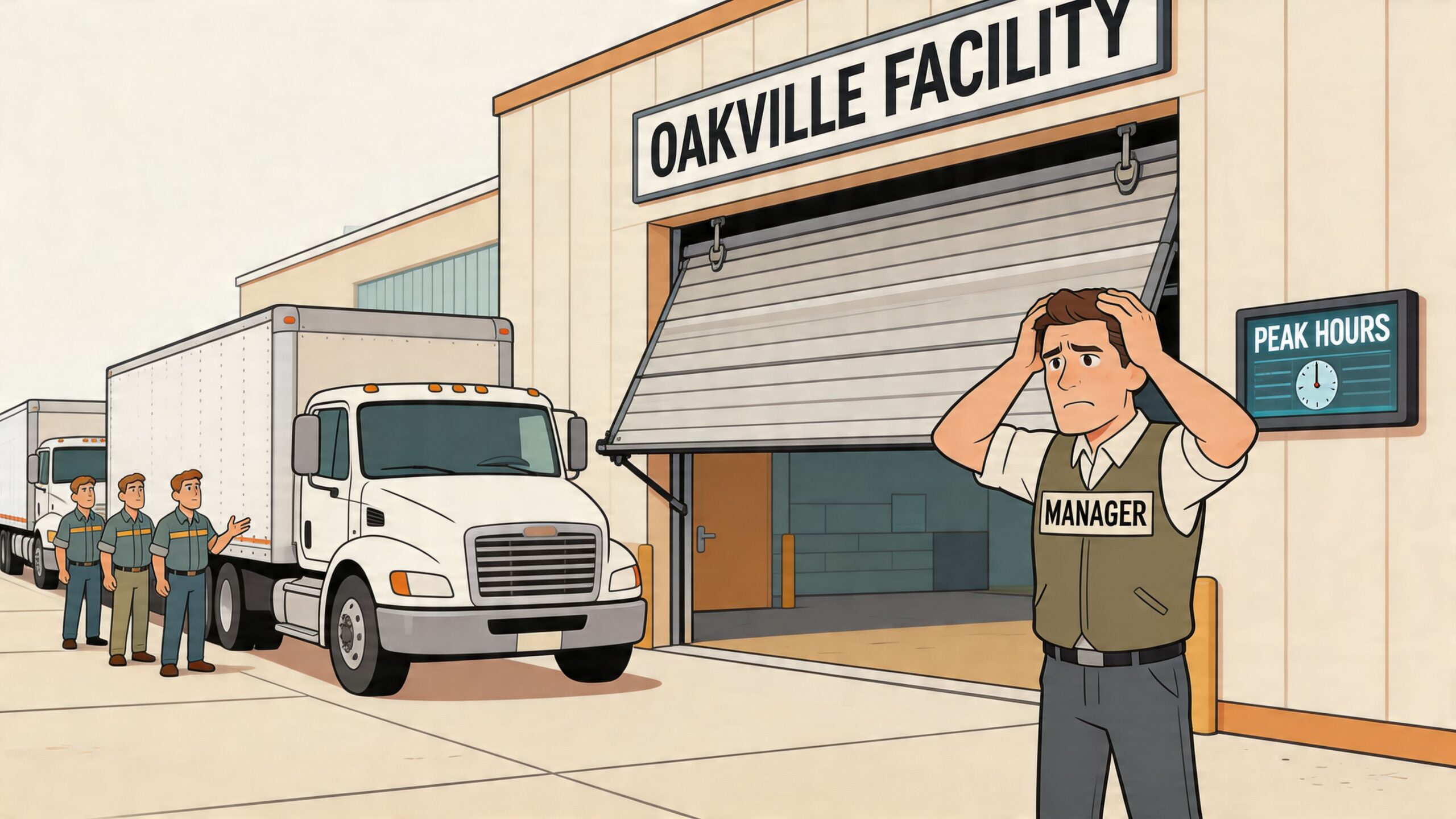
The better approach is to treat the door as an operating asset. A commercial door affects traffic flow, dock safety, building envelope performance, and emergency readiness. If one part of that chain is weak, the whole opening becomes expensive to own.
What a smart decision looks like
A sound investment starts with a few direct questions:
- How often does the opening cycle: A door used a handful of times a day needs a different spring, operator, and track setup than one serving a busy shipping lane.
- What environment does it protect: A dry warehouse, a washdown room, a food facility, and a heated shop all need different materials and sealing details.
- What happens if the door fails: Some openings are inconvenient when down. Others stop revenue, delay carriers, or affect fire separation.
Practical rule: Buy for the opening’s actual job, not for a generic category on a quote sheet.
Price matters, but ownership cost matters more
Facility managers often inherit door systems that were selected around initial budget instead of lifecycle fit. That usually shows up later as repeated roller failures, damaged bottom seals, poor jamb contact, operator strain, and winter complaints about drafts. The purchase price may have looked attractive, but the total cost over years of use often tells a different story.
For most commercial properties, the right path is to choose a door package that balances five things: opening conditions, insulation, duty cycle, code compliance, and service access. When those line up, the result is straightforward. Fewer disruptions, steadier temperatures, and a door your team doesn’t have to think about every week.
A Guide to Commercial Overhead Door Types
Commercial overhead doors aren’t interchangeable. Two doors can look similar from the parking lot and behave very differently once they’re installed. The right choice depends on what the opening has to do every day, not just how large it is.
Sectional doors
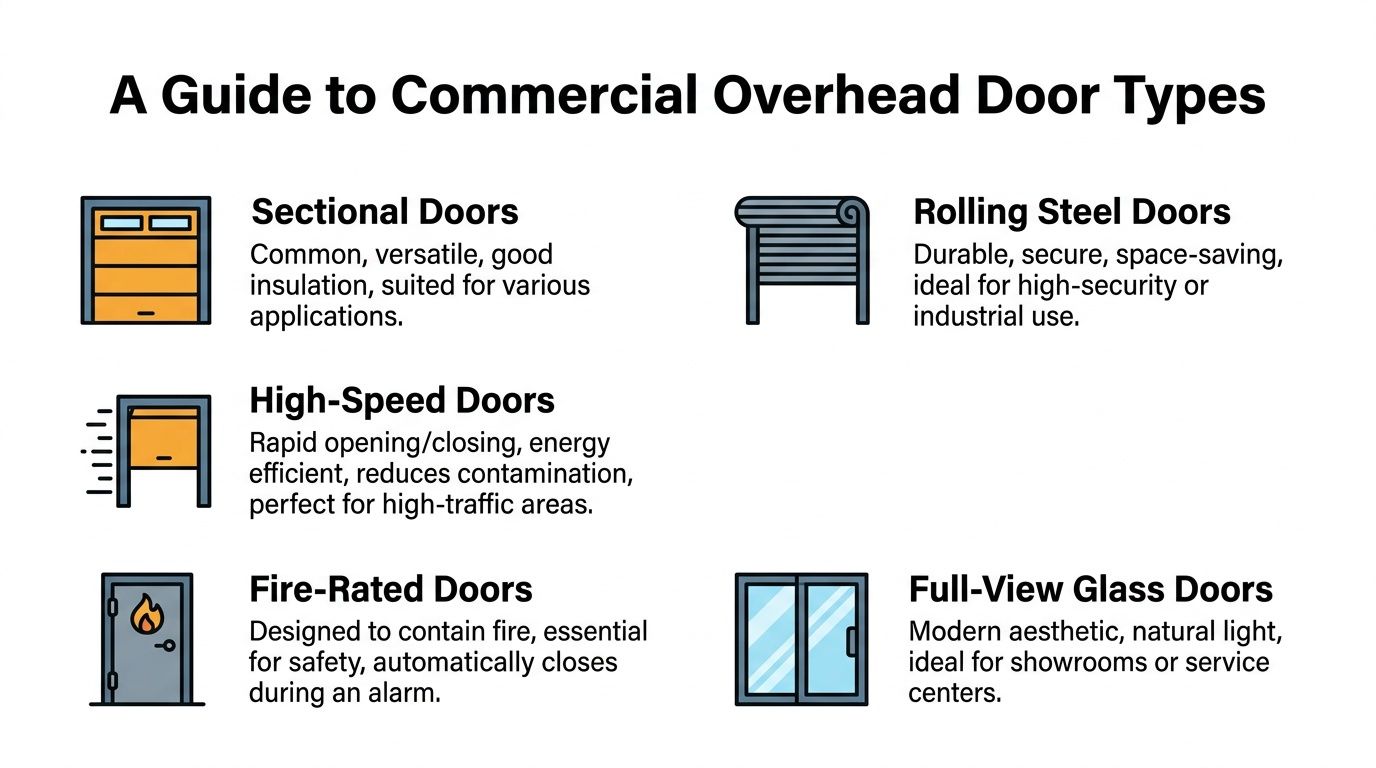
A sectional door is the workhorse option for many Oakville industrial and commercial buildings. It’s built from horizontal panels hinged together, so the door travels upward and then back along tracks under the ceiling. That layout gives you a practical mix of insulation, durability, and serviceability.
For many facilities, sectional doors are the default because they handle a wide range of openings well. They suit manufacturing bays, service centres, fleet buildings, and general warehousing. If the opening needs thermal performance, sectional doors are often the first category worth reviewing.
Rolling steel doors
A rolling steel door coils into a compact barrel above the opening instead of following horizontal tracks. Think of it as the space-saving choice when headroom and side room matter, or when the opening needs a more security-focused design.
Rolling doors are common where you want strong curtain construction and a smaller overhead footprint. They’re often used at service counters, storage openings, and industrial zones where security and compact storage above the lintel matter more than panel insulation.
A common buying mistake is comparing sectional and rolling models only on upfront cost. Their real trade-offs involve space, security, sealing, maintenance access, and cycle demands. If you’re weighing those differences, this guide on sectional vs rolling steel doors gives a useful side-by-side view.
High-speed doors
A high-speed door acts like an airlock. It opens and closes quickly to limit air exchange, reduce contamination transfer, and keep traffic moving through busy openings. These doors are often the right answer where forklifts move constantly and every extra second an opening stays exposed affects temperature or cleanliness.
That makes them a strong fit for food distribution, cold-chain operations, and internal separation between conditioned areas. In practice, they’re less about brute strength and more about operational control.
A short visual can help if you’re comparing movement styles and use cases across commercial door systems.
Fire-rated doors
A fire-rated door is part of the building’s life-safety system. It’s designed to close when required to help compartmentalise a fire and protect the building layout intended by code. In simple terms, it acts like a built-in barrier that stays ready in the background.
These doors belong where fire separation is required by design, not where someone prefers a heavier product. That distinction matters. A fire door brings inspection, testing, and maintenance obligations that standard service doors don’t.
A fire-rated opening isn’t just another piece of hardware. It’s part of the building’s compliance record.
Full-view glass doors
A full-view glass door combines an overhead door format with large glazed sections. In commercial settings, these are often chosen for service bays, showrooms, and customer-facing spaces where daylight and appearance matter alongside function.
They aren’t the answer for every opening. Glass and aluminium can be an excellent fit where visibility and presentation count, but they should be evaluated against thermal needs, privacy, and daily abuse from equipment traffic.
Quick comparison for Oakville facilities
| Door Type | Primary Use Case | Key Benefit | Common Oakville Application |
|---|---|---|---|
| Sectional Doors | General industrial and commercial openings | Versatility and insulation | Warehouses, workshops, service buildings |
| Rolling Steel Doors | Tight headroom or secure openings | Compact storage and durability | Storage areas, industrial service openings |
| High-Speed Doors | Frequent traffic between controlled spaces | Fast operation and reduced air exchange | Distribution centres, food facilities |
| Fire-Rated Doors | Openings requiring code-based fire separation | Life-safety protection | Manufacturing plants, multi-tenant buildings |
| Full-View Glass Doors | Customer-facing or daylight-focused openings | Visibility and appearance | Service centres, showrooms |
Match the door to the operation
The most reliable door is usually the one that fits the opening’s daily pattern with the least compromise. If the opening needs insulation, choose for thermal performance first. If it needs compartmentalisation, start with code. If forklifts are constantly moving through it, speed and cycle capability should drive the decision.
That’s how you avoid buying one door to solve five different problems poorly.
Key Factors for Selecting Your Commercial Door
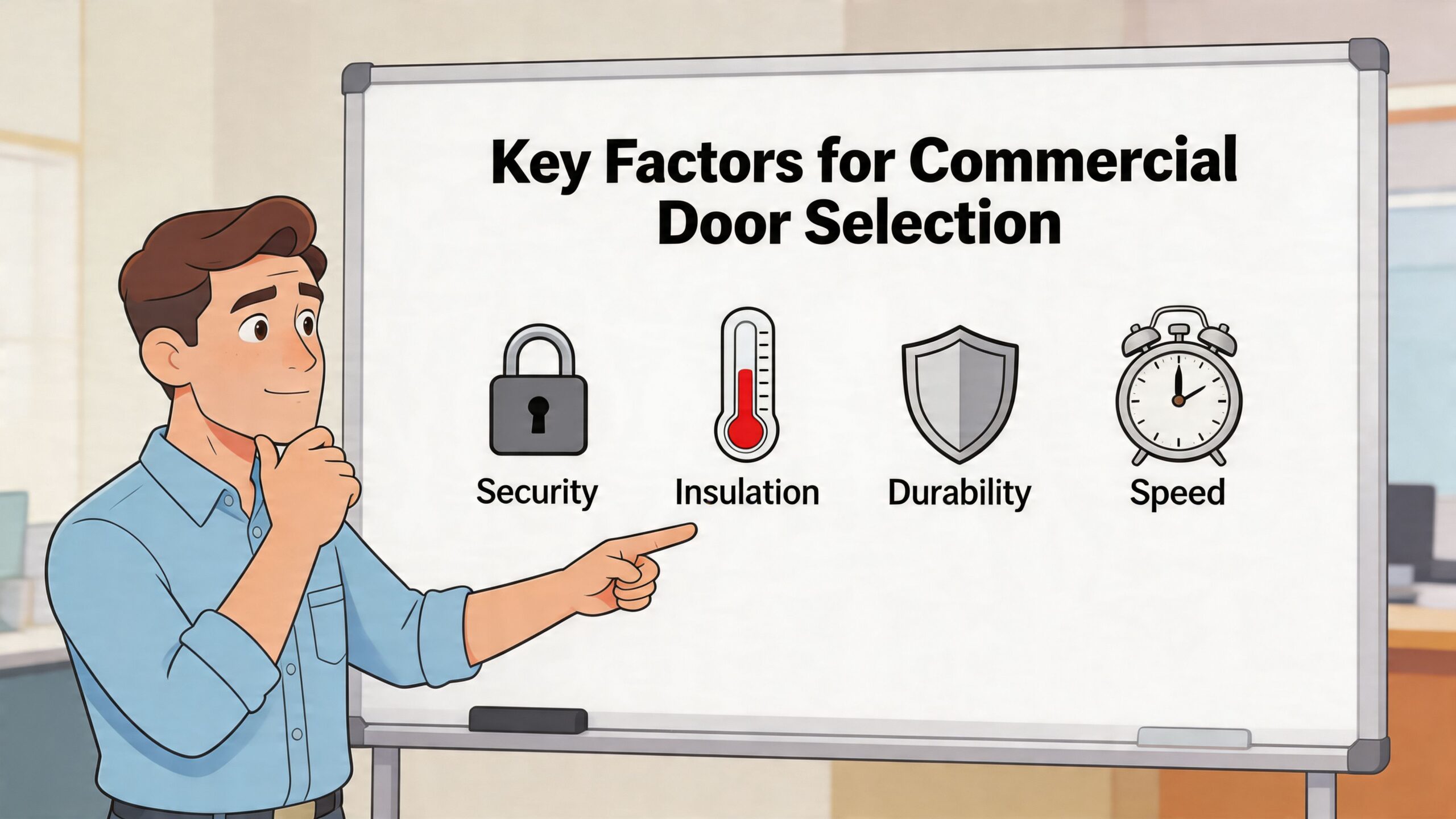
A commercial overhead door should be specified like a piece of operating equipment, not picked from a catalogue based on size and finish. The opening has to perform in your building, under your traffic, with your maintenance realities. That’s where selection gets practical.
Insulation and thermal control
R-value is a measure of how well a door resists heat flow. Higher numbers generally mean better insulating performance. For a facility manager, that translates into a simpler question. How much energy are you paying to lose through one of the largest moving openings in the building?
Modern insulated sectional doors can provide an R-value of approximately 17 and use a 1-3/4-inch Neufoam™ insulated polyurethane core with shiplap section joints, which can reduce heat loss by up to 40% compared to non-insulated doors according to this Oakville sectional door case study. Shiplap joints matter because they help sections fit together more tightly, which improves resistance to air leakage.
If your building is heated, cooled, or humidity-controlled, insulation isn’t a premium extra. It’s part of the door’s operating cost equation.
Duty cycle and operator sizing
Duty cycle means how often the door is expected to open and close. A light-use opening at a storage area can tolerate a very different hardware package than a shipping bay that runs all day. Springs, rollers, tracks, and operators all have to match that usage pattern.
When duty cycle is underestimated, doors usually don’t fail in dramatic ways at first. They become noisy, inconsistent, or hard on operators. Then service calls start stacking up. At this point, an accurate usage profile matters more than assumptions.
Safety systems that actually fit the opening
Safety devices should match actual hazards around the opening. That can include photo eyes, monitored reversing edges, motion activation logic, signalling, and protection around pedestrian interaction zones. A busy dock lane with forklift traffic needs a different setup than a secure rear service opening.
This is also the point where “smart” hardware can help, if it’s applied carefully. For teams thinking about controls and interface choices, there’s value in understanding how designers approach integrating clever door hardware so convenience features don’t create confusion, access issues, or maintenance headaches later.
Field note: The best activation system is the one operators use correctly on a rushed Tuesday afternoon, not the one that looked impressive in a product demo.
Security and door construction
Security isn’t just about whether the curtain or panel looks strong. It comes down to the full assembly. Tracks, guides, bottom bars, locking methods, glazing choices, operator integration, and how tightly the door seats against the opening all affect how secure the system feels and performs.
In practice, some sites need resistance to casual intrusion, while others need stronger protection around tools, stock, or after-hours access. A door that’s easy to force at the bottom or side won’t be rescued by a heavy operator alone.
Serviceability and lifecycle cost
Two similar products can produce very different ownership experiences. One may use components your local technicians can service quickly. Another may rely on niche parts that delay repair and keep the opening out of service longer than expected.
Ask direct questions before approving a specification:
- Can the door be serviced without unusual lead times: Replacement parts matter just as much as initial assembly.
- Is the operator properly matched to the curtain or panel weight: Oversized and undersized both create problems.
- Will your team be able to inspect wear points easily: If no one can reach or assess the hardware efficiently, routine care tends to slip.
A strong commercial door package does three things well. It seals properly, cycles as intended, and stays maintainable over time. If one of those is missing, the total cost of ownership climbs quickly.
Navigating Oakville Climate and Ontario Building Codes
Oakville facilities don’t operate in a neutral environment. Weather, moisture, temperature swings, and local code obligations all shape what a door needs to do. A specification that works in a mild interior setting can become expensive fast when it faces winter air, wind-driven moisture, and frequent opening cycles near loading areas.
Climate affects hardware choices
Buildings near the lake and throughout the GTA deal with damp conditions, freeze-thaw cycles, road salt exposure, and strong seasonal shifts. Those conditions push you toward better sealing, corrosion-conscious material choices, and hardware that won’t bind or degrade quickly in moisture-heavy environments.
That’s why details matter. Bottom weather seals, perimeter sealing, track condition, proper drainage around the opening, and material finish all affect whether a door performs cleanly after repeated winter use. If the opening is exposed and heavily used, basic hardware can age badly.
Energy performance is now a building issue
Energy loss at the door opening isn’t just a comfort problem. It affects HVAC workload, interior conditions, and operating budgets. In Ontario, commercial buildings can achieve 20-30% energy savings with insulated overhead doors, yet only 15% of Halton Region facilities have adopted these upgrades, according to this discussion of energy-efficient overhead door upgrades.
That gap matters because overhead doors are often among the largest weak points in the building envelope. If you have conditioned space, frequent openings, or product sensitivity to temperature, insulated door assemblies deserve closer attention than they usually get.
Many facilities focus on roof insulation and HVAC equipment first. They should also look at the opening that repeatedly exposes the interior to outside air.
Code compliance isn’t optional
Ontario code obligations affect more than just new construction. Replacement work, fire-rated openings, egress relationships, operator safety, and life-safety equipment can all trigger compliance questions. Facility managers don’t need to memorise code language, but they do need to know when a door opening has become a regulated issue rather than a maintenance issue.
Focus on these areas during planning:
- Fire separation requirements: If the opening sits in a rated wall, the door selection and testing obligations are different from a standard service opening.
- Safe operation: Sensors, entrapment protection, and operator controls need to suit the use of the area.
- Path of travel and access: A new door or revised operator layout shouldn’t create practical conflicts around circulation or emergency movement.
For facilities with rated openings, routine inspection matters as much as product choice, making services such as fire door testing and inspection part of risk management, not just maintenance paperwork.
Local decision-making prevents expensive retrofits
A generic specification often overlooks what Oakville openings face. It may ignore winter infiltration, overbuild a low-use opening, or under-spec a dock door that cycles constantly. Both mistakes cost money. One wastes capital. The other creates repeated disruption.
A local, code-aware approach usually leads to a simpler result. Pick the door for the opening, account for Ontario weather, and verify the life-safety implications before the order is placed. That’s easier than retrofitting seals, controls, and compliance items after the opening starts causing problems.
Your Essential Procurement and Specification Checklist
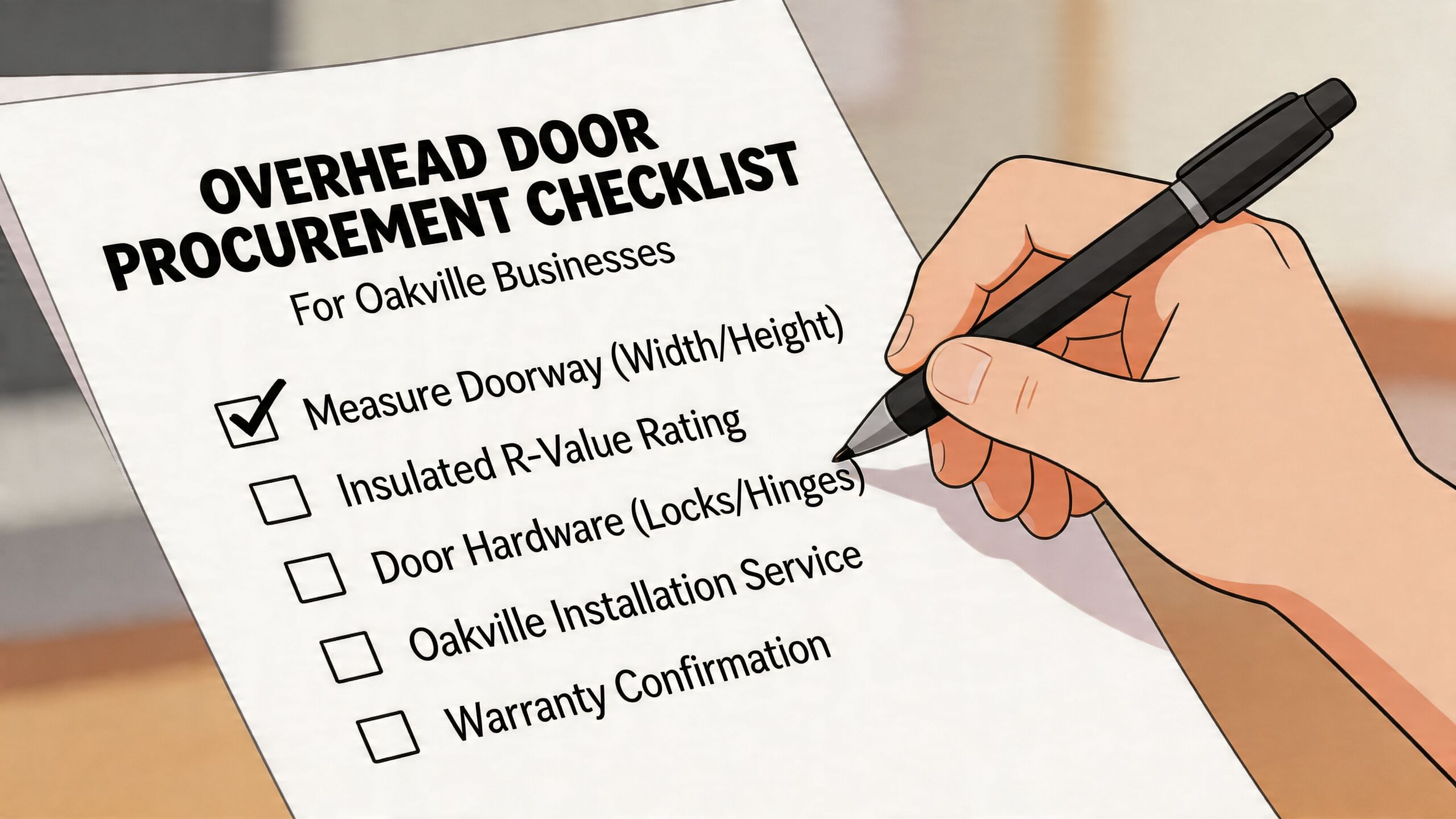
Procurement goes more smoothly when the operations team, maintenance team, and vendor are all working from the same definition of the opening. Vague requests create vague quotes. Specific requests create useful comparisons.
Start with the opening itself
Before discussing model names, lock down site conditions.
- Opening dimensions: Confirm width, height, headroom, side room, and back room. A door can be technically compatible with the opening size and still conflict with structure, lights, sprinklers, or mechanical runs.
- Mounting surface condition: Check jambs, lintel, slab level, and surrounding wall condition. A new door won’t perform well if the supporting surfaces are out of shape.
- Traffic profile: Note whether the opening serves trucks, forklifts, pedestrians, or mixed traffic.
A simple worksheet helps here. If your team needs a structured starting point, a product specification sheet template can be adapted to commercial door procurement so everyone is reviewing the same basic criteria.
Specify the operating demands
Many tenders get too loose at this point. “Standard commercial use” doesn’t mean much.
Ask for clarity on:
- Expected cycle volume: Low-use, moderate-use, or high-frequency operation changes the spring and operator conversation immediately.
- Opening speed needs: Some openings need fast recovery to protect temperature or throughput. Others don’t.
- Manual or motorised operation: If motorised, define how staff will activate the door and what happens during power loss.
Checklist habit: If the opening is critical to shipping, receiving, or fire separation, write that into the specification. Don’t assume the quote reviewer will infer it.
Include safety, sealing, and maintenance access
A strong specification should also answer these practical questions:
- Safety devices required: Photo eyes, reversing edges, audible warning, signalling, or restricted access controls.
- Perimeter sealing: Bottom seal, jamb seals, header seal, and any need for tighter environmental control.
- Future service access: Can technicians safely inspect springs, rollers, operators, and controls without major disruption?
Compare quotes on substance, not just price
When bids come in, compare what’s included around the door, not just the door leaf or curtain itself.
| Specification area | What to confirm |
|---|---|
| Door construction | Insulation, panel or curtain type, finish, and intended application |
| Operator package | Type, control logic, and suitability for the opening’s use |
| Safety scope | Included sensors, edges, and activation devices |
| Site work | Removal, framing correction, electrical coordination, and commissioning |
| Service support | Start-up, adjustments, inspection expectations, and parts access |
A procurement checklist won’t replace field expertise, but it will stop avoidable omissions. That alone saves time during quoting, approval, and installation.
Optimizing Uptime with Maintenance and Emergency Repair
Many facilities still treat commercial doors as break-fix equipment. The door works until it doesn’t, someone calls for service, and operations work around the problem. That mindset is expensive because door failures rarely happen in isolation. They interrupt traffic, create safety concerns, and often damage related components when teams try to keep using a failing opening.
Why break-fix costs more
A neglected door usually gives warnings before it stops. You’ll hear the operator straining. The door may hesitate, rack slightly, or stop sealing tightly at the floor. Rollers wear. Cables age. Tracks drift out of alignment. None of those signs fix themselves.
Once the opening becomes critical, the pressure on the repair decision changes. The maintenance team isn’t choosing the most efficient fix anymore. They’re choosing the fastest way to get movement back into the building. That often leads to temporary repairs, repeat callouts, and component replacement that could have been planned earlier.
What planned maintenance should include
A proper maintenance visit should look beyond lubrication and a quick run test. It should examine the full system under load and at rest.
Key items include:
- Balance and spring condition: An unbalanced door forces the operator to do work the spring system should be doing.
- Tracks and rollers: Wear, looseness, or misalignment usually show up here first.
- Cables, drums, and bottom fixtures: These are critical safety components and should be inspected carefully.
- Seals and panel condition: Air leakage and water ingress often begin at the perimeter.
- Operator and control logic: Limit settings, response, safety devices, and activation performance all need verification.
For high-cycle doors in GTA distribution centres, pairing a 2-inch thick polyurethane insulated door with a commercial-grade operator balanced by union-certified technicians can extend service life by 30% while supporting requirements such as fire door drop testing, according to this product information on high-cycle insulated steel doors. The practical takeaway is simple. Correct hardware selection and correct setup reduce wear from day one.
Build an inspection routine inside the facility
Your in-house team doesn’t need to replace trained technicians, but they should know what to spot between service visits.
Use a basic recurring check:
- Watch the door travel: It should move smoothly without jerking, twisting, or unusual pauses.
- Listen during operation: Grinding, slapping, and straining sounds usually indicate a mechanical issue.
- Look at the floor seal: Gaps and uneven contact often reveal alignment or wear problems.
- Check controls and sensors: If staff are bypassing normal activation methods, there’s usually an underlying issue.
A simple internal process works best when one person owns it. If everyone assumes someone else is watching the opening, small problems stay unreported until failure.
Emergency response still matters
Even with strong maintenance, urgent failures still happen. A forklift can strike a panel. A spring can break. Weather can affect a marginal system at the worst time. That’s why true after-hours support matters for Oakville operations that run beyond a standard day shift.
For practical guidance on local repair issues and common failure points, this article on garage door repair in Oakville is a useful reference when you’re assessing whether a door needs adjustment, component replacement, or a larger reset of the opening package.
Treat the door as a managed asset
A maintenance strategy works best when it connects specification, inspection, service history, and emergency planning. That’s the point where a provider such as Planned Maintenance Programs becomes useful because it turns recurring door issues into scheduled asset management instead of repeated disruption. If a critical opening still fails unexpectedly, access to 24/7 emergency repair matters because waiting for the next business day isn’t realistic for active dock and plant operations.
The cheapest service call is often the one you never have to make because the wear point was found early.
When a facility does this well, uptime improves for a simple reason. Fewer surprises reach the point of shutdown.
Your Partner for Reliable Overhead Door Solutions
The best overhead door decisions aren’t isolated purchasing choices. They sit inside a broader facility strategy that covers energy use, traffic flow, worker safety, code compliance, and service planning. When those pieces line up, the opening becomes stable and predictable. That’s what most facility managers are really after.
What long-term value looks like
Long-term value usually comes from a handful of disciplined decisions:
- Specify for actual use: Match door type and operator package to the opening’s traffic and environment.
- Protect the building envelope: Treat insulation, sealing, and material choice as operational issues, not cosmetic upgrades.
- Plan for compliance: Rated openings, safety devices, and testing obligations need to be addressed early.
- Keep the asset serviceable: Maintenance access, replacement parts, and response planning all matter over the years.
A lot of avoidable cost comes from breaking those decisions apart. One vendor handles the install, another gets called in after failure, and no one owns the opening’s lifecycle.
Experience matters when the opening is critical
Commercial doors sit at the intersection of mechanics, electrical controls, building code, and daily operations. That’s why experience shows up less in marketing claims and more in how a project is scoped, installed, tested, and maintained over time.
Companies in this industry with a history stretching past a century reflect that reality. With a legacy of over 100 years by 2026, firms such as Wilcox Door Service mirror foundational players in the sector by providing union-certified expertise and broad service capability that supports code-compliant, reliable access solutions, according to this industry profile on Overhead Door Corporation.
For Oakville facilities, that kind of support matters most when a provider can handle more than the door leaf itself. The opening may involve operators, dock equipment, safety devices, and inspection obligations that all affect uptime. If you’re reviewing local capability, Oakville commercial door and dock services is the right place to see the scope of support available for openings, loading areas, and related access systems.
A practical standard for partnership
“Respected Partners, Reliable Service” only means something if the provider helps you make better long-term decisions. That includes telling you when a repair is enough, when a door should be upgraded, and when compliance or energy performance deserves more attention than another short-term patch.
A reliable partner doesn’t just restore movement. They help the opening stay safe, efficient, and manageable for the life of the building.
If you’re reviewing overhead doors in Oakville and want a clearer view of lifecycle cost, compliance obligations, or upgrade options, contact Wilcox Door Service Inc. to discuss your facility’s openings, schedule an inspection, or request a quote.