


A lot of facility managers arrive at this question the same way. The warehouse feels dark even in the middle of the day. Dock staff keep the lights on from the first shift to the last. Corners near overhead doors feel dim, drivers and forklift operators rely too heavily on artificial light, and the space starts to feel more like a sealed box than a working environment built for people.
That’s usually when windows in garage doors move from a cosmetic idea to an operating decision.
In commercial buildings, windows affect more than appearance. They influence how safely people move around a bay, how much heat you lose in winter, what a thief can see from outside, and whether a door upgrade still meets code and fire requirements. In a distribution centre, one bad window choice can create glare, weaken insulation, or expose inventory. The right choice can improve visibility, reduce some lighting demand, and support smoother daily movement at the dock.
This guide looks at windows from the facility side, not the residential side. It covers where windows help, when they don’t, how glazing and frame options change performance, what retrofit versus replacement really means, and where Canadian code details matter. The goal is simple. Help you make a sound decision that fits your building, your workload, and your budget.
Introduction
A common scene in older facilities is easy to recognise. You walk into a loading area early in the morning and the overhead doors are shut, the artificial lighting is already fully on, and the space still feels flat and shadowed. Staff are moving product, checking paperwork, and lining up trailers, but visibility near the bay doors isn’t as clean as it should be. That affects comfort, but it also affects judgment.

That’s where windows in garage doors start to earn their place. In a commercial setting, they’re not there just to make the building look newer from the parking lot. They can improve sightlines, bring daylight deeper into the work area, and help a facility team modernise a door system without treating every opening the same.
The trade-offs are real. More glass can mean more heat loss if you choose the wrong glazing. Clear panes can create security issues in the wrong location. On rated openings, the wrong modification can create a compliance problem very quickly.
Practical rule: Treat garage door windows the same way you’d treat dock equipment. Match the specification to the job, not to a catalogue photo.
A food plant, a parcel hub, and an airport service bay won’t use the same window package. Sill height, glass type, insulation level, and impact resistance all need to fit the operation around the opening.
The Strategic Case for Commercial Door Windows
The best argument for door windows isn’t visual appeal. It’s operational return. In the right location, a well-specified window turns a solid barrier into a working part of the building.
Safety and sightlines at the opening
On a busy dock, people and equipment cross paths fast. Drivers pull in, forklifts stage loads, pedestrians cut through, and supervisors move between bays. A window gives staff one more way to check what’s happening on the other side before they open a door or move through a threshold.
That matters most in areas where timing is tight and visibility changes by the minute. A clear line of sight through a sectional overhead door won’t replace good process or mirrors, but it helps reduce the blind feel that solid panels create.
A lot of teams also use windows to improve communication at a door. Staff can confirm whether a trailer is aligned, whether a space is occupied, or whether someone is standing in the swing path of adjacent equipment.
Daylight and operating cost
Natural light helps a facility in two ways. First, the space is easier to work in. Second, electric lights don’t need to carry the full load all day.
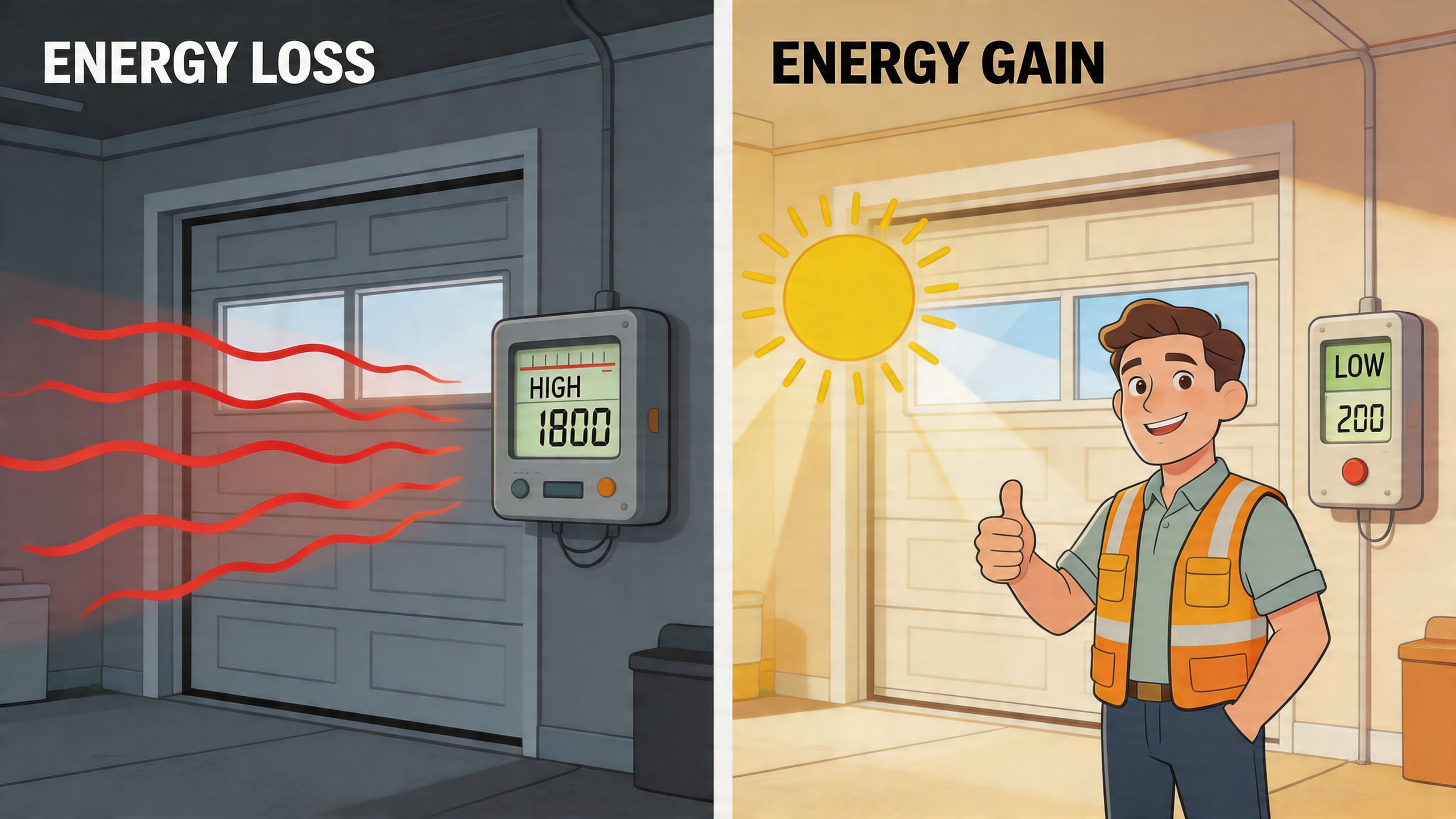
The energy side only works if the window package is built properly. Poor glazing can turn a door into a heat leak. In Canadian warehouses, uninsulated garage windows contribute to 15-20% higher heating costs in cold climates, while high-performance Low-E argon-filled windows can cut energy bills by up to 30% in provinces like Alberta, according to this commercial garage window guide.
That’s why a simple “add glass for more light” approach often misses the point. Better daylight is useful. Better daylight with poor thermal performance is an expensive compromise.
For managers comparing options, window inserts for garage doors are one path worth reviewing because they show how visibility, insulation, and door compatibility need to be considered together.
Employee experience and building perception
People notice light quality immediately. A darker dock tends to feel more closed in, especially in winter when crews already spend long hours indoors. A brighter receiving or shipping area often feels safer and easier to work in.
The human side isn’t just morale. Better ambient light helps with visual tasks such as label checks, trailer inspections, and general housekeeping. In a plant or warehouse, small improvements in visibility often support fewer daily workarounds.
More daylight won’t fix a poor layout, but it can make a good layout work the way it was supposed to.
Property image and asset value
Windows also change how a facility presents itself. A bank of properly aligned glazed sections can make an older building look maintained instead of patched together. That matters to multi-site property managers, tenants, and visitors.
In industrial real estate, appearance only matters if performance backs it up. If the new windows reduce visibility problems, support energy control, and fit the building envelope properly, the visual upgrade becomes part of a broader asset improvement rather than a cosmetic spend.
Choosing Your Glazing and Frame Materials
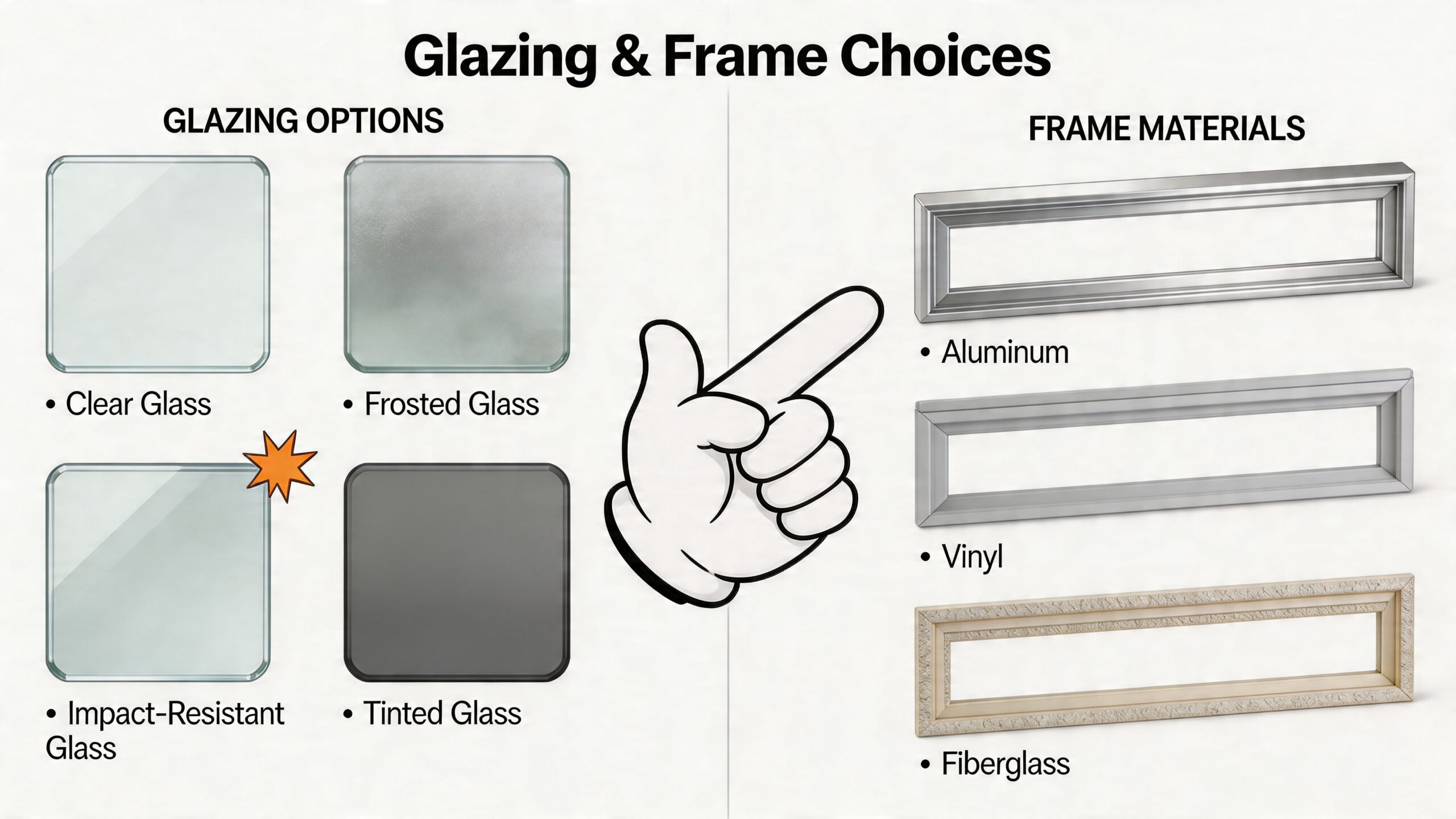
Material selection is where most of the long-term result gets decided. This is the part many buyers rush through, even though it controls insulation, impact resistance, clarity, and service life.
Start with the glazing
Glazing is the transparent part of the window. That can be glass or a clear plastic product, depending on the application.
A straightforward way to think about glazing is to ask four questions:
- Is heat retention important
- Is impact resistance important
- Do you need visibility or privacy
- Is the opening exposed to special code or fire conditions
Here’s the practical breakdown.
| Glazing type | Best fit | Main trade-off |
|---|---|---|
| Tempered glass | General commercial use where basic visibility matters | Stronger than ordinary glass, but not the top choice for high-security areas |
| Insulated glass unit | Heated facilities, conditioned spaces, dock areas where thermal control matters | Costs more than basic glazing |
| Triple-pane insulated glass | Cold-storage adjacent spaces or very cold climates | Added weight and cost |
| Polycarbonate | High-impact zones and areas prone to accidental strikes | Can scratch and may not deliver the same look as glass |
| Laminated security glass | Facilities where visibility and break-in resistance both matter | Higher upfront cost |
One term worth understanding is U-factor, a measurement where lower values indicate better resistance to heat loss. In Canada, energy-efficient garage windows with Low-E coatings and argon gas fillings can achieve U-factors as low as 0.25, which means a 25-40% reduction in heat loss compared with standard double-pane windows, according to this overview of garage window performance.
Low-E means low emissivity. In plain terms, it’s a very thin coating that helps reflect heat where you want it. In winter, that helps keep indoor heat from escaping through the glass. Argon gas is an insulating gas sealed between panes to slow heat transfer.
Matching the material to the operation
A heated shipping area has different priorities than a washdown room or a fabrication shop.
Consider the operating environment first:
- For distribution centres: insulated glass often makes sense because the door cycles frequently and the opening sits near conditioned space.
- For manufacturing plants: impact resistance matters if carts, pallets, or tools regularly move close to the door line.
- For food and pharma spaces: thermal consistency and cleanability usually rank ahead of appearance.
- For perimeter doors facing public areas: privacy and security may matter as much as light transmission.
If you’re reviewing pedestrian and entry systems alongside overhead openings, glass commercial doors can help compare how glazing performs across different types of commercial access points.
Frame choices and thermal breaks
Frame material gets less attention than glass, but it matters. In many commercial applications, aluminum is common because it handles weather well, resists corrosion, and supports clean, consistent fabrication.
The catch is that metal transfers heat easily. That’s where a thermal break helps. A thermal break is a barrier built into the frame to slow heat moving from one side to the other. Without it, you can buy good insulated glass and still lose performance through the frame itself.
Choose the window as an assembly, not as separate pieces. Good glass in a poor frame won’t deliver the result you expect.
For most facilities, the right specification is the one that balances insulation, durability, and serviceability. The most expensive glazing package isn’t always the right one. The cheapest almost never is.
Analyzing the Impact on Energy Security and Operations
Once the material options are clear, the primary question becomes what those choices do to the building every day. Windows affect three things at once. Energy performance, security exposure, and workflow on the floor.
Energy performance in a Canadian climate
The simplest mistake is treating any glass as a daylight upgrade. In reality, every glazed opening is part of the building envelope. In a heated Canadian facility, that means every window has to justify itself thermally.
Single-pane or poorly insulated door windows are usually weak performers. They can create cold zones near the opening, increase condensation risk, and force your HVAC system to work harder. Better insulated glazing changes that picture. It reduces the temperature swing around the door line and makes the area more stable for people working nearby.
In practical terms, this matters most in spaces with long winters, regular door cycling, or adjacent conditioned zones such as packaging rooms, maintenance shops, or dispatch offices. The operating benefit isn’t just lower utility spend. It’s a door area that feels less drafty and works better through the season.
Security risk is mostly a visibility problem
Security concerns around windows are valid, but the weak point often isn’t the glass itself. It’s what the glass reveals.
A key vulnerability in Canadian industrial facilities is visibility through clear panes. Warehouse break-ins rose 18% in Ontario and Quebec, partly due to thieves spotting valuable equipment through garage windows. Modern security-laminated glazing withstands 5x more force than standard tempered glass, according to this review of garage window security issues.
That leads to a practical security hierarchy:
Placement first
Higher window placement reduces direct sightlines into stored equipment and work areas.Glazing second
Laminated security glass or other reinforced glazing can improve resistance where break-in risk is a real concern.Privacy strategy third
Some sites use obscured glass, selective placement, or related solutions such as window tint for commercial windows when glare control and visual privacy need to work together.
The goal isn’t to remove visibility entirely. It’s to control what kind of visibility the opening provides.
A good commercial window lets your team see what they need. It doesn’t advertise what’s worth stealing.
Daily workflow at docks and service bays
Operationally, windows pay off when they support movement. On dock doors, they can help staff judge trailer presence, confirm whether a bay is active, and reduce the stop-start rhythm that happens when people open a door just to check conditions outside.
In service bays, technicians often benefit from more even ambient light around vehicles and equipment. In receiving areas, supervisors can get faster visual confirmation before walking the floor. In a manufacturing setting, windows can improve general awareness around aisle crossings and exterior staging areas.
That said, windows don’t help if they’re installed at the wrong height, too small to be useful, or constantly blocked by stored product. The opening has to fit the way the bay is used. A well-placed window works like a good sight panel in a pedestrian door. It supports the flow of work without drawing attention to itself.
Retrofit vs New Construction Installation Methods
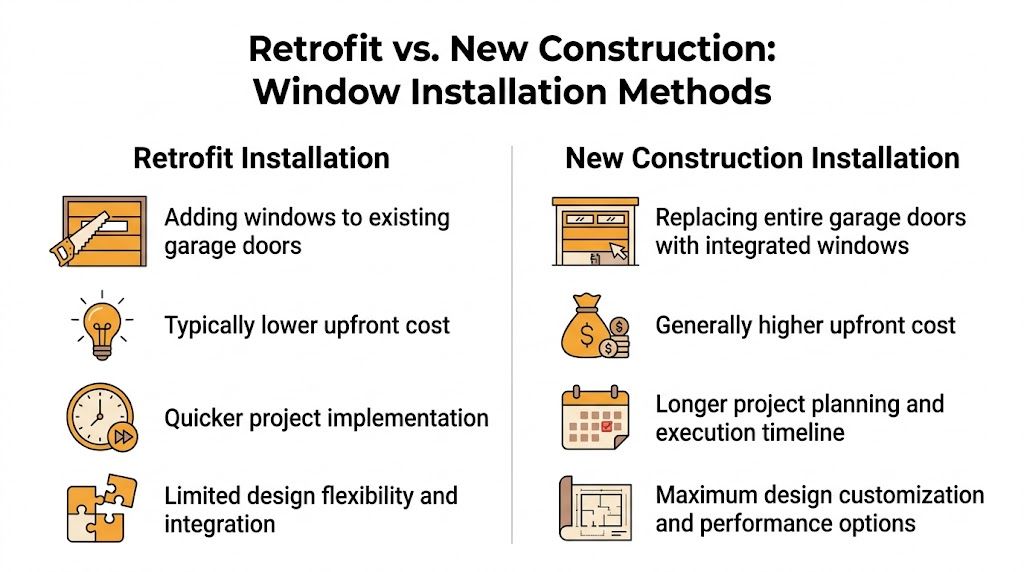
Most facility managers face the same fork in the road. Add windows to the existing door, or replace the door with a factory-built glazed model. Both paths can work. The right answer depends on door condition, budget, schedule, and how much performance you need from the final assembly.
Where retrofit makes sense
A retrofit means modifying an existing door or opening to add a window assembly. In the right situation, it’s efficient and cost-conscious.
In the Canadian warehouse sector, retrofit window installations are typically 15-30% less expensive than full-frame replacements, averaging $300-600 CAD per window, while still achieving annual energy savings of 12-15% with ENERGY STAR-certified glass, according to this retrofit versus new construction comparison.
Retrofit usually works best when:
- The existing door is structurally sound: Panels, hinges, track, and hardware are still in serviceable condition.
- Downtime must stay tight: Many facilities can’t afford to take a bay out for an extended replacement cycle.
- The upgrade goal is targeted: You want more light or better visibility without launching a full capital door project.
- The surrounding wall assembly should stay untouched: This matters in older masonry or insulated wall systems where invasive work creates added risk.
Retrofit is not a shortcut for a failing door. If the panel condition is poor, if the insulation is already compromised, or if the opening has recurring service issues, adding glass may only postpone the larger fix.
When a new door earns the added cost
A new construction style replacement gives you a complete assembly designed around the glazing from the start. That usually means better alignment between the panel, frame, seals, and insulation package.
This route makes more sense when the facility is already planning a major upgrade, when the existing doors are near end-of-life, or when thermal performance and warranty protection carry more weight than the lowest upfront spend.
A factory-integrated glazed door also gives you more flexibility in panel layout, sightline design, and specification control. That matters on projects where the owner wants consistency across multiple bays or multiple buildings.
| Installation path | Best fit | Main concern |
|---|---|---|
| Retrofit | Good existing doors, limited downtime, budget-sensitive upgrades | Must be done carefully to avoid weakening the door or compromising performance |
| New construction replacement | Doors at end-of-life, major energy upgrades, full redesign | Higher cost and longer planning window |
The decision usually comes down to condition
A quick rule works well here. If the current door still has years of useful life and the upgrade goal is specific, retrofit is often the practical answer. If the current door is already costing you in service calls, poor sealing, or lost thermal performance, replacement usually delivers the cleaner long-term result.
One more caution. Improper field modifications create expensive problems. Cut the wrong panel, misplace the window, or use the wrong kit, and you can affect balance, rigidity, insulation, or rating. Those mistakes often show up later as panel cracking, water entry, or operating issues that trigger urgent service. If you’re weighing repair risk at the same time, emergency door repair service is often part of the conversation because failed retrofits tend to surface under load, not at install.
Navigating Code Compliance and Fire Safety
Code is where many otherwise sensible window ideas get constrained. In commercial and industrial settings, placement and product selection need to support how the opening functions, not just how it looks.
Placement rules that affect daily use
Window height matters more than many teams expect. According to Canadian building codes like the NBC and OBC, optimal window sill height in commercial garages must be at least 914 mm (36 inches) from the finished floor to avoid conflicts with standard workbench heights and preserve usable wall space, as noted in this garage window design reference.
That requirement makes practical sense on the floor. If a window sits too low, it can interfere with benches, racks, stored materials, or protective barriers near the wall. In active dock-adjacent areas, poor placement can turn an upgrade into an obstruction.
For many facilities, window location should be reviewed alongside:
- Equipment clearance: Forklifts, carts, and mobile equipment need room to move without exposing glazing to avoidable strikes.
- Interior fit-out: Workstations, cabinets, and racking should not compete with the glazing line.
- Sightline purpose: The window should support visibility where operators require it.
Fire-rated openings need special treatment
Fire-rated doors are a separate category. If an opening is part of a fire separation, you can’t treat it like a standard sectional or service door.
In most cases, adding a non-rated window to a rated assembly is not acceptable. The glazing, frame, door construction, and labeling all need to work together as a tested system. If one component falls outside that listing, the rating can be voided.
That’s why fire door work should always start with the opening classification, not with the desired window size. If the opening requires a rated assembly, the proper route is usually a certified product designed and tested for that purpose.
For managers who are sorting out where shutters or rated barriers fit into the broader opening strategy, fire shutters for windows can help clarify how protected openings are handled in commercial buildings.
Standard glass and fire-rated glazing are not interchangeable. If the opening is rated, the paperwork matters as much as the hardware.
Compliance is also a documentation issue
Even when the physical installation looks correct, missing product data, labels, or test documentation can create trouble during review, inspection, or insurance follow-up. The safest approach is to confirm window type, door compatibility, glazing rating where applicable, and field conditions before work starts.
That protects more than compliance. It protects the facility from ending up with an opening that looks upgraded but creates a liability later.
Maintenance Lifecycle and Calculating Your ROI
A good window decision isn’t finished on installation day. The return shows up over time through lower waste, fewer avoidable service issues, and a door opening that keeps doing its job without becoming a maintenance nuisance.
Keeping the assembly in working condition
Commercial door windows don’t need complicated care, but they do need regular attention. Most problems start small. A failed seal, a loose frame, scratched glazing in a high-traffic bay, or debris buildup around the opening can all shorten service life if no one catches them early.
A practical maintenance routine should include:
- Cleaning the glazing regularly: Dirt, film, and residue reduce the visibility benefit you paid for in the first place.
- Checking seals and gaskets: Look for shrinkage, cracking, or gaps that can let in moisture and air.
- Inspecting frames and fasteners: Movement, corrosion, or impact damage around the insert should be addressed before it spreads.
- Watching for condensation patterns: Persistent fogging or moisture between panes can signal a failed insulated unit.
For sites that don’t have internal staff time to keep visibility standards up, outside help can make sense. In larger facilities, especially where presentation and line of sight matter, scheduled professional window cleaning services can support the upkeep side of the investment.
A planned service program also matters because the window is only one part of the assembly. Springs, hinges, rollers, seals, operators, and panel condition all affect whether the opening continues to perform the way it should.
A simple way to think about ROI
You don’t need a complicated financial model to test whether windows make sense. Start with the operational effects you can reasonably observe.
Use a basic checklist:
Energy impact
Will better glazing reduce heat loss compared with what’s there now?Lighting impact
Will daylight reduce how often staff rely on full artificial lighting in the area?Safety and workflow impact
Will improved visibility reduce blind checks, unnecessary door cycles, or small delays at the bay?Asset impact
Will the upgrade extend the useful life or usability of an otherwise solid door system?
Some returns are direct and easy to discuss with finance. Others are operational and easier to recognise on the floor than on a spreadsheet. Both count.
If the door is safer to use, easier to work around, and less wasteful to heat, the ROI is broader than utility savings alone.
The long-view decision
The best results usually come from matching the window package to the facility’s real constraints. Heated warehouse with older insulated doors. One answer. High-value storage with exterior exposure. Another. Fire-rated opening near a separation wall. A completely different answer.
That’s where a disciplined review pays off. Measure the opening. Understand the duty cycle. Confirm code conditions. Then decide whether retrofit, replacement, or no window at all is the smarter move.
Conclusion Your Next Step to a Brighter and More Efficient Facility
Windows in commercial garage doors can be a strong operational upgrade when they’re selected for the building, not for appearance alone. The right glazing improves visibility and daylight. The right placement supports safer movement and better workflow. The right installation method protects insulation, security, and compliance.
The wrong choice does the opposite. It leaks heat, exposes assets, creates maintenance issues, or causes trouble at inspection time.
For most Canadian facilities, the practical path is clear. Review the opening condition, decide what the window needs to achieve, and match the specification to that job. That’s how windows stop being a design feature and start becoming part of a better-performing facility.
If you’re assessing windows in garage doors for a warehouse, plant, or multi-site commercial property, Wilcox Door Service Inc. can help you evaluate the opening, the door condition, and the right path forward. Schedule a professional assessment or request a quote to identify retrofit, replacement, and code-compliant options that fit your operation. Respected Partners, Reliable Service.