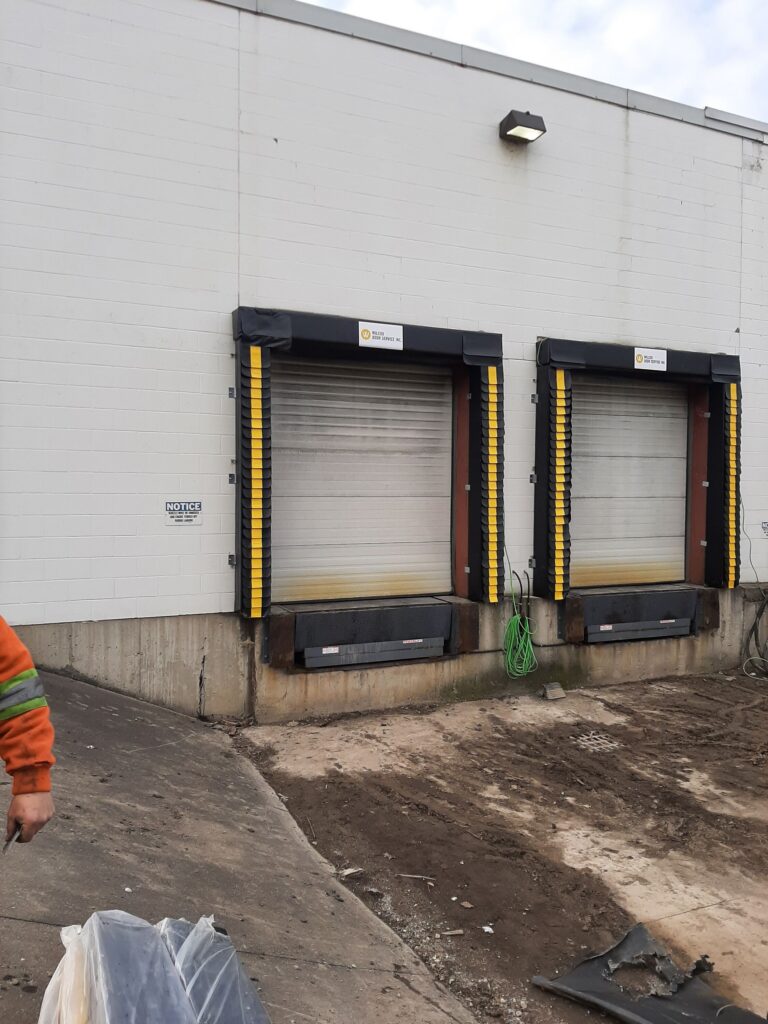
Meta description: Standard garage height dimensions for Canadian facilities. Learn the right clearances, code issues, and sizing choices to avoid downtime.
A lot of facility managers start looking into standard garage height dimensions only after something has already gone wrong. A truck shows up. The trailer clears the yard gate, lines up at the dock, and then stops because the opening is too short, the track conflicts with a beam, or the operator can’t cycle safely with the hardware above the opening.
That’s usually when the problem becomes expensive.
The right door height isn’t just about whether a vehicle fits. It affects dock flow, headroom for springs and safety hardware, fire door performance, energy loss, forklift movement, and whether a retrofit turns into a simple change or a structural project. In Canadian facilities, those choices also sit inside code requirements that many residential-style sizing guides don’t address well.
This guide focuses on what matters on site. It covers residential benchmarks for context, then moves into the commercial and industrial height decisions that keep warehouses, plants, and multi-site portfolios running safely and reliably. The goal is straightforward. Choose dimensions that work with your vehicles, your building, and your operating conditions the first time.
The True Cost of Incorrect Garage Door Heights
The failure usually starts with a small measurement mistake.
A building owner or contractor uses a familiar residential number, installs a door that seems reasonable on paper, and only later discovers the opening doesn’t suit the facility’s real traffic. In Canada, the standard residential garage door height is predominantly 7 feet (84 inches), and that standard typically matches 8 to 9 foot ceilings in homes according to this overview of Canadian residential garage sizing. That works for passenger vehicles. It often doesn’t work for warehouse receiving, service fleets, or dock operations.
What the problem looks like on site
In practice, the issue rarely appears as a neat design error. It shows up as daily friction:
- Drivers hesitate at the opening because clearance looks tight and they don’t trust the approach.
- Operators leave doors partially open to avoid contact with equipment or hardware.
- Forklift routes change around one undersized access point, which slows movement inside the building.
- Maintenance calls increase because the door system absorbs impacts, vibration, and misuse.
A few inches can turn a clean loading sequence into a stop-start process.
Field observation: When the opening is marginal, people don’t stop using it. They keep using it badly. That’s when tracks twist, bottom bars get damaged, and safety devices start taking abuse they were never meant to take.
Why height errors cost more than the opening itself
Wrong sizing also creates knock-on costs that don’t show up in the original quote. The opening may need reframing. The lift type may need to change. Lighting, sprinkler lines, and ductwork may need relocation. If the door serves a critical area, every hour of downtime affects receiving, shipping, sanitation, or production access.
That’s why experienced teams don’t treat standard garage height dimensions as a catalogue question. They treat them as an operating requirement. The opening has to suit the vehicle envelope, the door hardware, the ceiling conditions, and the work the building does.
Understanding Key Overhead Door Clearances
A door can match the vehicle height and still be the wrong specification. I see this most often in Canadian retrofits, where the opening looks workable until the installer measures the space above, beside, and behind it. That is where projects run into change orders, code conflicts, and service problems that were avoidable at the planning stage.
The opening is only one part of the system. Sectional doors need room for tracks, springs, shafting, operators, and full panel travel. Rolling steel doors have different space demands, but they still depend on clear structure, safe mounting surfaces, and access for inspection and repair. In commercial and industrial buildings, those details affect more than fit. They affect maintenance access, fire separation details, and whether the installation can meet the intent of the NBC, OBC, and applicable CSA safety requirements.
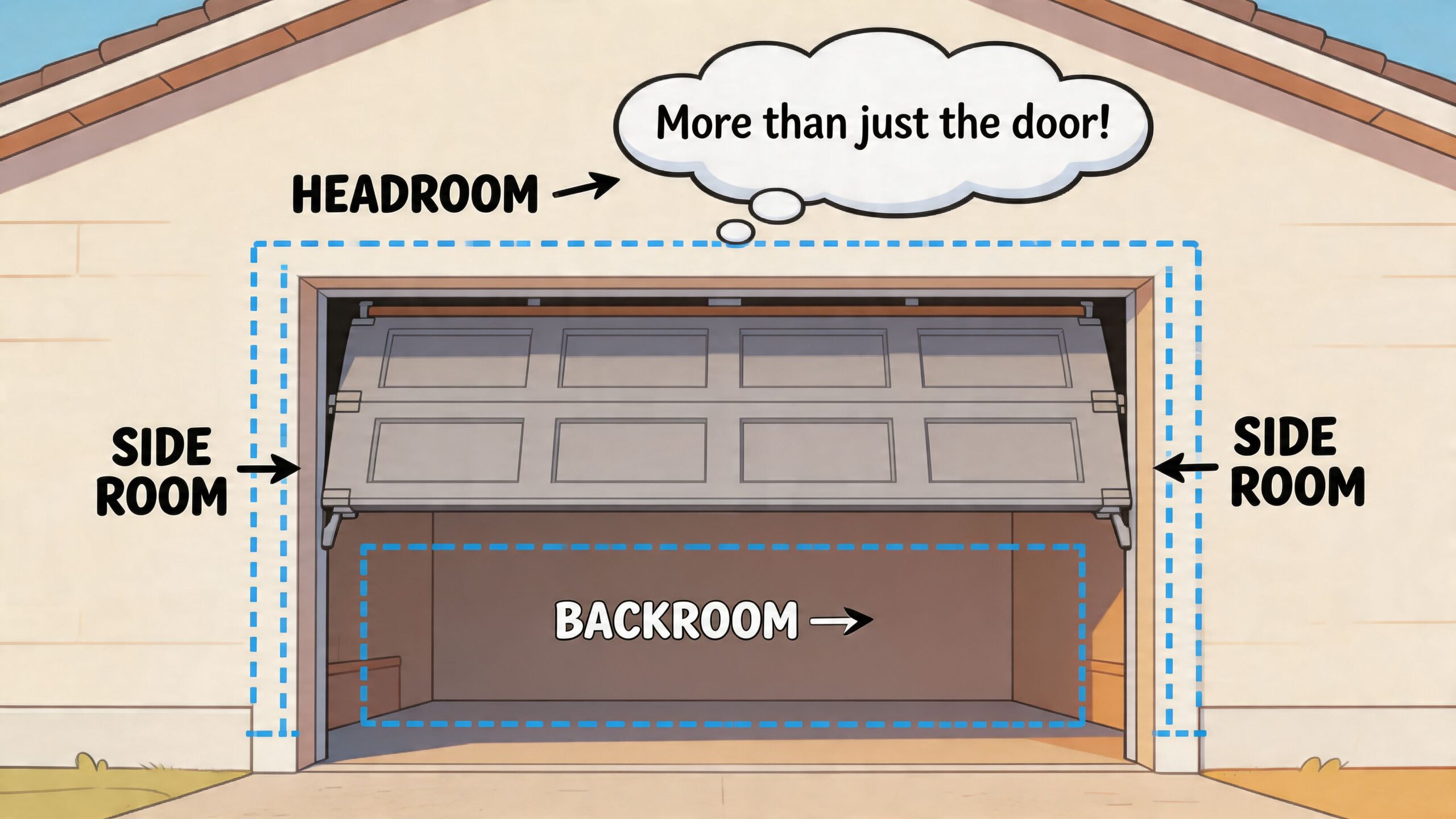
Headroom
Headroom is the clear space above the finished opening. It has to accommodate the track radius, spring assembly, shaft, bearing plates, and often the operator arrangement.
Tight headroom changes the whole specification. The installer may need low-headroom hardware, a jackshaft operator, a high-lift or vertical-lift setup, or a different door type altogether. Each option has trade-offs. Some solve clearance conflicts but add cost, reduce service access, or place stricter demands on the supporting structure.
This is also where code review matters. In many Canadian facilities, the space above the opening is already crowded with sprinkler piping, gas lines, unit heaters, or ductwork. Those elements cannot be shifted in the field without checking building, fire, and mechanical requirements.
Sideroom
Sideroom is the clear space at each side of the opening. The vertical tracks, flag brackets, attachment points, and in some cases operator components all depend on it.
Late-stage site changes create problems here. Electricians add conduit. Rack installers push uprights closer to the jamb. Steel protection posts get set in the wrong place. The door may still fit on paper, but service access becomes poor and hardware replacement becomes harder than it should be.
That matters in active facilities. A technician needs room to tension, align, inspect, and repair the system safely. If the jamb area is blocked, routine work takes longer and emergency calls become more disruptive.
Backroom
Backroom is the interior depth required for the door to travel fully open. On a sectional overhead door, that means enough unobstructed space for the horizontal tracks, the open door sections, and the operator arrangement.
Backroom is often the hidden constraint in warehouses and service buildings. Lighting rows, cable trays, radiant heaters, dock leveler controls, and pallet storage tend to compete for the same ceiling zone. The result is a door that cannot open to full height, or one that opens into building services and creates a safety risk.
The Door & Access Systems Manufacturers Association notes in its technical guidance for sectional doors that backroom requirements vary with door height, track configuration, and operator type, which is why field measurement matters before finalizing an industrial specification.
Why clearances decide whether the door works
In a live facility, clearances compete with other building systems from day one. Common conflicts include:
- Sprinkler mains above the lintel
- Heaters and ductwork in the track path
- Conduit and cable tray at the jambs
- Mezzanines or rack framing that restrict full travel
- Dock equipment that changes approach and service access
I tell facility managers to measure the opening, then measure the building around it. Record floor slope, structural projections, sprinkler lines, lighting, and anything that will limit future maintenance access. That is the difference between a door that installs cleanly and one that keeps causing downtime after handover.
Standard Height Dimensions by Application
Standard height depends on what has to move through the opening every day. A house garage, a fleet bay, a loading dock, and a food plant door may all look similar on a plan, but they are specified for very different operating conditions.
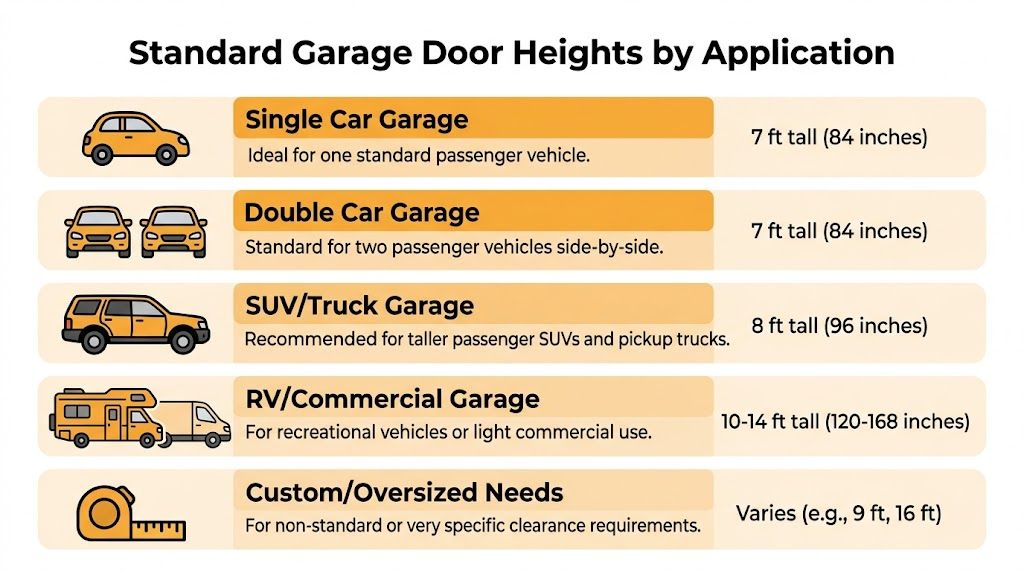
In Canadian residential work, 7 feet still shows up as the baseline. Commercial and industrial facilities usually need more than a baseline. They need an opening height that suits the vehicles, the door system, the building services above the lintel, and the code obligations that come with the occupancy.
Explore broader door options through Commercial & Industrial Door Solutions.
Residential and light vehicle applications
For homes and small private garages, 7 feet remains common because it fits standard passenger vehicles and typical residential construction. It is usually adequate for sedans, compact SUVs, and crossovers.
An 8 foot door is a better choice where full-size pickups, taller SUVs, or roof-mounted accessories are part of normal use. That extra clearance reduces bumper-to-header anxiety and gives the owner more tolerance if the driveway slopes up into the opening.
For rural properties and outbuildings, planning often starts with equipment access rather than passenger cars. Layout references such as practical machinery shed plans can help owners think through door placement and turning room early, even though final sizing still needs to reflect local code and the actual equipment on site.
Service fleets and mixed-use buildings
Mixed-use sites get into trouble when the opening is specified like a house garage but used like a fleet entrance. A caretaker van with a ladder rack, a courier cube van, or a contractor truck can turn a marginal opening into a daily operating issue.
A practical way to sort applications is by function:
- Passenger vehicle storage usually works with residential-style heights.
- Light commercial access often needs more height to allow for van roofs, ladder racks, and frequent use.
- Service bays and fleet openings should be sized around the tallest regular unit and the door cycle demand, not just the clear opening on paper.
- Dock and industrial openings must also account for loading equipment, traffic flow, and safety devices tied to the opening.
Facility managers comparing residential formats can also review common double size garage door dimensions before deciding whether a wider, taller, or fully commercial opening is the better fit.
Warehouse and industrial applications
Industrial openings belong in a separate category. In warehouses, distribution buildings, and manufacturing plants, common door heights often start around 10 to 12 feet for many service and shipping functions, then increase for trailer traffic, specialized equipment, or high-clearance operations. The correct specification depends on the actual fleet, the dock arrangement, and the track and operator configuration selected for the building.
Ceiling height is part of that decision, but it is not the same thing as door height. A facility may need a taller opening, raised-lift track, follow-the-roof track, or a different operator arrangement to get the full usable clearance. In Canada, those choices also have to be checked against NBC or OBC requirements, fire separations where applicable, and CSA-related safety expectations for the operating system and entrapment protection.
That is why industrial sizing should be treated as an operating and compliance decision, not just an architectural dimension.
Quick reference table
| Application Type | Standard Door Height | Common Vehicles / Use Case |
|---|---|---|
| Single car garage | 7 ft | Sedans, compact SUVs, crossovers |
| Double car garage | 7 ft | Two passenger vehicles side by side |
| SUV or pickup-focused residential garage | 8 ft | Larger SUVs and taller passenger vehicles |
| RV or light commercial garage | 10 to 14 ft | RVs, light commercial vans, utility vehicles |
| Industrial or warehouse opening | Typically starts above residential ranges and is often specified by fleet and dock requirements | Shipping, receiving, service access, material handling |
| Custom oversized opening | Varies | Special equipment, unique clearance constraints, non-standard operations |
Sizing principle: Start with the tallest routine user, then confirm the door system can be installed and serviced safely within the available building clearances. That sequence prevents expensive field changes after steel, sprinkler, and electrical work are already in place.
How Vehicle Size Dictates Door Specifications
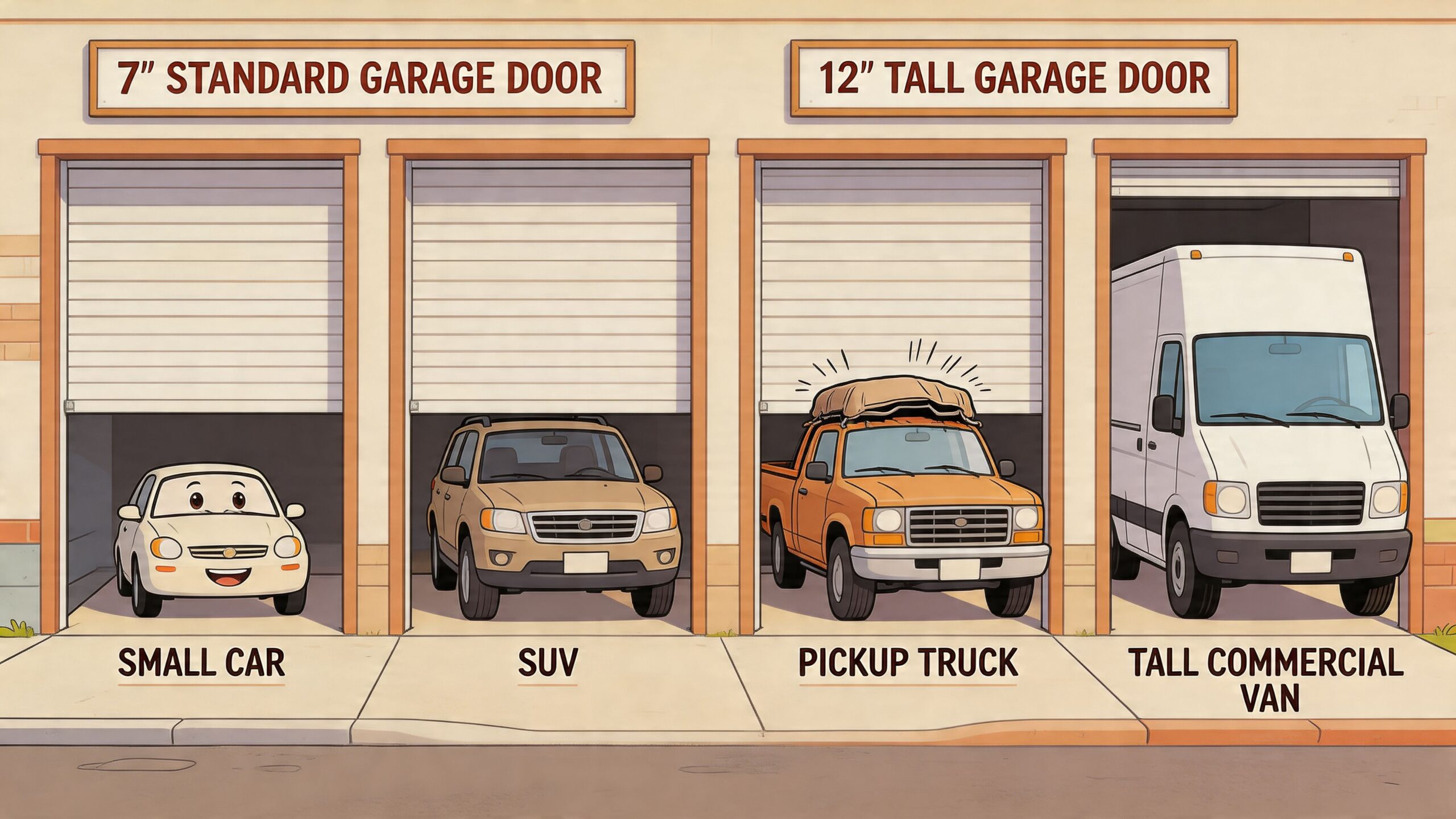
A door can look fine on a drawing and still fail on day one. The usual problem is simple. Someone measured the vehicle body, but not the rooftop unit, ladder rack, trailer height at the crown, or the slope of the approach. In commercial and industrial buildings, those misses turn into damaged panels, stalled traffic flow, and avoidable safety exposure.
The tallest regular user sets the baseline
Residential sizing often starts with the family SUV. Facility sizing starts with the tallest routine user and the worst realistic entry condition. That means checking fleet vehicles, third-party carriers, service contractors, waste haulers, and fire access where required by the site plan.
Height surveys also need to include the items that usually get missed:
- Refrigeration units on trailers
- Roof racks and ladder racks on service vans
- Antennas, beacons, and other roof-mounted accessories
- Forklift mast height at interior openings
- Approach slope, apron break, and suspension movement during entry
I see the same mistake regularly on retrofit jobs. The team records nominal vehicle height, then forgets that the vehicle pitches as it crosses the threshold. On paper, the clearance works. In service, the top section or weather seal gets hit.
Vehicle height changes the whole door system
Opening height is only one part of the specification. Track style, spring arrangement, operator type, and required headroom all change with the vehicle mix and the building geometry above the opening. The Door and Access Systems Manufacturers Association technical materials on sectional door headroom make that point clearly. The required space above the opening depends on the door size, lift type, and hardware arrangement, not just the clear opening dimension.
For Canadian facilities, that has practical code and safety implications. NBC and OBC compliance does not replace proper equipment selection, and CSA-related safety expectations still apply to the operating system, controls, and entrapment protection. A tall van or cube truck may push the project from a standard-lift setup into high-lift, vertical-lift, or a different operator configuration just to preserve usable clearance and safe travel.
If your opening has to serve two vehicles side by side, the width decision can affect how much tolerance drivers have when entering taller units. This guide to a double garage door size in Canada is a useful comparison point for mixed-use openings.
If you’re comparing utility buildings or agricultural enclosures where equipment size drives the opening first, these practical machinery shed plans are a useful example of how envelope planning starts with machinery dimensions rather than generic building templates.
Build the specification around movement, not parking
A parked vehicle needs less forgiveness than a moving one. Backing under seals, turning slightly off-center, carrying snow buildup, or crossing a sloped apron all reduce real clearance. Facilities that run forklifts, delivery vans, and occasional outside carriers should specify for operating conditions, not the best-case tape measure.
This video gives a helpful visual reference for how garage openings relate to vehicle height in real terms.
A sound specification identifies the tallest regular vehicle, adds working tolerance for motion and site conditions, then confirms the door hardware can be installed, operated, and serviced safely within the available structure. That is how facility managers avoid field changes, damaged equipment, and clearance complaints after occupancy.
Navigating Canadian Building Codes and Safety
A door opening isn’t compliant because it seems usable. It’s compliant when it satisfies the applicable code conditions, operates safely, and supports the building’s intended use without creating avoidable hazards.
That distinction matters in Canada because many published garage sizing references are still residential in tone. They can be useful for baseline dimensions, but they don’t answer the questions a warehouse, manufacturing plant, or property portfolio faces.
Residential minimums don't solve industrial access
One verified Ontario reference states that the Ontario Building Code Section 9.36 mandates a minimum unobstructed height of 1.95 m (6 ft 4.8 in) for habitable spaces, while a 2023 Statistics Canada survey reported that 68% of Ontario warehouse facilities faced clearance issues with standard residential-sized doors, leading to 15% higher retrofit costs for non-compliant installations, according to this discussion of standard door sizes in Canada.
That gap is the actual issue. A code minimum for one building condition doesn’t mean the opening is suitable for industrial traffic, dock equipment, or high-cycle service.
Where safety failures usually begin
Most code-related door problems aren’t dramatic at first. They start as interference and poor fit:
- Fire-rated doors need unobstructed travel and reliable drop function.
- Tracks and operators need clearance from structure and services.
- Safety devices need proper placement and protected wiring.
- Openings at docks have to coordinate with levelers, shelters, restraints, and traffic lines.
If any of those items are forced into a compromised layout, the risk shifts from inconvenience to inspection failure, property damage, or injury exposure.
The opening size on the drawing is only one compliance checkpoint. The installed system has to operate as intended under real conditions.
Why maintenance belongs in the compliance conversation
Compliance isn’t a one-time design event. Buildings change. Pipes get rerouted. Lighting gets added. Racking shifts. Operators get replaced with different equipment. Over time, those changes can eat into the space a door system needs to run safely.
That’s one reason many facilities tie opening performance to a formal Planned Maintenance Program. It creates a practical way to catch track interference, closing issues, worn safety edges, and altered clearances before the site ends up dealing with an emergency repair or a failed inspection.
For facility managers, the safest approach is simple. Don’t treat code as a paperwork exercise. Treat it as an operating constraint that should shape the opening from the start.
Door Height Planning for Retrofits and New Builds
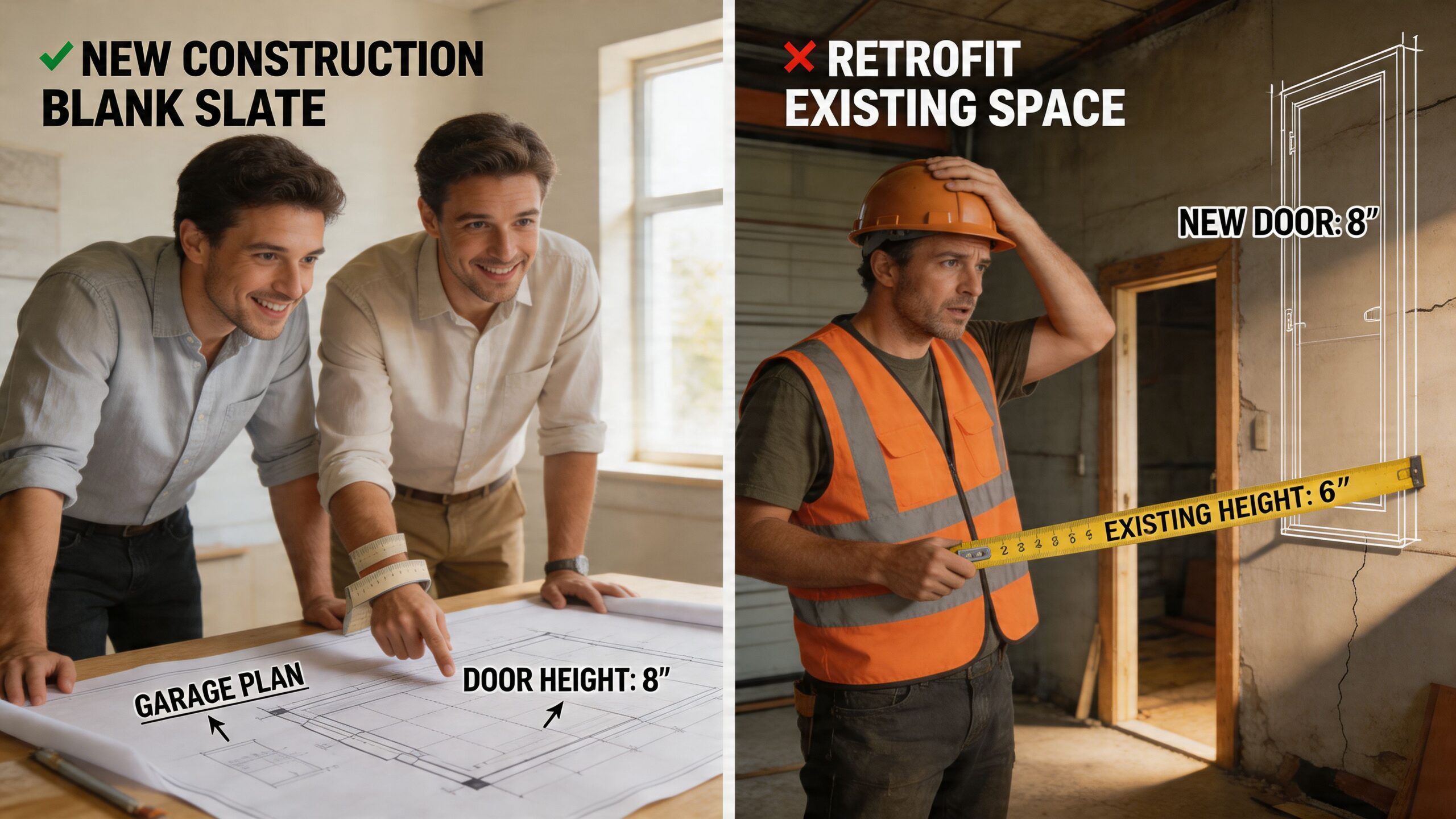
New construction and retrofit work may end with the same door product, but they almost never start from the same position.
In a new build, the team can design the opening, headroom, dock interface, and interior flow together. In a retrofit, the building usually dictates the first round of compromises. Existing beams, low lintels, HVAC runs, sprinkler mains, and slab conditions all limit what can be installed without structural changes.
New builds reward future-proofing
A clean-slate project gives you the best chance to avoid undersized openings. That means deciding early what vehicles, trailers, and handling equipment the building will support, then making sure the structure and services leave enough room for the selected lift type and operator.
For teams still shaping the overall shell, it can help to look at broader ceiling-planning references such as this practical guide for your new build. The market is different, but the planning lesson is transferable. Ceiling decisions made early affect door options later.
Retrofits need honesty about constraints
Retrofit work requires a blunt site review. If the opening is too low, there are only a few real options:
- Reframe the opening if the structure allows it
- Change the track arrangement to suit available headroom
- Select a different door type with different space demands
- Relocate building services that interfere with travel or hardware
Comparing door families matters here. A sectional system and a rolling steel system solve clearance problems differently, which is why this comparison of sectional vs rolling steel doors is useful during early retrofit scoping.
Energy performance is changing the conversation
Retrofits in temperature-controlled environments now have another dimension. One verified source states that, since 2025, Canadian cold storage and pharmaceutical facilities have faced mandates for taller garage heights of up to 5.5 m (18 ft) for energy compliance, and that 10 ft+ insulated doors with air curtains can cut heating losses by 34% in Ontario warehouses, while only 12% of existing facilities comply, according to this report on garage height and energy compliance.
That doesn’t mean every facility should build taller. It means height planning now has to account for thermal performance, air movement, and door cycle demands alongside basic vehicle access.
Project rule: In a retrofit, the fastest answer isn’t always the cheapest answer. If the opening still leaves the building struggling with clearance or heat loss, the problem hasn’t been solved. It has only been delayed.
Partner with Wilcox for Expert Door Specification
Choosing door height looks simple until you account for everything attached to it. Vehicle profiles, track type, spring space, dock equipment, code interpretation, fire door function, and energy performance all meet at the same opening.
That’s why the best specifications come from site review, not assumptions.
A good technician doesn’t just measure the opening. They check the lintel, note beam conflicts, confirm backroom, look at dock approach, review operator position, and ask what vehicles use the opening on the busiest day. That’s the difference between a door that fits and a door that works.
For facility managers, property teams, and contractors, the practical goal is clear. Get the dimensions right before the opening becomes a source of damage, delay, or non-compliance. That approach protects uptime, improves service life, and reduces the odds of paying twice for the same access point.
Respected Partners, Reliable Service.
If you need help confirming standard garage height dimensions for a warehouse, dock, plant, or retrofit project, contact Wilcox Door Service Inc. to schedule a site review, request a quote, or discuss the right door and hardware specification for your facility.