


A shipping day can unravel fast when one overhead door stalls half-open. Forklifts queue up. Carriers wait. Staff start using the wrong opening to keep freight moving. Then a simple equipment problem turns into a safety issue, a scheduling issue, and a cost issue.
That’s why garage door services and repair can’t be treated as an occasional call-out item. In a commercial facility, doors are part of the operating system. They affect throughput, temperature control, site security, fire separation, and how confidently your team can run a shift.
For Canadian operators, the stakes are even clearer. North America is projected to hold a 36.5% share of the global garage door service market in 2026, and repair and maintenance are projected to make up 47.2% of that market according to Coherent Market Insights' garage door service market analysis. The same analysis notes that Canadian facility managers average 2.3 service calls per site annually, driven in part by climate-related wear.
If you manage warehouses, manufacturing plants, retail service bays, or mixed commercial portfolios, you need more than a phone number for emergencies. You need a working approach for repairs, preventive maintenance, compliance, upgrades, and service accountability. In facilities that rely on hydraulic dock equipment alongside overhead doors, it also helps to understand how related systems interact. Teams dealing with dock lifts or levelers often benefit from specialist support in hydraulic system design and repair when troubleshooting broader loading-bay reliability.
Your Guide to Commercial Garage Door Services and Repair
Commercial doors fail in predictable ways, but rarely at convenient times. A worn torsion spring, an operator fault, a damaged bottom seal, or a track knocked out of alignment by a lift truck can all shut down access to a critical bay. What catches new operations managers off guard isn’t the repair itself. It’s the chain reaction that follows.
A door problem affects more than the opening. In a warehouse, it slows inbound and outbound traffic. In cold storage, it leaks conditioned air. In a manufacturing site, it can interrupt material flow between zones. If the opening is a fire door, the issue also raises compliance questions that can’t be kicked down the road.
Doors are easy to ignore when they work. That’s exactly why smart managers put structure around them before they fail.
Good facility teams treat door systems the way they treat HVAC, dock levelers, and access controls. They set standards for response, inspection, documentation, and replacement planning. They also choose service partners that can work across the full lifecycle, not just swap a spring and leave.
The practical question isn’t whether your site will need garage door services and repair. It will. The practical question is whether those services support your business goals. Respected Partners, Reliable Service only means something when it shows up in uptime, safer openings, cleaner audits, and fewer avoidable disruptions.
The Four Pillars of Commercial Door Service
Commercial door work usually falls into four buckets. If you separate them clearly, it becomes much easier to budget, assign priorities, and judge whether your provider is helping you operate or just reacting to breakdowns.
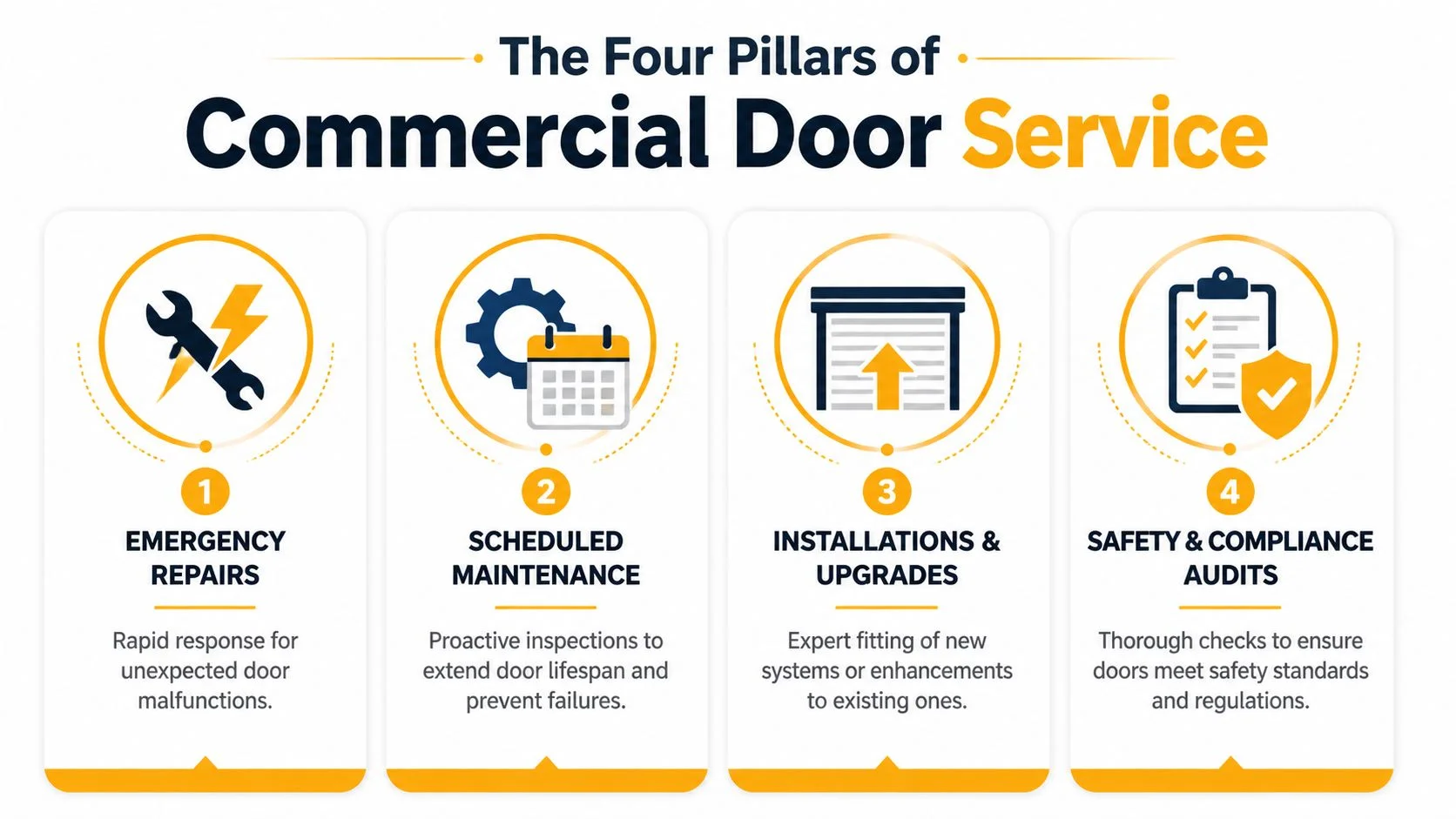
Emergency repairs
This is the call no one wants to make during a busy shift. Emergency repair covers sudden failures such as broken springs, snapped cables, damaged panels, failed operators, bent tracks, and doors that won’t close securely.
The business value is straightforward. You restore access, reduce exposure, and get a qualified technician making the area safe. Good emergency service also includes triage. Sometimes the right short-term move is a safe temporary fix that gets the bay usable until proper parts arrive.
Scheduled maintenance
Preventive maintenance is where experienced operators separate nuisance issues from true surprises. A planned visit should include inspection, adjustment, lubrication, wear checks, balance testing, fastening checks, and operator review. It should also produce usable records.
If your current maintenance feels vague, compare it against what a structured commercial garage door maintenance programme should include. The point isn’t paperwork for its own sake. The point is catching drift before it becomes downtime.
Installations and retrofits
Not every service call is about a failure. Sometimes the actual issue is that the door is no longer fit for the opening.
A retrofit may involve replacing an aging sectional door, changing operator types, adding insulation, improving visibility, or reworking an opening to suit a different traffic pattern. In loading bays, installations often need to consider adjacent equipment such as levelers, restraints, seals, shelters, and traffic flow markings.
Safety and compliance audits
This pillar gets overlooked until an audit, an incident review, or a near miss forces attention. Fire doors, egress hardware, activation devices, entrapment protection, and site-specific safe operation procedures all need checking.
A fire door drop test is a good example. In simple terms, it verifies that a rolling or sliding fire-rated door will close properly when triggered, so the opening performs as intended in an emergency. If you operate in food, pharma, manufacturing, or public-sector environments, these checks matter because your facility can’t afford uncertainty around life safety systems.
Here’s the practical lens to use:
| Service pillar | What it solves | What poor delivery looks like |
|---|---|---|
| Emergency repairs | Restores access after breakdowns | Slow response, repeat failures, unclear root cause |
| Scheduled maintenance | Reduces avoidable downtime | Generic checklists, no documentation, no trend tracking |
| Installations and retrofits | Aligns equipment with current use | Overspecified products or cheap fixes that don’t last |
| Safety and compliance audits | Supports safe, code-aligned operation | Missed testing, incomplete records, unclear responsibilities |
Defining Your Service Level Expectations
A service contract isn’t useful because it exists. It’s useful because it tells both sides what happens when a door fails, who is responsible for what, and how performance will be measured.
Too many facilities accept vague language. “Priority response” sounds reassuring until a door is down and no one can define what priority means. A proper service arrangement should set expectations in plain terms.
What a good SLA should cover
An SLA, or service level agreement, is the operating standard between your facility and your provider. It should define emergency response categories, communication expectations, work authorization rules, and what records you’ll receive after each visit.
Look for these basics:
- Response window language: It should state how emergency calls are triaged and what response standard applies by site type or critical opening.
- Scope clarity: It should distinguish between inspection, routine adjustment, repair, and replacement work.
- Documentation: You should receive service reports that identify findings, actions taken, and recommended next steps.
- Escalation path: If a first visit doesn’t fully resolve the issue, your team should know who owns follow-up and by when.
- Parts strategy: Critical openings often need a discussion about stocked parts, lead items, and temporary operating plans.
Warranties and accountability
Warranties matter, but only when they’re specific. Ask what is covered for labour, what is covered for parts, and what conditions may affect coverage. A spring, operator board, bottom seal, and impact-damaged panel are not the same type of risk, so don’t expect one blanket phrase to tell you much.
Practical rule: If a provider can’t explain warranty terms in a short conversation, the contract will be harder to use when you actually need it.
You should also ask how they track repeat issues. A reliable service partner doesn’t just close work orders. They identify whether one opening is consuming unusual service time, suffering impact damage, or nearing replacement.
Multi-site expectations
For property managers and regional operators, consistency matters as much as speed. One site may survive with an ad hoc process. A portfolio won’t.
Use this short checklist when reviewing any agreement:
- Same standards across sites: Make sure reporting and call handling are consistent.
- Clear approval limits: Your site contacts should know when repairs can proceed and when estimates are required.
- Asset identification: Each opening should be easy to reference by location and function.
- Compliance records: Fire door and related safety documentation should be stored in a way your team can retrieve quickly.
An SLA should support operations, not create another mystery file in someone’s inbox.
How to Select the Right Service Provider
Price matters. It just shouldn’t be your first filter.
A low quote can hide slow response, underqualified labour, poor safety discipline, weak documentation, or limited parts access. In commercial settings, those gaps show up later as repeat failures, delayed loading, and audit headaches. The right provider behaves more like an operating partner than a break-fix vendor.
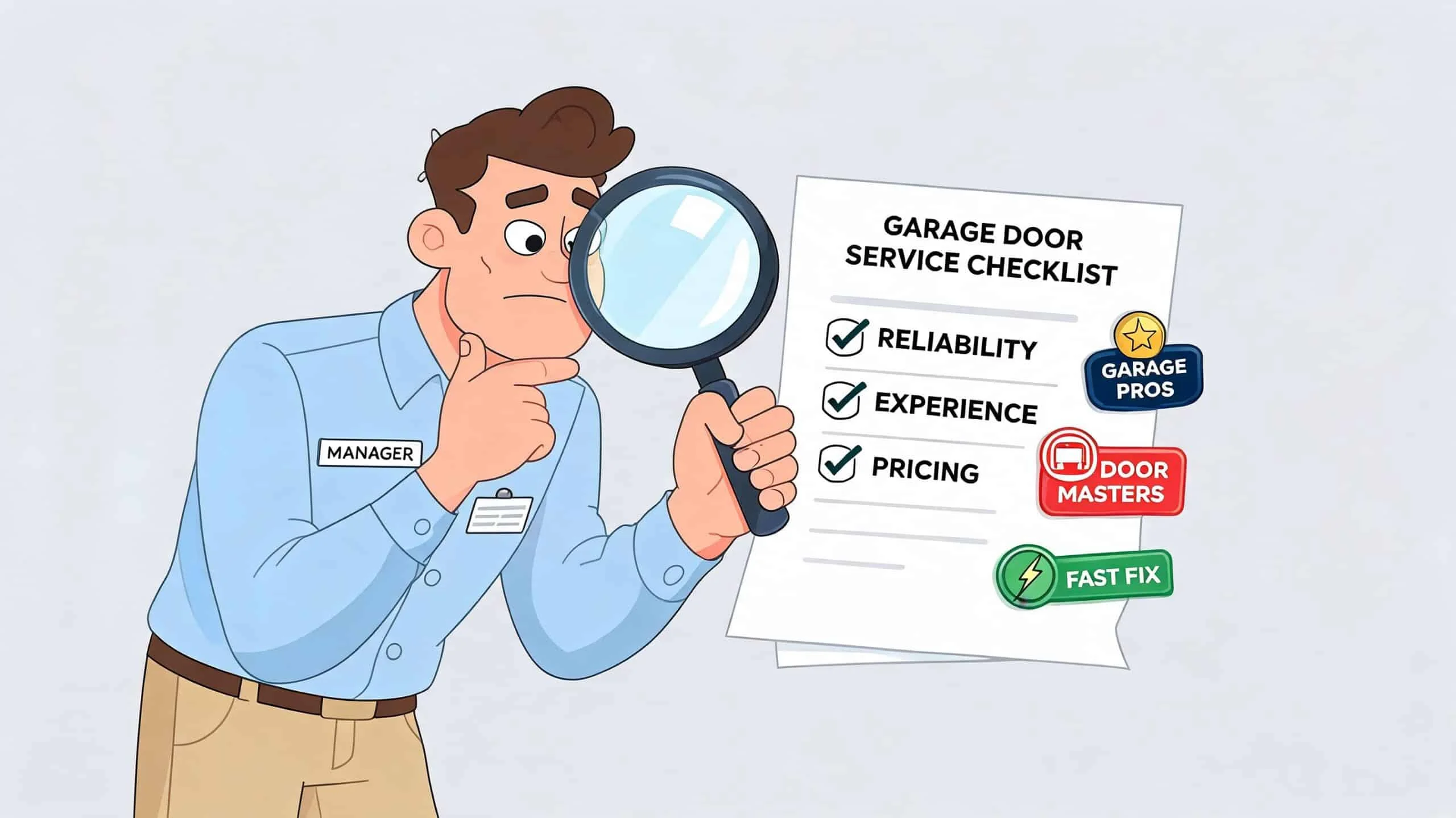
What to check before you award work
Start with capability. Can the provider handle the full range of equipment your site depends on, including overhead doors, dock equipment, high-speed doors, fire-rated openings, operators, and access-related hardware? If they only cover one slice, your team may end up coordinating multiple trades during one failure.
Then check proof points:
- Trade qualifications: Ask about technician training, union status where relevant, and manufacturer familiarity.
- Safety system: A provider should be able to explain how they manage site safety, lockout practices, and hazard controls.
- Commercial experience: Residential experience doesn’t automatically translate to industrial openings or dock environments.
- Geographic reach: Multi-site operators need coverage that matches the footprint of the business.
- Reporting quality: Good reports help you budget and plan. Weak reports force your staff to reconstruct the problem later.
For a quick example of how local directories can help with early-stage vetting in some markets, teams sometimes review listings like VerticalRent's Hillsboro service directory to compare how providers present licensing, service focus, and contact details. It’s not a substitute for due diligence, but it can help you spot whether a company looks built for residential calls or commercial service work.
Questions worth asking in the first call
The first conversation tells you a lot. Ask direct questions and listen for direct answers.
| Question | Why it matters |
|---|---|
| Can you support emergency repairs and planned maintenance? | You want continuity between reactive and preventive work |
| Do you service fire doors and loading dock equipment? | Many failures involve related systems in the same opening |
| How do you document deficiencies and recommendations? | You need records that help with planning and compliance |
| Can you support our locations consistently? | Portfolio managers need fewer service variables, not more |
One option facilities often evaluate is commercial garage door repair support near your location, particularly when they need a provider that can cover both urgent failures and broader commercial opening needs. The deciding factor shouldn’t be branding. It should be fit, scope, safety discipline, and whether the provider can support your operating reality.
Choose the company you’d trust during a shutdown window, an audit week, and a snowstorm. Those are not always the same company as the cheapest bidder.
The Business Case for Proactive Door Maintenance
Reactive repair feels cheaper because the invoice arrives only when something breaks. In practice, it often costs more because the repair bill is only one part of the event. The larger cost sits in stalled shipments, unsafe workarounds, security exposure, lost temperature control, and management time spent chasing updates.
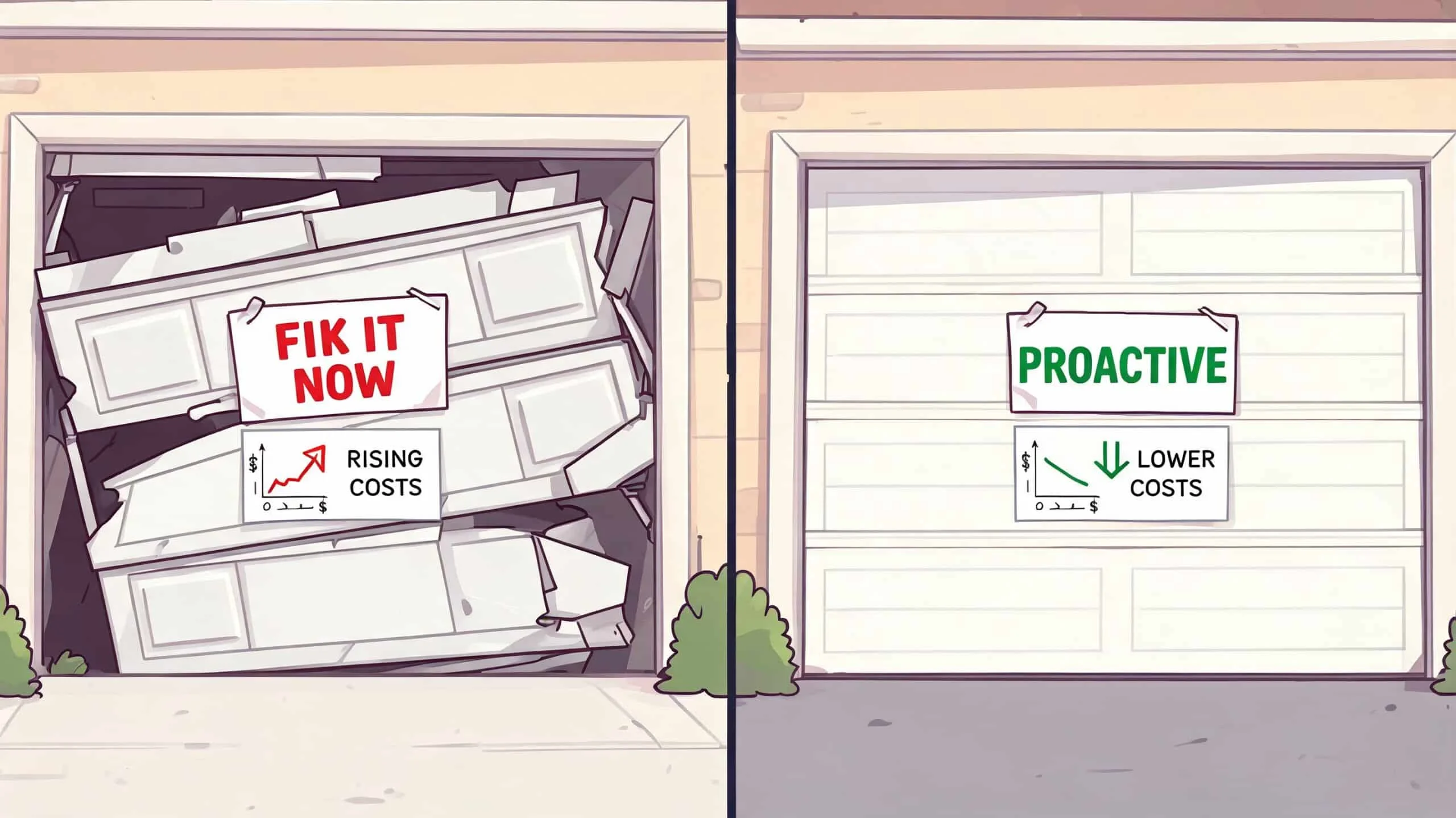
What proactive maintenance actually catches
The most valuable maintenance tasks are rarely dramatic. They’re the quiet checks that reveal drift before a component fails under load.
Torsion springs in commercial overhead doors typically last 10,000 to 30,000 cycles before failure, and quarterly tension tests and balance checks can reduce unexpected failures by 60% and extend asset life by 25% according to this garage door service checklist reference. That matters because an imbalanced door puts extra strain on tracks, rollers, and operators.
A proper visit should look at things your staff may notice but not be equipped to measure safely, such as:
- Spring condition: Wear, fatigue signs, and whether the door remains balanced through travel.
- Cable health: Fraying, diameter loss, and uneven loading.
- Track and roller wear: Damage from impact or misalignment that changes how the door travels.
- Operator performance: Delayed starts, inconsistent limits, noisy operation, or sensor issues.
- Seals and thermal condition: Worn perimeter seals that let air, dust, or moisture move through the opening.
Why timing matters in Canadian conditions
Canadian facilities see problems that would be minor elsewhere turn disruptive quickly. Freeze-thaw cycles, moisture, grit, and constant traffic are hard on springs, cables, rollers, and bottom bars. In cold storage and conditioned spaces, a worn seal doesn’t just look tired. It increases operating cost and can compromise environmental control around the opening.
That’s why a formal planned garage door maintenance programme makes financial sense. It creates predictable inspections, records recurring deficiencies, and gives you a chance to replace components on your schedule instead of during an operating crisis.
This short video gives a useful visual sense of what routine inspection and upkeep should support on a working door system.
What doesn’t work
Some maintenance programmes fail because they are too light to be useful. A spray-lubricant visit with no testing, no adjustment, and no record of deficiencies is not a programme. It’s a brief appearance.
Another common mistake is treating every opening the same. Your most critical bays need more attention than a low-use service door. High-cycle manufacturing and shipping openings deserve maintenance frequency based on use, environment, and consequence of failure.
A maintenance plan should follow the business impact of the opening, not just the calendar.
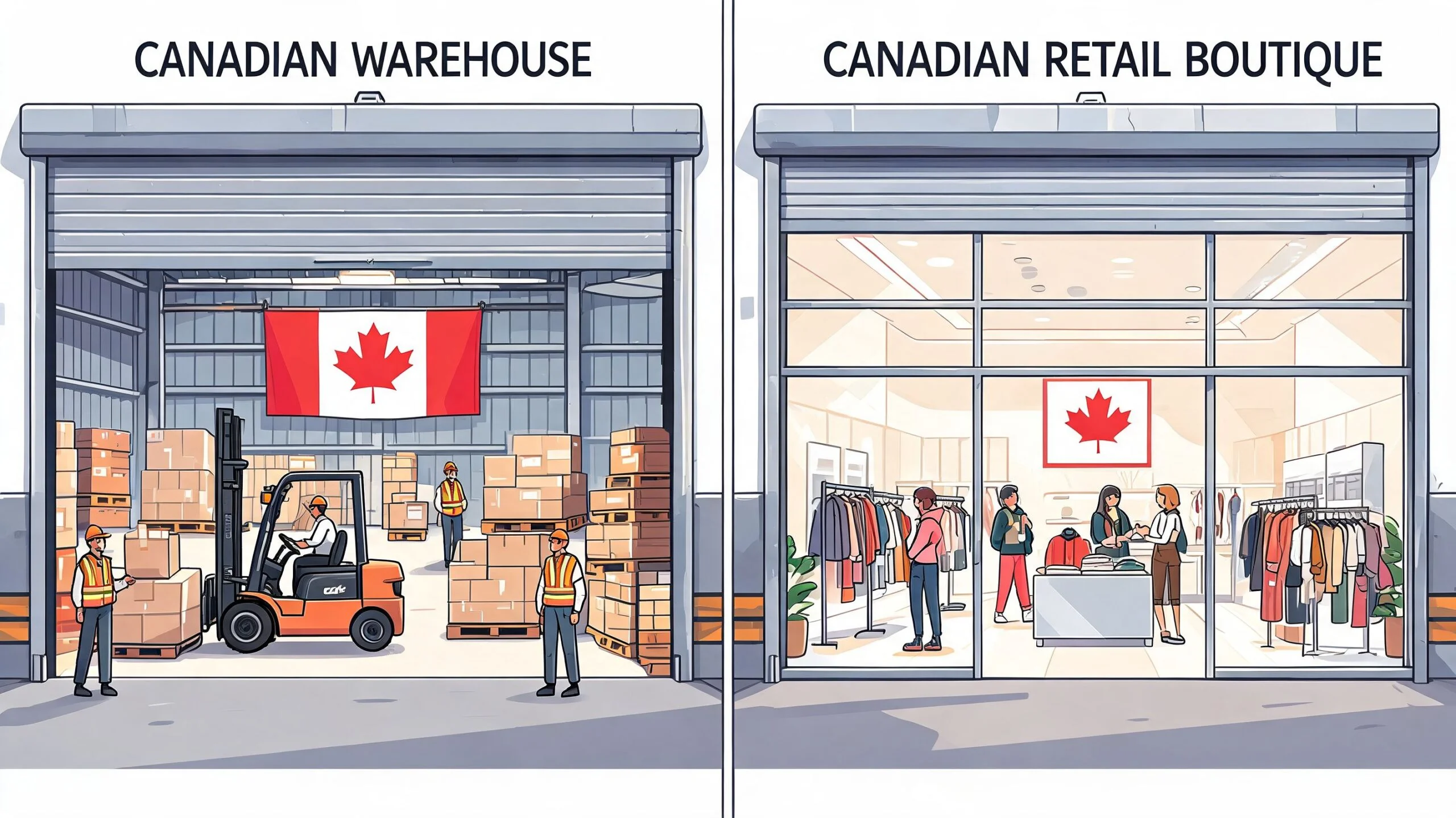
Real-World Scenarios at Canadian Facilities
The value of garage door services and repair becomes obvious when you look at what happens on site. The technical issue is often simple. The operating consequences are not.
Cold storage trouble in Ontario
An Ontario food distribution centre starts the morning with one cold-room door failing to close consistently. At first, the team thinks it’s an operator setting. By mid-shift, the seal isn’t holding properly and traffic is backing up because lift truck drivers are waiting to see whether the door will cycle cleanly.
The immediate risk isn’t just access. It’s temperature stability, product handling, and energy loss through an opening that should close fast and seal tightly. If the site responds by propping the opening or rerouting traffic through a less suitable bay, the problem spreads. Now the facility is balancing throughput, food-handling discipline, and environmental control all at once.
The right response in that situation is targeted. Diagnose the operator, inspect the door path, confirm the seal condition, and decide whether the opening can stay in service safely. If not, shift traffic intentionally and communicate it. The worst move is the informal workaround that becomes normal for the day.
Fire door preparation in British Columbia
A manufacturing plant in British Columbia is preparing for a fire safety review. Most of the team’s attention is on extinguishers, alarm devices, and housekeeping. Then someone asks when the rolling fire door over a key opening was last tested.
That changes the conversation. Fire doors aren’t ordinary production doors with a better label. They are life-safety assets. The facility needs to confirm that the door will release and close properly when triggered, that related components are in working order, and that records are available.
Here’s what often surprises new managers:
- The test itself is only part of the job: The facility also needs clear documentation.
- Deficiencies can affect operations planning: If a repair is required, the opening may need controls while work is arranged.
- Specialised support matters: Not every provider who repairs overhead doors handles fire door testing with the same confidence.
In both scenarios, the lesson is the same. Facility doors aren’t just physical barriers. They are operational assets tied to throughput, safety, and compliance. When the service partner understands that context, decisions improve quickly.
Your Actionable Facility Door Assessment Checklist
If you’re responsible for one building or a national portfolio, start with a simple site review. You don’t need to dismantle equipment or guess at technical settings. You need to spot where risk is building, where records are thin, and where your service approach may be too reactive.
Equipment review on site
Walk each critical opening and note what you can observe safely.
- Check door movement: Does the door travel smoothly, or does it jerk, bind, or hesitate?
- Listen for changes: Grinding, rattling, or uneven sound often points to wear, misalignment, or operator strain.
- Look at cables and rollers: If anything appears frayed, damaged, or out of track, stop there and arrange professional inspection.
- Inspect seals and bottom edges: Gaps, cracked material, or visible daylight can mean energy loss and poor environmental control.
- Review impact signs: Bent tracks, scuffed guides, and damaged panels usually indicate recurring lift truck contact.
Service programme review
Then check the management side. Many facilities often uncover a significant weakness there.
- Confirm maintenance status: Do you have an active preventive maintenance agreement for critical openings?
- Review recent reports: Are reports detailed enough to show trends, or do they only say the door was serviced?
- Check compliance records: Can you quickly find fire door testing and related documentation where applicable?
- Flag repeat call-outs: Any opening with recurring service history deserves a replacement or retrofit discussion.
- Match frequency to usage: High-cycle bays, cold-storage doors, and shipping openings shouldn’t be treated like low-use doors.
Manager’s shortcut: If you can’t explain which three openings are most critical to today’s operation, your maintenance priorities probably need work.
Provider vetting questions
Finally, assess the company doing the work, or the one you’re about to hire.
- Can they support both emergency response and planned maintenance?
- Do they understand commercial doors, dock equipment, and life-safety openings?
- Will they provide clear documentation after every visit?
- Can they help you plan replacements and upgrades, not just repairs?
- Do they communicate in a way your site supervisors and leadership team can both use?
A good checklist should lead to action, not just observation. If you find inconsistent records, recurring failures, or uncertainty around compliance-sensitive openings, book a formal inspection and set priorities by business impact.
If your facility needs a clearer plan for garage door services and repair, Wilcox Door Service Inc. can help you review critical openings, tighten your maintenance approach, and schedule service inspections that support uptime, safety, and compliance under the banner of Respected Partners, Reliable Service.