


Installing a standard commercial sectional garage door for a 10×10 foot warehouse opening in Canada typically costs CAD 2,500 to 4,500. In most projects, that starting number is only part of the story, because insulation, code requirements, operators, removal, and site conditions often decide whether the job stays predictable or turns into a budget problem.
If you're dealing with a failed overhead door, a capital planning request, or a retrofit that suddenly became urgent, you likely need two things right away. First, a realistic number. Second, a clear sense of what that number includes.
That’s where many cost guides fall short. They describe a garage door like a simple product swap, when commercial and industrial facilities know it isn’t. A door at a warehouse, manufacturing plant, parkade, or shipping bay is a working asset tied to uptime, safety, energy control, and compliance. The question isn’t just the cost to install garage door systems. It’s what that installation will cost your operation over time if the system is underspecified, poorly installed, or not maintained properly.
Facility managers see this every day. A low quote looks attractive until the opening needs modification, the operator needs new power, the fire rating triggers testing requirements, or the door chosen for light use starts failing under constant traffic. What looked cheaper on paper starts costing more in downtime, tenant complaints, lost heat, and emergency service calls.
This guide looks at the full picture for Canadian commercial and industrial facilities. It covers what drives the quote, what hidden costs usually get missed, how common applications differ, and how to think about long-term ownership instead of just install-day pricing.
Meta description: Cost to install garage door in Canada for commercial facilities. Learn real cost drivers, hidden expenses, and how to lower total ownership cost.
Understanding the True Cost to Install a Garage Door
At 6:30 a.m., the receiving crew is waiting, trucks are stacking up, and a failed overhead door has turned into an operations problem. The first number you get from a contractor matters, but for a commercial or industrial facility, that number only helps if it reflects the full scope of the opening, the duty cycle, and the building requirements around it.
For Canadian commercial work, a replacement can start in the low thousands for a basic sectional door on a straightforward opening, but that range moves quickly once the project includes heavier-duty hardware, an operator, controls, safety devices, electrical work, structural repairs, or code-driven upgrades. Facility teams comparing quotes should treat any published replacement garage door cost ranges for commercial applications as a starting reference, not a finished budget.
That distinction matters because commercial doors are operating systems, not commodity products. The panel package, springing, track, operator, photo eyes, edge protection, and mounting conditions all affect service life. If the opening serves a dock, parkade, service bay, food facility, or high-cycle traffic lane, the cheapest installed price often becomes the highest ownership cost.
Why quoted price and actual project cost often split
The quote usually reflects the visible scope. The invoice reflects the actual site conditions.
A contractor can price a standard replacement quickly when the opening is square, the steel is sound, power is available, and the new door matches the existing configuration. Costs rise when the jambs need repair, the headroom is tight, the spring line has to change, or the operator needs a dedicated circuit and control wiring. In older Canadian buildings, those issues are common.
Compliance changes the budget too. Fire separations, egress conditions, entrapment protection, and site-specific safety requirements can add material, labour, testing, and coordination that residential cost guides rarely mention. The same is true when access control is tied into the opening. On some sites, the garage door project sits alongside perimeter work such as an electronic access gate being fitted, and both systems need compatible controls, safety logic, and commissioning.
What experienced buyers check before approving a number
The useful question is simple. What does this opening need to do every day, and what will failure cost?
A low initial price often points to one of four gaps:
- Light-duty specification on a high-cycle opening, which shortens spring and hardware life
- Insulation or sealing that does not match the building envelope, which raises energy loss and comfort complaints
- Operator and safety scope treated as optional extras, even when the application clearly requires them
- Site repair, electrical, or compliance items left out of the base quote, then billed as change orders
This is why quote review has to go past the door model. Facility managers should confirm the intended cycle count, hardware grade, operator type, safety package, and any required testing or inspections before comparing bids.
Ownership cost is the right lens
Installed price is one line item. Total cost of ownership is the decision.
For a commercial opening, ownership cost includes the purchase and installation, but also downtime exposure, emergency service frequency, energy performance, planned maintenance, and the likelihood of premature replacement. A lightly used storage opening can tolerate a simpler specification. A busy shipping door cannot. If the opening is tied to production flow or tenant access, reliability has a direct operating value.
The practical standard is fit for use. Specify the door for the site, the traffic, and the code requirements first. Then judge price.
Deconstructing the Price Tag Key Cost Drivers
On paper, two doors can look close in price. In service, they can behave like two different assets.
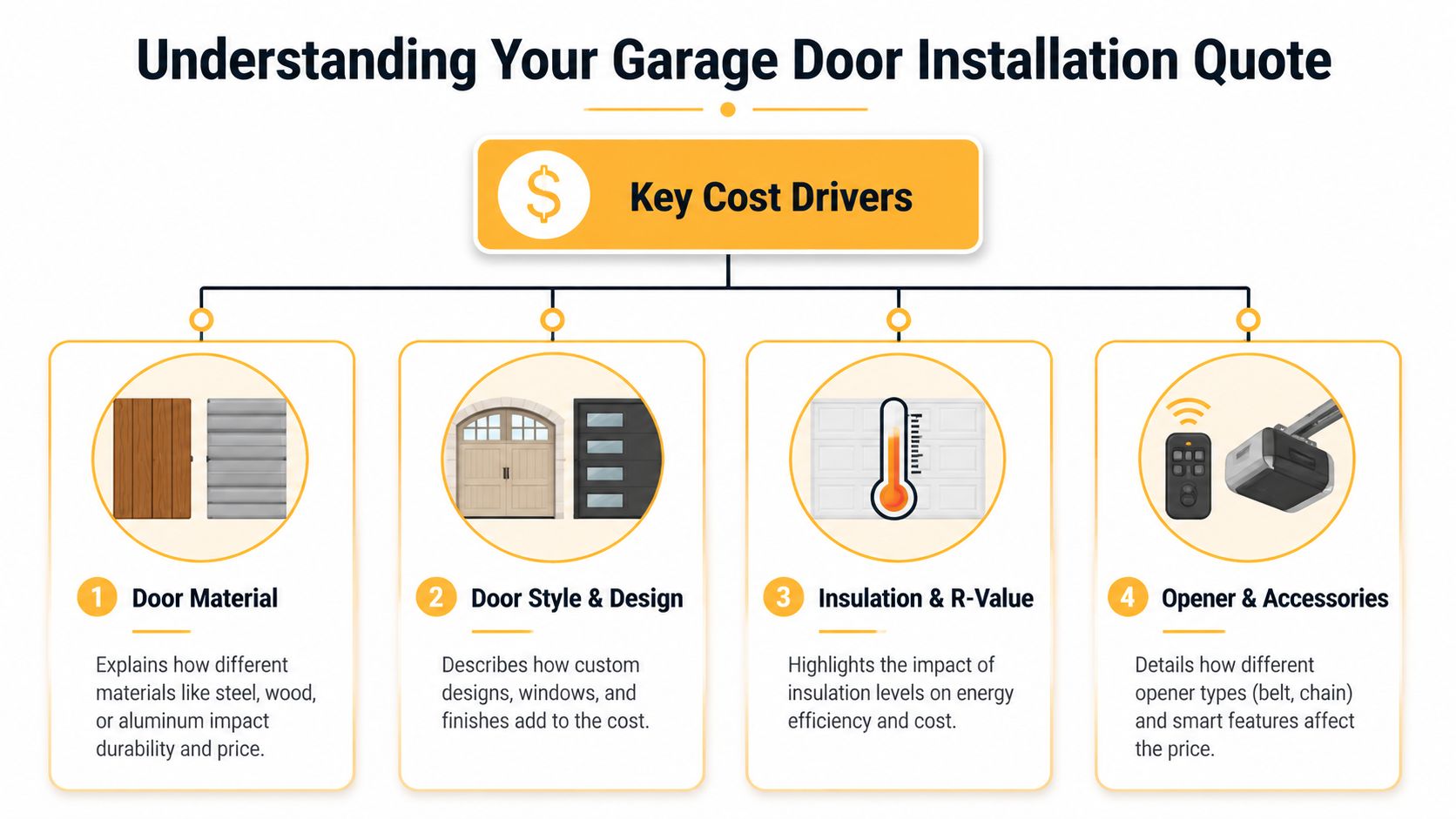
Most of the installed cost sits in four decisions: panel construction, insulation, hardware cycle rating, and operator scope. Those choices set the service life of the opening, the maintenance burden, and how well the door supports the building’s operations. If you are benchmarking replacement budgets, this overview of commercial garage door replacement cost factors is a useful companion to the line items below.
The door leaf and panel construction
Start with the panel, but do not stop there. Steel thickness, reinforcement, and panel design affect impact resistance, wind performance, corrosion resistance, and the total weight the spring system and operator need to carry.
For many commercial sectional doors, galvanized steel is the baseline material. Heavier-gauge steel usually costs more, but it tolerates forklift strikes, dock traffic, and daily vibration better than a lighter-duty skin. That trade-off matters on industrial sites where minor impacts are routine and cosmetic damage quickly turns into service calls.
That material choice also changes the rest of the system. A heavier door needs springs, shafting, track supports, and operator sizing that match the load. If the quote upgrades the panel but leaves the supporting hardware at a lighter specification, the asset is out of balance from day one.
Insulation and the meaning of R-value
R-value measures resistance to heat flow. In a Canadian commercial building, that matters most when the door separates conditioned space from the exterior, a refrigerated area, or a zone with tight temperature control.
Insulation also affects more than utility use. It can reduce condensation, improve occupant comfort near the opening, and help the door panel hold its shape through seasonal temperature swings. Polyurethane-insulated doors usually command a premium over non-insulated models, but the payback is often operational rather than purely energy-based.
A door at the building envelope should be specified as part of the envelope. Treating insulation as an upgrade instead of a performance requirement often creates avoidable heating loss, drafts, and tenant complaints.
Hardware, cycle rating, and why cheap parts fail early
The hardware package decides whether the opening will hold up under real traffic. Springs, rollers, hinges, bearings, cables, and track assemblies are where many low bids protect margin.
Cycle rating is the first item to verify. A spring assembly rated for occasional use may be acceptable on a low-traffic storage bay. It is the wrong specification for a shipping door that opens all day. Higher-cycle components cost more up front, but they cut the frequency of spring failures, emergency callouts, and unplanned downtime.
Alignment and balancing matter just as much. A well-built door with poor track geometry or incorrect spring calibration will wear out early. The wear shows up in rollers, hinges, operators, and panel joints, then the maintenance budget starts absorbing the mistake.
A useful outside example of how access systems are often part of a broader site strategy is an electronic access gate being fitted at a storage facility. The same principle applies to commercial overhead doors. The opening has to match traffic volume, security needs, and the operating pattern of the site.
Operators and control packages
Operators are often priced too late, as if they sit outside the main scope. In commercial work, they are part of the system.
Motor size, duty cycle, controls, photo eyes, sensing edges, hoists, timers, interlocks, and access control integration all affect installed cost. They also affect compliance, user safety, and how reliably the opening performs during busy periods. A manually operated door may look cheaper at tender stage, then become a problem once staff are using it dozens of times per shift.
Retrofits usually cost more than specifying the operator at the start. Access for wiring may be tighter, structural support may need upgrading, and control logic often takes longer to sort out after the door is already in service.
Use a practical filter when reviewing this part of the quote:
- Frequent-use openings: match the operator duty rating to traffic volume
- Safety-sensitive areas: include controls, entrapment protection, and commissioning scope in the base price
- Integrated sites: confirm whether the door needs access control, fire alarm interface, or sequencing with dock and traffic systems
For facility managers, this is the core pricing lesson. The cheapest door package usually strips cost out of the components that determine uptime.
Beyond the Door Hidden Costs and Site Factors
A facility manager approves a door replacement expecting a straightforward swap. Then the installer opens the wall, finds damaged jambs, no usable power at the opening, and a fire separation that changes the scope. The purchase order was for a door. The actual spend is for a working, code-compliant opening that can go back into service without creating a safety or operating problem.
Removal, preparation, and access challenges
Site conditions drive cost faster than many buyers expect. A one-for-one replacement in a clear, square opening is one budget. A replacement in an active loading lane with limited staging, damaged supports, and restricted work hours is another.
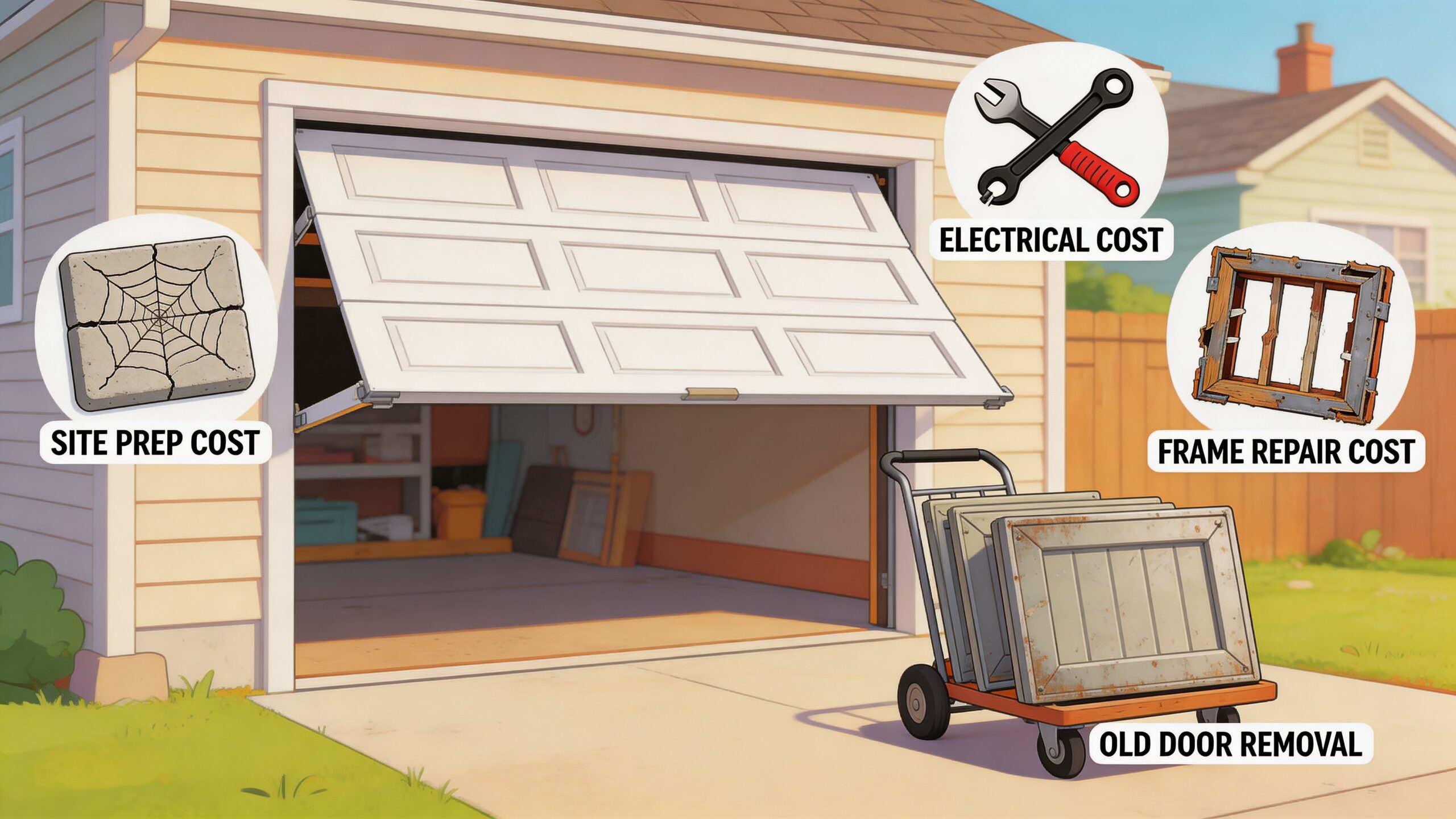
Old door removal is only the starting point. Crews may need to correct the frame, reinforce mounting points, patch concrete or steel, bring in access equipment, or work around tenant operations and traffic control rules. None of that changes the list price of the door. It changes the installed cost, which is the number that matters.
Common hidden scope includes:
- Old door removal and disposal
- Frame or jamb correction
- Steel reinforcement at mounting points
- Electrical work for operators and safety devices
- Access equipment and after-hours scheduling
Compliance costs that estimators often miss
Code requirements can change both product selection and labour scope. Fire-rated openings are the clearest example. If the opening is part of a fire separation, the door, release devices, testing, and documentation have to match the rating and the building condition. In Canada, that work is tied to the National Building Code framework and the local authority having jurisdiction, not to a generic residential installation allowance. The National Research Council Canada maintains the National Building Code of Canada publication and code framework, which is the right reference point when rated assemblies affect project scope.
Drop testing is one example. For a rated rolling steel fire door, the closing function has to be tested and documented so the opening performs as intended during an alarm or fire event. That requirement adds labour, coordination, and in some cases return visits. If a quote treats a fire door like a standard service door, the price may be low because required scope is missing.
The same issue shows up around the opening, not just in it. A receiving bay may also need related equipment or control changes to operate safely as a system. For context on opener-related scope and adjacent access equipment, see garage door opener installation cost and related commercial opening components.
A low quote on a rated opening often means the contractor has excluded testing, documentation, interface work, or corrective site labour.
Site-specific upgrades change the budget fast
Pre-install surveys often expose the work that determines total cost of ownership. Power may need to be brought to the opening. Control stations may need relocation so operators are not standing in the traffic path. The wall assembly may need revision to support a different track layout or hood. In retrofit work, the existing door type may be wrong for the application, which turns a replacement into a correction.
Those decisions affect more than installation cost. They affect uptime, service frequency, and how safely the opening performs over the next decade.
A short video can help visualise how installation details stack up beyond the basic product cost.
The practical budgeting method is to separate the quote into two buckets. One bucket covers the door system. The other covers site conditions, compliance work, and building modifications. That structure gives facility managers a clearer view of fixed scope, allowances, and items that may change after field verification.
Sample Budgets for Common Commercial Applications
A facility manager pricing a new loading bay, a washdown room opening, and a parkade fire door in the same quarter will get three very different numbers. That is normal. These systems solve different operating problems, carry different compliance obligations, and create different long-term service costs.
Budgeting works better when each opening is tied to its actual duty cycle, environment, and risk. Residential price guides flatten those differences. Commercial and industrial openings in Canada do not.
Estimated 2026 installation costs by commercial door type Canada
| Door Type | Typical Application | Estimated Cost Range (CAD) |
|---|---|---|
| Sectional overhead door, 10×10 | Warehouse or logistics bay | CAD 2,500 to 4,500 |
| High-speed fabric door | Food and beverage, fast-moving interior or exterior opening | Higher than a standard sectional opening. Final cost depends on size, speed, controls, and operator package |
| Insulated specialty door | Cold storage or temperature-controlled area | Higher than standard sectional applications because of insulation, sealing, and environmental control requirements |
| Rolling steel fire door | Parkade, service corridor, rated separation | Higher than standard base cost, with compliance, testing, and integration costs often driving the total |
Warehouse distribution centre
The standard warehouse opening is the closest thing to a baseline budget. For a typical 10×10 sectional overhead door, a practical installed range is CAD 2,500 to 4,500 for a straightforward commercial application.
That number is useful only if the opening is straightforward. Once the specification moves from basic service access to higher cycle counts, better thermal performance, or heavier hardware, the installed cost rises. The same happens when the opening needs operator changes, dock coordination, or framing correction discovered during site review.
For budgeting, this is the benchmark. It is not the default answer for every opening in the building.
Food and beverage facility
In food production and processing areas, first cost usually matters less than speed, separation, cleanability, and recovery after impact. A slow or poorly sealed door can disrupt sanitation flow, pressure control, and traffic movement within a single shift.
Installed budgets in this category usually sit above a standard sectional opening because the package often includes faster cycling, more advanced controls, and materials suited to wet or washdown conditions. The opening may also need better coordination with sensors, traffic paths, and process equipment.
A lower-priced door can become the expensive choice if it causes repeated resets, curtain damage, or excess open time. That is the larger point behind reducing total cost of ownership with the right door specification.
In a food facility, the door is part of the process. If it slows traffic, holds moisture, or fails after minor impact, operating cost rises long after installation day.
Cold storage or pharmaceutical opening
Temperature-controlled openings deserve a separate budget line because the door affects energy use, product protection, and room stability. The cost premium is not just insulation in the panel. It usually includes better perimeter sealing, tighter tolerances, more reliable closing performance, and controls that limit open time.
Earlier in the article, insulated construction was noted as a material cost driver over a basic steel door. In practice, cold-storage and pharmaceutical budgets often increase further because field conditions have to be tighter as well. Minor gaps, poor alignment, or inconsistent closing matter more in these rooms than they do at a general warehouse bay.
Typical scope drivers include:
- Higher insulation values
- Improved perimeter sealing
- Closer installation tolerances
- Operator and control packages that reduce open time
This is one of the clearest cases where a cheap install creates a long payback problem.
Underground parkade or rated service opening
A rolling steel fire door belongs in a life-safety category, not a general access category. The budget reflects that. Facility teams should expect higher costs than a standard sectional door because the assembly, documentation, interface requirements, and testing obligations are more demanding.
The exact number varies by opening size, rating, operator arrangement, and building interfaces. What matters at budgeting stage is understanding why the spread exists. Part of the spend goes into the door itself. Part goes into getting a rated opening installed, connected, and documented correctly.
For procurement, this is the common mistake to avoid. Do not compare a rated rolling fire door quote to a standard overhead door quote and treat the difference as markup. They are different systems with different operating risks, compliance responsibilities, and long-term service profiles.
Lifecycle Costs and Reducing Total Cost of Ownership
The visible part of a garage door budget is the installation invoice. The larger cost sits below the surface. That’s why total cost of ownership matters more than first cost in busy commercial facilities.
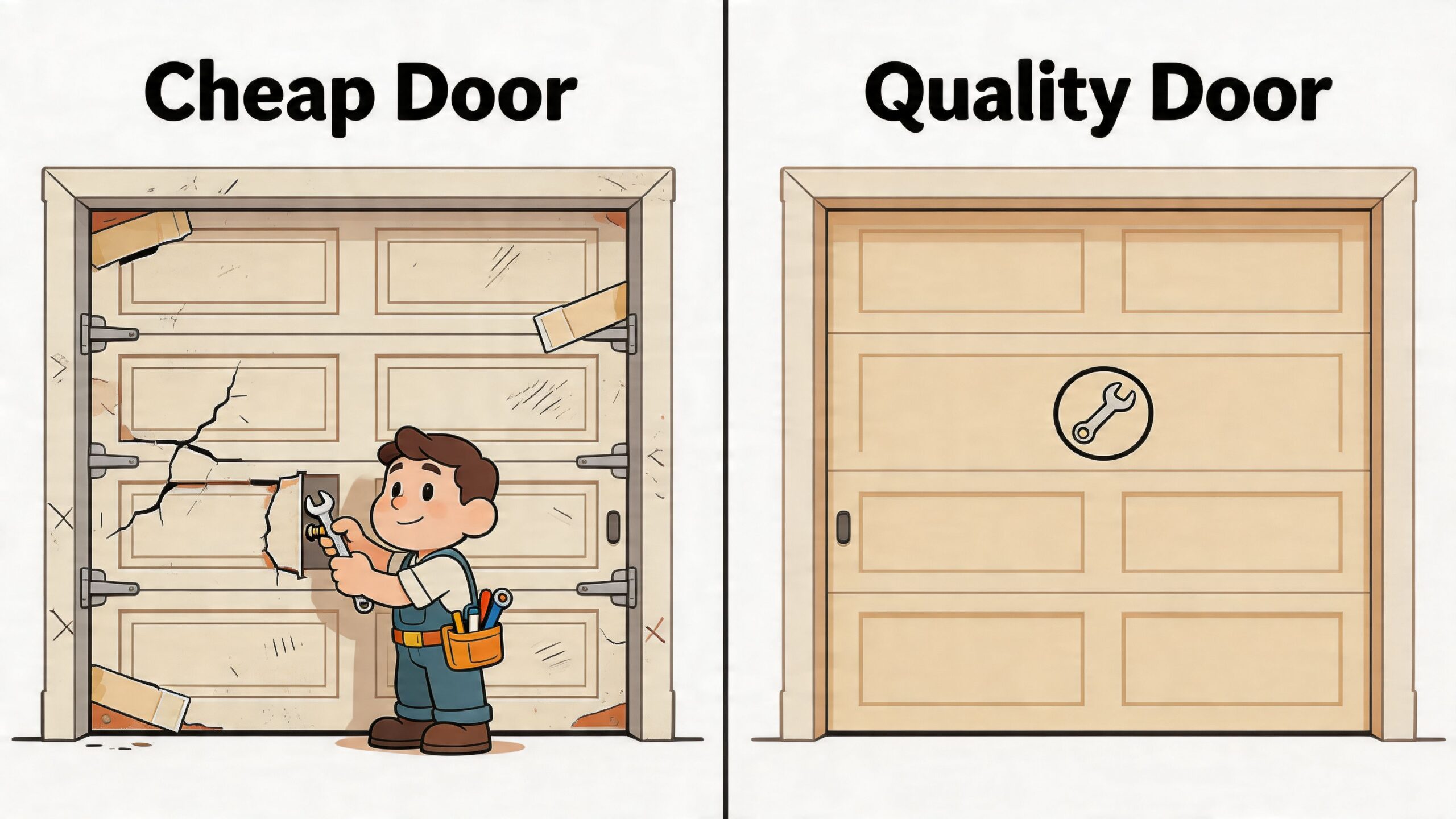
A poor specification creates three long-term problems. It wastes energy, it increases downtime, and it drives reactive repair spending.
The iceberg below the install price
An underinsulated door costs more than its purchase price suggests because it leaks performance every day. The verified data notes that uninsulated doors can increase HVAC loads by 20 to 30 per cent in Canadian winters, and that properly specified insulated upgrades can support 15 to 25 per cent energy savings over 10 years according to the cited benchmark context (reducing total ownership cost through better specification).
For non-specialists, that means the opening can subtly increase heating demand if the door is treated as a commodity. In large facilities, repeated heat loss at active openings becomes an operating issue, not just a maintenance issue.
Reliability starts with correct specification
A door that is too light for the traffic pattern usually doesn’t fail all at once. It starts with nuisance problems. Rollers wear early. Springs fatigue sooner. The operator strains. Tracks move out of alignment. Then the service calls start.
What works better is straightforward:
- Match cycle capacity to real usage
- Specify insulation to suit the building envelope
- Install operator and controls as part of one system
- Use trained technicians for alignment and testing
- Document service history and recurring issues
One practical option for this kind of lifecycle planning is a planned maintenance programme, where inspections, adjustments, and wear-part checks happen before the opening fails in service.
Maintenance is cheaper than interruption
In commercial settings, a stuck door often costs more in disruption than in parts. Trucks queue. Staff reroute. Security weakens. Conditioned space gets exposed. None of that shows up in the original install quote, but every facility team feels it when it happens.
Wilcox Door Service Inc. is one example of a provider that combines installation, fire door drop testing, emergency repair, and preventive service under one scope, which can simplify ownership for facilities managing multiple openings across dock, warehouse, and access control systems.
Owner’s lens: The right door isn’t the one with the lowest install number. It’s the one that keeps the opening working safely, efficiently, and predictably for the longest time.
Your Procurement Checklist Questions for Your Contractor
A good quote is useful. A good buying process is better. The contractor you choose will affect safety, compliance, and future service costs long after the installation crew leaves site.
Some facility managers find it helpful to look outside the door trade at how adjacent sectors vet specialised installers. For example, guidance around hiring self storage installers shows the same core principle: complex facility systems should be awarded on competence, scope clarity, and operational fit, not just line-item price.
Questions that expose scope gaps
Ask these early, and ask for written answers where possible.
- Who is performing the work on site? Confirm whether the technicians are qualified for the specific door type and whether testing requirements are included where applicable.
- What exactly is included in the quoted scope? You want clarity on removal, disposal, electrical coordination, operator setup, safety devices, and final testing.
- Is the quoted door matched to our traffic level? If the opening cycles heavily, ask how the spring and hardware package was selected.
- What code or fire requirements apply to this opening? If the answer is vague, the scope may be incomplete.
Questions that protect long-term value
These questions separate an installer from a real facility partner.
- What warranty applies to parts and labour? Get the terms in writing.
- What happens if the opening fails after hours? Emergency response matters on active sites.
- Can you support ongoing maintenance after install? A system without follow-up support usually becomes reactive.
- Have you installed similar openings in facilities like ours? Warehouse, food processing, property management, and parkade environments all have different demands.
What a solid proposal should show
A contractor doesn’t need to bury you in jargon, but the proposal should be detailed enough to stand up to procurement review. Look for:
- Door type and construction details
- Insulation level where relevant
- Hardware and operator scope
- Testing and commissioning steps
- Exclusions and site assumptions
- Service support after handover
A vague one-page quote may look easy to approve. It’s often harder to defend later when scope disputes start.
Invest in Reliability Not Just a Replacement
A commercial garage door is not a simple commodity purchase. It affects safety, uptime, energy performance, and regulatory compliance every day it’s in service.
That’s why the total cost to install garage door systems in Canadian commercial and industrial facilities goes beyond the initial installed price. The opening has to match the job. The project has to account for code, site conditions, and operator requirements. The ownership plan has to reduce avoidable downtime and wasted energy.
Facilities that buy strictly on first cost usually pay for it somewhere else. They pay through emergency calls, uncomfortable interiors, failed hardware, delayed shipping, or compliance headaches that should have been addressed at specification stage.
Facilities that buy for total cost of ownership tend to get a better result. The door lasts longer. The opening runs more predictably. Maintenance becomes planned instead of disruptive. Capital spending becomes easier to justify because the performance case is clear.
That’s the practical standard for a critical access asset. Reliability first. Compliance built in. Serviceability considered from day one. If you need a next step beyond generic pricing, a site-based review is the only way to build a budget that reflects your opening, your traffic, and your risk profile. For direct project discussions, service planning, or a site-specific review, contact us.
If you need a detailed quote for a commercial or industrial opening, contact Wilcox Door Service Inc.. Their team can assess the opening, identify code and site factors, and help you compare first cost against long-term ownership cost under the standard of Respected Partners, Reliable Service.