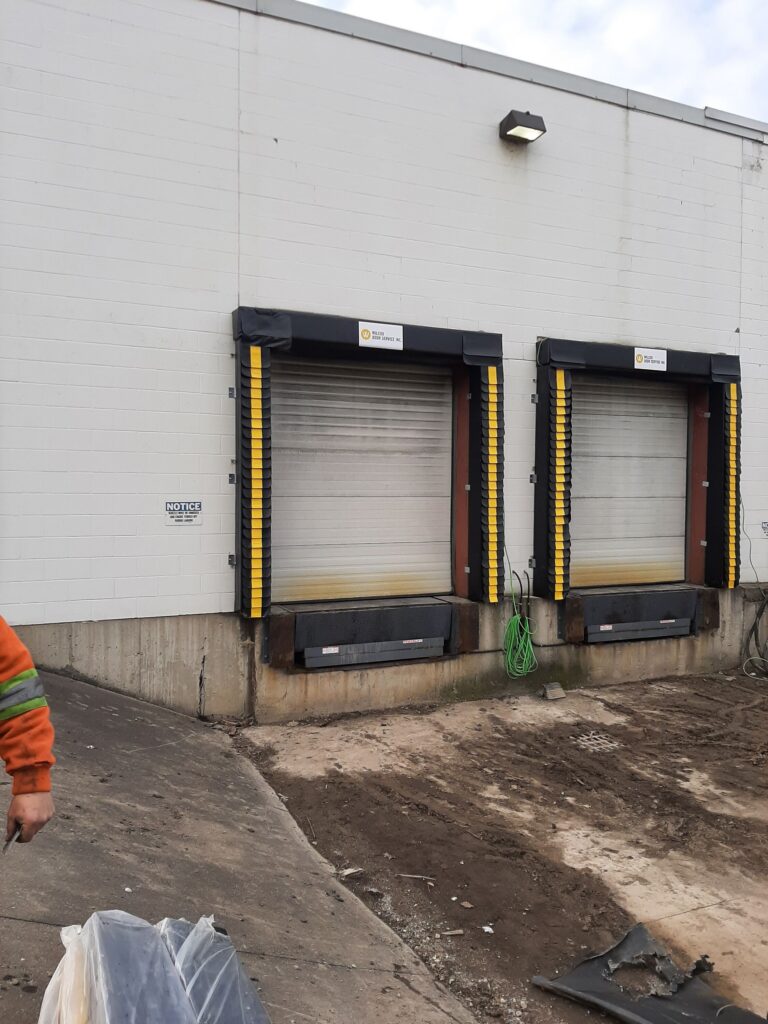
This guide provides a clear understanding of the essential role sensors for garage doors play in modern commercial and industrial facilities. You will learn about the different types of sensors available, the critical safety standards they must meet, and practical steps for maintenance and troubleshooting. By the end, you’ll be equipped with the knowledge to ensure your facility’s access points are safe, efficient, and compliant, reinforcing our promise of “Respected Partners, Reliable Service.”
Why Garage Door Sensors Are Essential for Facility Operations
Imagine a high-traffic loading dock where a single door failure stops operations cold. Worse yet, what if that failure leads to a serious accident? This is precisely why modern sensors for garage doors are no longer optional—they’re an absolute necessity for any commercial or industrial property. Think of them as the nervous system for your facility’s access points, providing the crucial intelligence to keep doors running safely and efficiently.
Your commercial door sensor isn’t just another part. It’s a silent guardian, working 24/7 to protect your operational uptime, secure your property, and safeguard your team. These components are the foundation of both safety and productivity. Operating without them invites serious risks, from personnel injury and equipment damage to costly operational delays and non-compliance fines.
More Than Just a Safety Feature
While safety is their most obvious job, the benefits of high-quality sensors for garage doors go far beyond preventing accidents. In a modern industrial setting, they are essential for creating an efficient, secure, and compliant workspace. For facility managers, understanding their full impact is the key to justifying the investment and optimizing performance.
A properly functioning sensor system is the first line of defence against costly downtime. At a busy loading dock, an unexpected door failure can halt shipments, disrupt production schedules, and lead to thousands of dollars in lost productivity within a single hour.
Here’s a look at what you gain by making your sensor strategy a priority:
- Prevent Costly Damage: A well-placed sensor can stop a high-speed door from closing on a forklift, saving you from expensive door repairs and vehicle damage. It also protects the valuable inventory on that forklift from being crushed or dropped.
- Protect Personnel from Harm: Sensors are a must-have for creating a safe work environment. They ensure your facility meets strict Canadian safety standards, protecting your team from entrapment and impact injuries.
- Improve Workflow and Efficiency: Integrating sensors with your commercial door operators helps automate traffic flow. For example, an induction loop can automatically open a door as a truck approaches, minimizing wait times and keeping the supply chain moving smoothly.
- Enhance Facility Security: Beyond safety, certain sensors can be integrated with your access control systems to monitor and restrict entry. This provides a clear audit trail and prevents unauthorized access after hours.
Ultimately, investing in the right sensors and a robust planned maintenance program is a direct investment in your facility’s operational resilience. It’s a proactive step that pays for itself in safety, uptime, and peace of mind.
Understanding the Different Types of Commercial Door Sensors
When it comes to sensors for garage doors, one size definitely does not fit all. Choosing the right technology is about matching the sensor to your specific environment, traffic flow, and operational needs. As your respected partners in facility management, we believe the best service starts with sharing our expertise so you can make an informed choice.
Let’s walk through the core sensor technologies you’ll find in commercial and industrial settings. Understanding how each one works is the first step to building a smarter, safer access point. These sensors often work in tandem, creating a complete system for safety and automation.
Photoelectric Sensors: The Safety Standard
The most common safety device you’ll see on a commercial door is the photoelectric sensor, often called a “photo-eye.” These are the real workhorses of door safety, and for good reason.
A photo-eye is essentially a tripwire made of light. One unit sends a narrow, invisible infrared beam across the door opening to a receiver on the other side. If a person, forklift, or pallet breaks that beam while the door is closing, the sensor instantly tells the door operator to reverse. It’s a straightforward but incredibly effective design that forms the safety baseline for nearly any commercial door.
Pressure-Sensitive Safety Edges
While photo-eyes guard the door’s path, pressure-sensitive safety edges protect against direct contact. These are the flexible rubber strips running along the bottom edge of a sectional or rolling steel door.
Inside that strip is a sensor that detects pressure. If the bottom of the door physically bumps an obstruction—say, a pallet stacked just a little too high—the edge compresses and triggers the sensor. This immediately signals the operator to reverse, preventing a crushing impact. Safety edges are a crucial secondary measure, acting as a final line of defence.
In a busy distribution centre, a safety edge can be the difference between a minor operational pause and a costly incident involving damaged goods or a broken door panel. It acts as a last line of defence when every second counts.
Induction Loops for Vehicle Detection
For facilities with heavy vehicle traffic, like loading docks and parking garages, in-ground induction loops are the go-to solution for automatic activation. These aren’t primarily safety sensors; instead, they are all about boosting efficiency and controlling traffic flow.
An induction loop is a coil of wire buried in the pavement in front of the door. When a large metal object like a transport truck or forklift drives over it, the loop detects a change in its magnetic field and sends a signal to open the door.
- Efficiency in Action: At a food processing plant, pairing an induction loop with a high-speed door ensures the door opens just in time for an approaching forklift and closes immediately after, minimizing temperature loss and protecting the climate-controlled environment.
- Enhanced Security: At a secure compound, loops can be configured to only detect large vehicles, preventing the door from opening for pedestrians or smaller, unauthorized vehicles.
For those interested in the technical details, learning the difference between inductive vs. capacitive proximity sensors can offer deeper insight into how specialized devices detect various materials.
To help you decide which sensor types are the best fit for your facility, here’s a quick comparison of the most common options.
Comparing Common Commercial Garage Door Sensor Types
| Sensor Type | Detection Method | Best For | Key Advantage |
|---|---|---|---|
| Photoelectric (Photo-Eye) | Infrared beam interruption | Standard safety for all commercial doors. | Prevents door from closing on people or objects in its path. |
| Pressure-Sensitive Edge | Physical contact/pressure | Doors with a high risk of contact with obstructions. | Provides a final, physical safety stop if an impact occurs. |
| Induction Loop | Changes in a magnetic field | Vehicle-only access points (e.g., loading docks). | Automates door opening for vehicles, improving traffic flow. |
| Motion/Radar Sensor | Microwave or radar waves | High-traffic areas needing hands-free activation. | Detects approaching traffic from a distance to open the door preemptively. |

alt=”An infographic illustrating the three main benefits of sensors for garage doors: Safety (a shield icon preventing an accident), Uptime (a clock icon reducing downtime), and Security (a lock icon deterring break-ins).”
As you can see, investing in the right garage door sensor types directly improves safety, reduces operational downtime, and strengthens your facility’s security. A knowledgeable partner like Wilcox can help you design a system that maximizes both safety and efficiency for your unique needs.
Meeting Safety Standards for Commercial Door Sensors
Understanding Canadian safety standards for commercial doors can feel complex, but it’s one of the most important responsibilities of a facility manager. These aren’t just suggestions; they are legal requirements designed to protect your people, your equipment, and your business from serious liability. As your trusted partner, our job is to translate that complex language into clear, practical advice that keeps your workplace safe and efficient.
The Standard That Matters: UL 325
When it comes to commercial door safety in Canada, the most important rulebook is UL 325. This standard dictates the mandatory entrapment protection systems for all automated doors. In simple terms, entrapment is what happens when a person or object is caught by a moving door.
UL 325 is the reason a door automatically stops and reverses when something gets in its way. It’s why components like photoelectric sensors and pressure-sensitive safety edges are non-negotiable parts of any modern commercial door system.
Under UL 325, your door’s operator must constantly monitor its safety devices. If a sensor gets knocked out of alignment or fails, the operator is required to detect that fault. It will then refuse to close automatically, usually defaulting to a “constant-pressure-to-close” mode where someone must hold the button down. This isn’t a bug—it’s a critical failsafe designed to prevent an accident.
Your Role as a Facility Manager
Compliance isn’t a one-and-done deal after installation. It requires ongoing diligence and having the records to prove your systems are working correctly. Regular testing and maintenance are legally mandated procedures, not just best practices.
- Daily Safety Checks: A quick visual scan for misaligned photo-eyes or debris blocking a sensor can catch a problem before it causes a system failure.
- Regular Functionality Tests: Placing an object (like a cardboard box) in the door’s path to confirm it reverses should be a routine part of your safety checklist.
- Mandatory Fire Door Testing: For fire-rated doors, the annual fire door drop test is not optional. It’s a legally required test to ensure the door will function correctly in an emergency. A strong safety culture also means understanding procedures like lock-out/tag-out for all your equipment.
How Modern Rules Shape Today’s Docks
Modern Canadian safety regulations require advanced sensors on garage doors for any commercial use. This has a huge impact on both compliance and operational uptime. Photoelectric and infrared sensors are now the standard, driving much of the innovation in automatic garage door operators. This focus on safety and automation is a major reason the North American garage overhead doors market, valued at USD 3.93 billion in 2024, is expected to grow to USD 5.52 billion by 2033. You can read more about these market projections for North American garage doors.
The easiest way to stay compliant is to partner with certified experts. A qualified technician understands the nuances of standards like UL 325 and can perform the required tests and documentation that protect your business.
Proactive Maintenance for Uninterrupted Performance
A sensor is only as good as its upkeep. To get the reliable, day-in-and-day-out performance you need from your sensors for garage doors, you have to be proactive. This shifts maintenance from a reactive headache into a strategic advantage, ensuring your access points are always ready for business. A little prevention can stop the vast majority of sensor-related failures before they happen, slashing unexpected downtime.

alt=”A technician in uniform performing garage door sensor maintenance on electrical control components with a checklist.”
Correct Placement and Installation
The foundation of a reliable sensor system is proper installation. An advanced sensor will fail if it’s not positioned correctly. For photoelectric sensors (photo-eyes), industry best practice dictates they should be mounted no higher than six inches (15 cm) off the floor. This low placement is critical for spotting low-profile objects like pallet jacks or other ground-level obstructions that a higher sensor would completely miss.
A common mistake we see in the field is installing photo-eyes too high up the door frame. While it might seem convenient, it creates a dangerous blind spot near the floor, defeating the sensor’s primary safety purpose and putting your facility at risk.
Building Your Maintenance Schedule
Once your sensors are installed correctly, a structured maintenance routine is the key to keeping them that way. A simple, consistent schedule helps you catch minor issues—like a dirty lens or a slight misalignment—before they escalate into an operational shutdown.
The need for reliable door sensors for garage doors is growing as businesses recognize their role in security and energy efficiency. Since 2022, demand for sensor models with motion detection has jumped by 28%, pointing to a broader shift toward smart infrastructure. You can discover more about the growing door sensor market on knowledge-sourcing.com.
Here is a practical, three-tiered maintenance plan you can implement:
- Daily Checks (Performed by Staff): Visually inspect the sensor lenses for dirt, dust, or frost. In a busy warehouse, a quick wipe with a clean, dry cloth can prevent a false obstruction signal that brings everything to a halt.
- Monthly Inspections (Performed by Maintenance Team): Check the physical condition of the sensors. Look for loose mounting brackets, damaged wiring, and proper alignment. The indicator lights on the sensors should be solid, not blinking—a blinking light is a common sign of a problem.
- Annual Professional Servicing (Performed by Certified Technicians): At least once a year, have a qualified technician perform a comprehensive inspection. This includes sensitivity testing, electrical diagnostics, and full system functionality tests to ensure compliance and peak performance. More details can be found in our guide to proactive maintenance on commercial garage doors.
By embracing a proactive maintenance philosophy, you ensure your sensors perform their critical duties without fail. It’s the most effective way to protect your investment, your people, and your productivity.
Troubleshooting Common Garage Door Sensor Issues
When one of your sensors for garage doors acts up, it’s more than just a hiccup—it’s a full stop to your workflow. A door that refuses to close leaves your building insecure and your climate control battling the elements.
The good news is that many common sensor problems can be diagnosed and fixed on the spot with a little know-how. Part of our “Respected Partners, Reliable Service” philosophy is empowering you to handle the simple stuff safely, helping you avoid a service call for what might be a quick fix.

alt=”An illustration showing three key steps for garage door sensor maintenance: a hand adjusting sensor alignment, a cloth cleaning a sensor lens, and pliers tightening sensor wiring.”
Diagnosing the Problem with Sensor Indicator Lights
Your first step should always be to look at the small LED lights on the photoelectric sensors themselves. These lights are your diagnostic dashboard, giving you instant feedback.
One sensor is the transmitter, and it will have a steady amber or orange light to show it’s sending its infrared beam. The other sensor, the receiver, should have a solid green light. That green light confirms it’s receiving the signal. If it’s off or blinking, you’ve found your problem.
A blinking or unlit green light on the receiver is the classic sign of a sensor issue. It tells the door operator that the safety beam is broken. As a built-in failsafe, the operator will stop the door from closing automatically. This isn’t a glitch; it’s the system doing its job to prevent an accident.
Step-by-Step Troubleshooting for Common Faults
If the indicator lights point to trouble, follow these steps. Most sensor issues come down to one of these three simple things.
- Check for Obstructions and Clean the Lenses: A bit of dust, a cobweb, or even frost can block the infrared beam. Wipe both lenses with a clean, soft cloth. Also, ensure no boxes or pallets are sitting in the beam’s path.
- Verify and Adjust Sensor Alignment: These sensors must be pointed directly at each other. A slight bump from a pallet jack can easily knock them out of line. Loosen the mounting bracket on the receiver (the one with the green light), gently adjust it until the light turns solid green, then tighten the bracket.
- Inspect for Loose or Damaged Wiring: Look at the wires running from each sensor back to the door operator for any signs of pinching, fraying, or damage. Give the wires a gentle tug right at the sensor to make sure they’re securely connected.
If you’ve cleaned, aligned, and checked the wiring and the sensors still aren’t cooperating, it’s a sign of a deeper issue, like an internal sensor failure or a problem with the operator’s control board. At this point, it’s time to call a professional for a safe, reliable repair. For urgent issues, you can explore our 24/7 emergency service options.
Upgrading Your Facility with Modern Sensor Technology
In a busy industrial facility, old equipment can become a bottleneck that costs you real time and money. Upgrading the sensors for garage doors at your facility is a smart move that does more than just meet safety standards. It’s a direct investment in efficiency, security, and future-proofing your operations.
When you retrofit older doors with modern sensors, you’re turning simple openings into strategic assets. These upgrades open the door to smarter automation and integration, giving you a new level of operational control.
Creating a Smarter, More Efficient Facility
Modern sensor technology unlocks powerful connections between systems that deliver a measurable return on investment. By linking door sensors to other facility systems, you can automate tasks, reduce manual work, and collect valuable operational data.
Consider the impact on energy bills. When you integrate door sensors with a Building Management System (BMS), a high-speed door in a climate-controlled warehouse can close the second a forklift clears the opening. This simple action dramatically reduces temperature swings, saving significantly on heating and cooling expenses.
The real value of a sensor upgrade is its ability to transform a door from a passive barrier into an active participant in your facility’s ecosystem. For example, linking a loading dock door sensor to an HVAC system can automatically adjust climate controls when the door is open, preventing energy waste.
Another powerful application is enhancing security. Connecting door position sensors to your access control system provides a real-time log of every entry and exit. This creates an invaluable audit trail and helps secure sensitive areas from unauthorized access, especially after hours.
The Power of Integration and Predictive Maintenance
Modern sensors also change how you approach equipment maintenance. Adopting technology-enabled maintenance solutions like IoT monitoring and predictive maintenance is a game-changer. Smart sensors can track usage cycles, monitor performance, and alert you to potential issues before they cause a failure.
This proactive approach provides several key advantages:
- Reduced Downtime: Fix potential problems during scheduled maintenance instead of reacting to a breakdown.
- Lower Repair Costs: Catching a small issue early is far cheaper than repairing major damage.
- Extended Equipment Lifespan: Proper monitoring prevents excessive wear, helping you get more value from your investment.
Upgrading your sensor technology is also a perfect time to ensure you have the right components from the start. Learn more in our guide on commercial garage door opener installation to ensure any new sensors are a perfect match for your operator.
Frequently Asked Questions About Commercial Door Sensors
When managing a commercial facility, you need clear answers about your equipment. Here, we tackle common questions about the sensors for garage doors that keep operations safe and efficient, reflecting our commitment to being “Respected Partners, Reliable Service.”
How Often Should I Have My Commercial Door Sensors Inspected?
For most commercial settings, we strongly recommend a professional inspection at least once a year. This is the best way to ensure your systems are in top condition and compliant with safety standards.
However, for high-cycle environments like distribution centres or emergency service bays, a bi-annual inspection is a much safer bet. A visit from a union-certified technician goes far beyond a quick visual check:
- Comprehensive Alignment and Sensitivity Tests: We ensure sensors detect obstructions accurately without causing nuisance trips.
- Thorough Wiring and Connection Checks: This prevents intermittent faults from loose or damaged wiring.
- Full System Functionality Verification: We confirm sensors are communicating correctly with the door operator.
Can I Install New Sensors on an Old Commercial Door?
Absolutely. Retrofitting modern sensors onto an older door is a common and cost-effective way to improve safety and meet current compliance standards like UL 325 without a full door replacement.
The key is compatibility. The new sensor must communicate properly with your existing operator’s control board. This requires an expert assessment to choose the right sensor and install it correctly. For commercial systems, this is not a DIY job.
What Is the Difference Between a Safety Sensor and an Activation Sensor?
While both are types of sensors for garage doors, they have very different jobs. Simply put: one protects, and the other initiates.
A safety sensor’s primary role is protection. It looks for obstructions to prevent the door from closing on a person or object. An activation sensor’s role is initiation—it detects an approaching person or vehicle and tells the door to open.
For example, photoelectric eyes and safety edges are classic safety sensors that stop or reverse the door to prevent an accident. In contrast, motion detectors and induction loops are activation sensors, used to automate opening for efficient traffic flow. Most modern commercial doors use a combination of both for a complete, safe, and automated system.
At Wilcox Door Service, our experts are ready to help you design, maintain, or upgrade the sensor systems that keep your facility running smoothly. To ensure your commercial doors are safe, compliant, and efficient, schedule a professional site assessment with our team today.