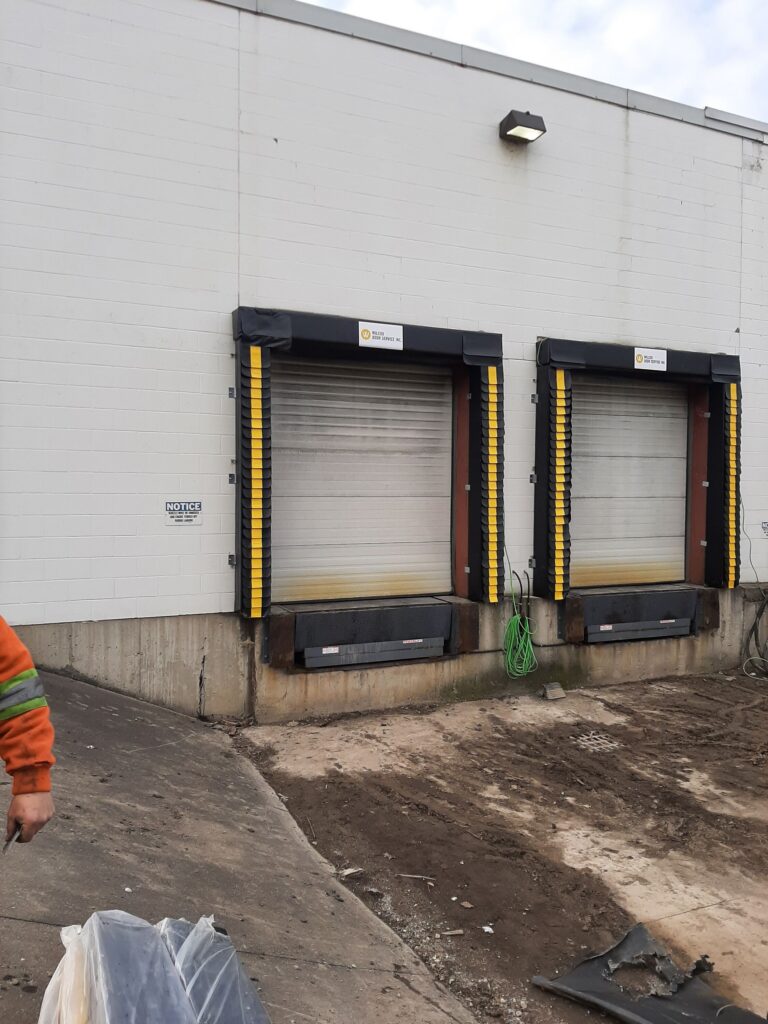
Figuring out the cost of a commercial garage door with installation can feel daunting. A basic steel door might start around $5,000, but a specialized high-speed or fire-rated system can easily exceed $30,000. This guide is designed to cut through the confusion and break down every factor that influences that final price, giving you the clarity to budget effectively for your next project.
Your 2026 Guide to Commercial Overhead Door Costs

When you’re planning for a new commercial or industrial overhead door in 2026, you have to look beyond a simple price tag. Making a sound decision for your facility’s efficiency, safety, and bottom line means understanding the complete investment. This guide gives you a comprehensive look at the total expense, from the door itself to professional labour, site prep, and any specialized features your operation needs.
We’ll explore the typical cost ranges for different door types, showing you exactly how your choices impact the final budget. It’s all about balancing immediate costs with long-term value—a core principle behind our “Respected Partners, Reliable Service.” commitment.
What You Will Learn in This Guide
- Key Cost Factors: Discover how the door’s material, size, insulation, and operational features like high-cycle springs directly influence your budget.
- Real-World Cost Ranges: Compare estimated prices for common commercial doors, including standard sectional steel, high-speed fabric doors for busy loading docks, and mandatory fire-rated doors.
- Hidden Expenses: Learn about site-specific costs like structural modifications, electrical work, and old door disposal that can affect your final bill.
- Smart Budgeting: Gain a clear roadmap for planning your project effectively, avoiding unexpected costs, and making a long-term investment that boosts facility performance.
Think about it this way: a food distribution centre might invest more upfront in an insulated, high-speed door. While the initial cost is higher, the energy savings and improved traffic flow provide a significant return over time. In contrast, a low-traffic storage warehouse could find a standard, non-insulated steel door to be the most cost-effective solution.
By understanding these variables, you can move from just buying a door to making a strategic investment in your facility’s operational backbone. This guide is your first step toward securing an accurate quote and ensuring your project aligns with both your budget and your business goals.
Our goal is to equip you with the knowledge needed to partner with a reliable provider like Wilcox Door Service. Whether you need a standard replacement or a custom engineered solution, knowing what drives the cost of a garage door with installation is essential.
Ready to discuss your specific needs? Contact Wilcox Door Service today for a detailed assessment and quote.
Decoding Your Invoice: What You Are Really Paying For
When you receive the final bill for a new commercial door, it’s crucial to understand what you’re paying for to see the real value behind the numbers. The total cost isn’t just one lump sum; it’s a combination of three key areas: the door system itself, the specialized labour for a safe installation, and any site-specific work needed to get the job done right.
Breaking down these components shows you exactly why a simple warehouse door has a much different price tag than a specialized, high-performance system.
It’s also helpful to know the difference between invoice and receipt documents. In simple terms, the invoice arrives before you pay, giving you a detailed breakdown of every cost. The receipt comes after, confirming your payment. Taking a close look at that invoice is the best way to see where every dollar is going.
The Door System and Materials
The biggest chunk of your invoice is almost always the door itself. This isn’t just a single slab of metal; it’s a complete, engineered system of parts that all have to work together perfectly. The cost here is directly tied to the materials, size, and the door’s intended job.
For example, a standard 10’x10′ uninsulated sectional steel door for a low-traffic storage bay is a common, budget-friendly choice. But if that same opening is in a food-grade facility, you might need a high-speed vinyl door to control the climate and stop contamination—a system that comes with a much higher initial cost but delivers a bigger operational payoff.
Key components you’ll see itemized on your invoice include:
- Door Panels or Curtain: The price varies significantly between steel, aluminum, vinyl, or specialized materials like those used in fire-rated doors.
- Track and Hardware: This covers the rollers, hinges, and the track system itself. High-lift or vertical-lift tracks, needed for facilities with high ceilings, will cost more than standard-lift options.
- Springs and Counterbalance System: For a busy distribution centre, investing in high-cycle springs rated for 100,000+ cycles is a smart move. It prevents costly downtime compared to standard 10,000-cycle springs.
- Weatherstripping and Seals: Perimeter seals and a solid bottom astragal (the rubber seal at the bottom of the door) are essential for energy efficiency, especially on loading docks that use seals and shelters.
Specialized Labour and Expertise
The second major line item is labour. This fee covers a lot more than just the physical work of lifting heavy parts. It represents the cost of certified expertise, safety, and compliance—a core part of our “Respected Partners, Reliable Service.” promise.
Think of it like this: you wouldn’t hire a general car mechanic to service a fleet of transport trucks. In the same way, installing a commercial overhead door—especially a complex fire door or a high-speed system—demands union-certified technicians who are masters of the intricate mechanics and safety standards.
This investment in professional labour is your best defence against premature failures, workplace accidents, and costly operational disruptions. It ensures the job is done right the first time, compliant with all local codes.
Site Preparation and Disposal
Finally, your invoice will outline any charges for site-specific work. These costs can vary quite a bit depending on how complex the job is.
If we’re replacing an old, damaged door, the quote will include the labour and fees for safely dismantling, removing, and disposing of the old system according to environmental rules.
In some cases, an installation might also require minor structural or electrical updates. This could mean anything from reinforcing the door jambs (the vertical frames of the opening) to running new wiring for a motorized operator. We make sure these costs are identified during our on-site assessment and clearly itemized on your quote, so there are never any surprises.
How Door Type and Material Drive Your Initial Cost
When you’re budgeting for a new commercial overhead door, the single biggest line item will almost always be the door itself. The type of door you choose sets the stage for the entire project’s cost, so it’s critical to get it right from the start.
Think of it like buying a vehicle for a commercial fleet. A standard pickup truck is a reliable workhorse for general tasks, but it’s the wrong tool for hauling refrigerated goods. In the same way, a basic sectional steel door is perfect for many warehouses, but a high-traffic pharmaceutical facility will need a specialized, high-speed door to maintain its clean environment.
This infographic gives you a clear picture of where the money goes on a typical installation invoice.
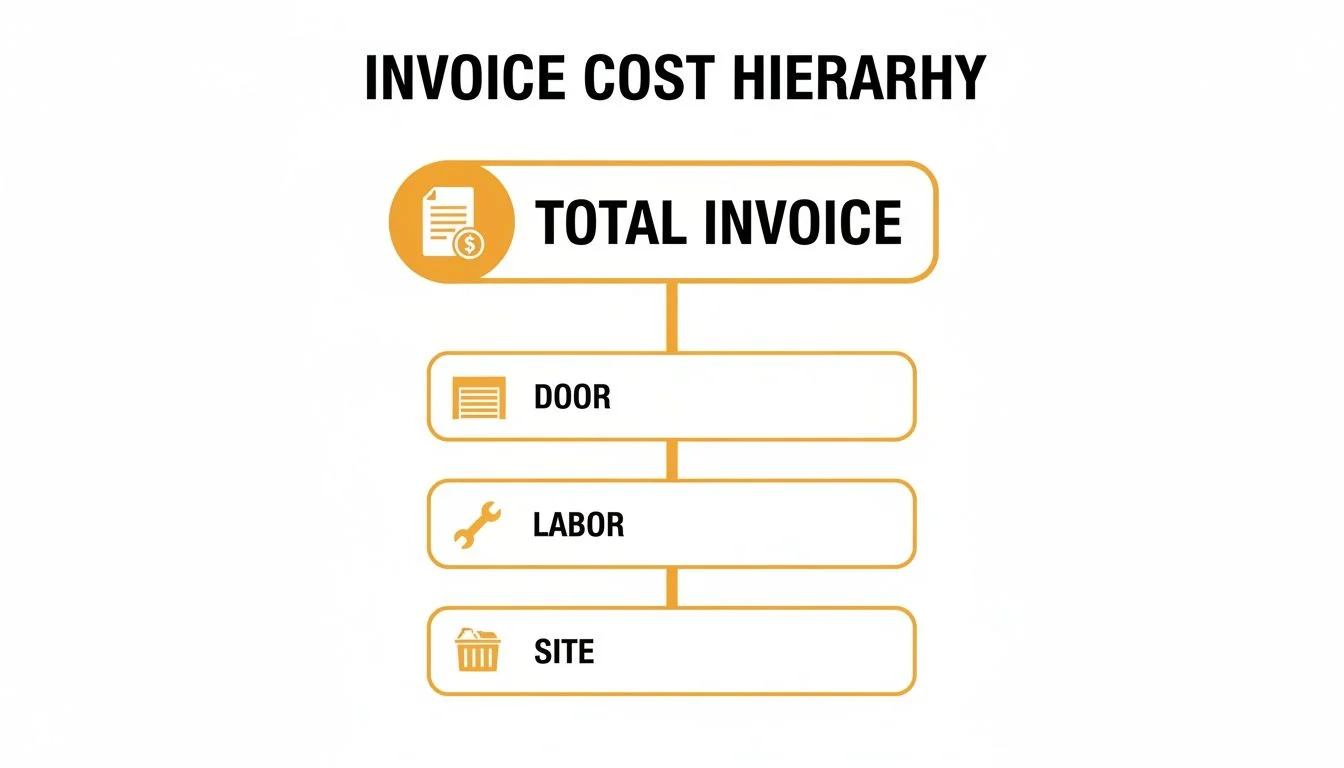
As you can see, the door system itself is the largest part of the investment. The other major components are the expert labour required for a safe, professional installation and any site preparation needed to get your opening ready.
Sectional Steel Doors: The Industry Standard
For most warehouses, distribution centres, and manufacturing plants, sectional steel doors are the go-to choice, and for good reason. They’re tough, dependable, and offer the best bang for your buck in many standard applications.
- Cost: These are often the most budget-friendly doors, which makes them a practical choice for facilities with dozens of loading docks.
- Function: They are perfect for low-to-medium traffic bays where high speed and precise climate control aren’t the main concerns.
- Best For: General warehousing, storage units, and industrial workshops.
But “steel” isn’t just one thing. The gauge (a term for the thickness) of the steel panels and the level of insulation will have a major impact on the price. A thicker, 20-gauge insulated door will cost more upfront than a 24-gauge non-insulated door, but it also delivers better security and long-term energy savings.
High-Speed Doors: Performance and Payback
When you’re dealing with a high-traffic environment—think food processing plants, busy logistics hubs, or parkades—high-speed fabric or rubber doors become essential. They open and close in a matter of seconds, which is critical for minimizing air transfer, controlling temperatures, and keeping your operations flowing without a hitch.
While the initial cost of a high-speed door can be 3 to 5 times higher than a standard sectional door, the return on that investment comes quickly. The massive energy savings from less heated or cooled air escaping, plus the productivity gains from faster cycle times, often means the door pays for itself in a surprisingly short period.
Specialty Doors: For Compliance and Extreme Conditions
Some doors aren’t just an operational choice; they’re a requirement. Specialty doors are engineered for specific, non-negotiable jobs, and their cost reflects the advanced technology and materials needed to perform.
- Rolling Steel Fire Doors: These are life-safety devices, plain and simple. They’re mandated by building codes to compartmentalize a building and stop a fire from spreading. Their higher cost is due to fire-rated materials and the sophisticated automatic closing mechanisms that must be professionally installed and tested.
- Insulated and Cold Storage Doors: For any refrigerated warehouse or freezer, these doors are non-negotiable. They use thick insulation (measured by a high R-value) and advanced sealing systems to hold precise temperatures. The investment here prevents massive energy waste and protects your temperature-sensitive products.
- Security Grilles: You’ll see these in parkades and retail storefronts. They provide a strong security barrier while still allowing for airflow and visibility.
The material you choose is another critical decision that shapes the door’s durability, maintenance needs, and long-term value. Deciding between a robust steel door and a lighter, corrosion-resistant one depends entirely on your facility’s environment. You can dig deeper into this choice in our article comparing fibreglass versus steel doors.
Ultimately, the door type you select is the foundation of your project budget. Working with an experienced provider ensures you get a door that doesn’t just fit your budget today but also serves your operation effectively for years to come—a core part of our “Respected Partners, Reliable Service.” commitment.
When you’re budgeting for a new commercial overhead door, the price for the door itself is just the beginning. The final number on your invoice often includes a handful of other critical factors that can catch you by surprise if you’re not prepared for them.
Think of it like renovating an old building. The blueprint looks straightforward, but the moment you tear down a wall, you might discover outdated electrical or a crumbling support beam that needs immediate attention. A commercial door installation is no different—what we find on-site can and will affect the total project cost.
Starting With The Door Itself: Customizations That Add Up
A “standard” door is a great baseline, but most facilities we work with need specific features to handle their day-to-day operations. Every single one of these customizations will nudge the price tag up.
- Door Size: This one’s pretty obvious. A massive 14’x14′ door for a vehicle repair bay will always cost more than a standard 10’x10′ loading dock door. It’s not just about more material; a bigger door needs a heavier-duty track, springs, and structural support to handle the weight.
- Insulation R-Value: For any climate-controlled space, from a heated warehouse to a cold storage facility, insulation is a must-have. While adding it increases the upfront material cost, it’s an investment that pays for itself in energy savings. A higher R-value (a term that measures thermal resistance) provides better insulation but comes at a premium.
- Windows and Vision Lites: Letting in natural light and giving your team a line of sight with vision lites (another name for windows) is a huge plus for safety and morale. Just remember that each window adds a step to the manufacturing process and can slightly lower the door’s overall insulating capability, all while adding to the cost.
The Cost of Hardware and Access Controls
How you open, close, and secure your door is a major cost driver. This is especially true in automated facilities or high-traffic areas where doors are constantly in motion. Standard hardware is fine for moderate use, but demanding environments need something far more robust.
For example, a busy distribution centre where a door cycles hundreds of times a day needs high-cycle springs rated for 100,000+ cycles. Standard 10,000-cycle springs would fail in a matter of months, leading to costly downtime and emergency repair calls. The high-cycle springs cost more upfront, but they prevent the operational headaches that come with a door being out of commission.
Real-World Example: We once worked with a pharmaceutical plant that needed an airlock for a clean room, which required two interlocking high-speed doors. The system had to be controlled by a specialized, clean-room certified operator that physically prevented both doors from opening at the same time. This was essential to protect the sterile environment. Those compliance-driven controls were a significant, yet absolutely necessary, addition to their project budget.
So, how much do these extras really add? It varies, but having a ballpark idea helps with planning. Each feature serves a distinct purpose, from boosting energy efficiency to meeting tough operational demands.
Here’s a quick breakdown of how common upgrades can impact your budget.
Cost Impact Of Common Upgrades And Features
| Feature Or Upgrade | Estimated Added Cost (CAD) | Primary Benefit |
|---|---|---|
| High R-Value Insulation (R-16+) | $500 – $2,500+ | Energy savings and climate control. |
| High-Cycle Springs (100k cycles) | $400 – $1,200 | Reduces downtime in high-traffic areas. |
| Fire-Rating (e.g., 90-minute) | $3,000 – $8,000+ | Code compliance and life safety. |
| High-Speed Operator | $5,000 – $15,000+ | Improves workflow and environmental control. |
| Vision Lites (per window) | $100 – $300 | Increases natural light and visibility. |
| Advanced Access Controls | $1,000 – $10,000+ | Enhances security and automation. |
As you can see, a few necessary upgrades can quickly add thousands to the base price of a door. That’s why it’s so important to think about your operational needs first, not just the door itself.
The Big Unknowns: Structural, Electrical, and Code Compliance
Some of the biggest “hidden” costs don’t come from the door at all—they come from your building and local regulations. This is exactly what a professional on-site assessment, which is a key part of our quoting process, is designed to uncover before you commit.
- Structural Modifications: Is the wall opening framed and ready to support a new, heavy-duty commercial door? We often find that we need to reinforce jambs, add steel to the header (the support beam above the door), or even re-frame the opening entirely. This all adds labour and material costs.
- Electrical Work: If you’re installing a new motorized operator, you’ll likely need a certified electrician to run dedicated power to the opening. This is a separate trade and a cost that needs to be factored into your total project budget.
- Code Compliance: Fire codes, wind-load requirements in certain areas, and other building regulations often dictate the exact type of door you must install. These specialized doors are always more expensive because of the rigorous testing and construction standards they have to meet.
Industry data shows just how much these variables matter. For instance, data from Angi.com on garage door pricing trends shows that while a standard installation in California might average between $916 and $2,866, adding a feature like a fire-rating can push the total toward $4,800. This makes it crystal clear that getting expert guidance is essential to navigate regional codes and get a price that won’t give you sticker shock later.
Calculating the Total Cost of Ownership Beyond Installation
Any savvy facility manager knows the upfront cost of a garage door with installation is only part of the story. The smartest financial decisions look at the bigger picture—the Total Cost of Ownership (TCO). This is a business term for the complete expense over an asset’s entire life. It helps you plan your long-term budget by accounting for every expense, not just what you pay on day one.
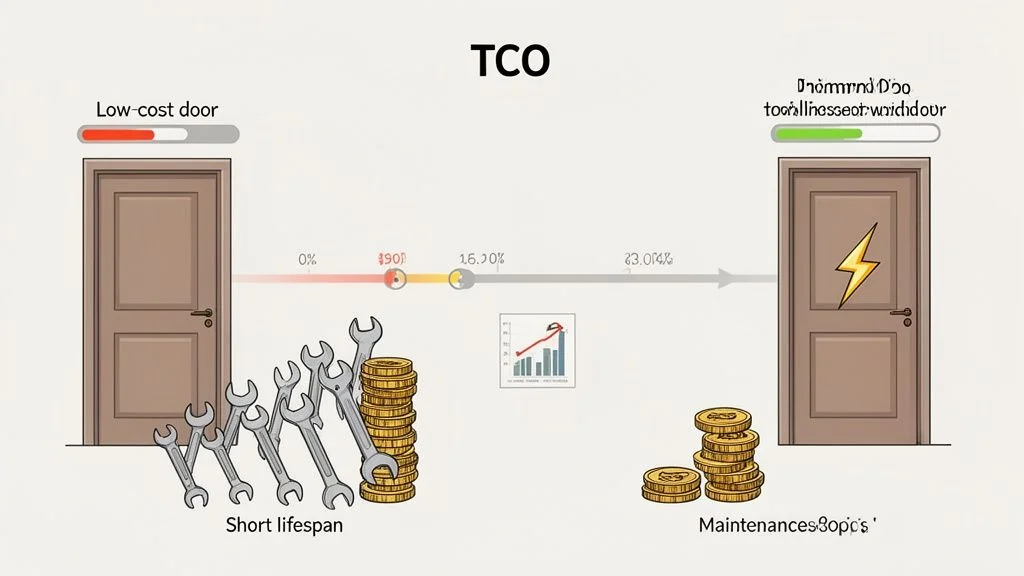
Thinking in terms of TCO shifts your perspective from just chasing the cheapest price to securing the best long-term value. It’s the difference between a quick fix and a strategic investment in your facility’s future—a mindset that aligns perfectly with our “Respected Partners, Reliable Service.” approach.
Energy Efficiency and Operational Savings
One of the biggest hidden costs of an inefficient door is just pure energy waste. An uninsulated or poorly sealed door on a heated warehouse or cold storage facility is like leaving a window wide open all day, every day. The higher initial cost of a properly insulated door often pays for itself through significant savings on your heating and cooling bills.
Consider this real-world example:
A cold storage warehouse operating with standard, uninsulated sectional doors was losing thousands of dollars a year in wasted energy. By upgrading to insulated, high-speed doors, they cut their energy consumption at each loading dock bay by over 20%. The doors paid for themselves in under three years through energy savings alone, not to mention the productivity gains from faster cycle times.
Maintenance and Repair Costs
A cheap door often means you’re signing up for constant breakdowns. The initial savings can get erased quickly by frequent emergency service calls, expensive replacement parts, and the crippling cost of operational downtime. A door that’s out of commission at a critical loading dock can bring your entire supply chain to a halt.
Investing in a higher-quality door with durable hardware and a proactive planned maintenance program dramatically cuts down on these risks.
- Durable Hardware: Features like high-cycle springs and heavy-duty rollers are built for demanding environments, minimizing the chance of an unexpected failure.
- Preventive Maintenance: Regular check-ups by certified technicians catch the small issues—like worn-out cables or misaligned tracks—before they explode into major, business-halting emergencies.
The True Cost of Asset Lifecycle
A door’s lifespan is a core part of its TCO. That cheaper door might seem like a good deal until you’re forced to replace it in just 7-10 years. In contrast, a robust, well-maintained door can easily last 15-20 years or more.
Let’s compare two scenarios.
- Door A (Low-Cost): Costs $8,000 installed but needs replacing in 8 years. Over a 16-year period, you’d buy it twice, costing $16,000 (not even counting inflation and downtime).
- Door B (High-Quality): Costs $12,000 installed and lasts the full 16 years. Your total investment is $12,000, saving you thousands and eliminating the massive disruption of a second installation.
Calculating TCO gives you the hard data to make a compelling business case for investing in quality. To get a clearer picture of how these principles apply to your facility, you can learn more about reducing total cost of ownership in our detailed guide. It ensures your next door purchase delivers reliable performance and real financial value for years to come.
How to Secure an Accurate and Reliable Quote
Getting a quote for a new commercial door shouldn’t feel like a game of guesswork. A trustworthy quote is much more than just a number—it’s a detailed roadmap that shows the provider truly understands your facility’s unique demands. To get an accurate picture of the cost of your garage door with installation, you need to be ready with the right operational details.
Think of it like giving a blueprint to a builder. The more specific information you can provide upfront, the more precise their estimate will be. Doing this initial homework helps prevent surprise costs and ensures the final invoice aligns with the initial quote, which is the foundation of any reliable partnership.
Your Pre-Quote Checklist
Before you even pick up the phone, take a few minutes to gather these key details. Having this information on hand will make the entire quoting process faster, smoother, and far more accurate.
- Opening Dimensions: We need the clear width and height of the door opening. Just as important is noting the available headroom (the space from the top of the opening to the ceiling) and the side room, as this dictates the kind of track system that will fit.
- Operational Needs: How will the door actually be used day-to-day? Be specific about the expected cycle frequency—how many times you expect it to open and close. A door on a busy loading dock cycling 200 times a day requires vastly different hardware than a storage unit door that opens twice a week.
- Special Requirements: Do you have any specific code or operational needs? Make a list. This could include fire-rating for code compliance, high insulation values for a cold storage facility, or enhanced security features for a high-value inventory area. These are major factors that drive cost.
What to Look for in a Comprehensive Quote
Once a quote lands in your inbox, it’s time to review it with a critical eye. A transparent quote from a true partner will be highly detailed, leaving no room for hidden fees or surprise charges down the road. It’s not uncommon for today’s contractors to use advanced tools like AI in construction estimating to make sure their quotes are both competitive and precise.
A solid quote should clearly itemize everything:
- All materials for the entire door system.
- All labour charges, including the cost for certified technicians.
- Costs for the safe disposal of the old door and any related materials.
- Any required site modifications, like structural framing or electrical prep work.
If a quote seems vague or just shows a single lump-sum number, consider it a red flag. A detailed breakdown is proof that the provider has done their homework and is committed to being transparent.
At Wilcox, we insist on conducting on-site assessments before finalizing a quote. This step allows our experts to see any potential site-specific challenges firsthand, which guarantees the price we give you is firm and all-inclusive. This proactive step helps facility managers compare quotes based not just on the bottom line, but on the long-term value that comes from a provider’s expertise, safety record, and support.
When you’re ready to find the right team, our guide on choosing the best garage door installers near you is a great resource.
Answering Your Questions About Door Installation Costs
When you’re budgeting for a new commercial overhead door, a few key questions always come up. As a facility manager, you need clear, straightforward answers to plan effectively. We’ve pulled together some of the most common concerns we hear and provided answers based on our decades of experience.
How Long Does a Typical Commercial Door Installation Take?
For a standard sectional door being installed on a prepared opening, you can expect our certified two-person crew to have the job done in about 4-8 hours. We know that downtime costs you money, so our crews work efficiently to get your new door running with minimal disruption to your operations.
Of course, not every installation is that straightforward. Some projects naturally take longer. If we need to perform structural work like framing a new opening, or run custom electrical wiring for an advanced operator, that will add to the timeline.
Specialized doors are also a different story. Complex systems like large vertical-lift doors or interlocking fire-rated doors can take several days to install, test, and commission properly. We always provide a clear, realistic project timeline with our quotes so you can plan for any temporary workflow adjustments.
Is It Cheaper to Repair My Old Door Instead of Replacing It?
Sometimes, a repair is absolutely the right call. If the door panels are in good shape and you’re dealing with an isolated problem—like a broken spring or a single faulty component—a repair from our 24/7 emergency service team is often the fastest and most economical solution.
However, replacement becomes the smarter long-term investment when the door has widespread damage, is nearing the end of its lifecycle, or just doesn’t meet your facility’s security and efficiency needs anymore.
Constantly sinking money into an old, inefficient door often leads to higher costs over time from frequent downtime, wasted energy, and security risks. A professional assessment from one of our technicians will help you weigh the true costs and benefits, ensuring you make the safest and most cost-effective decision.
What Is the Benefit of a Planned Maintenance Program?
A planned maintenance program is the single best way to protect your investment and drive down the total cost of ownership. It’s about being proactive, not reactive.
Regular inspections catch the small issues—a worn roller, a frayed cable, a misaligned track—before they turn into catastrophic failures that halt your business. This preventive approach ensures you stay compliant with safety standards, avoids expensive emergency calls, and squeezes every bit of operational life out of your door.
Ready to get a clear, accurate, and reliable quote for your next project? As “Respected Partners, Reliable Service.”, Wilcox Door Service Inc. is here to help. Contact us today for an expert consultation.